Table of Contents
Knowing how to get rid of belly fat isn’t as simple as cutting calories. The visceral fat packed around your organs drives insulin resistance, chronic inflammation, and cardiovascular disease risk independently of your total body weight. You can be thin everywhere else and still have dangerous levels of it.
Visceral fat is metabolically active, and it tends to respond to the same diet, activity, sleep, and stress changes that lower body fat overall. Here are 11 methods that work, covering diet, exercise, sleep, and the hormonal levers most people overlook.
1. Avoid Sugar
Excess sugar, especially from drinks, is a major dietary driver of visceral fat. Your liver converts a share of dietary fructose into fat, and controlled feeding trials link sugar-sweetened drinks to more visceral and liver fat. Liquid sugar is the worst offender – a can of soda or a large juice delivers fructose without fiber, protein, or any signal to your satiety system that you’ve consumed anything.
Cut sugary drinks first. Then hit added sugars in packaged food – sauces, cereals, flavored yogurts, energy drinks. You don’t need to eliminate fruit; whole fruit comes with fiber and isn’t the target here. What you’re targeting is processed sugar in drinks, pastries, condiments, and snacks.
Read labels. “No added sugar” and “natural sugars” are marketing. Fruit juice carries a concentrated sugar load without the fiber of whole fruit, so treat it like any other sugary drink rather than a health food.
2. Eat More Protein
Protein is the most filling macronutrient, and it takes more energy to digest than carbohydrate or fat. It influences appetite hormones like ghrelin and peptide YY, and a higher-protein diet helps many people feel fuller and eat less, though the size of that effect varies from person to person and meal to meal.
Sources: eggs, fish, meat, legumes, dairy, nuts. A protein-rich breakfast works for some people, but trials comparing breakfast types haven’t found a consistent drop in daily intake, so treat it as one option rather than a rule.
Protein also helps preserve muscle during a calorie deficit. When you lose weight through diet alone without adequate protein, you lose a mix of fat and muscle. A common target during weight loss is roughly 0.7 to 1 gram of protein per pound of body weight (about 1.6 to 2.2 g/kg), which skews the loss toward fat.
3. Cut Carbohydrates
Cutting refined carbohydrates helps many people lower calorie intake and steady blood sugar. What the evidence does not show is low-carb diets beating low-fat diets for visceral fat once calories are matched: randomized trials comparing carbohydrate and fat allocations have generally found similar visceral-fat reductions. The practical value of cutting carbs is that it removes a lot of easy-to-overeat food – bread, pasta, rice, sugary snacks – and some people find their appetite drops as a result.
You don’t need full ketosis or a specific gram target. Cut the refined grains and sugar first, and keep vegetables and legumes – the fiber and micronutrients are worth more than the minor carbohydrate load.
4. Eat Viscous Fiber
Soluble fiber forms a gel in your gut that slows digestion, suppresses appetite, and reduces calorie absorption. It also feeds gut bacteria that produce butyrate, which improves insulin sensitivity. Target 14 grams of fiber per 1,000 calories – significantly more than average Western intake.
Good sources: oats, legumes, psyllium husk, flaxseeds, sweet potatoes, most vegetables. If you use psyllium husk, follow the product label for the dose, mix it into at least 8 oz (240 ml) of liquid, and drink it promptly before it thickens – taking it with too little liquid can cause choking or blockage. Take it separately from other medicines, since it can slow how they’re absorbed. Store-brand psyllium is usually the same active ingredient as branded versions like Metamucil for less money.
5. Do Aerobic Exercise
Aerobic exercise – running, cycling, swimming, rowing, brisk walking – burns calories and improves insulin sensitivity, and it reliably reduces visceral fat. It isn’t the only winner, though. Trials that compare training types are mixed: combined aerobic and resistance training often beats either one alone, some studies find no difference between endurance and strength work, and diet alone can produce larger fat reductions than exercise alone. The honest summary is that the calorie deficit matters most, and the activity you’ll actually keep doing is the one that helps.
Aim for at least 150 minutes per week of moderate activity, plus muscle-strengthening on two days, in line with public physical-activity guidelines. Moderate means you can talk in short sentences but not comfortably sing. Interval training can deliver similar benefits in less time, but it’s demanding: build a base of steady cardio first and raise the intensity gradually rather than starting at maximum effort.
For beginners: start with 20-minute brisk walks and build from there. Consistency at modest intensity beats ambitious plans that collapse after two weeks.
Don’t ignore what happens outside those sessions. The calories you burn through ordinary daily movement – steps walked, stairs climbed, standing instead of sitting – are non-exercise activity, and across a full day they can add up to more than a single workout. Sitting for 8-12 hours while training a few times a week still leaves you sedentary for most of your waking hours. Baseline movement through the day isn’t aerobic training and won’t cut visceral fat the way structured cardio does, but it raises your total daily calorie burn and supports the deficit that removes fat.
6. Strength Train
Weight training builds muscle and improves insulin sensitivity directly, which supports fat loss independently of the calories burned in a session. The effect on resting metabolism is real but modest and variable – it depends on how much muscle you build and hold, and it fades if you stop training.
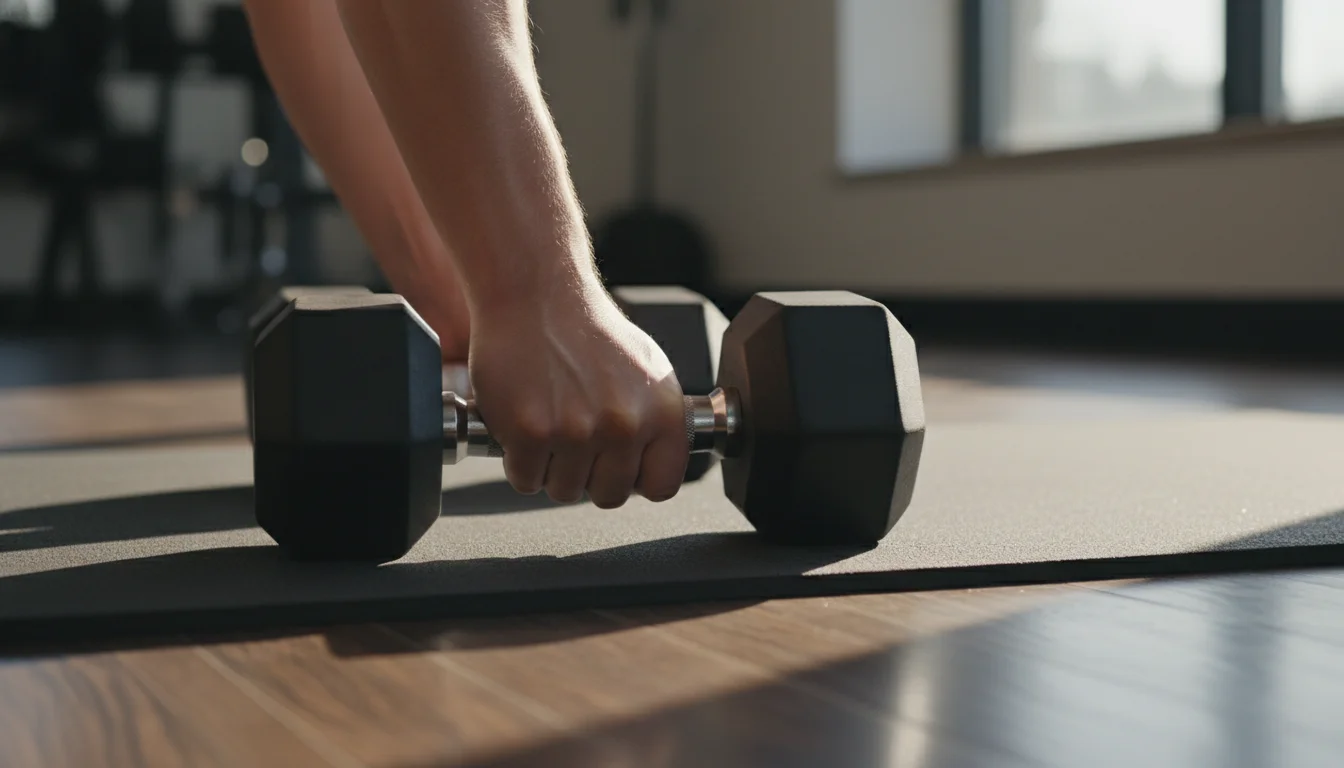
Target compound movements: squats, deadlifts, rows, presses. These recruit more muscle simultaneously than isolation exercises and produce a greater metabolic effect per session. Two to three sessions per week with progressive overload is sufficient. Combine with aerobic exercise for the strongest combined effect on abdominal fat.
Don’t fixate on ab exercises. Planks and crunches build core muscle but do nothing to reduce the fat above them. The fat comes off through the whole-body calorie deficit and hormonal changes that compound movements and aerobic exercise produce.
7. Track What You Eat
You’re probably eating more than you think. Studies of self-reported diets find people commonly underreport intake, often by around 20 to 30 percent in the groups studied, though it isn’t universal. Tracking for two to four weeks – using an app, a notebook, anything that requires conscious notation – makes the hidden calories visible.
Cooking oil is often the biggest surprise. A tablespoon of olive oil is 120 calories. The “small” latte might be 250. The handful of almonds before dinner is 170. A few of these a day can account for the entire surplus driving fat accumulation. For many people the act of paying attention nudges intake down on its own, without any deliberate restriction.
8. Prioritize Sleep
Short sleep disrupts ghrelin and leptin (the hormones that regulate hunger and satiety) and alters cortisol, and people who sleep poorly tend to carry more belly fat than those who sleep 7 to 9 hours at comparable calorie intake and exercise levels.
Seven to nine hours is the target. Consistent sleep timing matters as much as duration – irregular sleep patterns (varying bedtimes and wake times across the week) disrupt metabolic hormones even when total sleep hours are adequate. Pick a sleep schedule and hold to it, including weekends. If you struggle to fall or stay asleep, fixing that comes first – see how to deal with insomnia.
9. Manage Stress
Chronic stress is associated with more abdominal fat, and cortisol is part of the link – though it isn’t the single switch that decides where fat goes. You can eat well, exercise regularly, and sleep adequately and still find belly fat harder to shift if stress stays high.
The most reliable stress interventions: moderate-intensity aerobic exercise (which also burns fat directly), consistent sleep, and deliberate slow breathing. Practiced regularly, slow breathing can help lower stress over time; studies that measured a cortisol drop used repeated sessions over weeks, not a single five-minute fix. Social connection and cutting the density of daily obligations and decisions both tend to ease the load.
10. Reduce Alcohol
While your liver processes alcohol it prioritizes clearing it over burning fat. Alcohol is also calorie-dense (7 calories per gram with no nutritional value), and most drinks add carbohydrates on top of that. Regular drinking can also raise cortisol, layering hormonal fat-storage pressure on top of the calorie surplus.
A pint of beer is 180-230 calories. A glass of wine is 120-150. A cocktail can top 300. None of it triggers satiety hormones. There’s no proven safe threshold, and health agencies note that less is better: cutting back reduces empty calories and eases the hormonal pressure toward fat storage. Alcohol’s contribution to abdominal fat is real enough to have its own name – see how to get rid of a beer belly.
11. Drink More Water
Adequate hydration supports normal metabolism. In one trial of older adults with overweight or obesity, drinking about 17 fl.oz (500 ml) of water before a meal cut intake at that meal by roughly 13 percent. That result may not carry over to everyone, but water before meals is a cheap habit worth trying.
Rather than chasing a fixed daily figure, use the total-water guidance from the National Academies: about 91 fl.oz (2.7 L) a day for women and 125 fl.oz (3.7 L) for men, counting water from food and all drinks, with individual needs varying by body size, climate, and activity. Spread it through the day rather than in one sitting. Don’t expect hydration alone to move the scale much; its value is reducing the water retention that can make the belly look bigger than the underlying fat – the same puffiness behind everyday bloating.
FAQ
How do I reduce my belly fat?
The highest-leverage combination: cut sugar and refined carbs, move more (a mix of aerobic and strength work), sleep 7-9 hours, and reduce alcohol. These changes address both calorie balance and the hormonal environment (insulin, cortisol, ghrelin) that drives visceral fat accumulation. Give it a couple of months of consistent effort before judging results.
What will burn the most belly fat?
There’s no single best exercise for belly fat. Aerobic training, strength training, and combined programs all reduce visceral fat, and combined training often does best – but the biggest lever is the calorie deficit, which is driven mainly by diet. Pick the mix you’ll actually stick with.
What is the main cause of belly fat?
Visceral fat accumulation is driven mainly by insulin resistance (from excess sugar and refined carbs) and a sustained calorie surplus. Stress, poor sleep, and alcohol add to it through hormones like cortisol. Genetics determine where fat is preferentially stored, but diet and lifestyle determine how much accumulates.
How to reduce belly fat in 7 days?
You can’t lose meaningful fat in 7 days, but you can reduce bloating and water retention noticeably. Cut sodium, alcohol, and refined carbs for the week, drink water regularly, and move more each day. The visible reduction will be mostly water and inflammation, not fat. Actual fat loss becomes visible over several weeks of sustained effort.
Corrections
- 2026-09-20: Corrected several health claims against primary sources. Low-carb diets do not consistently beat low-fat diets for visceral fat once calories are matched (the trial evidence is mixed), and there’s no “single best” exercise – aerobic, strength, and combined training all help, with the calorie deficit the main lever. Removed “permanently” from the strength-training metabolism claim (the effect is modest and fades if you stop). Scoped the protein-breakfast, calorie-underreporting, and food-tracking claims to what studies actually show. Rewrote the psyllium instruction to product-label safety wording (adequate liquid, drink promptly, choking caution, separate from medicines). Removed the specific alcohol limit and the 6-8 week waist-loss promise; removed the fixed 2-3 L daily water target in favor of the National Academies’ sex-specific total-water guidance; scoped the pre-meal water result to the population that was studied. Removed the prescriptive max-effort interval protocol and the deterministic cortisol claim. Removed the claim that hydration reduces “false hunger” from mild dehydration – two randomized trials found mild hypohydration did not change hunger, fullness, energy intake, or ghrelin; the pre-meal water preload result and the water-retention point stay.