Table of Contents
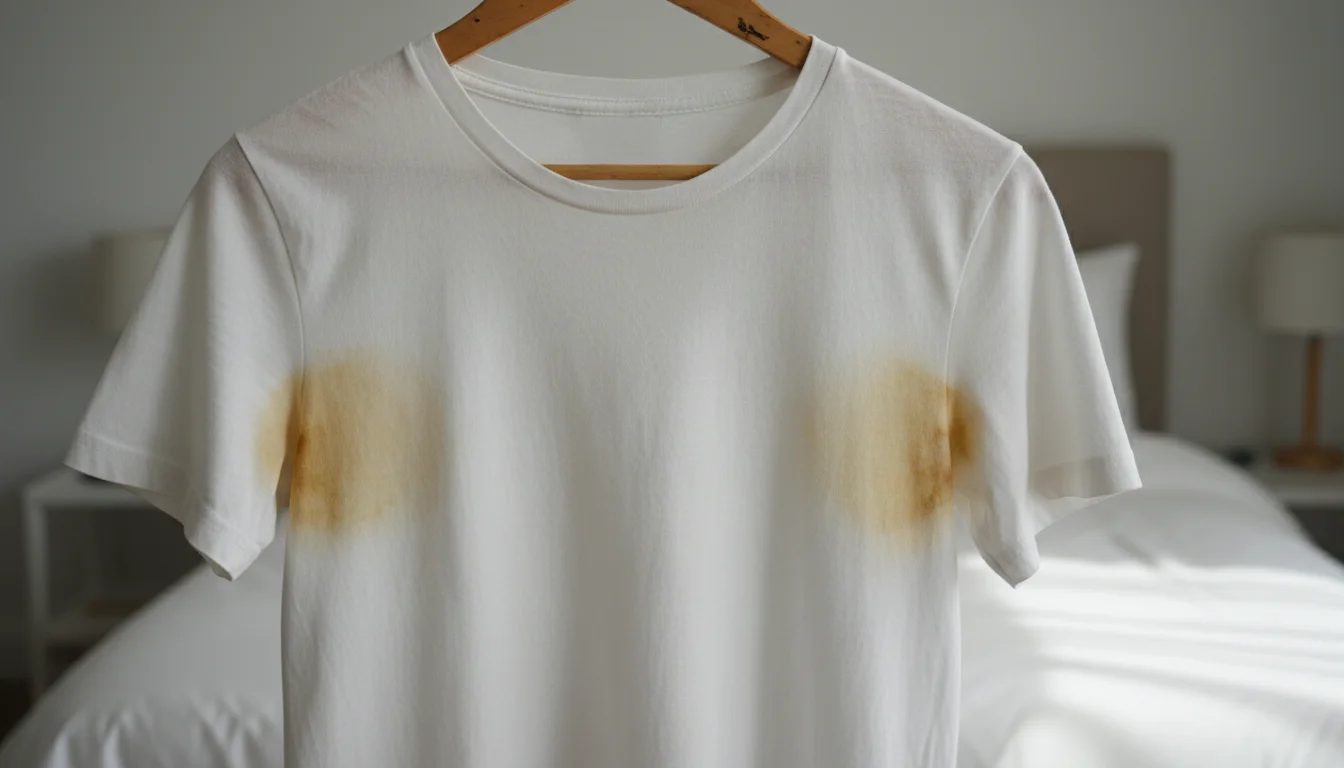
Two different problems hide under the same wet patch. Yellow armpit stains are aluminum from your antiperspirant reacting with sweat and body oils, ground deeper into the fibers with every wash. Gray or white marks are plain deodorant buildup sitting on the fabric. They look similar and they clear differently, so the fix starts with matching the treatment to the stain and working the mildest method first. Every cleaner below carries the same two rules the textiles extension services repeat: read the garment’s care label before you start, and pretest anything stronger than detergent on an inconspicuous seam, because dyes and aluminum both react. Old stains are not hopeless. They just need longer contact time.
1. Dish soap, then hydrogen peroxide
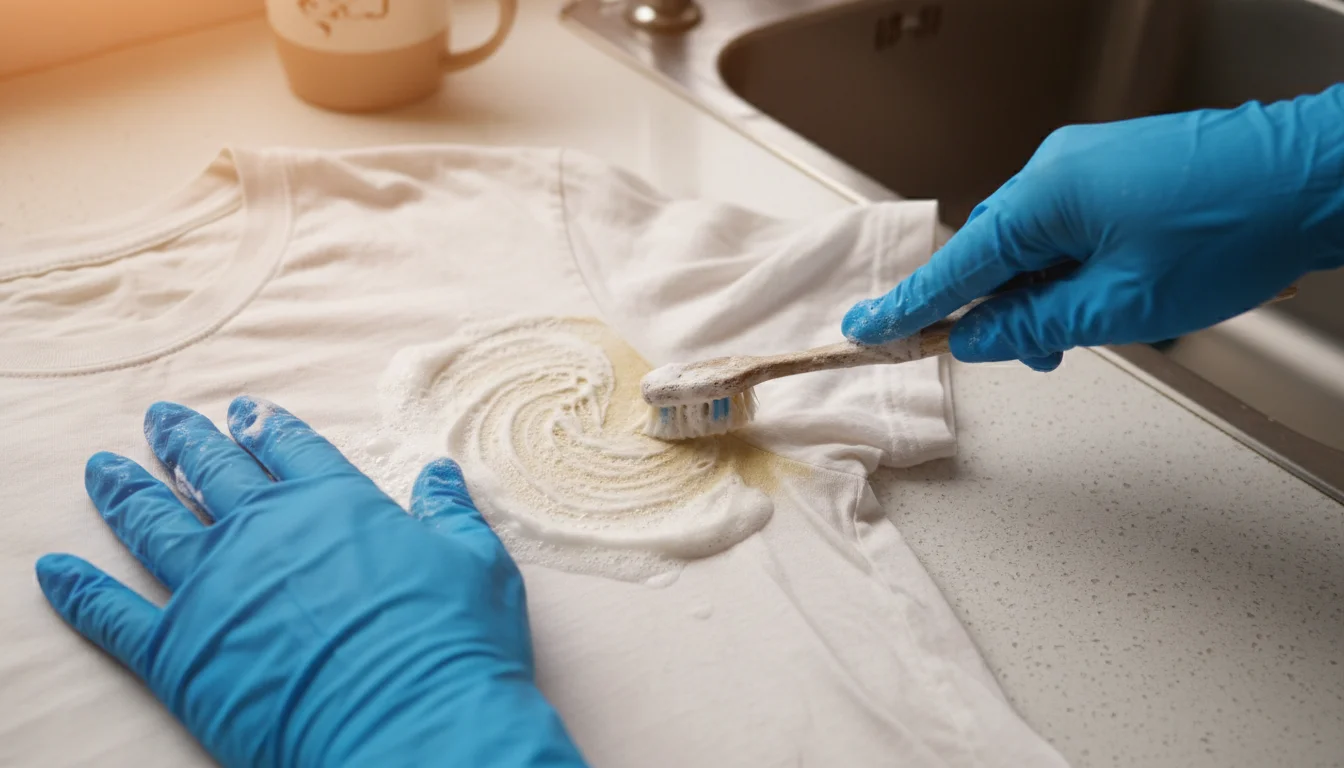
Start with the surfactant, not a paste. Rub undiluted liquid dishwashing detergent straight into the stain, work it in with your fingers or a soft brush, and launder in the warmest water the care label allows. Dish soap is built to cut body oils, which is half of what an underarm stain is, so a plain wash clears most fresh marks. If discoloration survives, move to 3% hydrogen peroxide from the drugstore, not a stronger concentration. Pretest it on a hidden seam, then dab it on and leave it 15 to 20 minutes before rinsing. This is the University of Georgia Extension’s own order for antiperspirant stains.
2. Enzyme presoak
Sweat is a protein stain, and protein needs enzymes, not just detergent. Reach for an enzyme-based detergent (“bio” or “enzymatic” on the label) or a dedicated pretreatment spray. Work it into the stain and presoak in cold to lukewarm water, under 100°F (38°C). Iowa State Extension is blunt that hot water sets protein stains instead of lifting them. Give it 30 minutes to overnight, then wash cool and air dry. Bad stains take two or three rounds. Skip fabric softener on moisture-wicking athletic wear; it clogs the weave.
3. Oxygen bleach soak
When peroxide has not cracked set-in yellowing, escalate to oxygen bleach. Powders like OxiClean are sodium percarbonate, which releases hydrogen peroxide in water, a more concentrated version of method one. Dissolve per the package in warm water and soak the garment one to four hours, longer for old stains, then wash normally. Reach for oxygen bleach, not chlorine bleach: chlorine can react with the aluminum residue and deepen the yellow, the same yellowing from chlorine bleach you fight elsewhere.
4. White vinegar for the color shift
Antiperspirant’s aluminum chloride is acidic and can change a dye’s color, not just deposit on top of it. The University of Georgia Extension’s fix for that shift is to restore the color, not soak it out: dab a few drops of white vinegar onto an old discolored patch, or a few drops of ammonia onto a fresh one, then launder. Vinegar and ammonia can both alter some dyes, so pretest on an inconspicuous seam and check the care label first. This targets the color change, so it does nothing for gray deodorant buildup.
5. Lemon juice and sun (white cotton only)
For a white cotton shirt, Iowa State Extension’s low-tech method works: sprinkle table salt over the damp stain, squeeze fresh lemon juice onto the salt, and lay the garment flat in direct sun until dry. Citric acid and UV bleach the discoloration together. Keep this one to whites, because lemon and sun will lighten colored fabric, and skip it if you need the shirt back today or have no reliable sun.
What causes armpit stains
Two mechanisms, two looks. Yellow: the aluminum in antiperspirant is acidic, reacts with sweat proteins and body oils, and the discoloration compounds over wash cycles until it grinds into the weave, which is also why white shirts turn yellow-brown at the underarm first. Gray or dark: deodorant, not antiperspirant, accumulating on the fibers along with body oil. Detergent left in under-rinsed washes can darken both. Pink or red tints are a third look but not a third deposit: the acidic aluminum chloride can change the fabric’s own dye color instead of sitting on top of it (University of Georgia Extension), so treat those like the color shift in method four, not like buildup. Naming which one you have tells you whether to chase the aluminum reaction, restore a shifted dye, or just lift the oily buildup.
Prevention
Let deodorant dry fully before you dress, and pretreat the underarms before washing rather than after a stain has set. Wash cool, not hot: heat sets the protein half of the stain, and a hot dryer bakes in whatever the wash missed. If yellowing keeps coming back, switch to an aluminum-free deodorant, or at least a lower-aluminum one; readers report far less staining below about 18% aluminum. The same sweat that stains also drives underarm odor, so the two problems tend to ease together. For other laundry stains, the mildest-first order still applies.