Table of Contents
Your house has run out of other spiders. The cobwebs in the corners are still there, but nobody’s home. That’s the classic sign of white-tailed spiders, and it tells you most of what you need to know about how to get rid of white-tailed spiders: they’re hunters that eat other spiders, so they come in for the buffet and stay for the hiding spots.
Most of what ranks for this is either a myth-busting page with no removal steps, a pest company’s sales page, or a generic US spider guide. Here’s the species-specific version. Cut the house spiders they feed on, stop leaving clothes and towels on the floor (that’s where the bites happen), catch the ones you see, and close the gaps. And no, the bite doesn’t rot your flesh. We’ll get to the study.
Why white-tailed spiders come inside
Food, mostly. White-tails don’t build webs to catch prey. They wander at night hunting other spiders, and the Australian Museum lists curtain-web spiders, daddy long-legs, redbacks (a cousin of the black widow) and black house spiders among their recorded meals. In New Zealand, Te Papa’s spider expert Phil Sirvid says the black house spider and the gray house spider (both Australian imports, both happy around homes) are what keep white-tails fed. A house with webs in every window frame is a pantry.
Shelter is the other half. By day they squeeze into cracks and crevices, which houses provide in bulk, and Kiwicare notes they also move indoors to get out of the cold. Outdoors they live under loose bark, rocks and leaf litter. The Australian Museum says they’re most often seen in and around houses in summer and fall. Te Papa suggests the extra ones you see in late summer may be males wandering in search of females.
1. Make sure it’s a white-tail
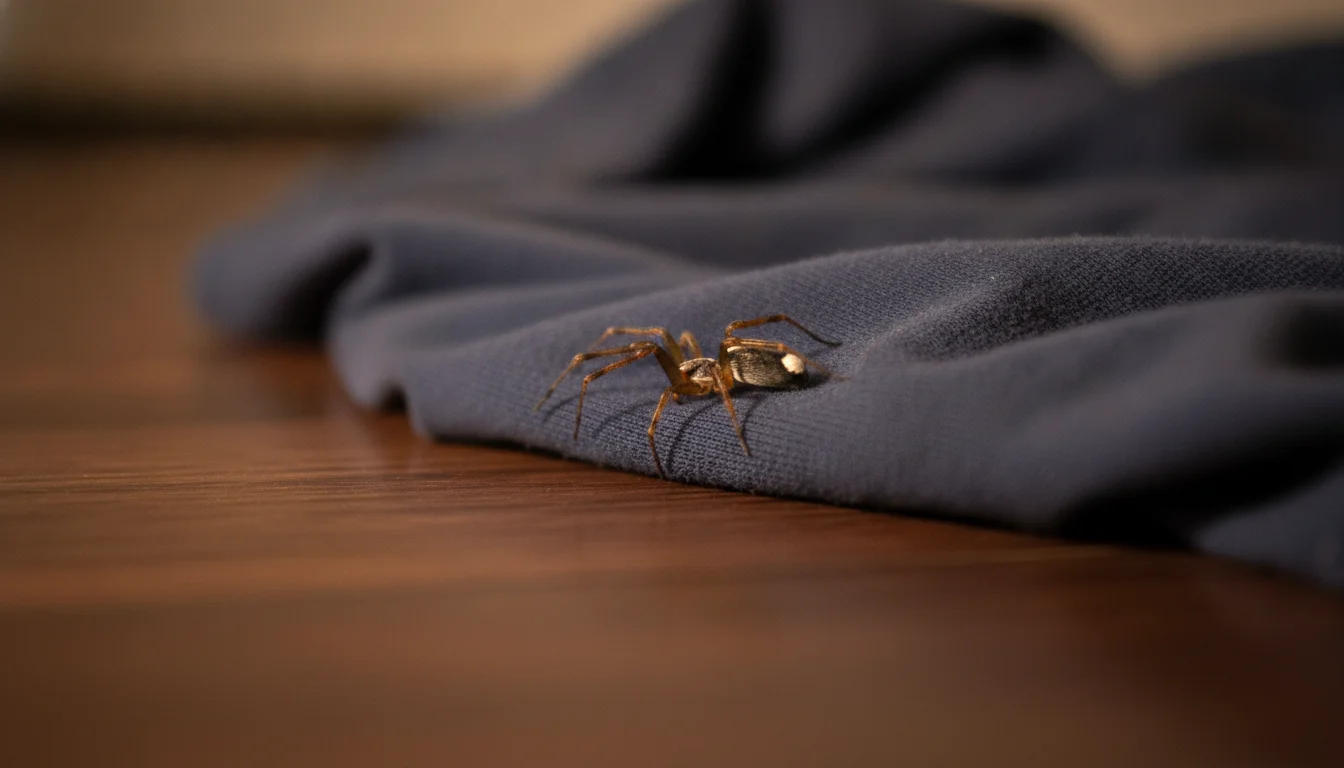
Do this first, because half the fear around this spider comes from blaming it for things it didn’t do. A white-tail has a slender, cigar-shaped body about 0.4 to 0.8 inch (1 to 2 cm) long, dark gray to reddish, with orange-brown banded legs and a cream-white spot at the very tip of the abdomen. Juveniles and males have extra pairs of faint white spots along the back. Kiwicare puts the full leg span at about the size of a fifty-cent coin.
Two species do the trespassing: Lampona cylindrata and L. murina. You need a microscope to tell them apart, and you don’t need to. If you’re not sure what you’ve got, trap it in a clear jar (method 7 shows how) and compare it against the Australian Museum’s or Te Papa’s photos before you start worrying about the bite.
2. Vacuum the webs and the house spiders in them
This is the method that does the most work, because it goes after the food supply. The Australian Museum’s own management advice for white-tails is two lines: catch and remove the ones you see, and clear away the webs of the house spiders they feed on.
Use the hose attachment with a crevice tool and work the upper corners of rooms, the seam where walls meet the ceiling, window frames and behind furniture. Take the web and its owner together. Empty the canister outside into a sealed bag. Kiwicare’s point is worth remembering here: having other spiders around doesn’t mean you’re white-tail-free. It may just mean they haven’t eaten everything yet.
3. Hose the webs off the outside of the house
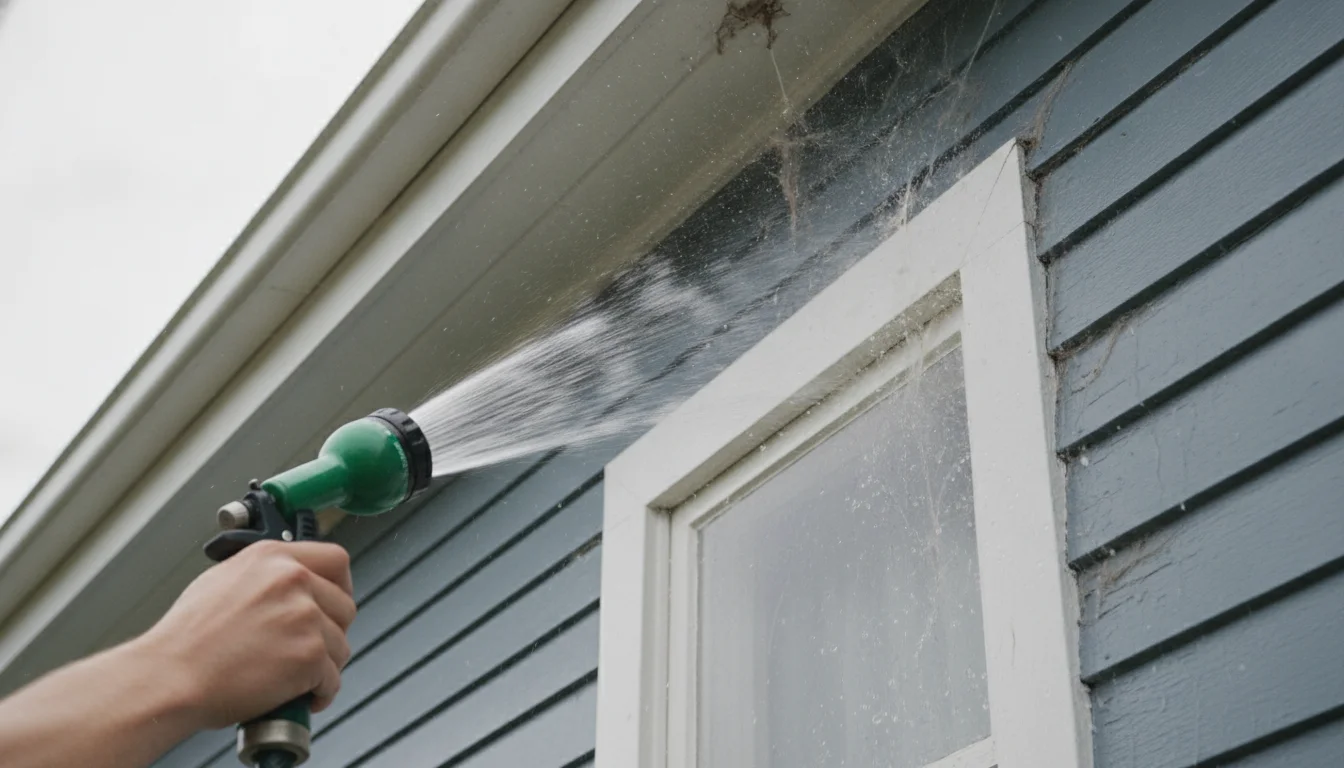
The house spiders sitting in webs around your eaves and window frames are tonight’s dinner for any white-tail nearby. A Wellington pest control company tells customers to waterblast the exterior regularly, focusing on eaves, window frames and anywhere webbing builds up. A hard jet from a garden hose does the same job on a smaller scale: it knocks spiders and spider webs off walls, frames and outdoor furniture. Repeat whenever the webs come back.
4. Spray the outside for web-building spiders
PestXpert, an Australian pest products company, makes the case plainly: white-tails have no fixed hiding place, so they’re hard to hit with a spray directly. Treat the outside of the house instead and kill the web-building spiders they come for. Less food, fewer white-tails.
Use an outdoor insecticide whose label covers spiders and perimeter use, and apply it only where and as often as the label says. Focus on eaves, window frames, door frames and the base of the walls. Keep kids and pets off treated surfaces until they’re dry, and keep it well away from ponds and fish tanks. A spray is a top-up to the cleaning, not a substitute for it.
5. Shake out clothes, towels and shoes
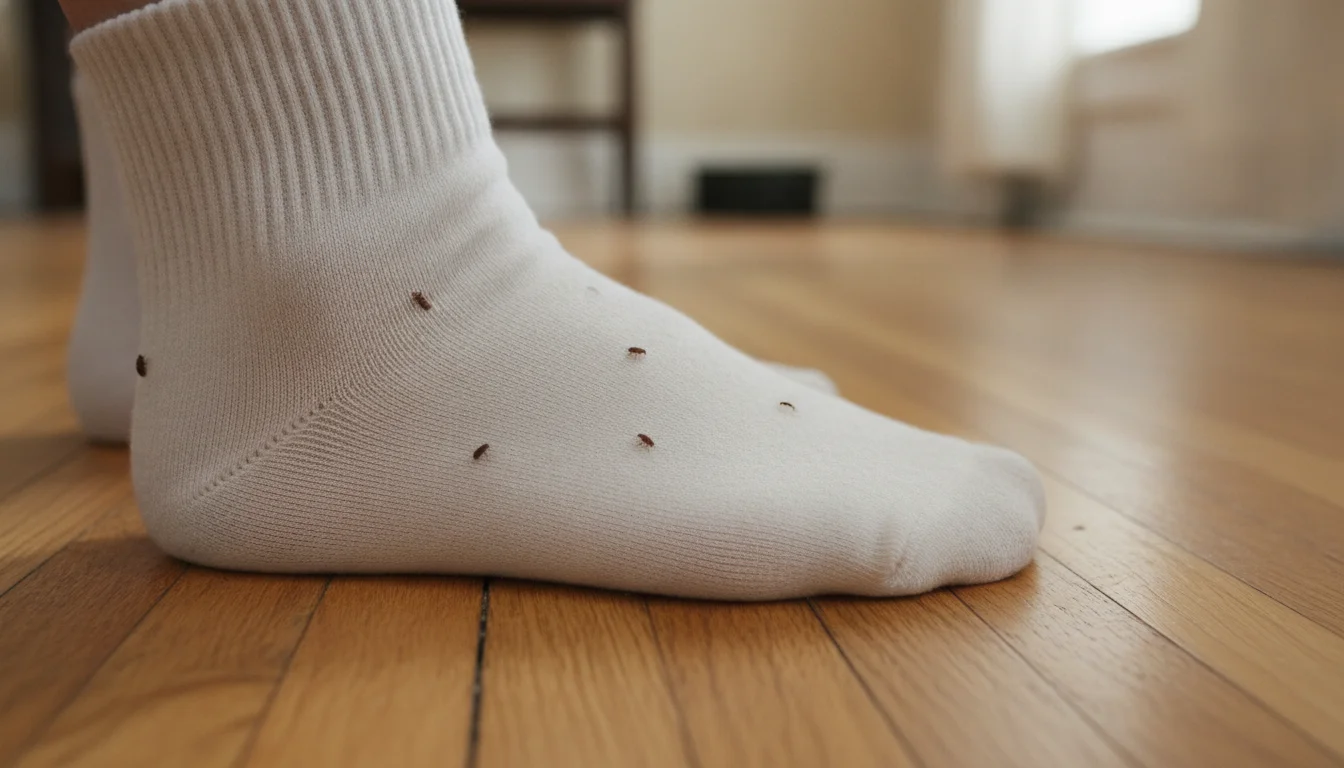
This is the one that stops the bites. In a study of 130 confirmed white-tail bites published in the Medical Journal of Australia in 2003, 63% happened because the spider was trapped between skin and bed sheets, a towel, or clothes left on the floor. Most bites happened indoors, in the evening or at night.
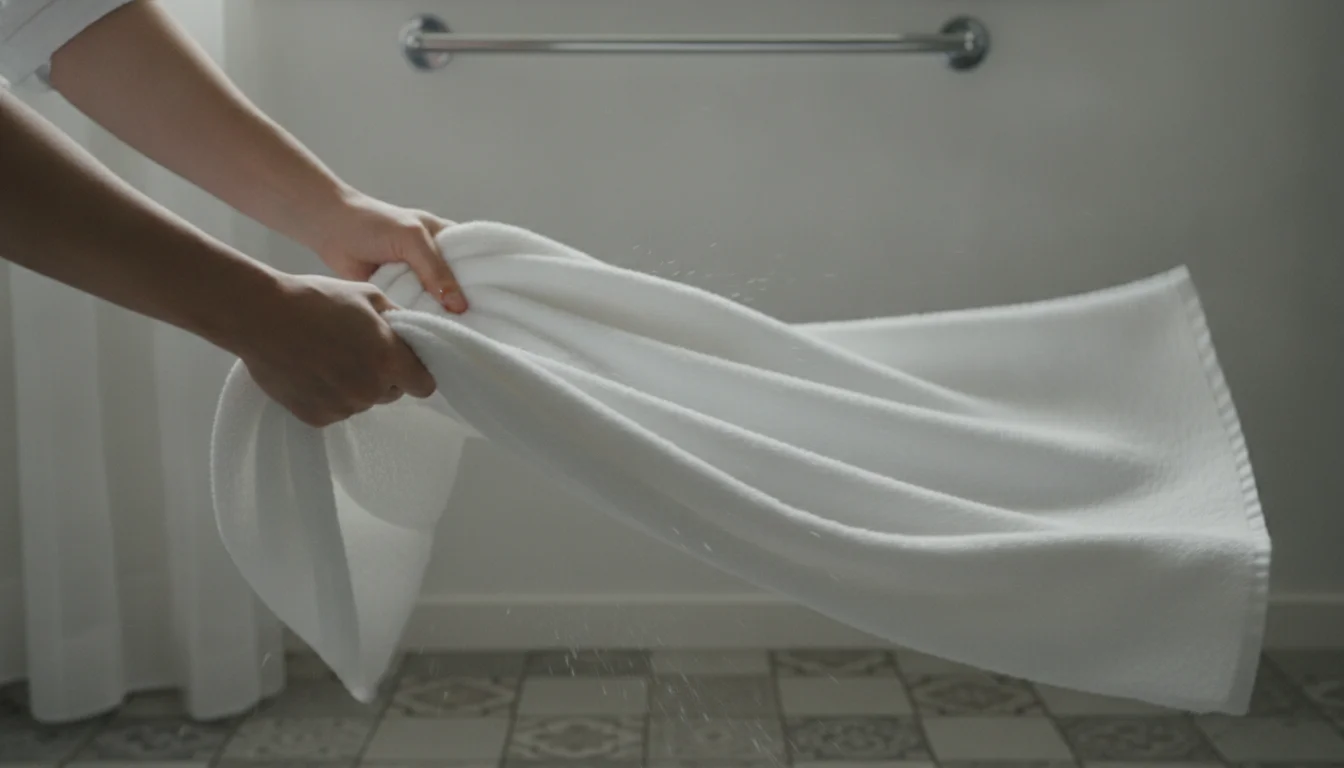
So before you put anything on that’s been lying around, hold it at arm’s length and shake it hard. Knock shoes upside down on the floor before your foot goes in. Turn the sheets back before you get into bed, especially if the bedding trails onto the floor. If something drops out, don’t swat it with your hand.
6. Get things up off the floor
Shaking out is the backstop. The real fix is not leaving the hiding spots in the first place. Clothes in the hamper, towels on the rail, shoes on a rack or in the wardrobe, bedding tucked in rather than draped onto the carpet. Pull out the stuff stored under the bed while you’re at it. A clear floor gives a night hunter nowhere to bed down by morning.
7. Catch the one in front of you
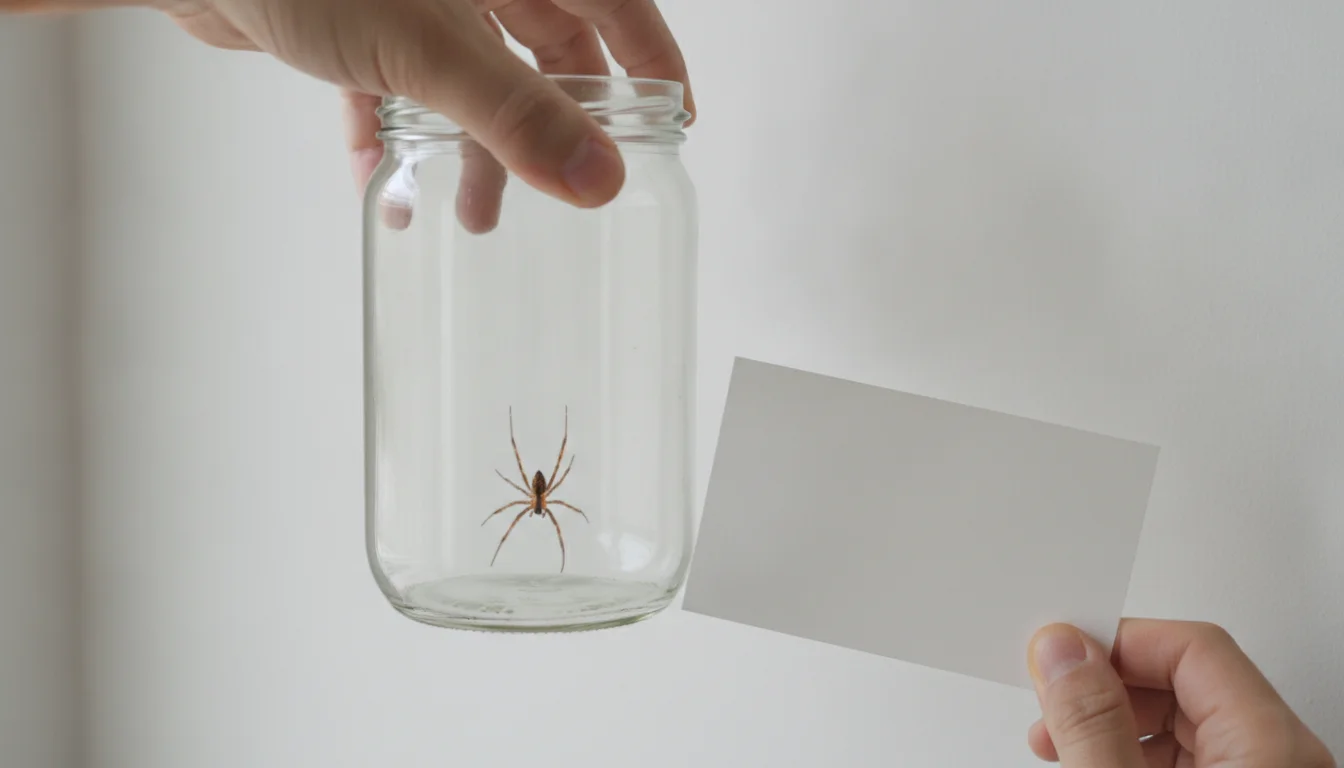
For a single white-tail on the wall, a clear jar and a stiff card are enough. Put the jar over it, slide the card underneath, lift both together and tip it out well away from the house. Don’t grab it with bare fingers: the bite is mechanically strong, and Te Papa says it hurts.
8. Put sticky traps where they walk
White-tails roam floors and walls at night, which is exactly what a glue board catches. Lay cardboard sticky traps flat against the bottom of walls and under furniture, out of reach of kids and pets. They won’t clear a population, but they’ll tell you which rooms the spiders are traveling through.
9. Seal the gaps
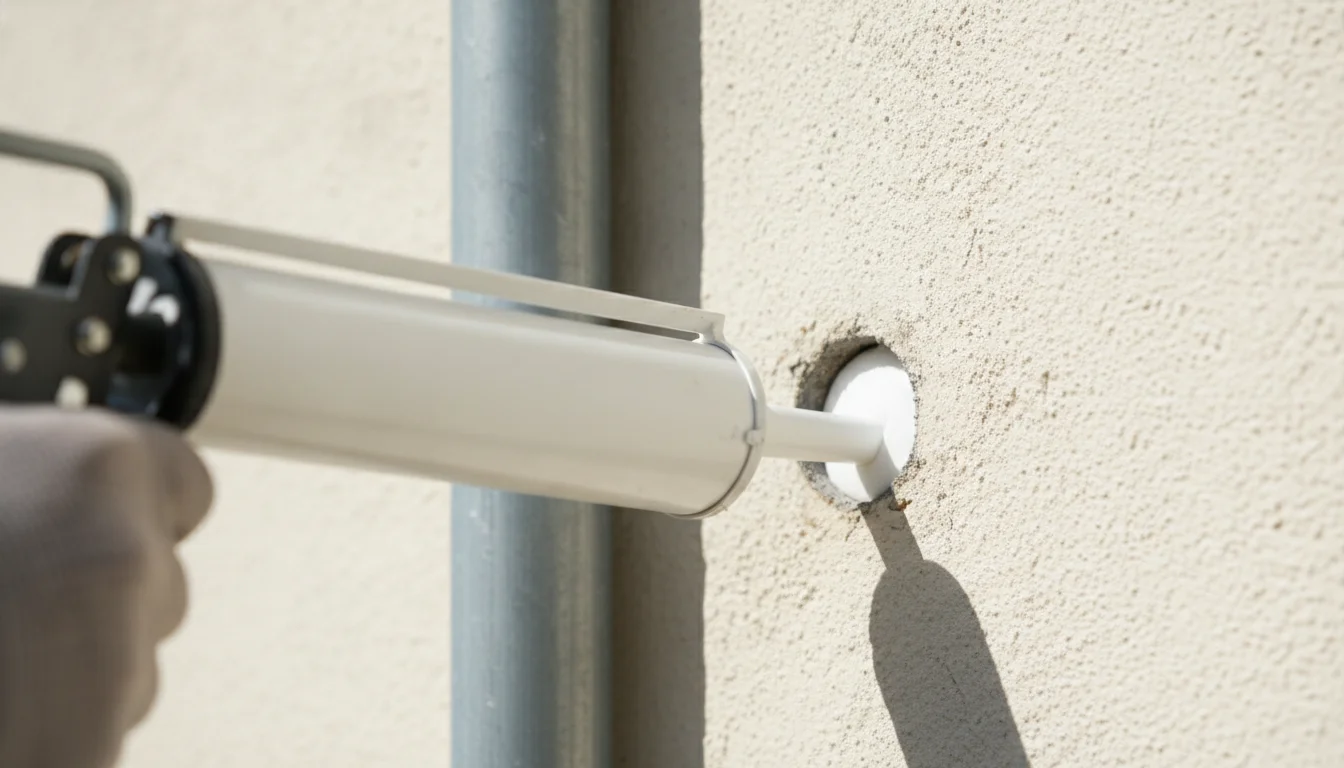
Caulk cracks around doors, window frames and walls, and pay attention to the spots where pipes and cables come through. Make sure doors and windows close tightly. Sealing stops new arrivals; it does nothing about the ones already inside, so keep doing methods 2 and 5.
10. Fix the screens
A hunter that’s out after dark walks straight in through a torn screen or an open window. Patch small holes, replace screens that don’t sit tight in their frames, and keep unscreened windows closed at night.
11. Clear plants and debris away from the walls
Outdoors, white-tails live under bark, logs and leaf litter, and Te Papa notes they’re fond of the loose bark on Australian tree species. Rake debris away from the base of the house, cut shrubs back so they don’t touch the walls, and keep garden beds from running right up against the cladding. A clear strip means fewer spiders waiting next to your gaps.
How to get rid of white-tailed spiders and keep them out
It’s maintenance, not a one-off. Keep clearing webs inside and out whenever they reappear, because every house spider you leave is a reason for a white-tail to visit. Keep the floors clear. Check the seals and screens before the weather turns.
Skip the repellent sprays. A New Zealand pest control firm says peppermint, lavender and eucalyptus oils give at best a temporary fix, and we didn’t find any source showing that a scent keeps white-tails out of a house.
When to call a professional
If you keep seeing several white-tails over a short period after doing the above, you’ve likely got an established population. Te Papa notes they can go several months without feeding, so a few weeks of clean corners won’t starve them out quickly. A pest controller can treat the attic or roof space and wall cavities, where Kiwicare says their tangled-web nests are often found, along with the house-spider population outside.
For a bite,  Healthdirect, Australia’s government health information service, says to wash it with soap and water and put an ice pack wrapped in a clean cloth on it, never straight on the skin. See a doctor if the pain is bad, the bite hasn’t settled within a few hours, or the swelling or itching gets worse after 24 to 48 hours. Call emergency services for signs of a severe allergic reaction: difficult or noisy breathing, a swollen tongue, a tight or swollen throat, or collapse.
Frequently asked questions
Does a white-tailed spider bite cause necrosis?
No. That 2003 study by Geoffrey Isbister and Michael Gray in the  Medical Journal of Australia followed 130 bites where the spider was caught at the time and identified by an expert. There were no necrotic ulcers at all. The authors also note that white-tail venom lacks sphingomyelinase, the component that makes brown recluse venom destroy tissue. Most older reports blamed white-tails without anyone catching the spider. The bite does hurt, and it causes burning, redness, swelling and itching. Te Papa’s rule of thumb: if a white-tail gets blamed for a wound but nobody felt the bite, it was almost certainly something else.
Do white-tails get their venom from eating daddy long-legs?
No. Te Papa calls this one complete rubbish: daddy long-legs venom isn’t dangerous to people, and no spider can take on another species’ venom by eating it. Daddy long-legs often win the fight anyway. They wrap the white-tail in silk from a safe distance and eat it.
What repels white-tailed spiders?
Nothing reliably. Essential oils give a temporary effect at best. What actually makes a house less attractive is fewer spiders to eat and fewer places to hide, which is methods 2 through 6.
Why do I keep finding white-tails in my house?
Because your house is feeding and sheltering them. If you have black or gray house spiders, you have white-tail food. Expect more sightings in summer and fall, and more inside when the weather turns cold. For other species that turn up indoors, see our guides to spiders in general and yellow sac spiders, another night hunter that hides in clothes.