Table of Contents
Knowing how to get rid of a logo from a water bottle comes down to one fact: the print is thinner than whatever it’s sitting on. That’s the whole trick. You’re removing a very thin layer and stopping before you reach the next one. Powder coat, bare stainless and plastic each take that differently, and advice that’s fine for one wrecks another. So find your bottle’s finish first, because the forum threads rarely mention it.
One thing before you start.  Owala’s FreeSip guide says no harsh chemicals or abrasives, and
 Nalgene’s guarantee doesn’t cover cosmetic damage. Everything below is at your own risk, and that’s a fair trade only on a bottle you’d otherwise stop using.
1. Work out what you’re dealing with
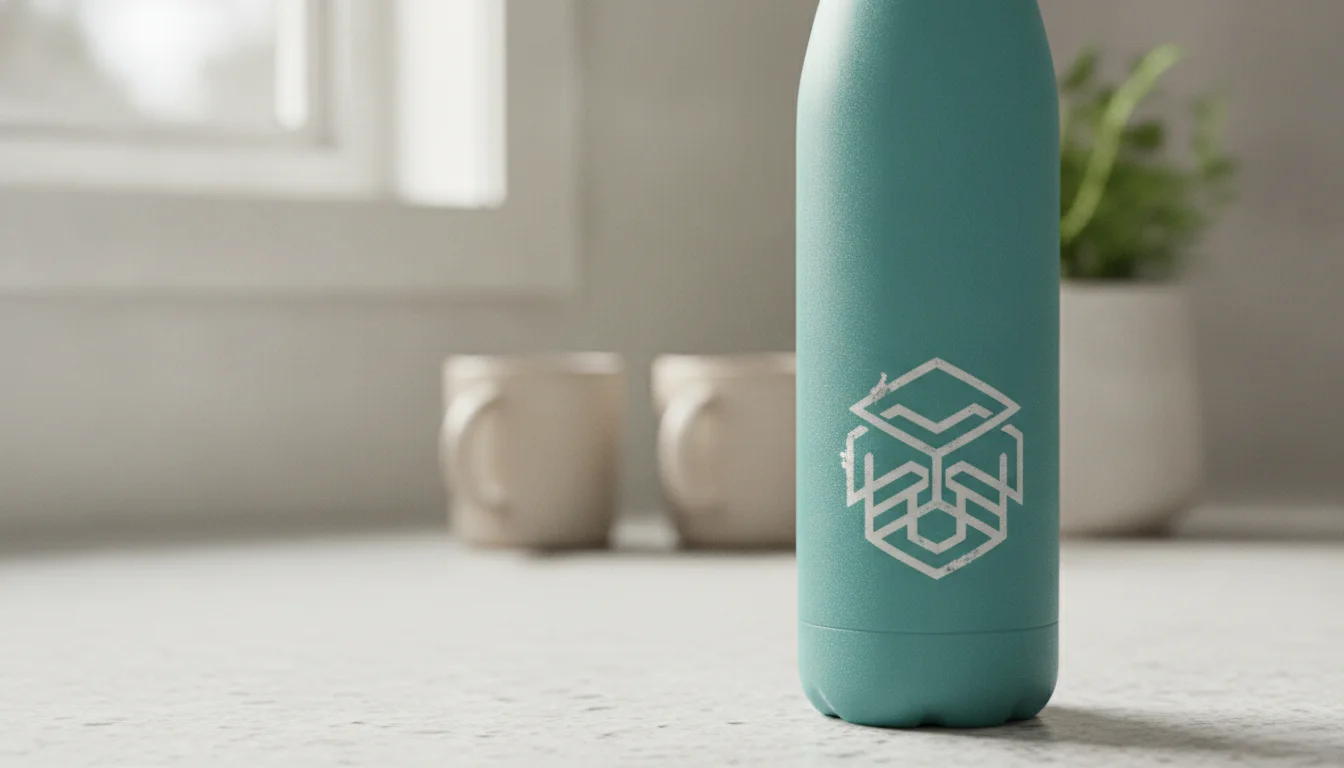
Run a thumbnail over the logo. Printed ink sits on the surface, and you can usually feel its raised edge. Two or more colors point to print. A single silver tone against a colored coating, with no raised edge, may be laser engraving, which  Custom Ink describes as etched into the surface for the life of the vessel. This is a rough check, not proof, so test a hidden spot if you’re unsure. If it is engraved, nothing here takes it off. Skip to method 7.
Now name the base:
- Powder coat: colored, often slightly textured. Acetone first, then melamine or wet sanding.
- Bare stainless: plain metal. Acetone, then a scouring pad.
- Plastic: check the material on the maker’s page or the base of the bottle. Alcohol first. Acetone only if your plastic can take it.
Can’t tell? Treat it as the delicate option.
2. Rub it off with acetone
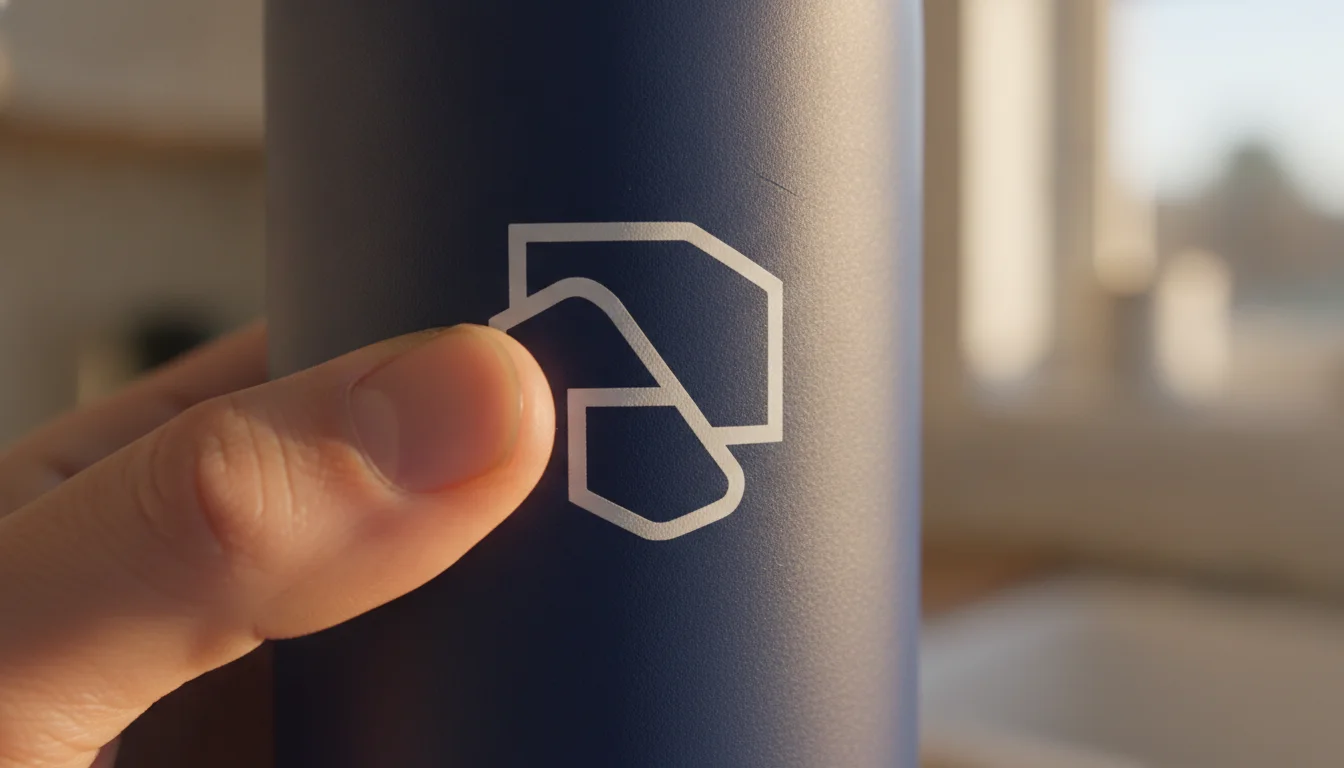
This is our first pick on metal bottles. Take the lid and seal off, because the  Nalgene chemical resistance guide rates silicone gaskets N with pure acetone at 20°C, meaning immediate damage may occur. Use pure acetone or a nail polish remover that lists it on the label. Wet a cotton pad and rub the print in small circles.
 One ThriftyFun reader spent 20 minutes on it with nail polish remover. That’s a single report, not a test, but it tells you it isn’t magic.
Test first.  One Hydro Flask guide says the base carries the same paint as the logo, which makes it a good hidden test spot. A coat that’s gone tacky, or color on the pad that isn’t the logo’s, means stop. That guide reports one owner taking the logo off this way and leaving the coat alone, but it also warns that chemicals can discolor or strip the coat. Wash off the acetone as soon as the logo’s gone so it doesn’t keep working on the coat.
Plastic is where this goes wrong. Polycarbonate and PETG both get an N with pure acetone on the same chart, at 20°C and at 50°C. It rates lab plastics under constant exposure, not a quick wipe, but N is still its worst mark.  Eastman’s own test gives its Tritan copolyester 3 out of 4 for crazing and cracking in acetone, where 4 is worst. That test ran 24 hours under strain and yours is a brief wipe, so it isn’t a death sentence. It’s a reason to keep contact short and never soak.
Acetone is flammable, with a  flash point of 0°F (-18°C). Work outside or by an open window, away from flame. It also
 dries and cracks skin, so gloves are a good idea.
3. Try rubbing alcohol on plastic
On polyethylene and polypropylene at 20°C, Nalgene’s chart gives pure isopropyl alcohol its top rating, E, where pure acetone gets G or F. Eastman sells Tritan on its resistance to alcohol. PETG scores F with alcohol at 20°C, so keep it brief there. Hold a cloth dampened with alcohol on the print for about 5 minutes, then wipe.
One ThriftyFun reader paired it with a Magic Eraser on dip and cottage cheese tubs, which is the next method.
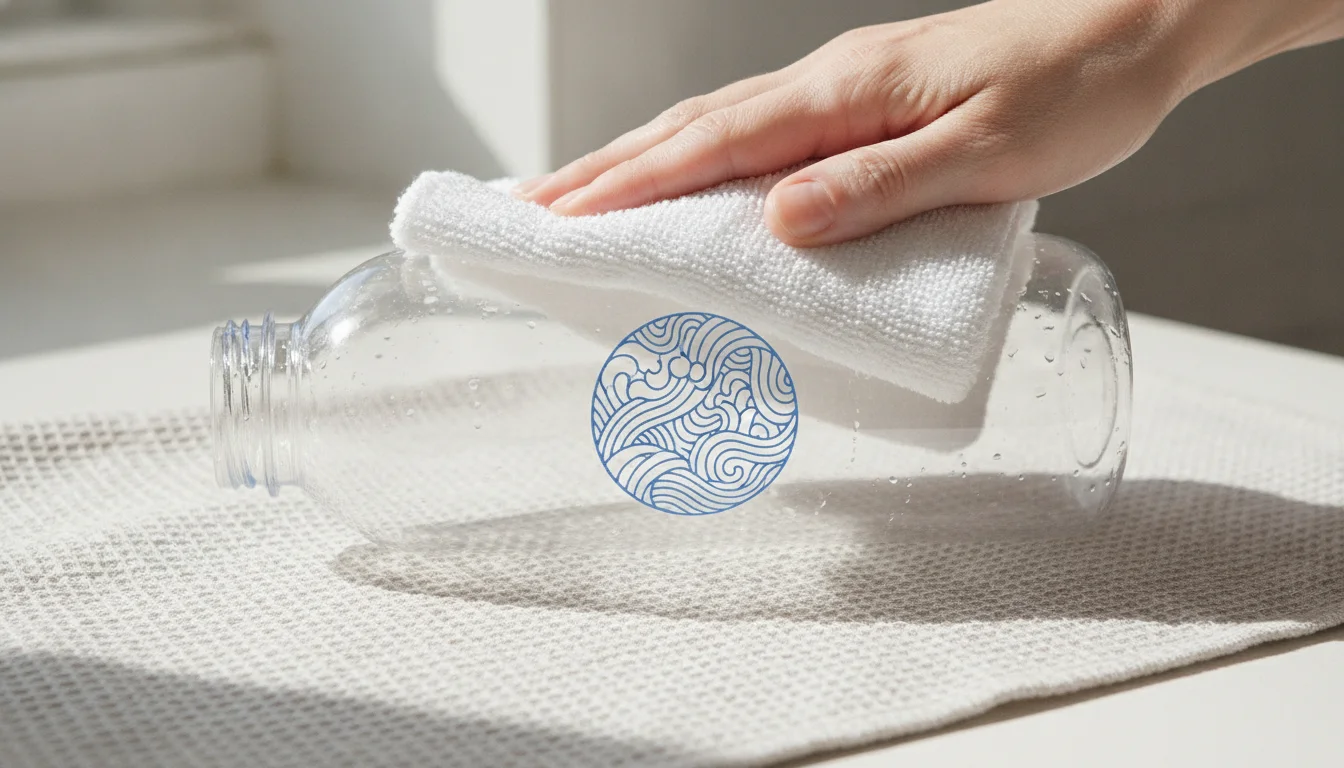
4. Follow up with a melamine sponge
A magic eraser is a very fine abrasive, so it wears the print away along with a little of whatever’s below. Wet it, squeeze it until it’s damp, and rub only the logo. The Hydro Flask guide says it needs some force and some time on powder coat. On a clear plastic yo-yo cap,  one hobbyist paired it with 99% isopropyl alcohol and reported the ink off in seconds.
Check as you go. Hard rubbing can polish a textured coating into a shiny patch, and no amount of cleaning will undo it.
5. Wet-sand what’s left
For ink that ignores solvents, the Hydro Flask guide uses wet paper. Soak 2000 or 3000 grit paper in water, wet the logo, and rub with almost no pressure. When the paper stops gliding, dip it again. You’re trying to take off the logo and as little coat as you can, so stop the moment it’s gone.
Anything coarser will scratch the bottle badly. This route is the most likely to leave a visible trace. Let the area dry fully before you judge it, because a wet surface hides a faint mark.
6. Scour bare steel with a pad
Only for uncoated stainless. If there’s color on the bottle, a pad goes straight through it. Wet a nonmetallic pad such as a Scotch-Brite and scrub the mark. The metal won’t care, but the shine will change. If it ends up smeary, the stainless steel streaks guide sorts that out.
Skip steel wool.  The stainless industry’s association warns that wool used on carbon steel leaves particles that later rust.
7. Cover it with a vinyl sticker
The only option for an engraved logo, and the sensible one for a coating you won’t risk. Wash the area, let it dry completely, and press on a vinyl sticker that covers the whole mark. Vinyl can be hand washed and comes off easily when you change your mind, and if it leaves anything tacky, treat it like tape residue. If there’s a second logo near the base, it’ll need its own.
Acrylic paint over the mark is the bigger version of the same idea. It’s more work, and if you’re left with a half-used pot, here’s how to get rid of old paint.
8. Wash off whatever you used
Every route ends here. Wash the outside with warm, soapy water and a cloth, then rinse it and dry it. Wash the inside, lid and seal too if any acetone or alcohol got near them. Keep solvents away from the rim and spout while you work, because that’s the part in your mouth.
A wash doesn’t prove the bottle’s fit to drink from, and neither does a clean smell. Nothing we read tests that. If plastic has gone cloudy, tacky or finely cracked where you rubbed, that’s damage, so ask the maker about it.
FAQ: how to get rid of a logo from a water bottle
How do I remove a printed logo from metal?
Acetone on a cotton pad, in small circles. On bare stainless you can follow with a scouring pad. On powder coat, use a melamine sponge or 2000 grit wet paper instead.
Does rubbing alcohol remove logos?
It can, though the reports we read pair it with a melamine sponge. On polyethylene and polypropylene at 20°C, Nalgene’s chart rates pure alcohol gentler than pure acetone.
How can I remove a logo from a plastic bottle?
Find out the plastic first. Start with rubbing alcohol. Use acetone only in brief contact, and not at all on polycarbonate or PETG. Never soak it.
Is a bottle safe to drink from after using acetone?
We can’t clear it. We found no maker’s guidance that approves acetone on a bottle, and no test of drinkware after solvent cleaning. Keep it on the outside, away from the rim and spout, and ask the maker if you need a firm answer.