Table of Contents
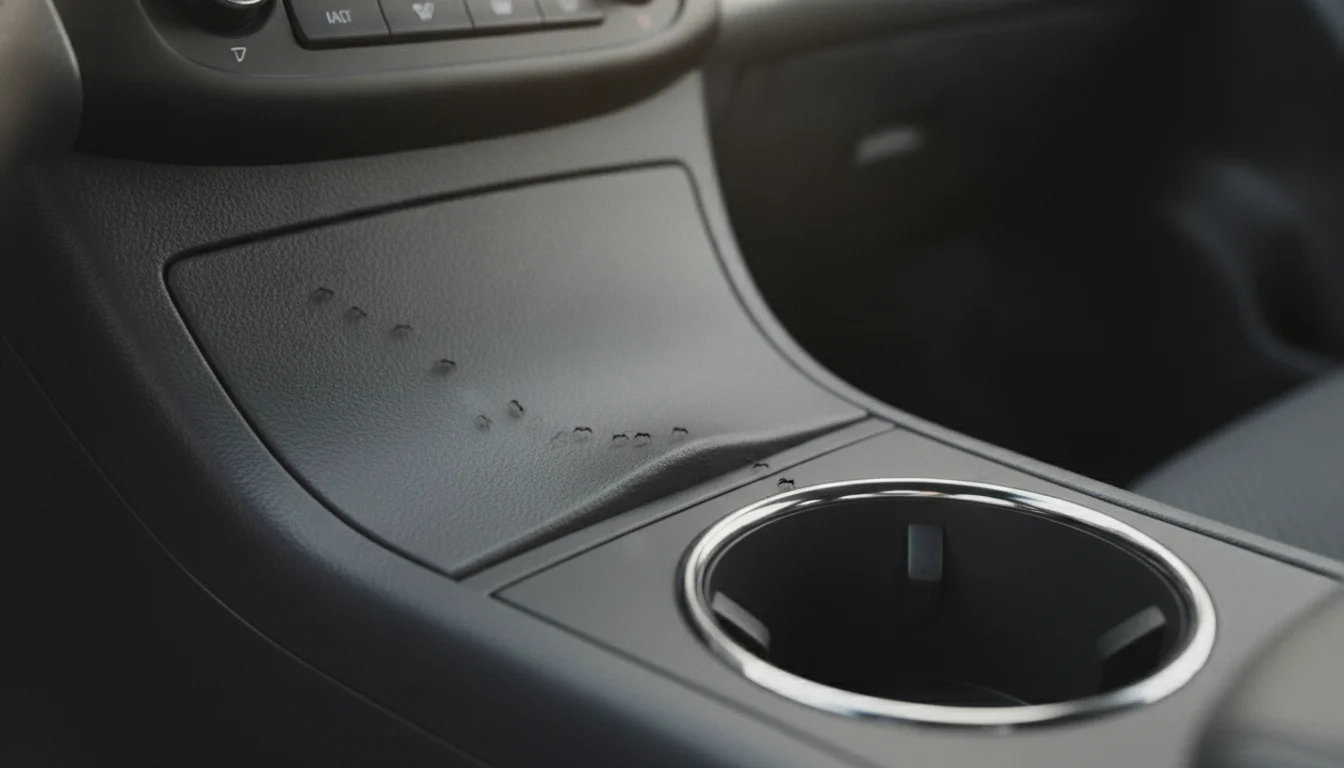
You cleaned the car. The ants are still on the dashboard. That’s the first thing to know about how to get rid of ants in car cabins: chances are they don’t live in the car. They live where you park it.
Orkin calls it  an invasion, not an infestation, because ants are unlikely to set up a nest in a car. So start on the ground. Trace the trail to the nest, bait it until they stop, then clean the car so there’s nothing left to visit.
What the car is telling you
| What you see | Start with |
|---|---|
| Ants once, after parking somewhere new | Clean the car (steps 5 to 9). Orkin says ants picked up that way aren’t likely to stay. |
| Ants every morning at home | Trace the nest at that spot (step 1), then bait it (step 2). |
| Ants only in a wheel well or under the hood | Look for packed dirt (step 9), then look under the hood (step 10). |
| Still there after a few nights parked elsewhere | Check your other regular spot (step 1), then your bags and any missed food (step 5). |
It’s not proof, just where to look first.
1. Trace the trail to the nest
Do this before you wash anything. Wiping and hosing break the trail you’re about to follow.
Go out when it’s cool.  Utah State University Extension says you can find pavement ants foraging day or night, but most often in cooler conditions. Start at the tires and follow the line away from the car. Their trails usually run along edges, so check the curb, the wall and the seam where concrete meets dirt, and pull the grass and mulch back from the pavement to see what’s under it. Don’t stop at the next space, either: trails over 30 feet (9 m) have been recorded.
You’re looking for small, volcano-shaped mounds of dug-out dirt, especially in cracked pavement near a lawn. Mark each one. No line to follow? Some trails run below ground, so check the cracks anyway. Other ants nest in mulch and leaf litter, so look there too, at home and at work.
Bare asphalt doesn’t rule it out. One Reddit owner parked on it with no trees or grass nearby and still found an ant on the dash every few weeks.
2. Bait the nest until they stop feeding
Workers carry bait home, and  UC IPM says the whole colony, queens included, can be killed that way. Put it near the trail and nest openings you marked, at the nest end and not beside the car. Pick a station labeled for ants and outdoor use, follow the label, and keep it away from kids and pets.
Then keep it full. Utah State says pavement ant baiting commonly fails because the ants don’t get enough. Check the station often and top it up or replace it, as the label allows, until they stop feeding.
Ignoring it? Try another spot on the trail or a different bait. UC IPM’s longer guide suggests offering a little of each kind to see which they take. Colorado State Extension says  pavement ants usually favor greasy food, and that bait turns unattractive when it dries out.
Don’t spray near it. UC IPM says it takes 5 to 10 days to see fewer ants, and it may take several weeks or more to finish.
Keep bait out of the car. The  Maxforce FC gel label (EPA Reg. 432-1264) lists buildings and outdoor spots, and no vehicles. One owner tried gel on the dash anyway. The ants swarmed it on day one, and it didn’t fix the problem.
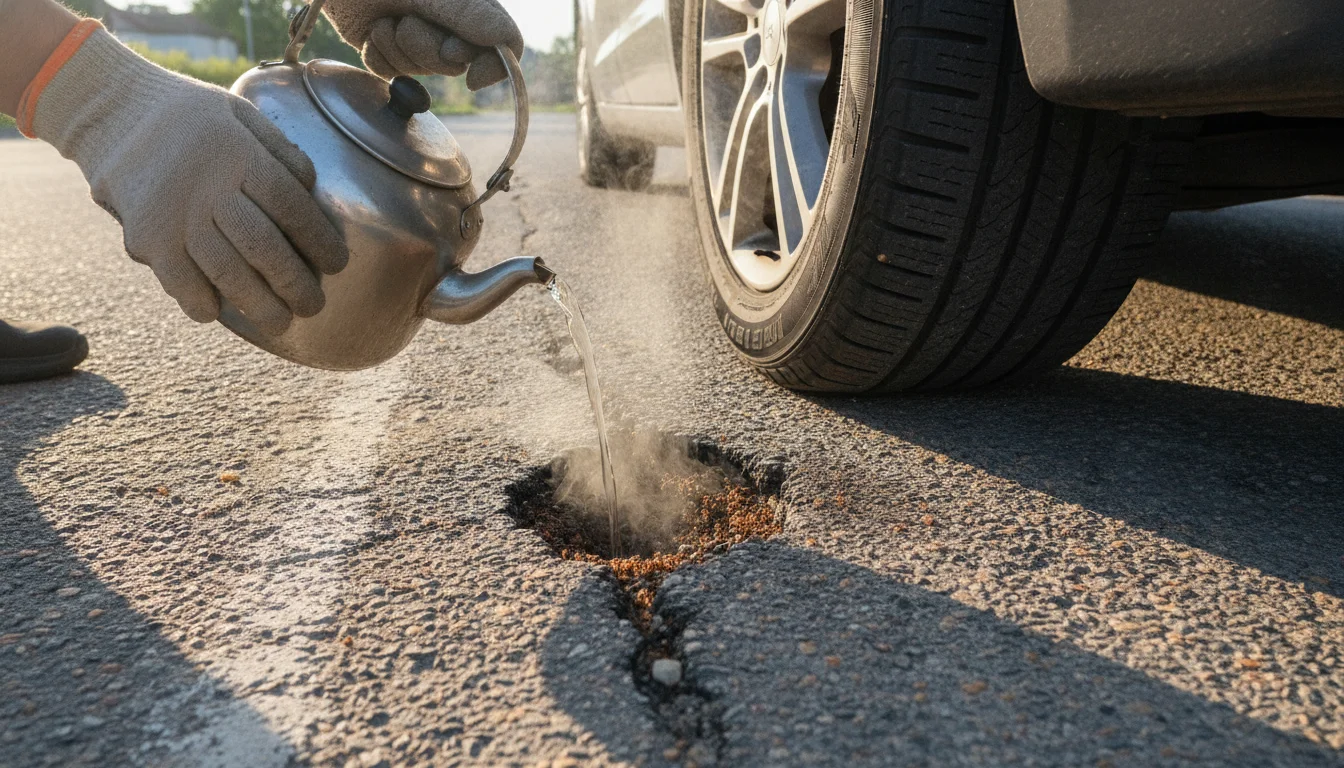
3. Soak the nest with hot, soapy water
Bait ignored, nest in plain sight?  Penn State Extension says outdoor nests can be destroyed, or at least discouraged, by digging them up or soaking them with hot, soapy water. In pavement, that means soaking. (Nest in a lawn? See ants in the garden.)
It’s the backup for a reason. Colorado State says nests can run a few feet deep, and that ants disturbed at the entrance will often open a new one elsewhere. So trace again afterward.
 Rowland says red imported fire ants thrive in parking areas, and their sting is painful. Leave those to a pro.
4. Move the car to a different parking spot
Park somewhere else for a few days, away from trees, grass and mulch, and watch the cabin. If activity drops, the old spot was probably the source. Plunkett’s notes ants can also drop onto the car from a tree.
Assigned parking? Then treat the spot (steps 2 and 3). A car cover isn’t a fix: one owner bought one and the ants still turned up.
5. Clear all food and trash out of the car
Wrappers, cans, a dropped fry, the sticky ring in a cup holder. Get it all out, and empty the bags and caddies that live on the seats.
6. Vacuum the seats, seat tracks and crevices
Hit the seat tracks, door pockets, cup holders and center console, where Rowland says ants turn up most. If there’s a child car seat, take it out and vacuum underneath, then refit it as its manual says. Vacuum up any ants you see and throw the bag out, as Penn State advises. Empty a canister outside.
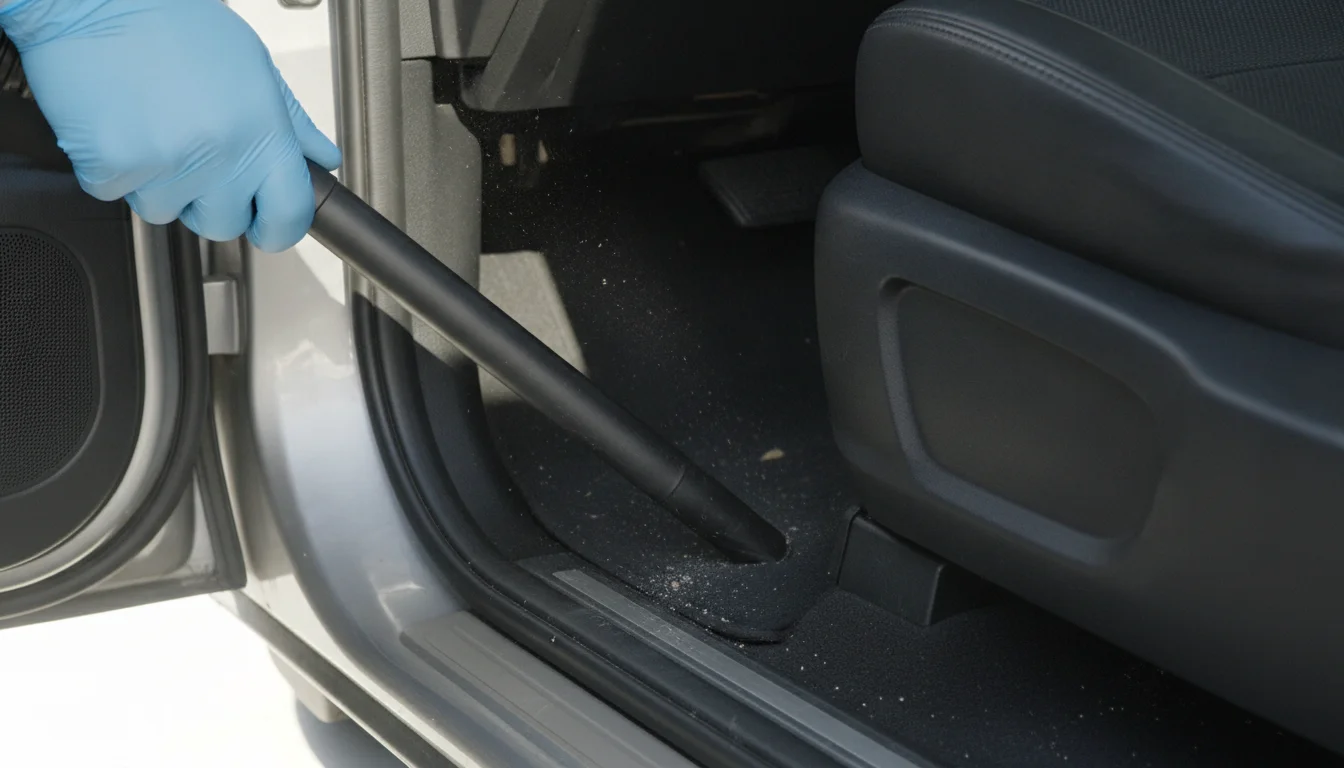
7. Wash the floor mats and trunk liner
Rubber mats and liners get mild soap and a hose. Carpeted mats get carpet cleaner, a scrub and a vacuum. Dry everything before it goes back in.
8. Wipe the scent trails
Ants follow chemical trails that outlast the crumbs. Wipe the dashboard, console, cup holders and door panels with soapy water or a mix of vinegar and water, as Penn State advises.
Go easy on child seats.  Safe in the Seat warns that the wrong cleaner can damage the fabric and the structure: use only what the manufacturer allows, with no essential oils and no ant killers.
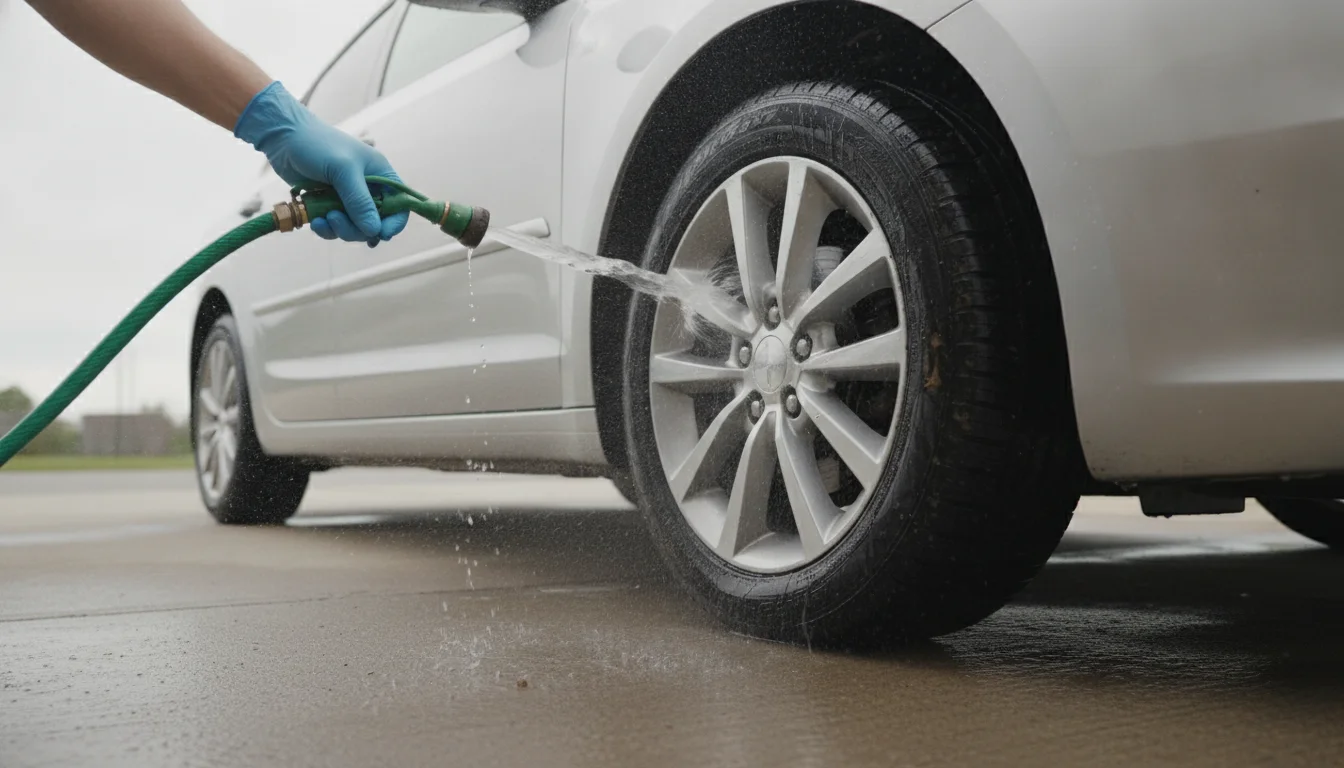
9. Wash the wheel wells and undercarriage
The tires are the bridge from the ground to the car. Hose them, the wheel wells and the underside, or use a car wash that cleans the underbody.
Look underneath while you’re down there. An r/pestcontrol commenter told of a driver who’d apparently parked on an ant bed at a county fair and scooped some of it up: there were handfuls of dirt under the car. Wash off any packed soil.
It won’t always end there. One Reddit owner’s mechanic washed and sprayed a wheel well. A week later, ants were back on the dash.
10. Look under the hood, then leave the cleaning to a pro
With the engine off and cold, open the hood and look, hands out. Check along the edges, the cowl below the windshield, and around the battery tray for a moving line of ants or packed soil and leaves. (Droppings or chewed wires? That’s rodents.)
Found ants? Take it to a mechanic or detailer. Don’t wash the bay yourself.  Motorist.org says too much water or pressure can push moisture past seals into connectors, sensors and fuse boxes, and you end up with corrosion, misfires or a car that won’t start. Keep bait and spray out too: the Maxforce label rules out electrical equipment where there’s a shock hazard.
What causes ants in a car
Food first. Once one forager finds crumbs or a spill, it leaves a trail the rest follow. Then location: a car parked next to a nest, under trees, or by mulch gets explored as part of normal foraging.
Rowland says they get in around weather stripping, door frames and window seals. And sometimes you carry them in, in a grocery bag, backpack or cardboard box that sat on the ground.
How to prevent ants in your car
Don’t eat in the car, or toss the wrappers the same day. Wipe spills right away. Keep off the grass when you can. If the ants have moved on to the house, see ants in the house or the full ants guide.
When to call a professional
Call a pest control company if bait you’ve kept stocked hasn’t thinned the trail after UC IPM’s 5 to 10 days, and moving or switching it didn’t either. Call sooner if you can’t find the nest, or if it’s on property you can’t treat.
Frequently asked questions
Can ants live in your car?
Rarely. Orkin says it’s unlikely they’d establish a nest in one, and Safe in the Seat calls it pretty rare in a car you use regularly. A car that sits for a long time is the exception.
What is the best ant killer spray for cars?
None, and no bug bombs either. Penn State says to avoid sprays, bombs and foggers indoors because they irritate lungs and leave residue, and Plunkett’s says  over-the-counter ant spray can be dangerous in a car’s enclosed space.
What smell do ants hate?
Peppermint gets the press, but don’t count on it. UC IPM says products made with plant oils like peppermint, clove and orange kill well on contact but leave little behind to stop the next ants. One Reddit owner sprayed peppermint oil all over the car and still had ants.
What time of year are ants most active?
The warmer months, when Colorado State says workers forage constantly. It varies by ant: Utah State says pavement ants are worst indoors in spring and early summer. UC IPM says bait works best in late winter and early spring, while ant numbers are just starting to grow.
How to get rid of ants permanently?
From the car, usually by treating the nest and keeping food out. From the ground, you won’t: UC IPM calls getting rid of every ant outdoors unrealistic. Vinegar won’t do it either. It breaks the scent trail and leaves the colony alone.