Table of Contents
Most guides on how to get rid of hard water stains on shower glass hand you a bottle of vinegar and wish you luck. Sometimes that works. Sometimes the haze is still there after you’ve rinsed, looking smug.
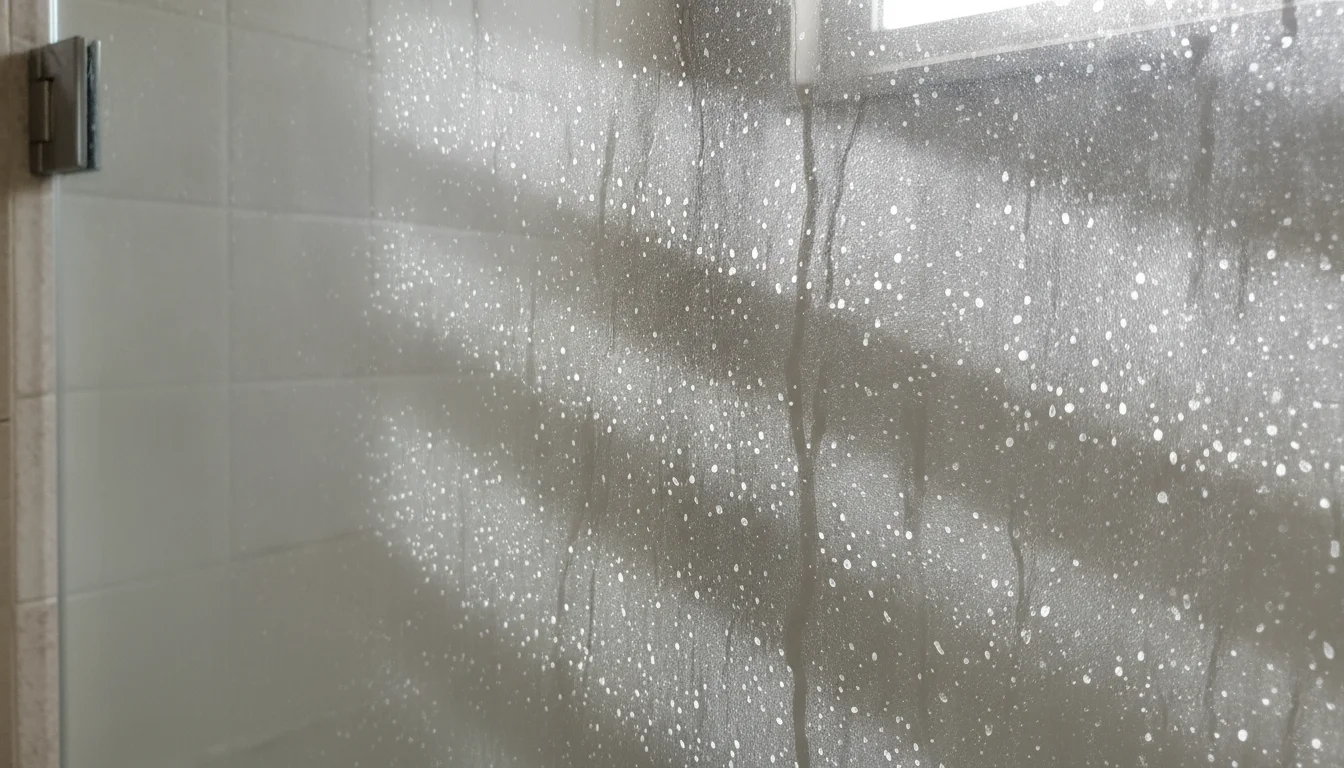
Cloudy glass is two problems in one costume. Film (limescale, soap scum or both) sits on the glass and comes off. Etching is corrosion in the glass, and no cleaner on earth fills a pit. Work out which you’ve got first.
A factory coating or natural stone nearby changes what you can use, so both come up below. If scale is all over the house, not only here, hard water issues covers the rest.
1. Test whether the glass is filmed or etched
Pick one hand-sized patch of the worst haze and feel it dry. Chalky or gritty? Mineral. Greasy, or a film you can scrape up with a fingernail? Soap scum. Smooth but cloudy? Suspicious.
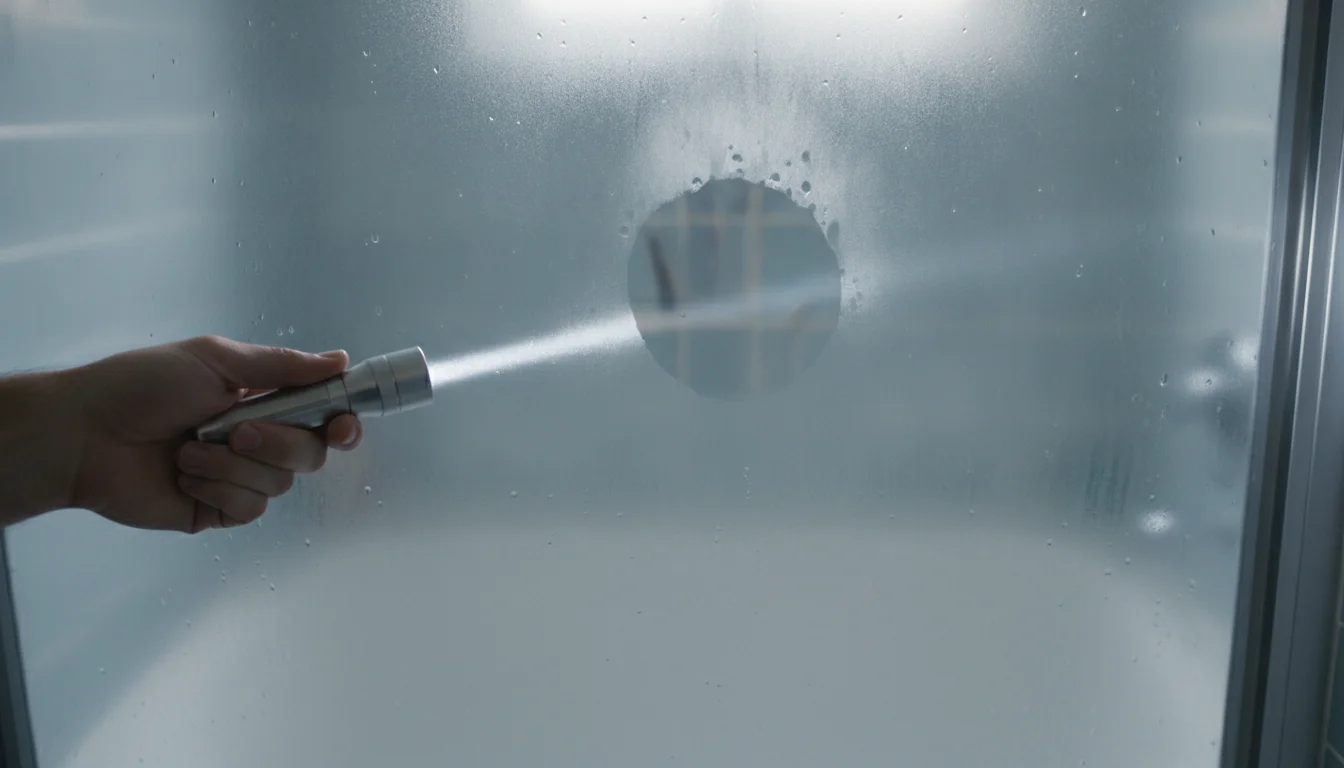
Don’t convict on touch alone, though. Restoration guides contradict each other (some say etched glass feels smooth, others rough). So clean the patch. Dish soap first, rinse, then a paper towel soaked in white vinegar held on it for 15 minutes. Rinse, dry completely, and look across it with a flashlight held low to one side.
- Clearer than the glass around it: film. Do the whole panel with methods 2 to 6.
- Still gritty: there’s more scale to go. Repeat before you judge.
- Smooth, dry and just as hazy: probably etched. Mist that patch with plain water. If the haze fades while it’s wet and returns as it dries, skip to method 7 (or 9 if it’s coated).
The mist trick works because water fills the microscopic pits. If there’s stone below the patch, skip the vinegar and use the paste in method 4.
Now find out about coatings. On a clean patch, tight beads suggest one; a flat sheet means none, or one that’s worn off. Your paperwork or installer settles it.
2. Wipe off the soap film first
Soap scum is what you get when bar soap meets the minerals in hard water: a waxy layer that can seal the limescale underneath. Vinegar struggles to get through it, which is half the reason vinegar “doesn’t work.”
About 1 teaspoon (5 ml) of dish soap per quart (1 L) of warm water, on a soft cloth or sponge. Wash the whole panel, rinse, dry. If the glass comes up clear, congratulations, you never had a limescale problem.
3. Hold diluted vinegar on the glass
Vinegar dissolves limescale. It also runs off a vertical door before it’s done anything, so give it something to cling to. Mix equal parts white vinegar and water, soak paper towels, and press them flat against the glass. Re-wet them every 15 minutes or so; a badly crusted door can take an hour or more. Wipe with a soft sponge, rinse with warm water and dry.
On coated glass, the care sheets for Cardinal’s HydroClear and AGC’s Luxclear Protect both allow a 50/50 vinegar mix. Other makers differ, so yours gets the final word.
Keep it off marble, limestone and travertine. Acid etches those. With stone in the shower, go to method 4. Never use vinegar with bleach, or on anything that’s just had bleach on it. And don’t add baking soda to it: they neutralize each other, and all you keep is the fizz.
4. Scrub with baking soda paste
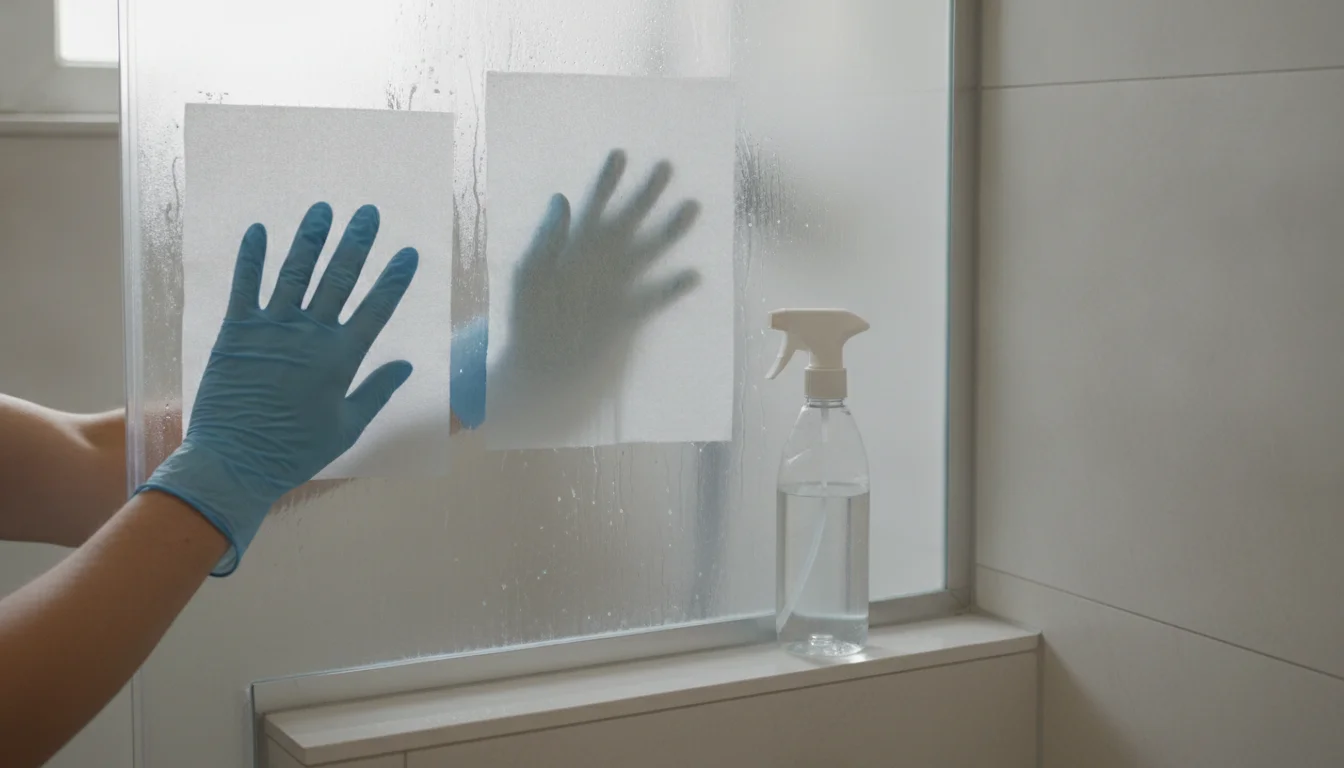
This is the acid-free route, and it stays where you put it. Mix 1/2 cup (120 ml) of baking soda, 2 tablespoons (30 ml) of dish soap and a splash of water into a thick paste. Spread it on, leave it 10 minutes, and mist it if it starts to dry. Work it in circles with a non-scratch sponge, then rinse until the water runs clear, because leftover baking soda dries to its own white film.
A Tom’s Guide writer who’d given up on vinegar got a clear door this way in about 10 minutes. Stone nearby? Rinse any drips off it promptly. For soap scum on the stone itself, the Natural Stone Institute says to use a non-acidic soap scum remover.
5. Rub gently with a melamine sponge
A magic eraser is very fine sandpaper pretending to be a sponge. Wet it, squeeze it out, rub lightly and stop when the mark lifts. It’s good on soap film and light spots, and Cardinal and AGC both permit it on their coated glass (check your own maker, since one shower dealer says never). It can leave a dull residue, which glass cleaner takes off.
Those same two care sheets ban abrasive cleaners such as Ajax, Comet and Bar Keepers Friend, steel wool, razor blades, CLR and Lime-A-Way. So much for the internet’s favorite tips.
Skip the razor on uncoated glass too. Shower glass is tempered, and one window-cleaning trade guide advises against blades on tempered glass because it scratches so easily.
6. Dissolve limescale with a descaler
For old crust on plain, uncoated glass, with no stone in range. Test a corner, put it on the glass with a cloth, and leave it only as long as the label says, usually no more than 2 minutes. Rinse well with cold water. Thick scale gets a second round, not a longer one.
Keep it off the frame, track and hinges, because strong acids can damage finishes. Gloves on, fan on, no bleach anywhere near it. And never a cleaner containing hydrofluoric acid. It attacks glass.
Two honest rounds with no change? Back to method 1.
7. Polish etched glass with cerium oxide
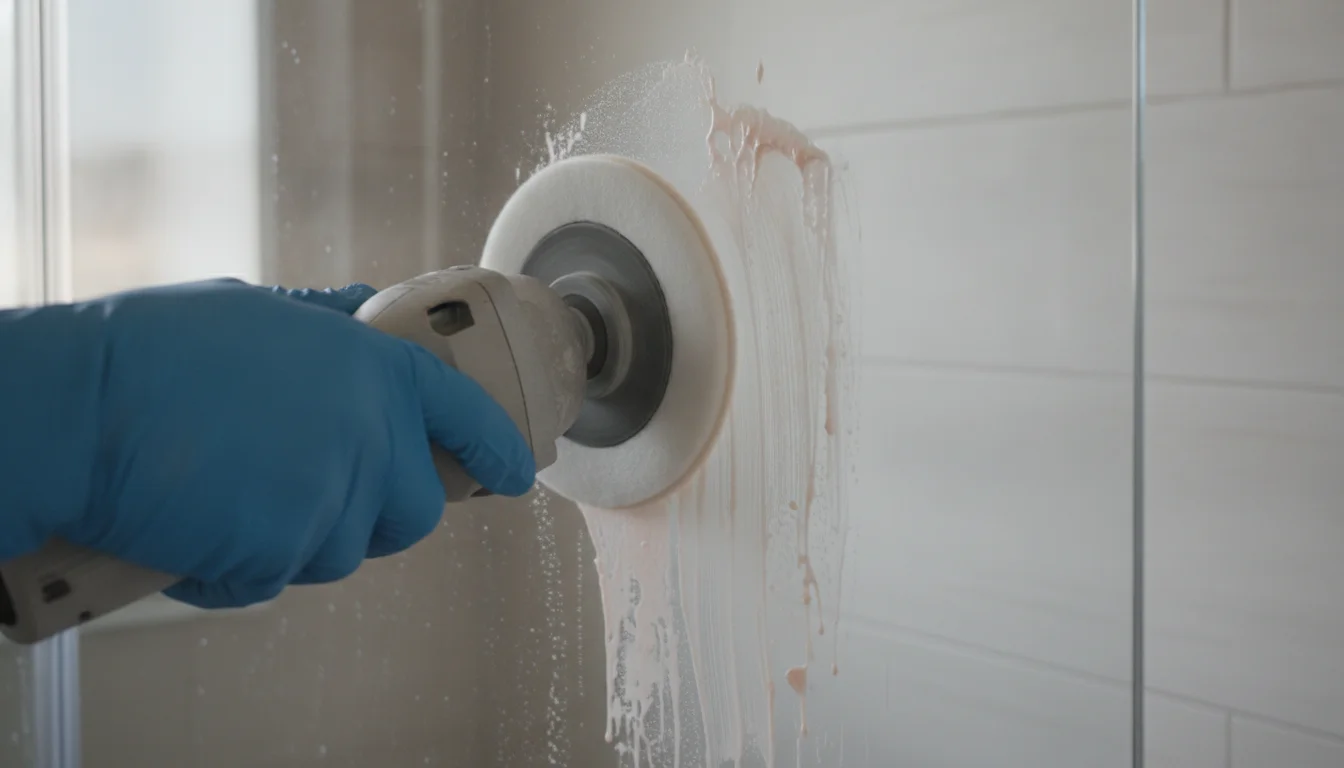
This takes etching out by taking the damaged surface off. It’s also a miserable job. Clean the panel to bare glass first, since grit under the pad scratches. Mix about 2 parts distilled water to 1 part cerium oxide powder and work it with a felt pad on a variable-speed polisher. Keep the pad flat, wet and moving over an area much bigger than the haze. Grind one spot and you wear in a dip that bends the view like a funhouse mirror.
Heat is the danger: uneven heating can shatter tempered glass. If the panel’s uncomfortable to touch, stop. Wear a dust mask, gloves and eye protection, and keep water away from the tool. Never start on chipped glass, and never polish a coating (the two care sheets ban cerium oxide outright).
Try a low corner first. An aquarium keeper spent a full workday clearing moderate haze from one 36 by 18 inch (91 by 46 cm) panel. A homeowner on a UK building forum gave a shower panel a dozen passes and “only reduced it slightly.” Hand rubbing? Don’t bother: a polish supplier’s guide says the process needs friction heat.
8. Coat the glass with a water repellent
If the etching’s faint, a windshield repellent such as Rain-X is the cheap thing to try before the polisher (a tip from that same forum). It may make the haze less obvious. It won’t fix it.
On clean, bone-dry glass, buff a few drops on with a microfiber cloth in small circles, wait a few minutes and wipe off the excess. Keep it off the floor. Redo it when water stops beading: one cleaning guide says about monthly. One shower dealer calls sealing essential after polishing, because fresh glass is more porous. Factory-coated glass? Ask the maker first, because a second coating may not stick.
9. Replace the etched panel
Replace it when the test polish barely moves the haze, when a fingernail catches in a scratch, or when there’s a chip near a hinge. One Straight Dope poster threw CLR, Lime-A-Way, vinegar, muriatic acid and an orbital buffer at a door before admitting it was ruined and buying another.
Price the glass alone before anyone sells you a new enclosure. Tempered glass can’t be cut or trimmed afterward, so the measurements have to be right first time, and walls that aren’t plumb usually mean custom. Ask for a factory coating. Keep the care sheet.
10. Wipe the glass dry after every shower
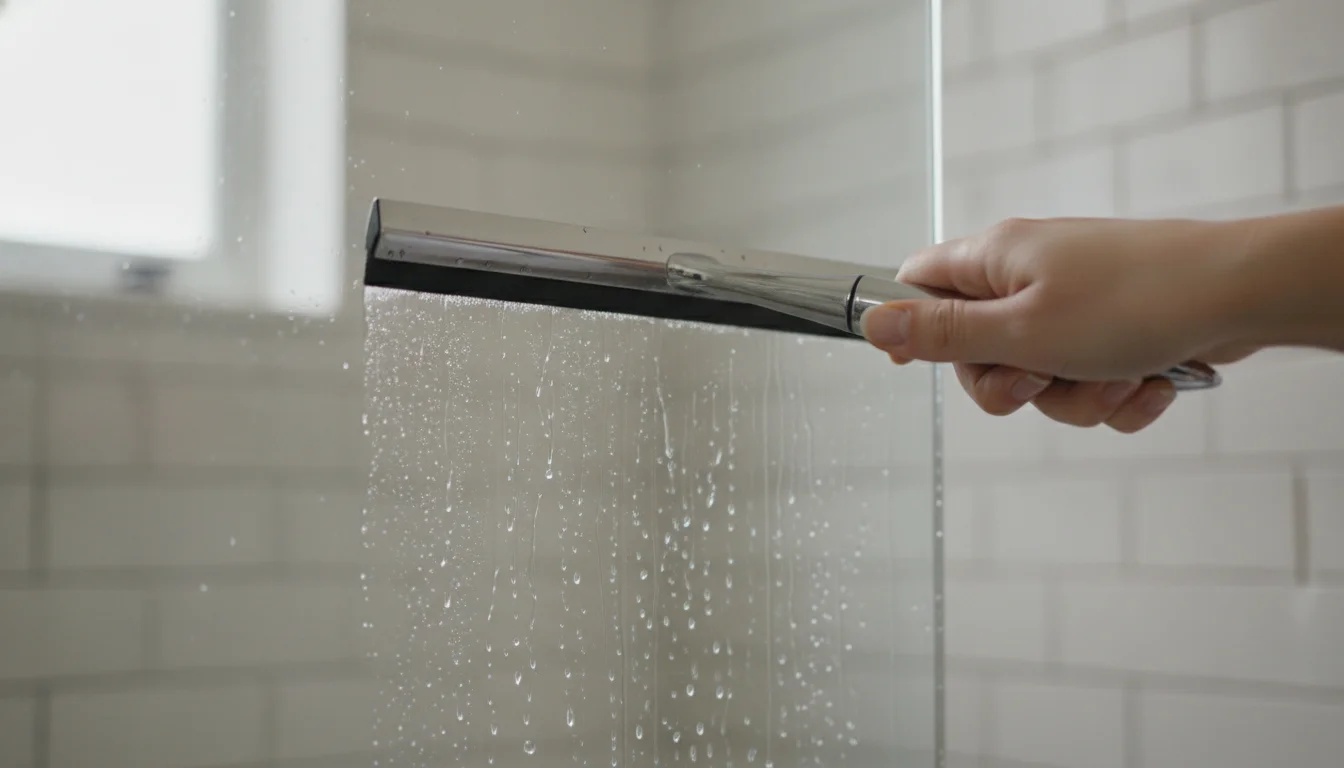
Water that never dries on the glass can’t leave anything behind. Squeegee top to bottom while it’s wet (about 30 seconds), then dry the edges and the bottom, where drips collect. Textured glass laughs at squeegees, so use an old towel. Leave the door open after. Damp that lingers is also how you get mold in the bathroom.
FAQ
Can hard water stains be removed from shower glass?
If they’re on the surface, yes. If the glass is etched, cleaning won’t touch it. Polishing might, and a new panel will. The patch test in method 1 tells you which.
How do you remove calcified hard water stains?
Contact time. Soap film off first, then vinegar-soaked paper towels kept wet for an hour or more, then a descaler if the glass is uncoated and there’s no stone nearby. Don’t chip at it.
Does CLR damage glass shower doors?
Not plain, untreated glass, used by the label. It’s a different story on coatings, where Cardinal and AGC both ban it, and on metal trim and natural stone. The same caution goes for stains on the bathtub next to it: check that finish before anything drips.
What removes hard limescale from shower glass next to marble?
Not acid. Use the dish soap and baking soda paste, and a non-scratch sponge. If that fails, ask a glass company before any acid goes near the marble.