Table of Contents
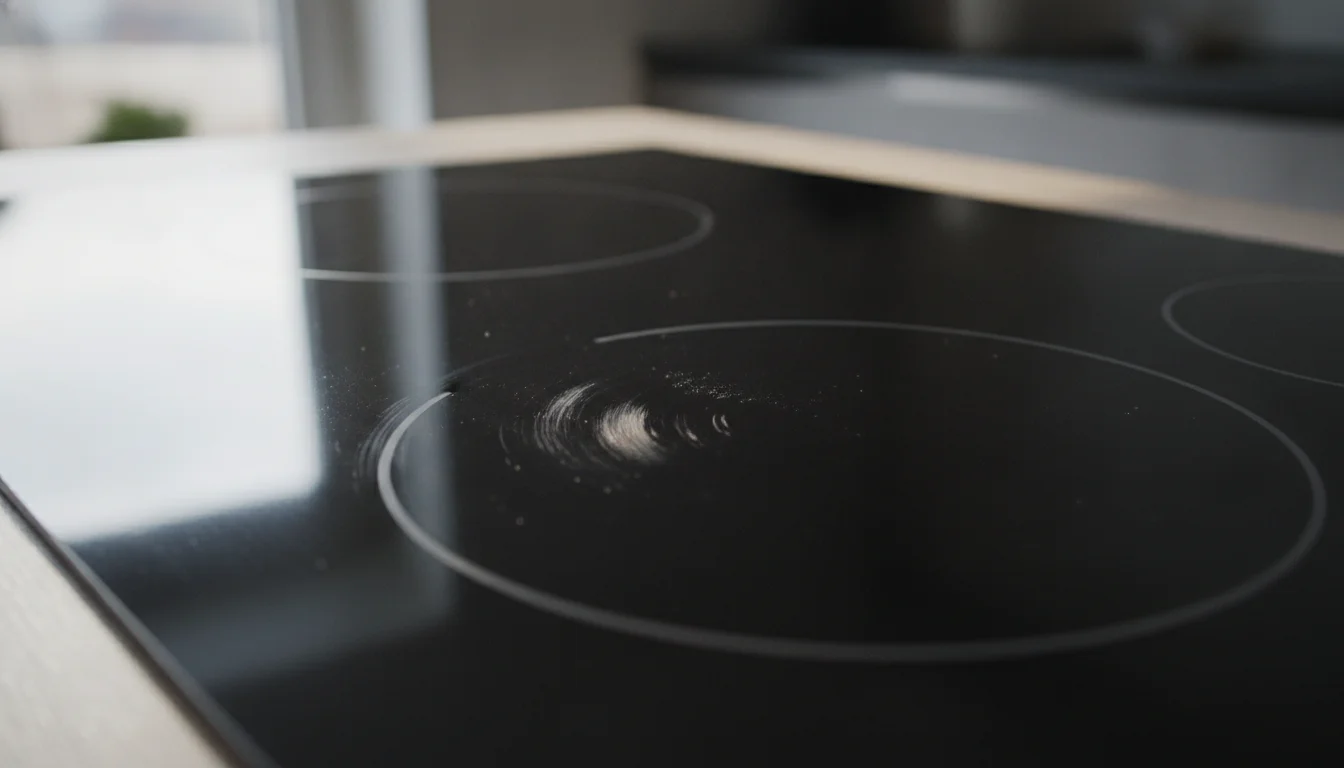
Those gray, silver or faintly rainbow streaks where a pan sat are usually metal sitting on top of the glass, not damage in it. A deposit comes off. A scratch doesn’t. The catch is timing: Bosch says removal gets very difficult once the cooktop is heated again, and GE and Cafe warn some pan discoloration turns permanent. So here’s how to get rid of metal marks on glass cooktop surfaces before that burner goes back on.
Gentlest first, on a cool cooktop with every element off.
What causes metal marks (and what else it could be)
GE says the glass surface pattern is slightly rough and “gathers” metal from soft copper and aluminum pans slid across it. Stainless steel does it less, but Bosch lists it too. Viking calls them silver or gray marks, Bosch an iridescent stain.
Before you scrub, check it’s not something else:
- A scratch is a groove in the glass. No cleaner lifts it. Bosch says small scratches are expected and don’t affect cooking.
- Burnt-on food is raised and crusty. A razor scraper takes it off.
- Hard-water rings are mineral deposits left as water evaporates. Bosch treats them with undiluted white vinegar, then a rinse, a dry and cooktop cream. GE notes that a metallic sheen can be minerals too, and cooktop cream lifts those.
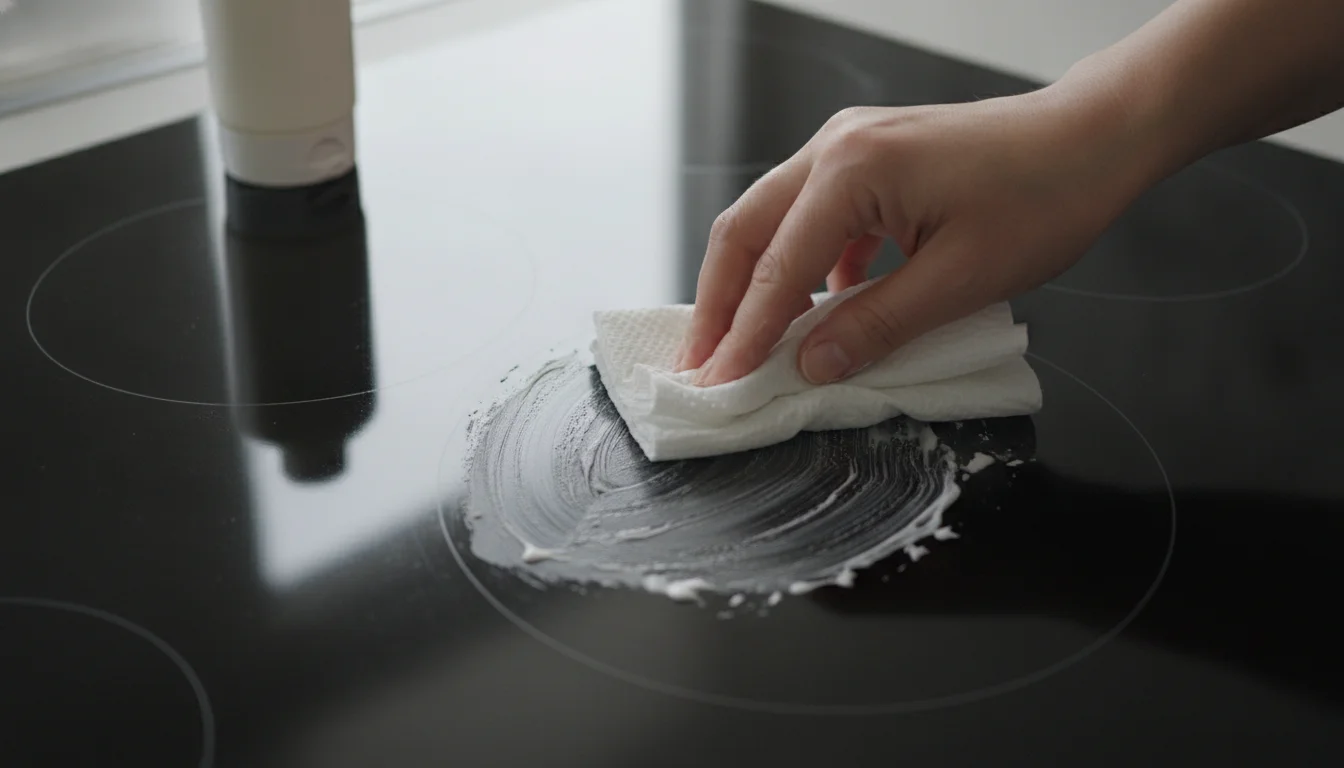
1. Rub in ceramic cooktop cleaning cream
Every maker sends you here first, and often it’s the whole job. The cream’s very fine abrasive polishes glass-ceramic, which dish soap can’t.
Shake the bottle, put a few drops on the mark and rub with a damp paper towel or a non-scratch pad made for ceramic cooktops. Viking uses a nylon scrub pad or brush. Press as hard as the mark needs. Whirlpool lets the cleaner dry to a white haze before wiping. Then buff off every trace with a dry paper towel. GE says no rinse is needed, but don’t heat the cooktop until the cream is gone.
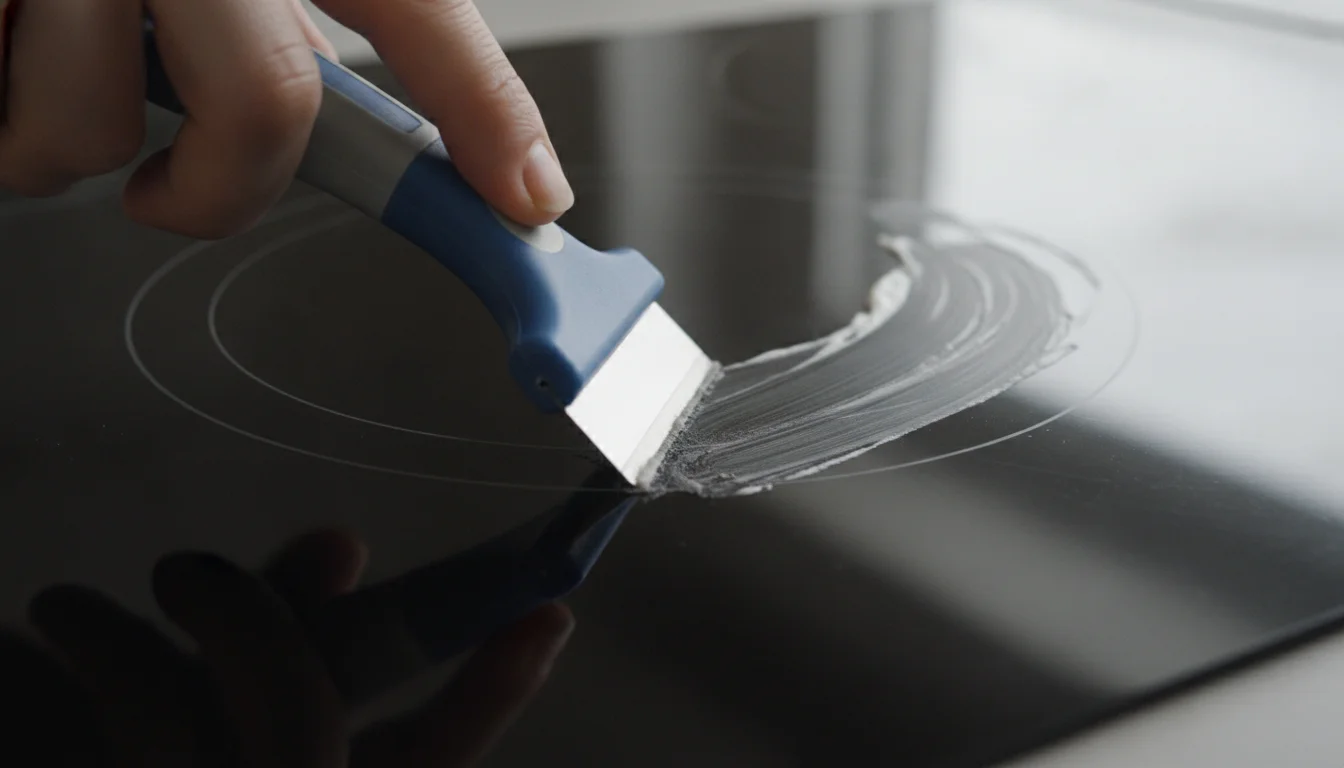
2. Scrape the leftovers with a razor scraper
GE’s fix for pan residue is cleaning cream plus a razor scraper. Use a scraper made for glass cooktops with a new, sharp blade (Bosch asks for one), and hold it low, nearly flat. Viking gives 30 degrees and Whirlpool and Consumer Reports about 45. Short strokes, light pressure, then cream the patch again. The same scraper clears baked-on grease from oven door glass.
3. Scrub with a non-bleach mild cleanser
Still there? Bosch’s next step is a mild abrasive without bleach: Bon Ami, or Soft Scrub without bleach. Put a little on a damp paper towel (not a scouring pad) and rub the mark. Rinse well, dry, and go over it again with cooktop cream to restore the finish.
The bleach part matters. Bosch warns that powdery cleaners containing chlorine bleach can stain the cooktop permanently.
4. Try an oxalic acid powder, briefly
One Bosch manual lists Bar Keepers Friend, an oxalic acid powder, beside Bon Ami and Soft Scrub, on a dampened paper towel. It works with acid as well as fine grit, so keep the contact short: the maker’s directions say about one minute, then wipe. Rinse the area completely, dry it and finish with cooktop cream.
What never goes on the glass
Steel wool, scouring sponges, abrasive powders, oven cleaner, ammonia and chlorine bleach. Viking says these can permanently damage the cooktop. Bosch adds that metal scouring pads and Scotch-Brite style sponges can scratch the glass or leave metal marks of their own.
If you can see pitting or a dent, cleaning won’t fix it. Cafe says the glass has to be replaced.
Preventing metal marks
- Lift, don’t slide. GE, Viking and Cafe all name sliding pans as the cause.
- Check pan bottoms for nicks and rough spots (GE says they scratch), and keep them clean.
- Don’t let thin aluminum or copper-clad pans boil dry. GE and Cafe say the overlay can leave black discoloration that must come off before the next heat.
- Wipe with cooktop cream regularly. Bosch and Viking both recommend daily use.
Frequently asked questions
How do I get stubborn marks off a glass cooktop?
Work the order above: cream, then cream with a razor scraper, then a non-bleach cleanser or Bar Keepers Friend, each followed by cream. If nothing moves it, it’s likely a scratch or pitting, not a deposit.
Can a stainless steel pan leave metal marks?
Yes, though less often than copper or aluminum. Bosch lists stainless steel bases as a source. Smears on the pan itself are a separate job: see stainless steel streaks.
What if I already cooked over the mark?
Try the full sequence anyway. Bosch says removal gets very difficult after the next heating, not impossible. GE and Cafe warn that boil-dry discoloration from aluminum or copper overlay may stay for good.