Table of Contents
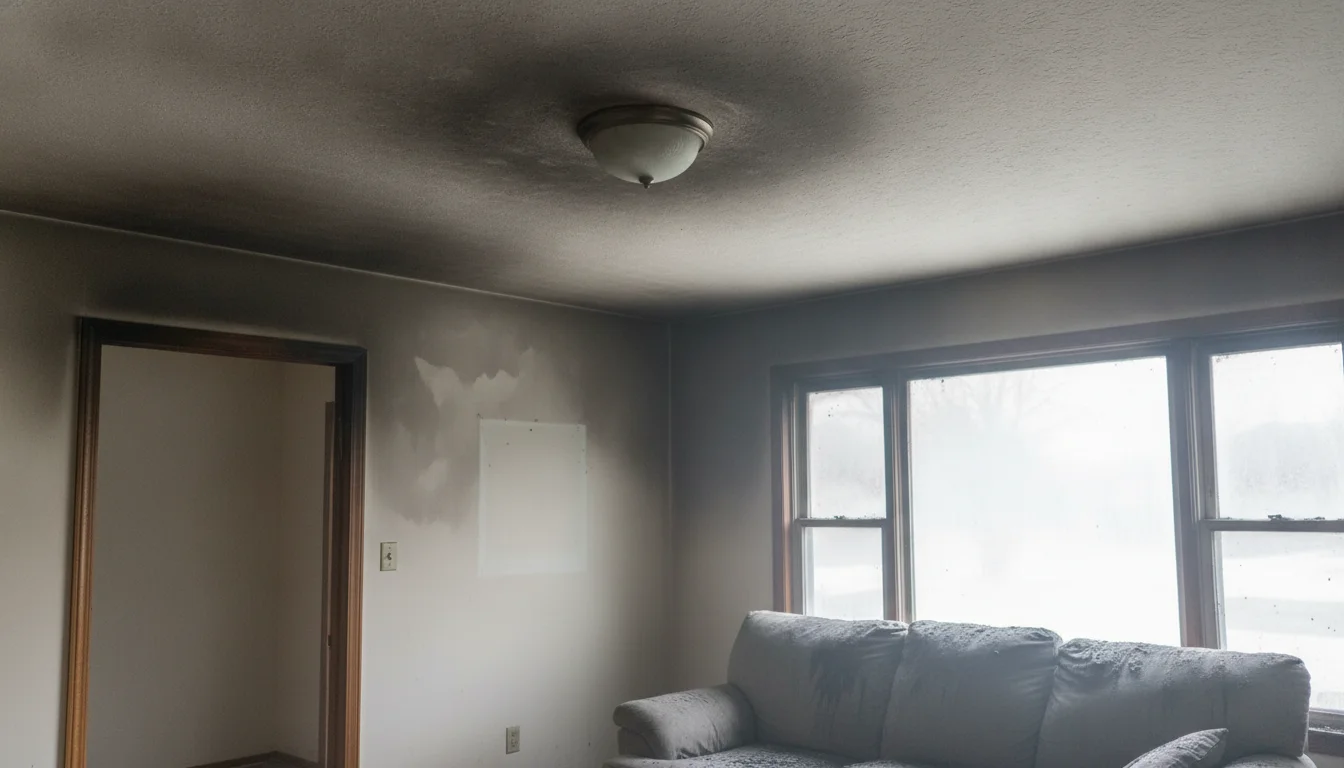
The fire’s out, the fire service has said you can go back in, and the house smells like a campfire that won’t quit. Opening every window and lighting a candle buys you an afternoon. It fixes nothing, because the smell lives in a film of soot and residue on every surface, in the carpet, the sofa and the ducts. That’s the whole secret of how to get rid of smoke smell after fire damage: you remove the residue rather than cover it.
So the job is removal, in order: record the damage, get the dry soot off before any water touches it, wash top down, then fix the fabrics and the air system. Wear an N95 respirator (or better), gloves and goggles for all of it. Keep kids, pets and anyone with heart or lung disease out of the cleanup.
Why the smell hangs on (and comes back on warm days)
Smoke settles as soot on anything cooler than the fire, and works into cracks, carpet and upholstery. The smell itself comes from volatile organic compounds (VOCs). Scientists at CIRES and the University of Colorado Boulder, writing after the Marshall Fire, say those compounds deposit on surfaces and keep off-gassing for weeks to months. More comes off when it’s warm, less when it’s cool. Hence the house that stinks on the first hot afternoon.
If the heating or air conditioning ran during or after the fire, it carried smoke through the whole house. And the type of fire matters. A hot fire with plenty of air leaves dry, powdery soot. A smoldering fire, or one that burned plastics, leaves an oily soot that clings and needs detergent to shift.
1. Photograph everything before you touch it
Before you wipe, wash or throw out anything, record it. Photos and video of every room, ceilings included, plus a written timeline of what happened and what you’ve done since. Call your insurer before you book a cleaner; the policy may cover the cleanup.
A Waldo Canyon wildfire survivor, writing for the nonprofit United Policyholders, adds two tricks. Look for “ghosting”: lift a picture off the wall, look at the wall at an angle in good light, and the covered patch shows a different sheen. And take photos before and after any wall wiping the insurer approves. Cleaning often smudges soot into the paint, and that smudging is what gets sealing and repainting approved.
2. Air the house out (when outside is better)
Open the doors and windows and set fans to push air out. It only dilutes the smell (Texas A&M’s disaster guide is blunt about that), but it makes the work bearable.
One exception from the CIRES guidance: if the house only smells a little and outside smells worse, as it can after a wildfire, keep the windows shut.
3. Vacuum the loose soot without touching the surface
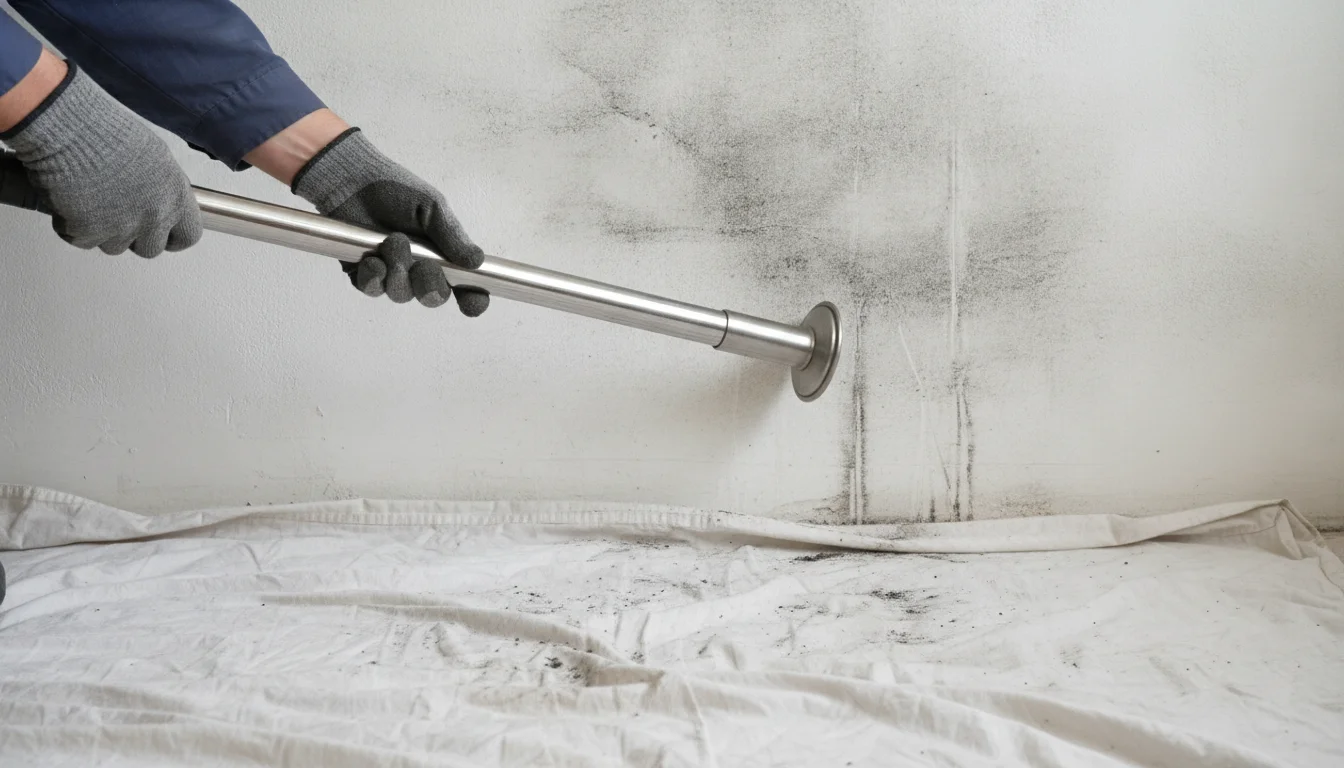
Get the dry stuff off dry. Turn the heating and air conditioning off first so it doesn’t spread the dust you raise, and cover the floor with old sheets. Then use a vacuum with a HEPA filter (an ordinary one blows the fine particles straight back out) and hold the nozzle about half an inch (1 cm) off the walls and ceiling. Soot smears at the slightest touch. Ceiling first, then walls.
On carpet, rugs and drapes, skip the beater bar, which kicks soot into the air. Lift big flakes off the carpet with a spoon instead of grinding them in. No HEPA vacuum? Wear the respirator, open the windows, and do what you can outside.
4. Lift the rest with a dry chemical sponge, before any water
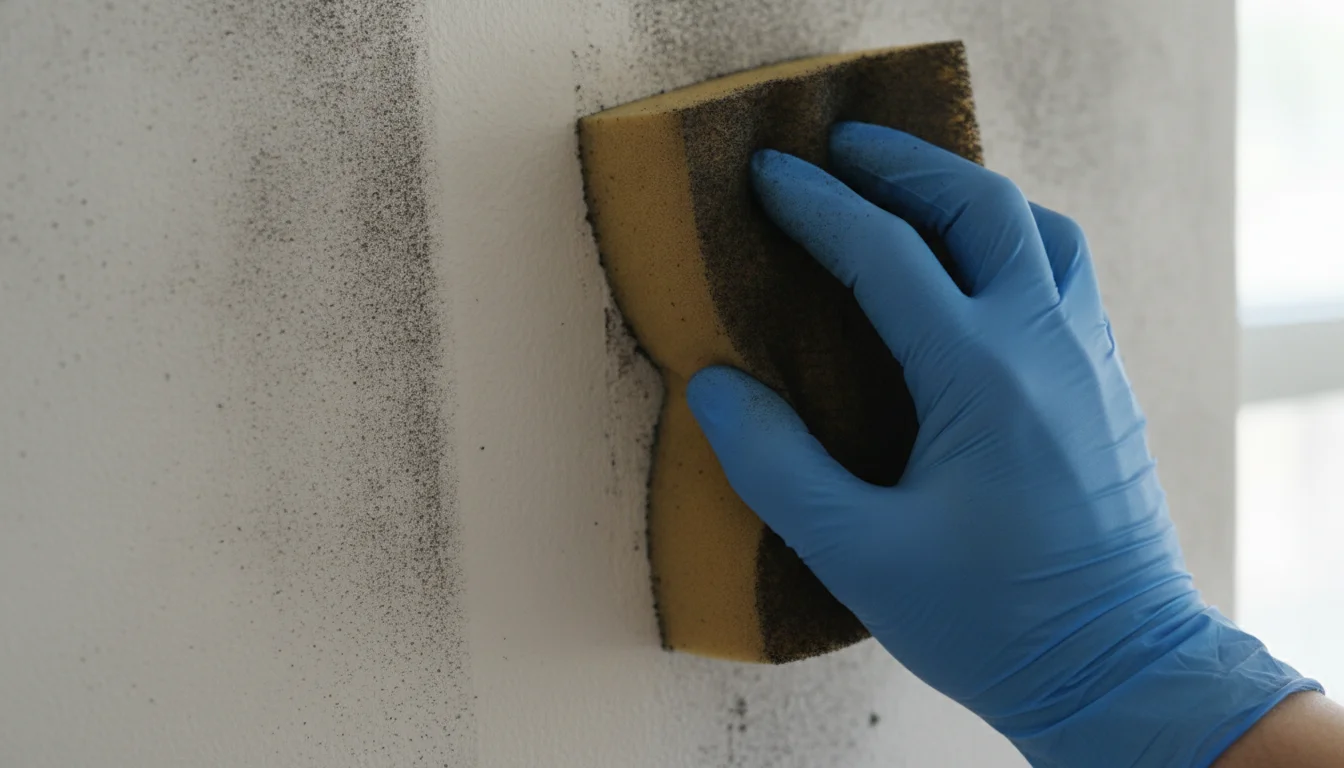
This is the step most people get backwards. Wipe soot with a wet cloth and you smear it into the paint, sometimes for good. A dry chemical sponge (also sold as a soot sponge or dry-cleaning sponge) is a block of rubber that lifts soot the way an eraser lifts pencil.
Keep it bone dry. A wet one stops working. Wipe in long downward strokes with light pressure, ceiling first, and don’t scrub. When the face goes black, flip it or slice a layer off to expose a clean face. A heavily sooted wall can use up several sponges. Do the light fittings and ceiling fan blades too, or the first spin throws soot back onto your clean ceiling. Test on a hidden patch first.
5. Wash walls and ceilings from the top down
Now water. Once the dry soot is off, wash the hard surfaces with warm water and a few drops of dish soap: ceiling, then walls, trim and doors, floor last, so dirty drips only land where you haven’t been yet. Rinse with plain water and change the bucket as soon as it goes gray. Do the insides of cabinets, drawers and closets too.
Oily soot from a smoldering or plastic fire needs an alkaline detergent or degreaser, tested on a hidden spot first. After a wildfire, go gentler: the CIRES guidance, following Boulder County, says soap and water handles ash, and harsh cleaners and vinegar can react with chemicals in it. And never mix bleach with ammonia or vinegar.
6. Wash the fabrics and keep them out of the dryer
Curtains, bedding, cushion covers, throws, clothes: anything that fits in a machine goes in, with 1 cup (240 ml) of white vinegar added to your usual detergent. Smell each load when it comes out. Still smoky? Wash it again the same way, and keep going until it isn’t.
Don’t put anything that smells of smoke in the dryer. The heat sets the smell into the fabric. Air dry, and store clean items away from the house until it stops smelling. Delicates go to a dry cleaner who handles smoke damage. Our guide to getting smoke smell out of clothes covers stubborn loads.
7. Baking soda on the carpet, overnight
Sprinkle baking soda liberally over the carpet, leave it overnight, and vacuum it up with the HEPA vacuum. On upholstered furniture, give it several hours before vacuuming. If the carpet still smells after this and a proper clean, step 11 applies.
8. Change the furnace filter, then keep changing it
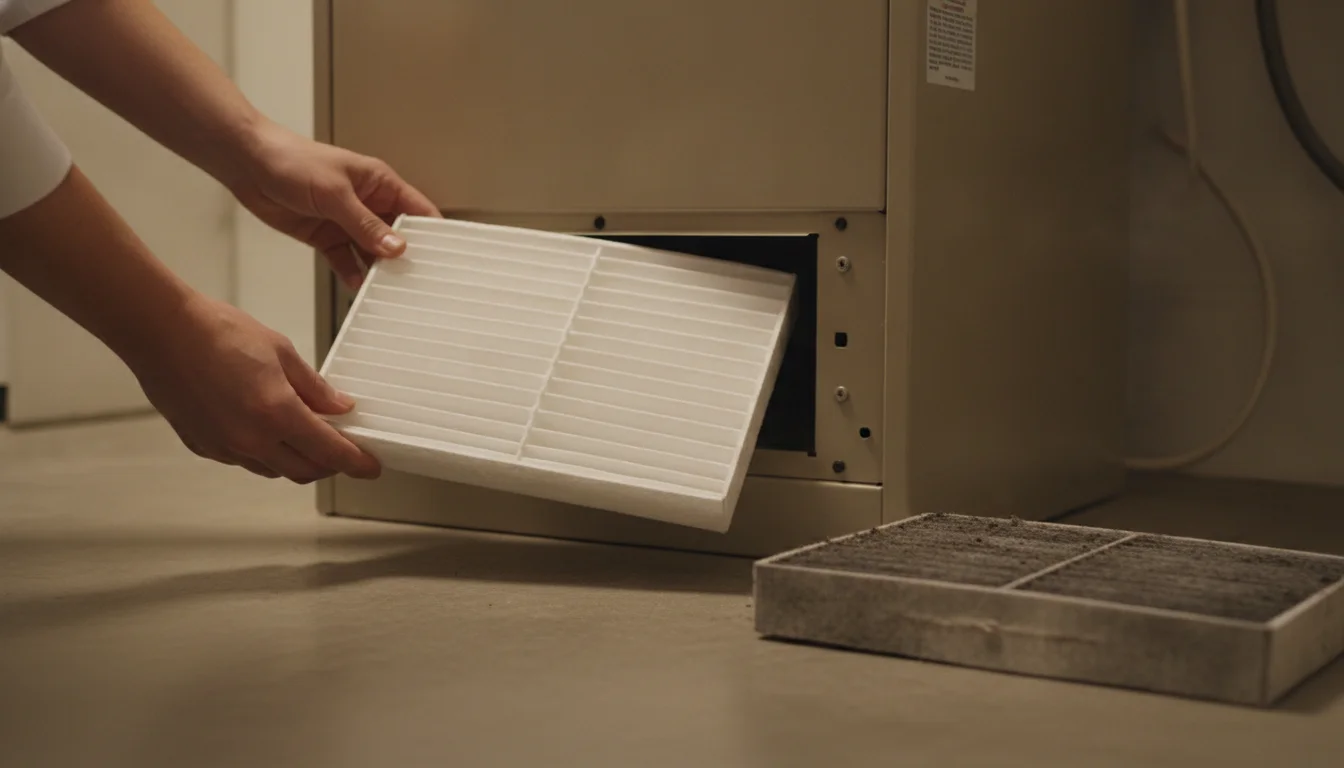
The system pulls air from every room and blows it back out, so a smoky filter keeps spreading the smell. Swap it as soon as you’re back in the house, then every month until the smell is gone. FEMA’s advice, passed on by Texas A&M and Oklahoma State extension, is at least monthly for the first year.
Use the best filter your system takes. EPA suggests MERV 13, or as high as your fan and filter slot can handle; the CIRES team suggests MERV 11 or 12. It has to fit snugly. Seal any gap around the edges with foam or tape so air can’t slip past, and never bend a filter to make it fit.
9. Run an air purifier with a real carbon filter
A HEPA-only air cleaner catches particles, but the smell is mostly gas. You want HEPA plus activated carbon, because the carbon is what pulls out the VOCs you’re smelling. Size it to the room, run it on high while you’re in there, and leave it on until the smell is gone. Carbon gets used up, so expect to change that filter more often.
Avoid anything that sells odor removal through ozone, ionizers or UV. The CIRES team warns those can put out unhealthy levels of ozone, and EPA points you to the California Air Resources Board’s list of cleaners tested to emit little or no ozone.
10. Set out activated charcoal and open the cupboards
Bowls of activated charcoal (or baking soda) left around the house for several days soak up some of the odor while you work. Oklahoma State’s housing specialist adds the useful part: open the closets, the kitchen and bathroom cabinets, and any door you’d usually keep shut. Cheap, passive, and not a fix on its own.
11. Throw out what cleaning can’t save (after you’ve documented it)
Some things never come clean. Carpet and its padding behave like a sponge. Upholstered furniture, mattresses, drapes, insulation and drywall can be the same. If it still smells after a proper clean, it’ll keep re-scenting the rooms you’ve done. Out it goes.
But photograph it first and ask your insurer. If you have to rip out carpet before they agree to pay for it, keep a large piece for inspection. Cotton, linen and silk tend to discolor and then fall apart under the aggressive cleaning smoke residue needs, and once that’s documented it supports a replacement claim. Burnt objects, ash and charred debris should leave the house as soon as they’ve cooled.
12. Seal the walls before you repaint
If the walls are clean and still smell, paint alone won’t hold it back, because smoke odor can work through ordinary latex paint. Seal first with a shellac-based, odor-blocking primer, then paint. The United Policyholders guide calls that order best practice. It’s the same fix as for a house smoked in for years. Never prime over soot you haven’t cleaned off. The seal is only as good as the surface under it.
When to call a professional
Call a fire and smoke restoration company when the fire reached more than one room, there’s heavy soot on the walls and ceilings, or the smell comes back after you’ve cleaned. They also handle drywall and insulation that need to come out, and the ducts: FEMA advises professional cleaning of the heating and cooling units and all ductwork after a fire, while EPA says to clean ducts if they’re clogged with debris or particles blow out of the vents.
An ozone generator can destroy leftover smoke molecules, but Oklahoma State Extension says it isn’t something homeowners should do themselves: there are significant health and property dangers, and everyone has to leave the house while it runs. Hire it out and ask your insurer whether it’s covered. And replace smoke and carbon monoxide detectors that sat through heavy smoke, which can lose sensitivity.
FAQ
Is the smoke smell after a fire harmful?
It can be. The CIRES researchers note that some of the compounds left after a fire are toxic, including benzene, formaldehyde and PAHs, and soot irritates skin, eyes and lungs. Hence the N95, and keeping children, pregnant people, older adults and anyone with heart or lung disease away from the cleanup. If someone in the house has symptoms that don’t clear, see a doctor.
How long does smoke smell last after a fire?
The CIRES team says the residue keeps off-gassing for weeks to months, more on warm days, and slowly tapers off. A smell that’s still strong after a full clean usually means something porous (carpet, a sofa, the ducts) is still holding it.
Does vinegar get rid of smoke smell?
In the wash, yes: 1 cup (240 ml) per load is the standard extension advice. On hard surfaces it helps with a mild smell. One Reddit poster who burned two wooden spoons to ash in their kitchen said spraying a lot of vinegar did more than anything else they tried. After a wildfire, though, keep it off ash-covered surfaces and use soap and water.
Can I run an ozone generator myself?
Rentals exist. Texas A&M puts the cost in the low hundreds of dollars and notes you have to leave the house while it runs. Oklahoma State Extension’s advice is to hire a professional instead, because of the health and property risks. Ozone does nothing for soot still on surfaces, so clean first. For a smaller burn, like a scorched pan, see getting burnt smell out of a house.