Table of Contents
Yes, smoke does come out of clothes. But it takes more than one wash cycle, and there’s at least one thing you’re probably doing wrong (running the dryer before the smell is fully gone sets it permanently). Without treatment, that smell isn’t going anywhere on its own – smoke particles are oily and microscopic, and they bond to fabric fibers in a way that plain detergent doesn’t break down on a standard quick cycle. The fix is layered: absorption first, then neutralization, then a proper machine wash with the right settings. Here’s the sequence that actually works.
1. Pre-Treat with Baking Soda
The most consistently recommended method across every source that has tested this. Lay your smoky clothes flat and sprinkle baking soda liberally over the fabric – collar, sleeves, and front panels especially.
Leave it for at least 30 minutes. For heavy odors (think: sitting next to a campfire for hours, or clothes from a smoker’s house), leave it overnight. The powder absorbs smoke particles directly from the fibers. Shake off the excess outdoors before washing. For problem spots, make a paste with baking soda and a little water, press it in, let it dry, then wash normally.
2. Soak in White Vinegar Solution
White vinegar neutralizes smoke odors by breaking down the alkaline compounds in smoke residue. Fill a sink or bathtub with cold water and add 1 cup (240 ml) of white vinegar per gallon (3.8 L) of water. Submerge the clothes completely. Soak for 30 to 60 minutes.
The vinegar smell disappears during washing – your clothes won’t smell like a salad bar. For heavy smoke exposure, increase to 2 cups (480 ml) per gallon (3.8 L). After soaking, wring out and wash normally. This pre-soak does most of the heavy lifting before detergent even touches the fabric.
3. Wash Smoky Items Separately
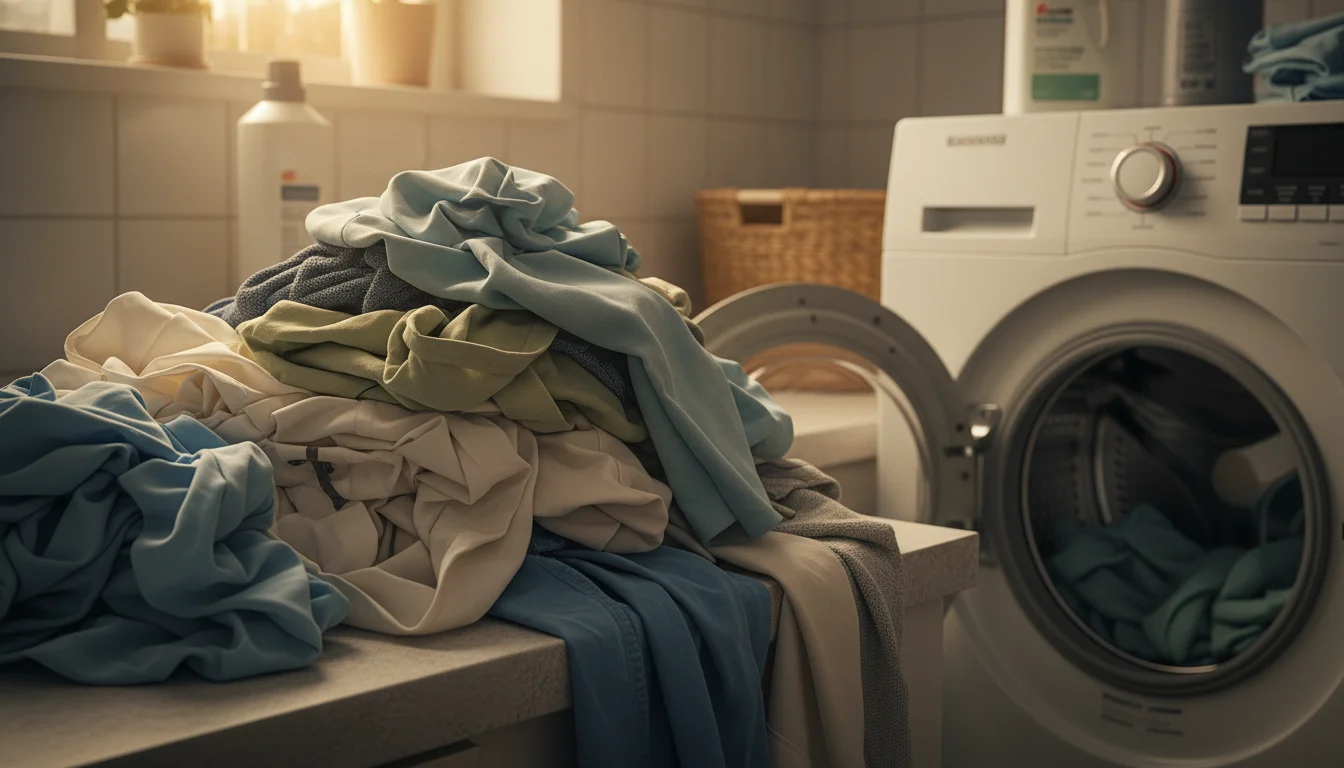
Don’t mix smoky clothes with a regular load. Smoke odor transfers to clean items during the wash, and suddenly you’ve turned one problem into a full machine’s worth. Run a dedicated load for the affected clothes.
This matters practically for two reasons. First, it lets you use stronger treatment concentrations (more vinegar, extra baking soda, hot water) without worrying about delicates in the same load. Second, campfire smoke and cigarette smoke have different chemical compositions and may respond differently to treatment – if you’ve got both, separate loads give you more control over each.
4. Turn Clothes Inside Out
Quick step, easy to forget. Smoke particles settle on the outside but also penetrate through to the inside of the fabric. Flipping garments inside out exposes the inner surfaces to full detergent contact during the wash cycle.
Especially worth doing with jackets, hoodies, and anything with thick or layered fabric. And as a bonus, it protects the outside surface from abrasion, which keeps colors from fading faster than they need to.
5. Use Warm Water and Extended Cycles
Smoke particles are oily. Oil breaks down in warm water, not cold. Check the care label and use the warmest water safe for the fabric. Polyester handles warm fine; wool needs cold.
Pick an extended or heavy-duty cycle – not a quick wash. Standard cycles run 30 minutes. You need 60 to 90 minutes of agitation for the detergent to work through smoke-contaminated fabric. Quick wash is how you end up washing the same clothes three times.
6. Use the Right Amount of Detergent
More is not better here. Excess detergent creates suds that trap smoke particles in the fabric instead of rinsing them out. Use the label’s recommended amount for your load size. That’s it.
If you’re using a standard detergent, consider switching to one designed for odors or sports gear – these contain enzymes that break down organic compounds, which is what smoke residue is. Labels say “odor elimination” or “sport.” The enzymes do the work; the scent is irrelevant.
7. Add Scent Boosters or Odor Eliminators
An optional add-on, but useful for persistent cases. In-wash odor eliminators work by neutralizing odor molecules rather than covering them. Add to the drum before loading clothes, or use the machine’s designated dispenser.
Natural option: 1/2 cup (120 ml) of borax. It’s a water softener and odor neutralizer, and it helps detergent perform better.
8. Air Dry in Sunlight
UV rays break down the chemical compounds that create odors. Moving air carries away what’s left. Hang clothes outside on a sunny, breezy day – give them a few hours, not just 20 minutes on the line.
If outdoor drying isn’t possible, hang near an open window with good airflow and accept that it’ll take longer. Inside on a still day with no airflow does almost nothing.
Don’t machine dry until you’ve confirmed the smell is gone. Smell the fabric before it goes in. Heat sets odors into fabric, and once that happens you’re starting the whole process over. If there’s still smoke smell after washing, repeat the vinegar soak and run another extended cycle. Do not touch the dryer until the clothes actually smell clean.