Table of Contents
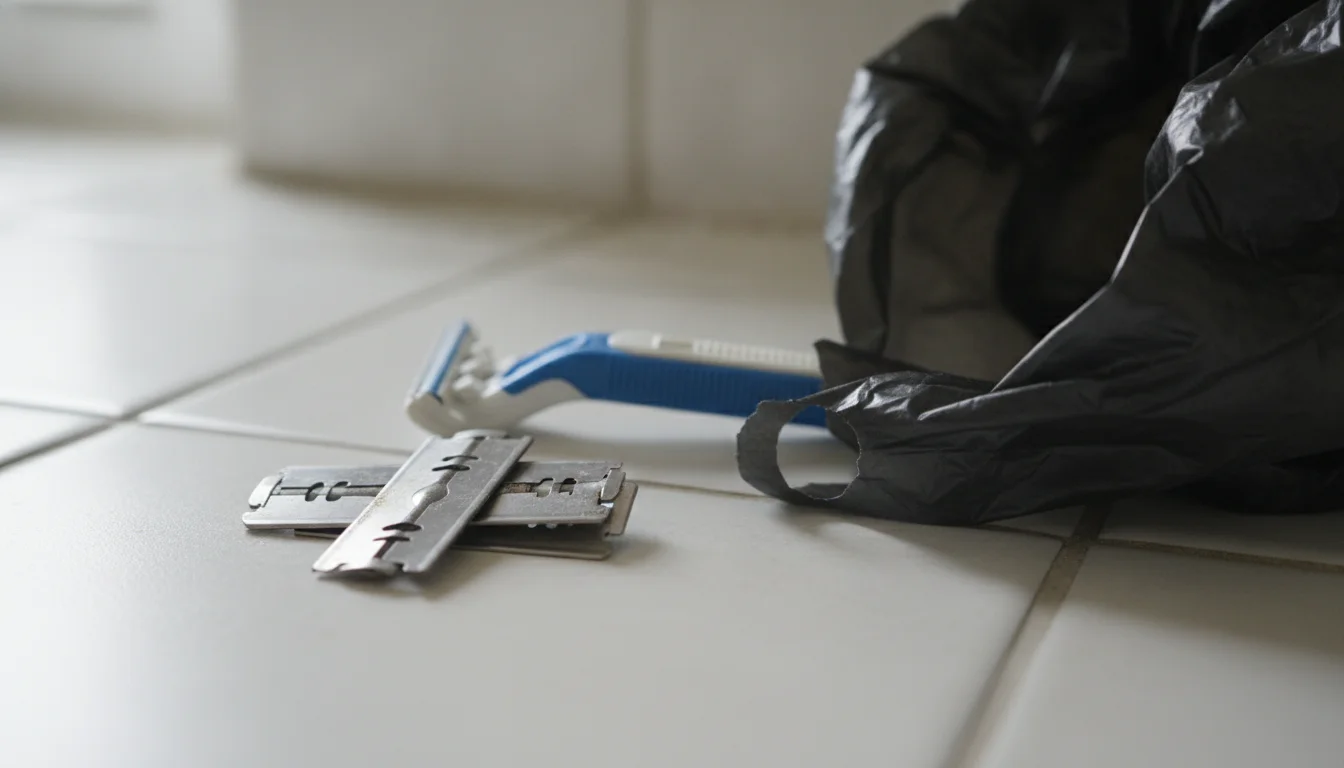
A razor blade you retire because it drags is still sharp enough to shave with. That is the whole problem with getting rid of it. Toss it loose in the bin and it slices through the bag and into whoever lifts it out; drop it in the recycling and it lands on a hand-sorting belt where a loose blade is exactly the kind of thing that cuts a worker. A regular shaver gets through a lot of blades, so the pile builds up fast and none of it is safe to just throw away. Knowing how to get rid of razor blades is almost entirely about the container: contain the edge so it cannot move, then send the sealed container down the right route. Here is how, sorted by the blade you are actually holding.
1. Collect them in a blade bank
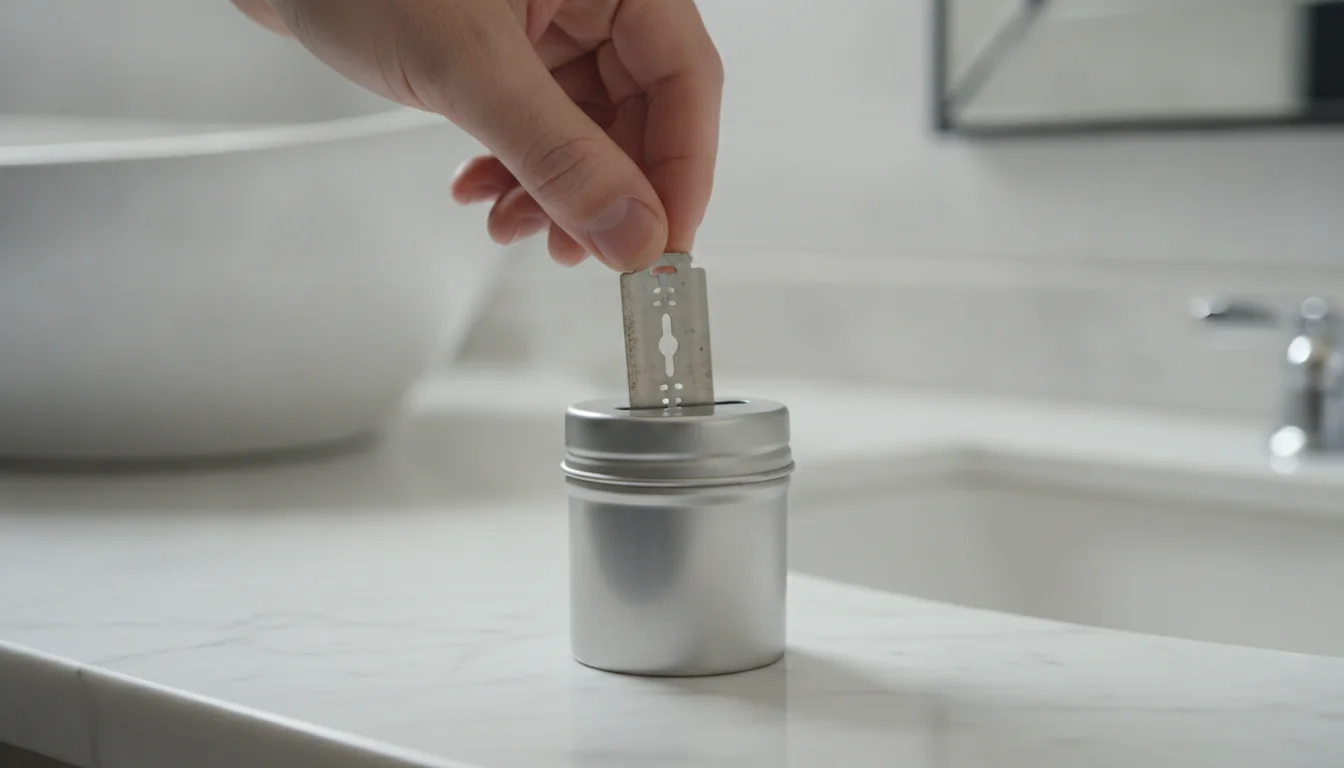
A blade bank is the purpose-made answer for double-edge and safety-razor blades: a small metal or ceramic tin with a narrow slot in the top. You drop each used blade through the slot, and the slot is sized so a thin blade tips in but will not slide back out when the tin is knocked or carried. Some safety-razor packs and blade cartons have a bank built into the base or lid, so the container the blades arrived in becomes the one they leave in, no purchase needed.
A bank holds years of blades before it fills, which is the point: you never handle a loose blade twice. Most banks are sealed, one-way tins: when one is full, tape the slot shut and dispose of the whole unit, and do not pry it open, since emptying it re-creates the exact hazard the bank removed, a pile of loose edges in your hand. A few banks, some porcelain ones among them, are instead built to be emptied through a designed opening; if yours is one, follow the maker’s own instructions rather than binning it whole.
2. Drop them into a sharps container
If you already keep an FDA-cleared sharps container in the house, razor blades are welcome in it. These are rigid, puncture-resistant plastic with a one-way lid that lets sharps in but not fingers back out, and municipal guidance routinely lists razors alongside needles as acceptable contents. Drop each blade in edge-down as soon as it comes off the razor. It is the same container the sharps guides use for needles and lancets. For blades alone, though, you do not need a medical container: a blade bank or a rigid tin does the same job for far less.
3. Use a rigid screw-top container instead
No blade bank and no sharps container, but blades to get rid of now? A rigid, puncture-resistant container with a tight-fitting lid stands in – what matters is a wall a blade cannot push through and a lid that fastens down rather than pressing on. A sturdy metal tin whose lid screws or clamps shut, or a heavy-duty plastic bottle like an empty, rinsed detergent bottle, does the job. Skip the containers that only look safe: a coffee can’s press-on plastic lid pops off, a clear plastic drinks bottle lets a blade work through and gets mistaken for recycling, and a glass jar turns one hazard into two if it breaks. This is the same contain-the-sharp-edge logic used for broken glass, a rigid container the shard cannot pierce, sealed before it travels.
4. Slot cartridges and utility blades into a taped dispenser
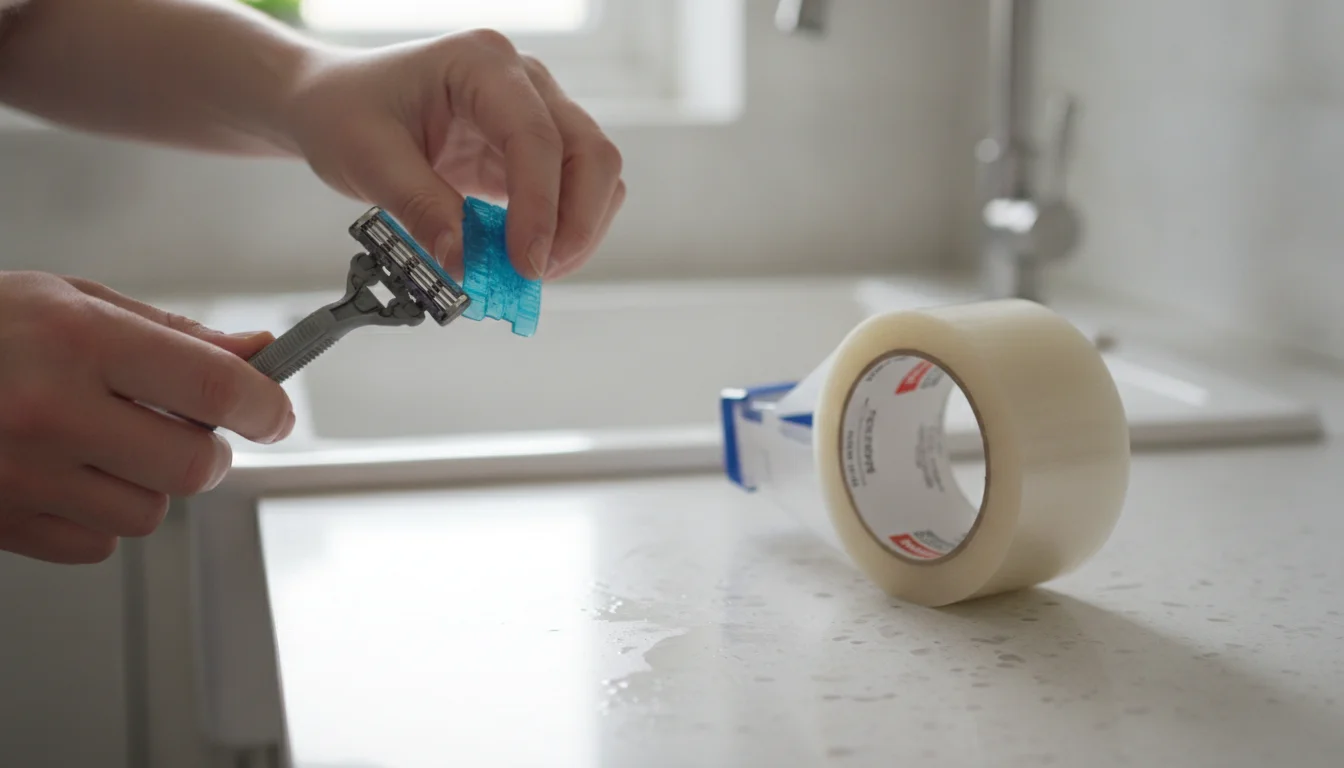
Disposable razor cartridges and utility or box-cutter blades come with their own containment, and most people throw it away with the packaging. A cartridge has a molded plastic guard that clips back over the edges; a utility-blade dispenser has a separate used-blade channel alongside the fresh side. Snap the guard back on, or feed the dull blade into the return channel, then wrap two or three turns of strong tape around the whole dispenser before it goes in the bin.
If the guard or dispenser is long gone, wrap the cartridge head or the blade in several layers of tape or thick folded paper and tape it inside a rigid tin. The aim is the same as every other method here: keep the edge covered and fixed so it cannot move against the bag or the hand that carries it.
5. Fill to three-quarters, then seal and label
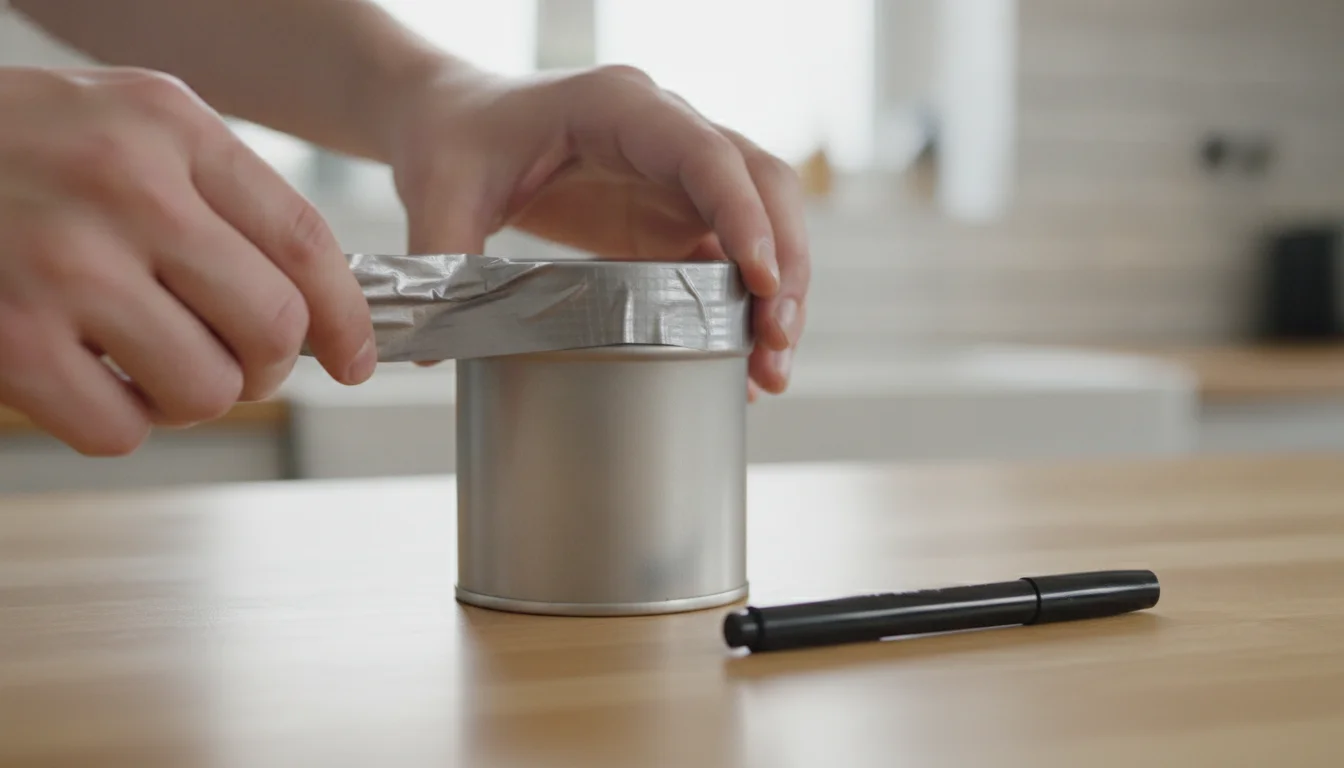
A container only protects anyone once it is closed, sealed and labeled, so treat that as its own step. Stop adding blades when the container is about three-quarters full; cramming it to the top is when a blade catches the closing lid or springs back out. Close a blade bank or sharps container by its permanent lock; on a household tin, press or screw the lid down and run a band of heavy-duty tape around the seam and the slot. Then write on the outside, in permanent marker, that it holds used blades and is not for recycling, so the next person knows what they are holding and does not open it to sort the contents.
6. Check your local rule before you bin it
Where a sealed container of blades is allowed to go is set locally, and it varies more than people expect. Solid stainless double-edge blades are recyclable steel, and some areas take a sealed metal tin of them in scrap-metal recycling or at a transfer station. Elsewhere the sealed container goes in general household waste, allowed as long as blades are contained and never loose. Loose blades never belong in curbside commingled recycling: they are a cut hazard to the sorters who hand-pick the belt. A sealed metal can is a different question, and a few programs do accept one in the recycling bin, so that part comes down to your local rule. Before you get rid of a full container, find your own area’s rule, calling your local solid-waste authority or checking its website for razor blades or scrap metal.
7. Drop it at a collection site
If your area does not take contained blades at the curb, a drop-off site closes the loop. A sealed metal blade tin is often accepted at a scrap-metal recycler, a transfer station, or a household hazardous-waste collection day, and some zero-waste shops and pharmacies take full blade banks and hand them on for recycling. Call ahead to confirm the site takes razor blades, then carry the container in sealed and hand it over as it is. Do not tip the blades out into a communal bin; the whole point of the sealed tin is that no one downstream meets a loose edge.
8. Send cartridges to a brand take-back program
A disposable cartridge is bonded metal and plastic that a curbside recycler cannot separate, so curbside recycling will not take it. The one recycling path for that mixed waste is a manufacturer take-back program. The free route is a public drop-off point: a participating store keeps a collection bin, and you leave the items there at no cost. You can also mail waste in, but a private mail-in participant pays their own carrier’s shipping; the label the program issues tracks the parcel, it does not prepay the postage. Sign-ups can also be capped, so a program may be closed to new mail-in members when you look. Most take any brand of blade, cartridge, disposable razor, handle and packaging, and a sponsor covers the processing itself.
Contain the sharp parts first, though, and pack the shipment the way the program’s own instructions say; the US program asks you to reuse a shipping box and keep the contents dry. A mailer or shared drop bin is still opened by a person, so snap a cartridge’s guard back on or tape a bare blade down before it goes in. Check the accepted-items list once, since a few country programs exclude loose double-edge blades, which are better sent to scrap metal.
Razor blade disposal FAQ
Can razor blades go in the recycling bin?
Loose blades never go in the curbside commingled bin: they cut the workers who hand-sort recycling. Solid stainless double-edge blades are recyclable as scrap metal, sealed inside a metal tin and taken to a scrap-metal recycler or transfer station; a few local programs also accept that sealed can in the recycling bin, so check yours.
Can I put razor blades in a sharps container?
Yes. Municipal guidance routinely lists razors as acceptable in an FDA-cleared sharps container. You do not have to buy one just for blades, though; a blade bank or a rigid tin is cheaper and does the same containment job.
How do I dispose of disposable razors and cartridges?
Snap the plastic guard back over the blades, or wrap the head in tape if the guard is gone, then bin it contained. Cartridges are bonded metal and plastic, so curbside recycling will not take them; the only recycling route is a manufacturer take-back program.