Table of Contents
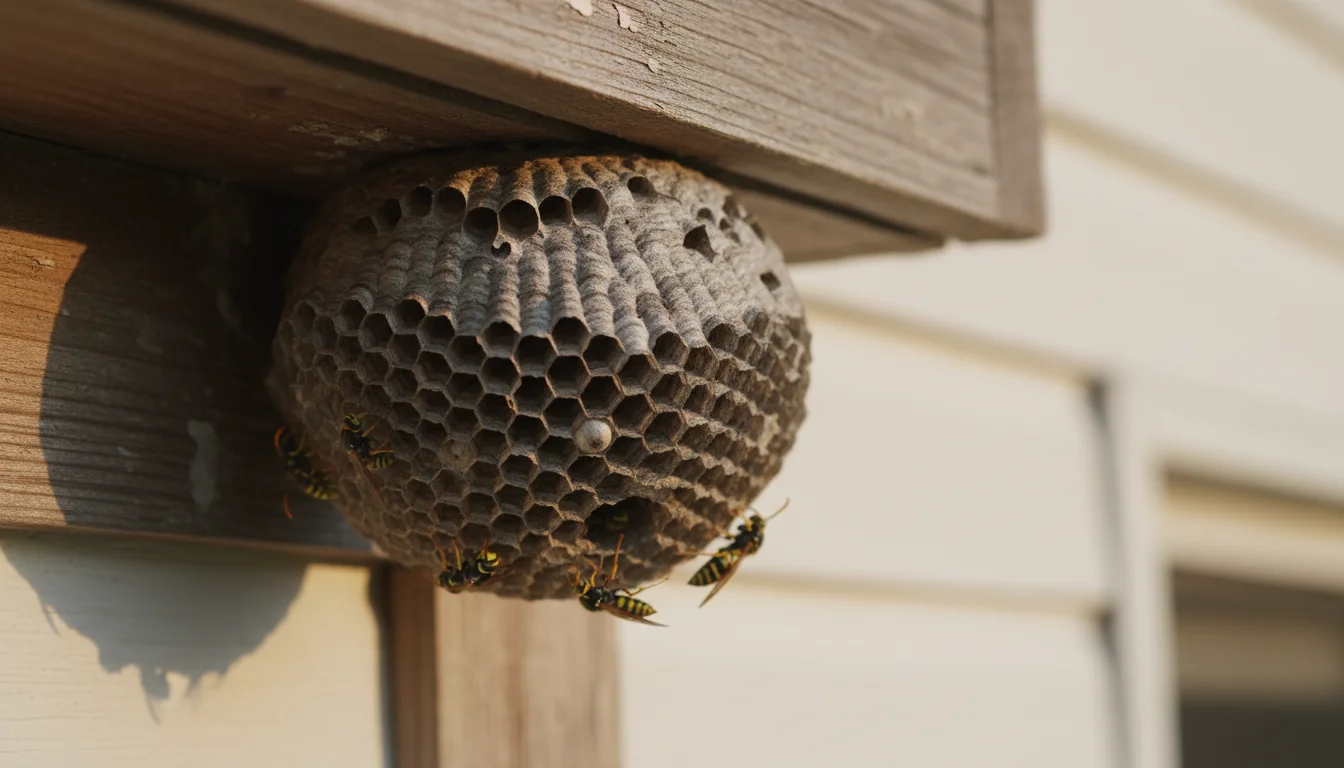
You’ve got a wasp nest somewhere on your property and you want it gone. Here’s how to get rid of a wasp nest safely: timing is everything – treat at dusk when wasps are back inside and less aggressive, and you’ve already solved half the problem. First, make sure they’re actually wasps. Honeybees and some ground-nesting bees are protected and worth keeping, so don’t spray anything you can’t identify. Most accessible wasp nests are DIY territory. Here’s what works, roughly in order of how fast you’ll want results.
1. Commercial wasp spray
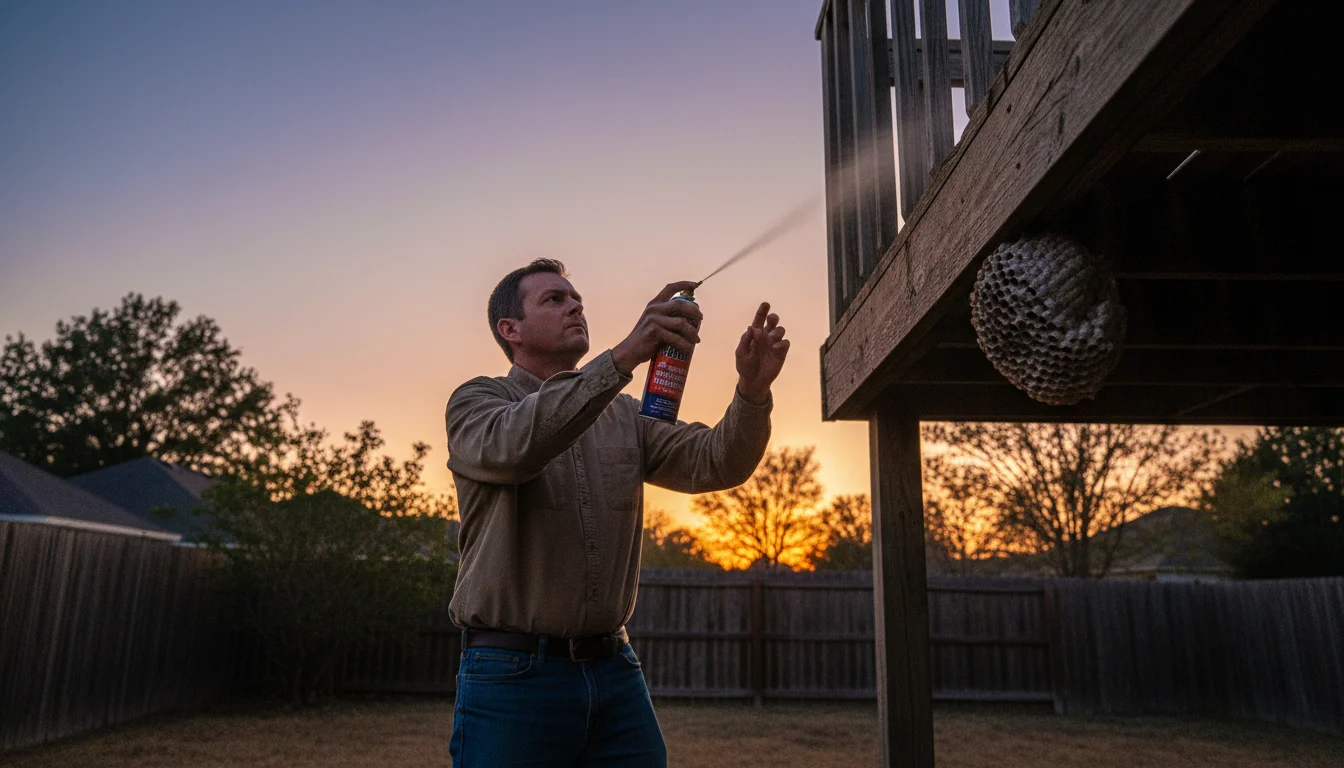
The clear winner for most situations. Get a can of wasp and hornet killer that shoots 20+ ft (6+ m) so you can stay well back. Wait until dusk when wasps are calmer and most of the colony is inside. Aim directly at the nest entrance and drench it, following the directions on the label. Come back the next morning and hit it again if there’s still any movement.
For a nest in the ground – usually yellowjackets or other ground-nesting wasps – treat the entrance hole after dark with a product labeled for that use and follow the label exactly. Don’t stand directly over the hole.
Wall voids are the case to hand to a professional. An aerosol fired blind into a wall rarely reaches the whole nest and can drive wasps into the room behind it. If you insist on treating a visible cavity opening yourself, use only a product whose label covers wall voids, and do exactly what the label says.
Wear long sleeves, pants, and closed shoes even from a distance. Wasps are fast when disturbed.
2. Dish soap spray
A spray bottle of water with a good squirt of dish soap in it will knock down and kill wasps you hit directly. Mix a few tablespoons of dish soap into about a quart (1 L) of water and spray any wasp you can reach.
This is a close-range option for individual foragers or a small, exposed paper nest you can get right up to, not a way to clear a large colony. It has none of the reach of an aerosol, so you have to be close, which is exactly where an active nest is most dangerous. Use it on stragglers, not as your main attack on a full nest. Regular dish soap works better than a gentle, moisturizing formula – you want the degreasing kind.
3. Wasp traps
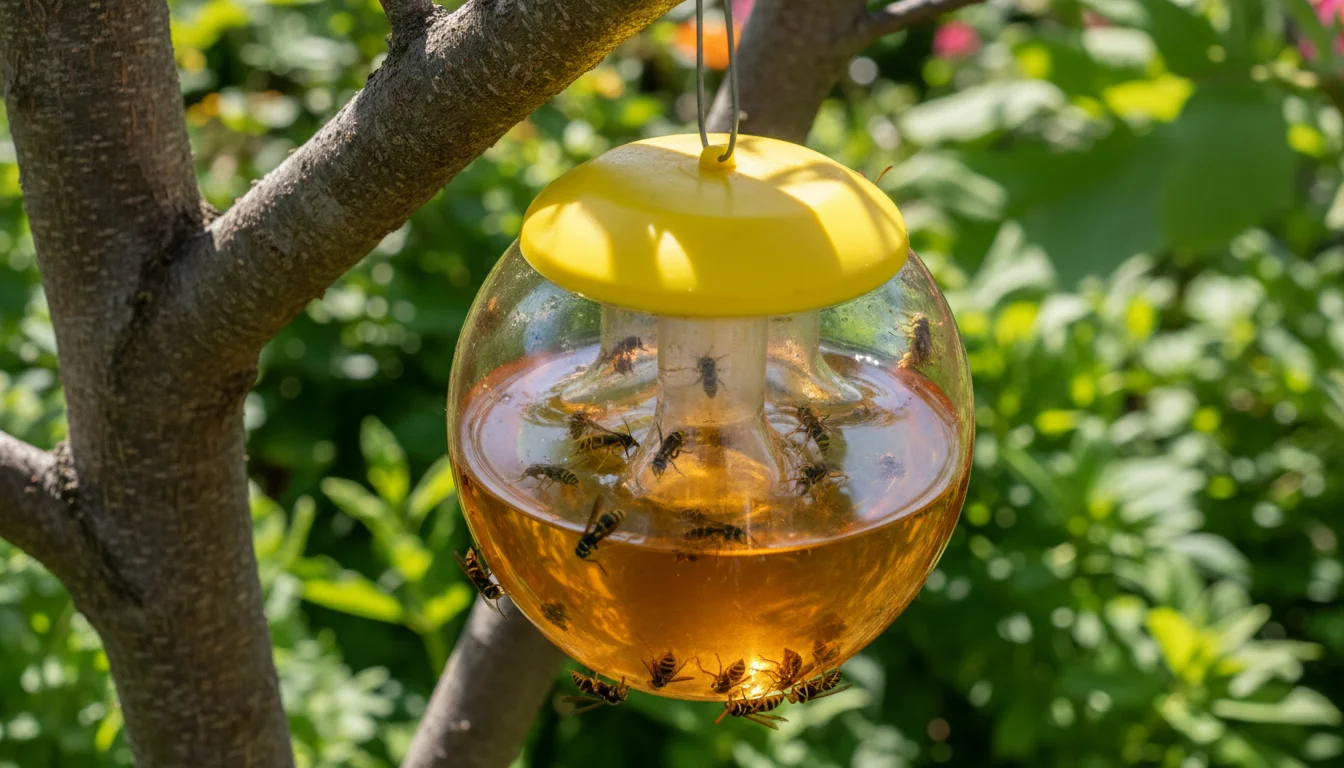
Sweet-baited traps catch foraging workers, which is useful for keeping wasps off a patio or picnic table late in the season. Buy a commercial trap or use a jar of sugar water or fruit juice with a funnel lid. Hang them near the activity but away from where you sit.
Traps catch foragers; they don’t clear the nest. Treat them as a supplement to dealing with the nest itself, not a replacement. Empty and re-bait them as they fill up or the bait goes stale.
4. Remove the nest physically
A wasp colony is annual: the workers die off in late fall and the nest is not reused. Once winter cold has killed the colony, an old nest is just paper and you can take it down. Knock it into a bag, seal it, and put it in the trash. For nests in eaves or attics, sweep them down with a broom.
Don’t try to judge an in-season nest as empty from the ground, and don’t shine a light into the entrance to check – a light draws wasps out and toward you. If there’s any chance the colony is still alive, treat it or leave it alone; save physical removal for a nest you know is dead after a hard freeze.
5. Call pest control
Some nests aren’t worth taking on yourself. Call a professional if the nest is inside a wall void or ceiling cavity, if it’s high up or otherwise hard to reach safely, if the colony is large, or if you or anyone nearby reacts badly to stings. A pro has the protective equipment and the labeled products to treat a cavity nest you can’t reach without opening the wall.
Paying someone is cheap next to a course of stings in a confined space, or a wall you have to open up later.
Prevention
After dealing with the nest, the goal is making your property less attractive for next year’s queens.
Seal gaps in soffits, fascia boards, and siding where utility lines enter. Wasps favor small dark cavities – caulk or steel wool in any opening wider than a pencil. Check under eaves and around shed rooflines in early spring before temperatures warm up. Take down old, inactive nests over winter so the space is clear.
Keep trash can lids closed and clean up any fallen fruit promptly. Wasps feeding on sugary waste in late summer are at their most aggressive – this is when most stings happen, and it’s usually a foraging problem rather than a nesting one. For the wider picture on getting rid of wasps around the house, start with the hub.
Frequently asked questions
What kills wasp nests instantly? Commercial wasp and hornet spray with a 20+ foot range, used at dusk, is the fastest option. Soapy water kills wasps on contact but has no range, so it means getting uncomfortably close to an active nest.
Will a wasp nest go away on its own? Yes, eventually. The colony dies off in fall as temperatures drop – the workers die and only new queens survive, overwintering away from the nest. The old nest won’t be reused, though a new queen may build nearby the following spring. If the nest isn’t in your way, leaving it until winter and then removing the empty nest is a reasonable option.
How do I get rid of a wasp nest in a wall? A nest inside a wall void is the case to hand to a professional. Spraying blind into a wall can push wasps into the room behind it and rarely treats the whole nest, and opening the wall yourself puts you right on top of an active colony. A pro can treat the cavity through the entry point with a labeled product.
How do I stop wasps nesting here next year? You can’t reliably move an active nest, so prevention is the better play. Seal cavities in eaves, fascia, and siding before spring, keep trash lidded, and clear fallen fruit. If a nest does form and it’s out of the way, let the colony die over winter and take the empty nest down then.