Table of Contents
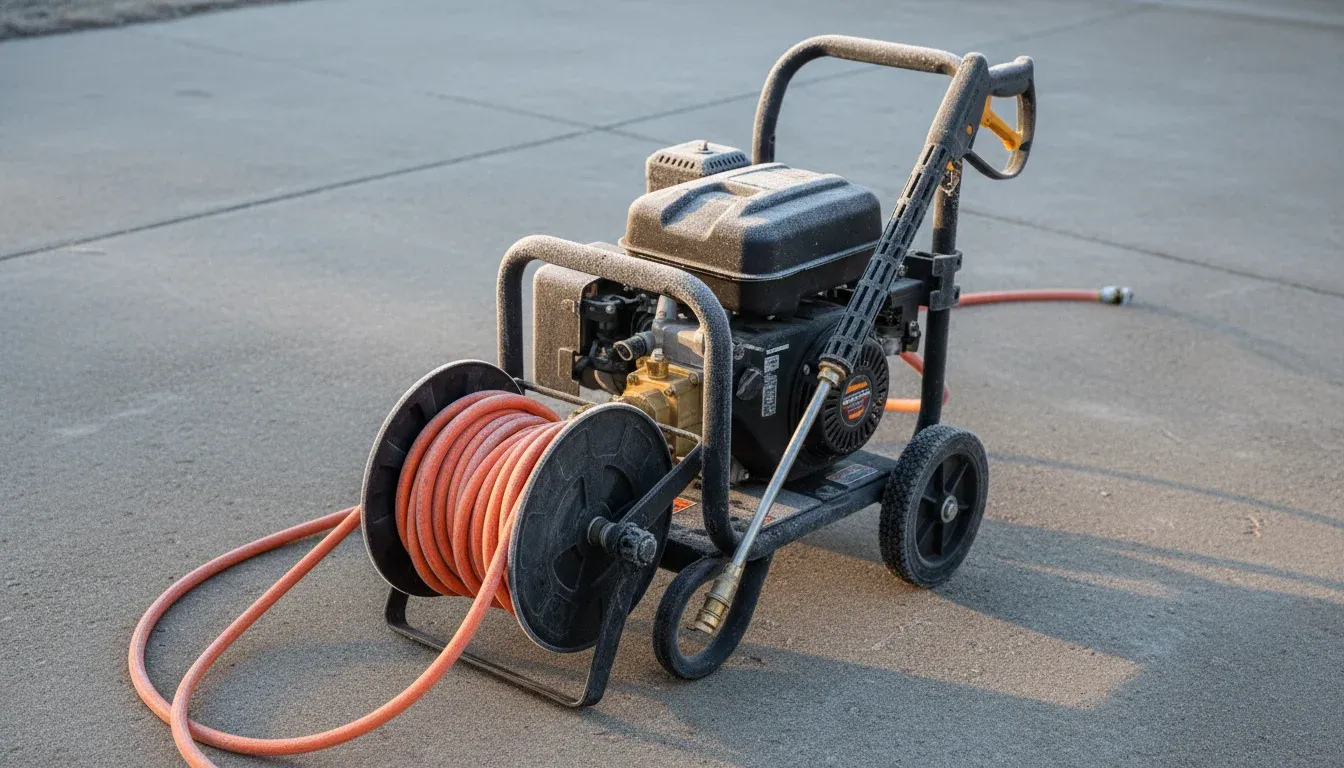
Water left in a pressure washer pump over winter freezes, expands and cracks the pump. That’s the whole story, and it’s an expensive one. To winterize a pressure washer you do two things: get out as much water as you can, then fill what’s left with something that won’t freeze. Gas and electric machines need the same steps except one (getting fluid through the pump), and that one is spelled out below. Do it before the first hard frost, not after: once the machine sits below 32°F (0°C), any water left inside can freeze.
1. Flush out the soap first
Run clean water through once more. Garden hose on, detergent siphon tube in a bucket of clean water (or the onboard soap tank filled with water), low-pressure nozzle fitted, trigger held for a minute or two. This purges soap from the pump, injector and lines. Detergent left to dry over a long layup clogs things up, and chemical residue is hard on rubber seals.
Turn the machine off once the water runs clean. Then shut off the supply.
2. Squeeze the trigger to release pressure
Machine off, water off, gun pointed at the ground. Squeeze the trigger two or three times, until nothing more comes out. That dumps the pressure still trapped in the hose and pump. Do it before you unscrew a single fitting: they come apart more easily and safely with the pressure gone.
3. Disconnect and drain the hoses, gun and wand
Take it all apart. Garden hose off the inlet, high-pressure hose off the pump and off the gun, wand off the gun. Stretch the high-pressure hose out flat, lift one end and walk the lift down its length so the water runs out the far end, then repeat from the other end. Hold the gun and wand nozzle-down with the trigger open until they stop dripping. Pull the nozzle tips and let them dry indoors.
4. Blow out what gravity leaves behind
Draining by gravity still leaves water inside the pump. Some owners blow it out with a compressor: a blow gun at the garden-hose inlet, run until only air comes out of the outlet. Check your manual first and use the air pressure it gives; don’t guess at a number, because the pump’s seals are what’s at stake. Do the high-pressure hose, gun and wand the same way.
No compressor, or nothing about air in the manual? Skip this step. Steps 5 and 6 clear the pump without it.
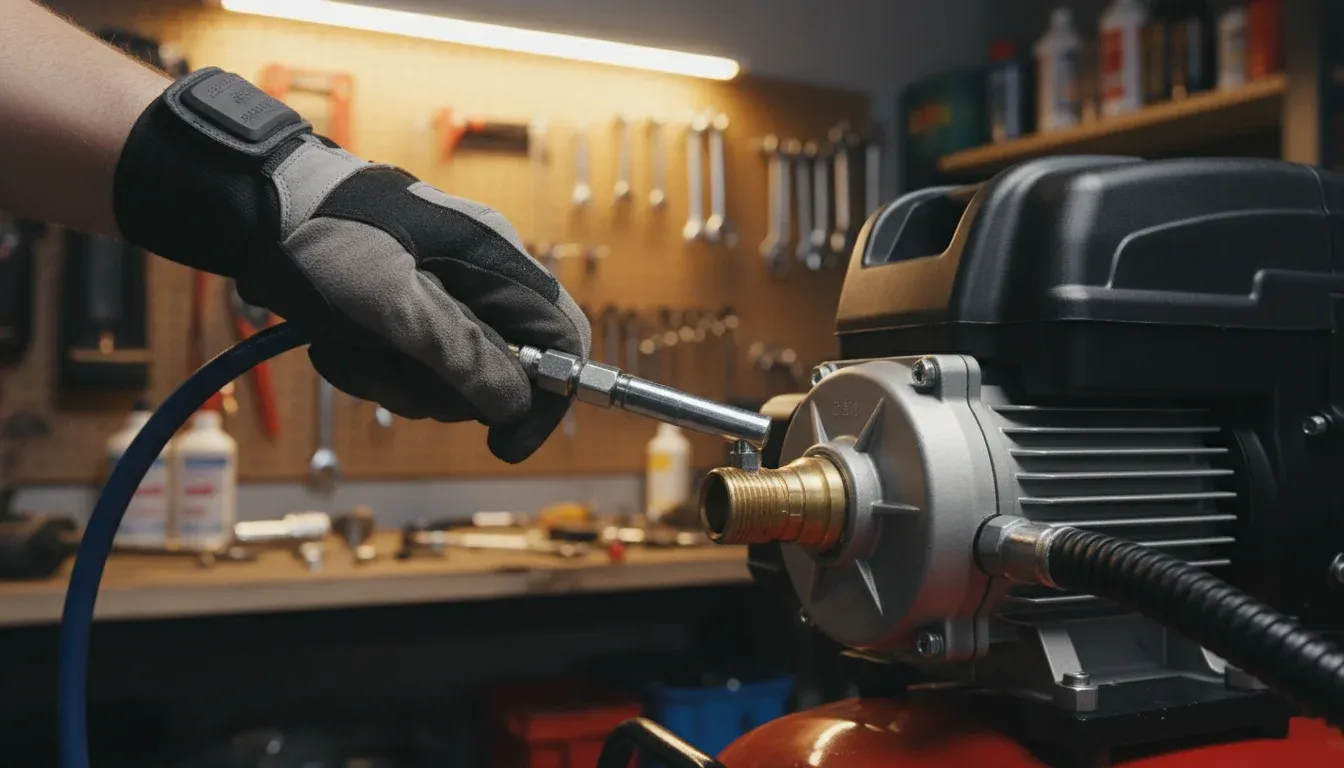
5. Cycle the pump: gas and electric differ here
The pump only empties when its pistons move, and this is where gas and electric part ways.
Gas: hoses off, engine switch off, pull the starter cord a few times. Each pull strokes the pistons and pushes water out. Stop when nothing more comes out. Pull the spark plug wire first if you want to be certain it can’t catch.
Electric: there’s no cord to pull. With the water connections off, switch it on for a few seconds until the last water leaves the pump, then switch it off at once. Some manuals say not to run the machine with no water flowing at all, so read yours before you do this.
6. Fill the pump with pump saver or RV antifreeze
Draining never gets every drop. Antifreeze replaces what’s left and keeps the seals lubricated. Two options, each with its place.
Pump saver (also sold as pump protector) is the right call for a typical homeowner’s machine. It’s a small bottle or aerosol that screws onto the garden-hose inlet. Squeeze or spray it in, then cycle the pump as in step 5: on gas, pull the cord with the engine off until fluid comes out of the outlet; on electric, switch on briefly until it comes out, then off. Cat Pumps gives exactly that split in its directions, rates its protector to -25°F (-32°C) and says it also inhibits mineral deposits in the pump. With an aerosol, hold the gun trigger open until the flow stops, or you get hosed when you take the can off.
RV antifreeze is what some pros on pressure-washing forums use. It’s cheaper by the gallon, and there’s enough to run through the bypass and hoses too. Fit a short garden hose to the inlet with a funnel in the other end, hold it up and pour while you cycle the pump until antifreeze comes out of the outlet. One pro uses about a quarter gallon (1 L) on a 4 GPM machine. Another owner pulled the cord until he couldn’t feel his arm and never saw a drop; the ones who make it work rest the funnel up high and keep pouring while they pull.
Buy propylene glycol RV antifreeze and check the burst point on the label, not just the freeze point. Never use automotive (ethylene glycol) antifreeze: Purdue Extension notes its additives can attack pump seals and plastic parts. RV antifreeze has no corrosion inhibitor, so it comes out in spring.
7. Store it above freezing if you can
The safest pump is one that never freezes. A basement, a heated garage or any room that stays above freezing is ideal. Keep it away from the furnace, though; manuals warn that direct heat dries out pump seals.
Only an unheated shed? Then makers say pump saver is a must, not an extra. Either way, plug the inlet and outlet against insects, coil the hose loosely so it doesn’t kink, and cover the machine against dust and mice.
Gas owners: add fuel stabilizer if it’ll sit 30 days or more and run the engine a few minutes, or drain the tank (stale fuel? here’s how to get rid of old gasoline). Change the engine oil too, and take the drained oil to a used motor oil drop-off.
8. In spring, check it and flush out the antifreeze
Pull the plugs off the inlet and outlet. Look over the pump, hoses and fittings for cracks, and check the small rubber O-rings inside each quick-connect: replace any that are cracked, flattened or missing (they cost next to nothing, and a bad one leaks pressure). Reconnect everything, aim the nozzle at gravel or a drain, not the car, since antifreeze can damage paintwork, and run water through until it comes out clear.
If the pump leaks or won’t build pressure, look for cracks in the pump head and fittings before anything else. A cracked pump is a repair, not a flush.
Why you need to winterize a pressure washer
Water expands by about 9% when it freezes, and a pressure washer is full of small, rigid, closed passages. The usual casualty is the pump manifold (the cast head the water runs through), which cracks. Check valves bust, and the unloader and thermal relief valves get damaged. Outside the pump, a hose full of water splits and a gun with water trapped in it cracks.
Often you don’t find out until spring, the first time you run it.
FAQ
How do you drain the water out of a pressure washer?
Release the pressure with the trigger, disconnect every hose and the gun, drain each piece, then cycle the pump (cord on gas, a brief switch-on on electric) until nothing comes out. Steps 2 to 5.
Can I store my pressure washer in an unheated garage?
Yes, if it’s drained and treated with pump saver. That’s the makers’ condition for freezing storage.
Can I use RV antifreeze instead of pump saver?
Yes. Use propylene glycol, check the burst point and flush it out in spring. Skip automotive antifreeze, and methanol windshield washer fluid too (Purdue Extension notes washer fluid can contain methanol and doesn’t suit every case).