Table of Contents
You took the bag out, you washed the can, and the kitchen still smells like last week’s chicken. That’s the first thing to know about how to get rid of trash can smell: the smell isn’t where you cleaned. It’s under the bag, under the lid, under the bin, or in the plastic itself.
So the job is mostly finding it, cleaning it once, properly, and then stopping liquid getting into the bottom of the can. The cleaning guides that rank for this skip the cabinet a built-in bin sits in, and that’s where a stubborn island or pull-out bin smell usually lives.
One rule before you start: never use bleach and vinegar together, and never one straight after the other without a full rinse in between.
What causes trash can smell
Bacteria. They feed on food waste and turn it into the compounds you smell. Architectural Digest, drawing on scientists at Glad and Febreze, puts the start of the stink at two to three days, and sooner for food you’d normally keep in the fridge.
What keeps a clean can smelling is where that bacteria gets to live:
- Liquid under the bag. A loose scrap or a leaky bag drips juice into the bottom, and it rots there after the bag is gone.
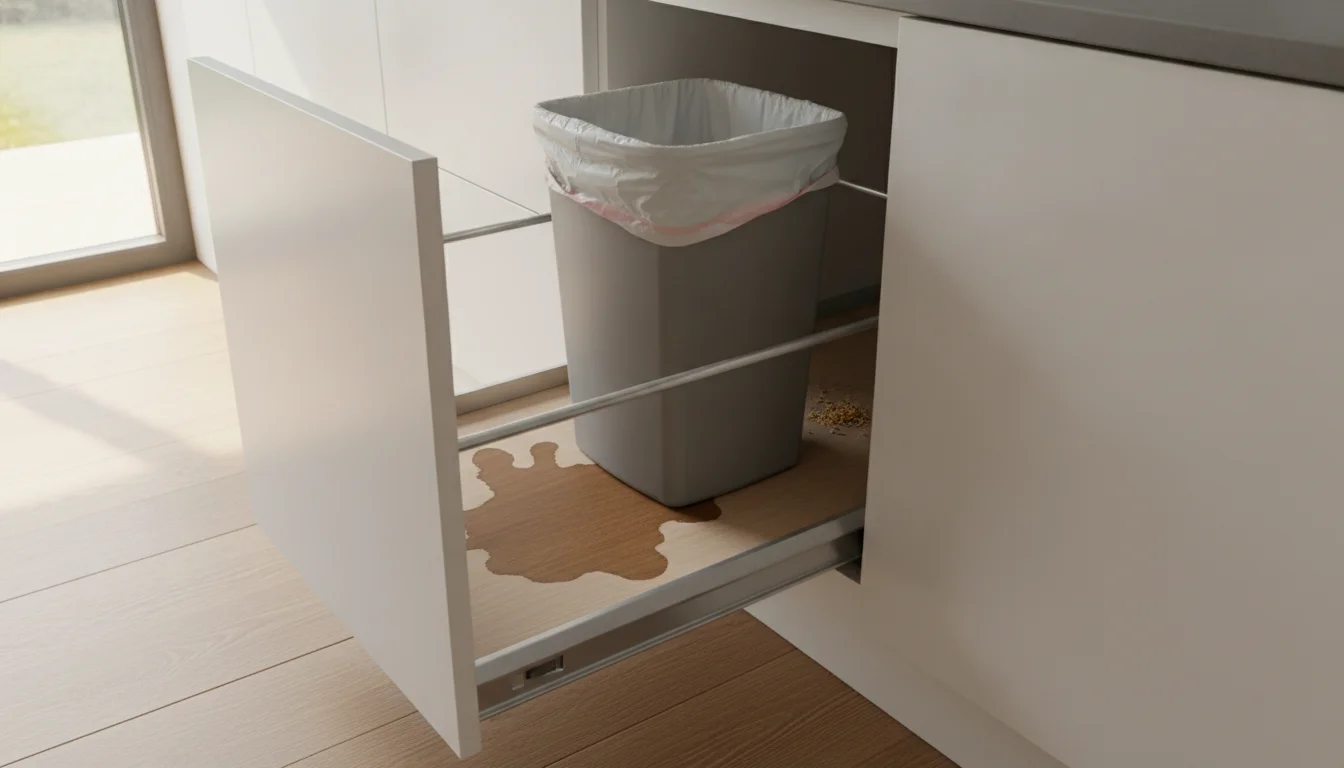
- The cabinet. A built-in bin drips and splashes onto the cabinet floor, and bare or worn wood soaks it up.
- The lid and seal. They get splashed every time something wet goes in, and nobody looks at the underside.
- The plastic. Plastic absorbs odor in a way stainless steel doesn’t.
- Fly eggs. UC IPM notes that flies lay eggs in warm, moist garbage, and blow flies can go from egg to adult in as little as 7 days. That’s maggots in the can, and a smell to match.
1. How to get rid of trash can smell in a built-in bin: clean the cabinet
If your bin slides out of a cabinet or a kitchen island, start here. Pull the drawer or frame all the way out and lift the bins off. Then look at the cabinet floor. One reply to a Reddit thread about exactly this (a stubborn smell from an island bin) put it plainly: “meat juice loves to soak into that bottom panel.”
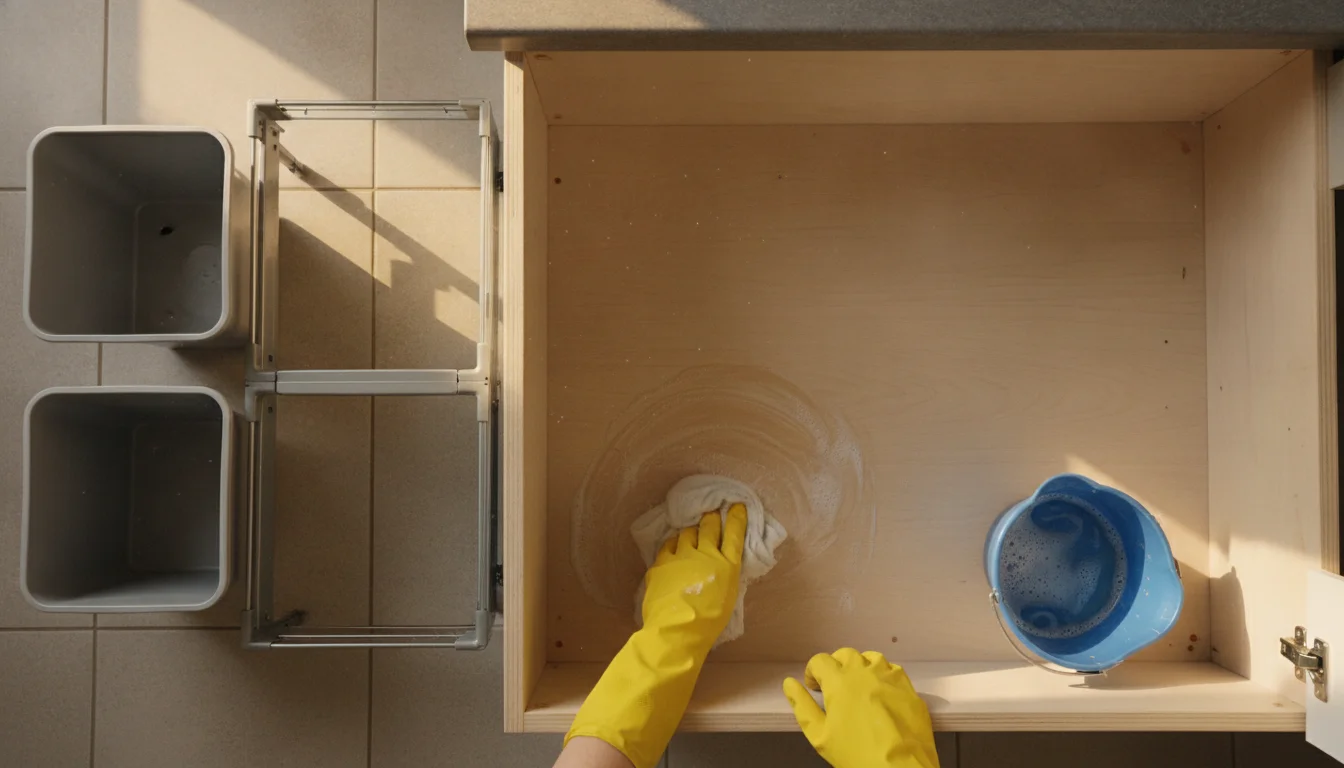
Wipe the floor, the back and side walls and the pull-out frame with warm soapy water. Wipe again with clean water, then dry it. Where something has soaked in, follow with an enzyme cleaner (method 4). Then leave the doors and drawer open for a day so the wood dries and airs out.
Keep chlorine bleach off the wood. And know what you’re up against: many cabinet bins have a thin, water-based finish inside, and once it’s worn, spills go into the wood. Some owners give up and use it for recycling, with a separate lidded can for food trash. Or, as one house cleaner does, line the cabinet floor with contact paper you peel off and replace when it gets dirty.
2. Scrub the lid, rim and seal
Open the lid all the way (or lift it off, if it comes off) and scrub the underside, the hinge area and the rim with hot water and dish soap. Work the soap into the rubber seal around the rim if your can has one. That’s where the drips you never see dry on.
Dry the lid and seal before you close it. On stainless, use a soft cloth or a non-scratch scrubber. One Reddit user took the green side of a kitchen sponge to theirs and scratched the whole underside of the lid.
Between deep cleans, wipe the lid, rim and the outside handles with a disinfecting wipe every time you change the bag.
3. Wash the can, then sanitize it with bleach
Bleach goes on a clean can, not a grimy one. Scrub the inside with hot soapy water and rinse it first. Then follow the directions from an EPA-registered household bleach label: swish 3/4 cup (180 ml) of bleach per gallon (3.8 L) of water over the inside of the can, let it stand 2 minutes, then rinse and air dry. Gloves on, and do it outside or with a window open.
Never mix bleach with vinegar. The New Jersey Department of Health’s hazard alert says the combination produces chlorine and chloramine vapors that can burn your eyes and lungs. Plenty of trash can guides list them side by side without saying so. If you’ve already used vinegar, rinse the can thoroughly before any bleach goes in. Same rule for ammonia and every other cleaner: bleach alone, with water.
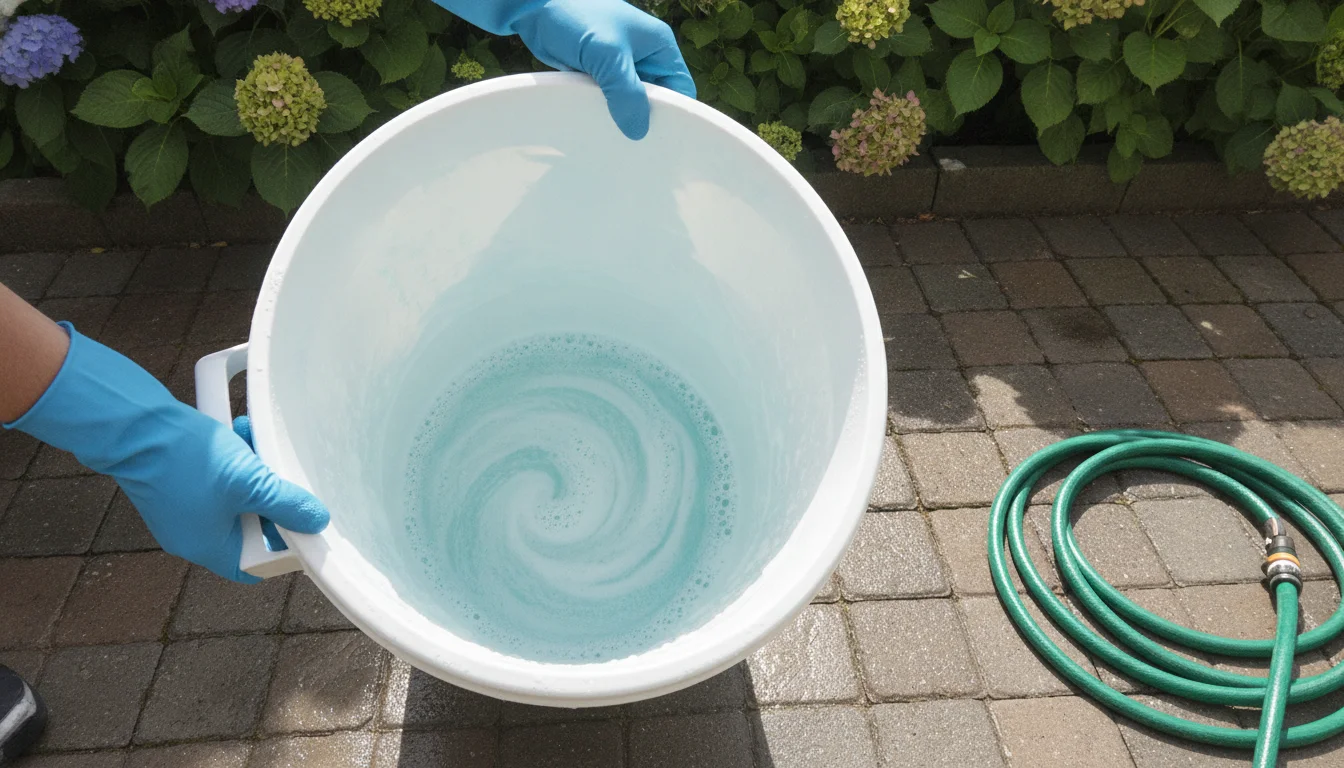
4. Use an enzyme cleaner on what bleach leaves behind
Bleach kills bacteria but doesn’t always remove the residue that smells. An enzyme cleaner digests it.
Spray it generously on the bottom of the can (or the cabinet floor) and keep it wet for at least 10 to 15 minutes. On a porous surface, use more than you think and cover it with plastic wrap so it doesn’t dry out. One Reddit owner tried bleach, ammonia (separately), degreaser, soap and sunlight on a garbage pail that reeked. The enzyme cleaner was what worked. Pet stain enzyme cleaners are easy to find and do the job.
5. Pour boiling water on maggots
Maggots in the can? Take it outside (or into the bathtub if you’ve got no yard) and pour boiling water straight onto them. It kills them on contact. Then scrub the can with soap and water as in method 3. To stop them coming back, see methods 9 to 11.
6. Dry it in the sun
Moisture keeps bacteria going, so a damp can is a smelly can. After washing, leave it in direct sun until it’s completely dry (one Reddit owner gives it a full day). Several report the sun cleared a smell that cleaners didn’t. Never put a bag back in a wet can.
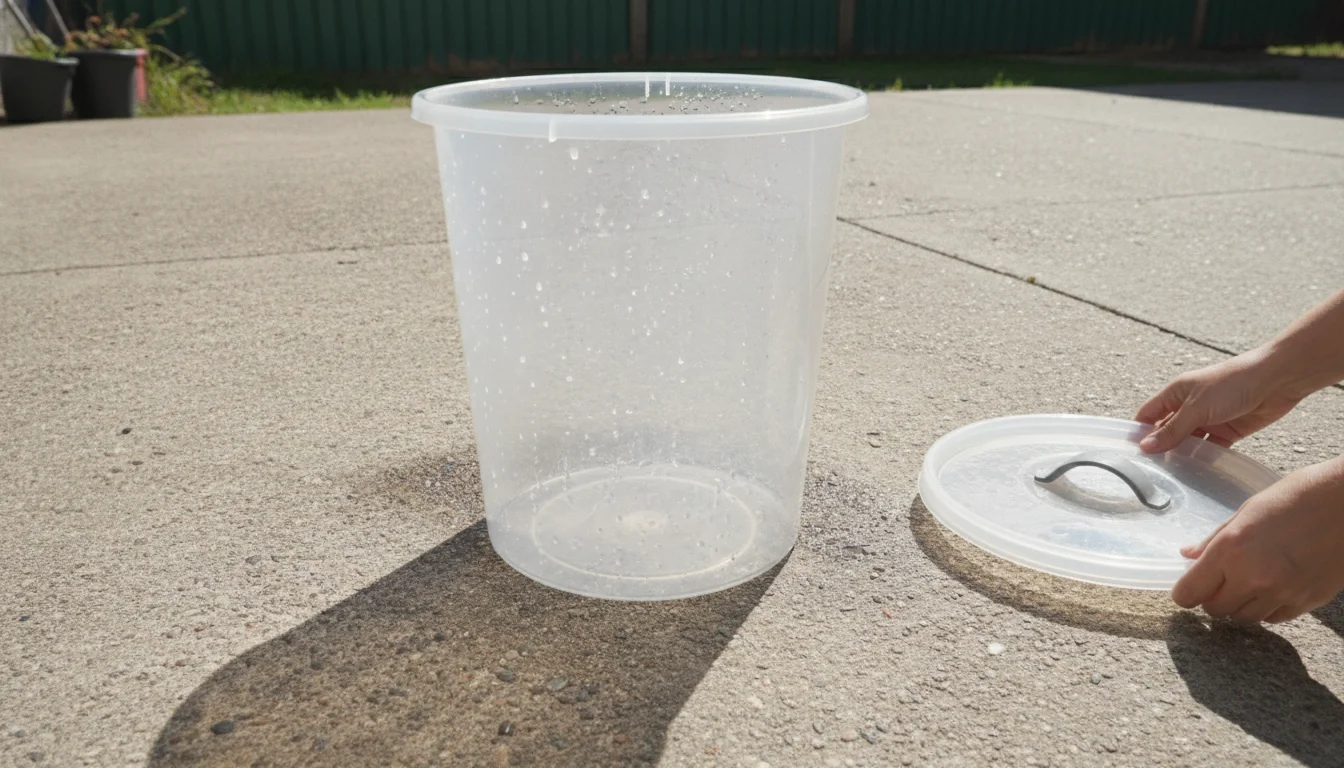
7. Replace a plastic can that won’t stop smelling
Still smells after a proper wash, a bleach rinse and a full day in the sun? Then the smell is in the plastic, and more cleaning won’t get it out. Architectural Digest and Chowhound both note that plastic holds on to odor where stainless steel doesn’t.
So replace it. A basic plastic kitchen can is cheap (one Reddit commenter put it at $10 to $20), often less than you’ve already spent on cleaners. If you move up to stainless, check the inside: a lot of steel cans have a removable plastic bucket, which is the part that touches the bag. The upside is that you can replace just the bucket.
8. Put activated charcoal in the bottom
Charcoal is the deodorizer that actually earns its spot. Put a sachet of activated charcoal, or a chunk of plain lump charcoal, in the bottom of the clean, dry can under the bag. One Reddit user’s can still smelled of potato peels after the bag came out; a chunk of lump charcoal overnight and the smell was gone the next day. Replace or recharge it monthly (a few hours in direct sun recharges it).
Baking soda does the same job, more weakly. A light layer in the bottom soaks up moisture and mild smells. Neither one fixes residue you haven’t cleaned off.
9. Drain and double-bag wet food waste
This is the one that stops the smell coming back. Pour off any liquid before wet waste goes in. Double-bag meat packaging, the absorbent pads from meat trays, seafood shells and anything spoiled, and tie the inner bag shut. Give pet food cans, yogurt cups and meat trays a quick rinse before they go in. And nothing goes in the can unless it’s in a bag.
UC IPM points out that kitchen waste tossed in without a sealed bag is how maggots end up crawling out of the can. If a bag does leak, clean the can before the next bag goes in.
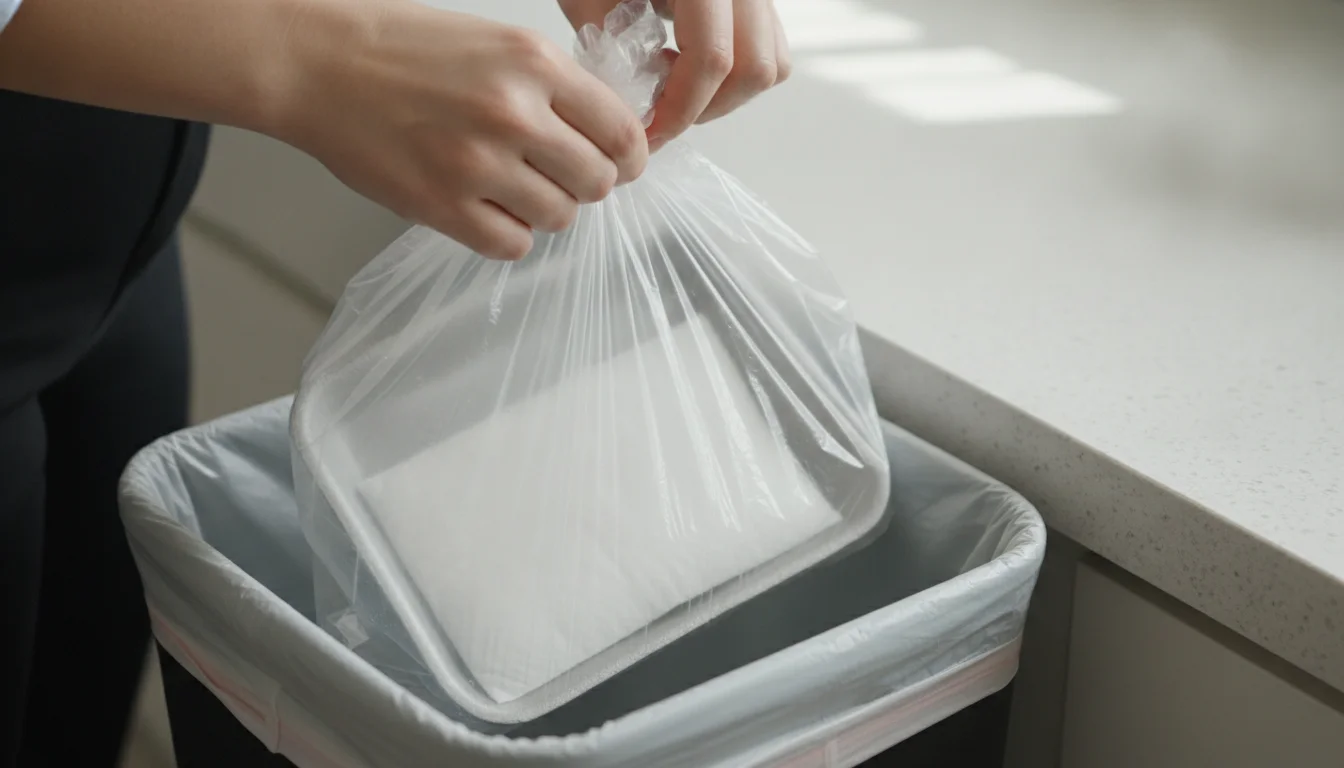
10. Freeze meat scraps until trash day
Raw meat scraps, fish skins and chicken packaging go in a bag in the freezer, and into the trash the night before pickup. A Reddit user found that meat packaging and the absorbent pads from chicken trays reek within 24 hours in the kitchen trash. Frozen, they don’t smell, and flies can’t lay eggs on them. Label the bag so nobody mistakes it for dinner.
11. Take the trash out more often
The less time food sits in the can, the less time it has to rot. Empty the kitchen can every couple of days, more often in hot weather or after anything pungent like fish, and take the bag straight to the outdoor bin, not to the porch or the garage.
Outdoors, UC IPM’s guidance is to put the garbage can out for pickup at least once a week, even if it isn’t full. Garbage that sits more than a week is likely to be producing adult flies.
Frequently asked questions
What can I put in my bin to stop it from smelling?
Charcoal under the bag (method 8), or paper towels or newspaper to soak up small spills, changed with every bag. Wash the can first: nothing you put in fixes residue already stuck to it.
Is there an odor eliminator that actually works?
An enzyme cleaner, because it digests the residue rather than covering it. Scented sachets, sprays and dryer sheets mask the smell for a while. If the source is still there, the smell comes back.
Is it okay to put baking soda at the bottom of a trash can?
Yes. It absorbs a bit of moisture and mild smell. Treat it as maintenance, not a cure for a can that already smells.
How do I get the smell out of an outdoor garbage can?
The same steps, bigger tools. Hose it out, scrub it with soapy water and a long-handled brush, sanitize it with diluted bleach, then let it dry in the sun. Keep the lid closed, park the can in the shade, and put it out on every collection day.
For smells beyond the can, see cooking smells and drain smell. If fruit flies came with it, start with fruit flies.