Table of Contents
Split ends can’t be repaired. Once the hair shaft frays, no serum, mask, or overnight miracle fuses it back together. Hair is dead once it leaves your scalp, so there’s nothing alive in it to heal. That leaves two honest options: cut the split off, or glue it shut with a bonding product until your next wash. Everything else on this page is about stopping the next batch from forming.
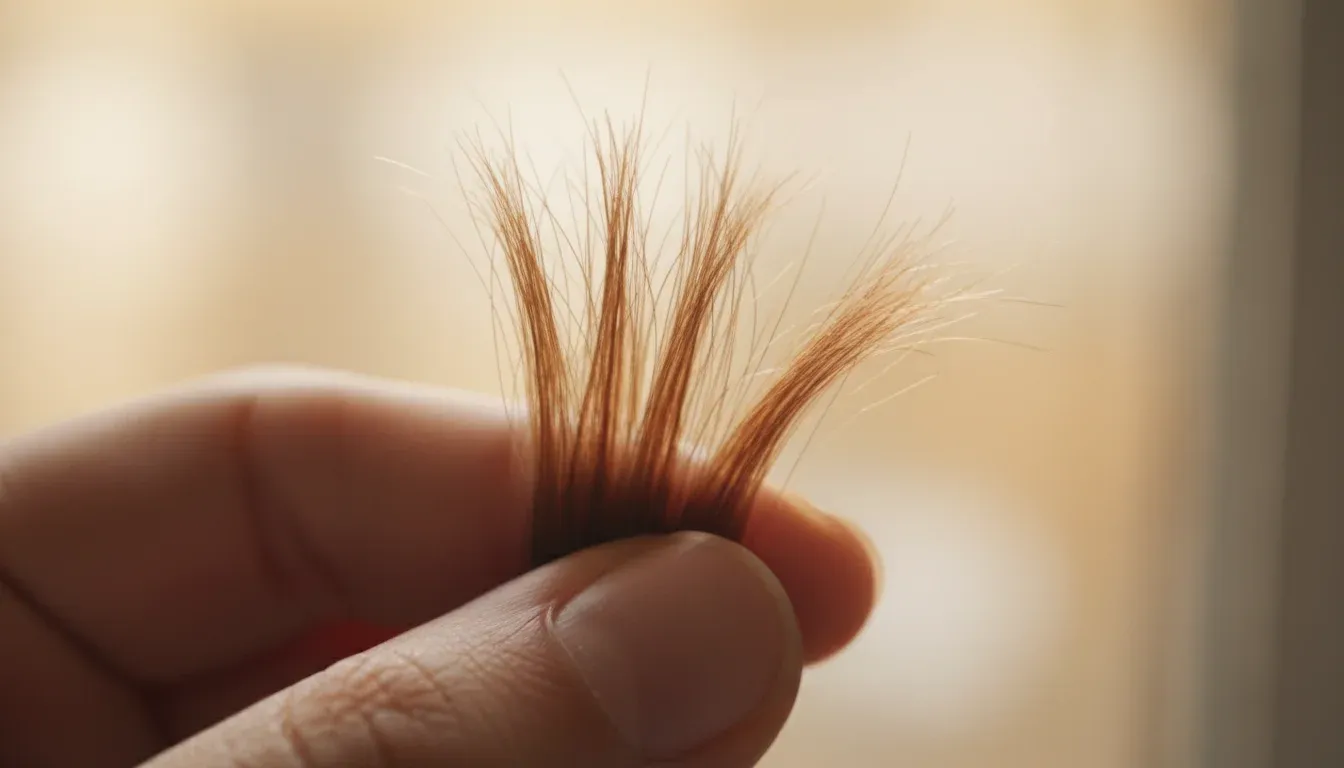
Here’s what’s actually happening. The outer layer of each strand, the cuticle, wears away from heat, friction, rough handling, and harsh chemistry like bleaching and stripping color. Once it’s gone, the soft inner core frays and the end splits (the technical name is trichoptilosis). You can slow that wear to a crawl, but you can’t reverse a split that’s already there. So the real question isn’t how to repair them. It’s whether to remove them or hide them, and how to keep new ones from showing up.
1. Cut them off
The only permanent fix is scissors. There’s no way around it: a split end comes off, it doesn’t come back together.
Get a trim every 6 to 8 weeks. Not a full chop, just a dusting (a quarter inch to half inch), so your stylist takes the damaged tips while keeping your length. If you’re growing your hair out this feels backwards, but ignored splits travel up the shaft and cost you more length to breakage than a regular trim ever would.
Between salon visits you can spot-trim your own. Use sharp hair scissors, never the junk-drawer pair, because regular scissors crush the shaft and start new splits. Work in small sections, twist a section gently so the frayed ends stick out, and snip off what pokes up. Don’t get ambitious. You’re dusting, not cutting a style.
2. Seal split ends temporarily
This is the closest thing to “repair,” so it’s worth being clear about what it does. A bonding conditioner or a protein serum coats the frayed end and holds the split shut, so the hair looks smooth and feels sealed. Cosmetic chemists are blunt about the limit: the protein and silicones sit on the outside of the strand and rinse away with your next shampoo. It’s masking, not mending. The split is still there under the coating.
Warm a pea-sized drop between your palms and smooth it over the bottom inch or two of dry or damp hair, never the roots (piling product up there just leaves you with greasy hair). Reapply after every wash. Treat it like makeup for your ends before a photo or a night out, not a repair you can bank on.
3. Stop heat styling (or use it right)
Flat irons, curling wands, and blow dryers cook your hair at 300 to 400°F (150 to 200°C). That bakes out moisture and weakens the protein structure until the ends give. Heat is the single biggest driver of new splits for most people, so this is the habit worth changing first.
If you’re using hot tools, put a heat protectant on first. It coats each strand and buffers the heat. Keep the temperature under 350°F (175°C) and don’t drag the iron over the same section again and again. Better yet, air dry when you can. If you hate the frizz, squeeze the water out with a microfiber towel or a cotton t-shirt, then let it finish on its own.
4. Keep the ends conditioned
Dry hair is stiff hair, and stiff hair snaps and splits. Moisture keeps each strand flexible enough to bend instead of break. Use conditioner after every wash, and once a week swap in a deep conditioning mask. Look for keratin, argan oil, or shea butter on the label.
Apply it to damp (not dripping) hair and concentrate on the ends, where the damage lives. The roots take care of themselves. Leave a mask on for 10 to 15 minutes; some people wrap their hair in a warm towel to help it soak in. A leave-in conditioner or a few drops of oil on the ends between washes keeps them from drying out again.
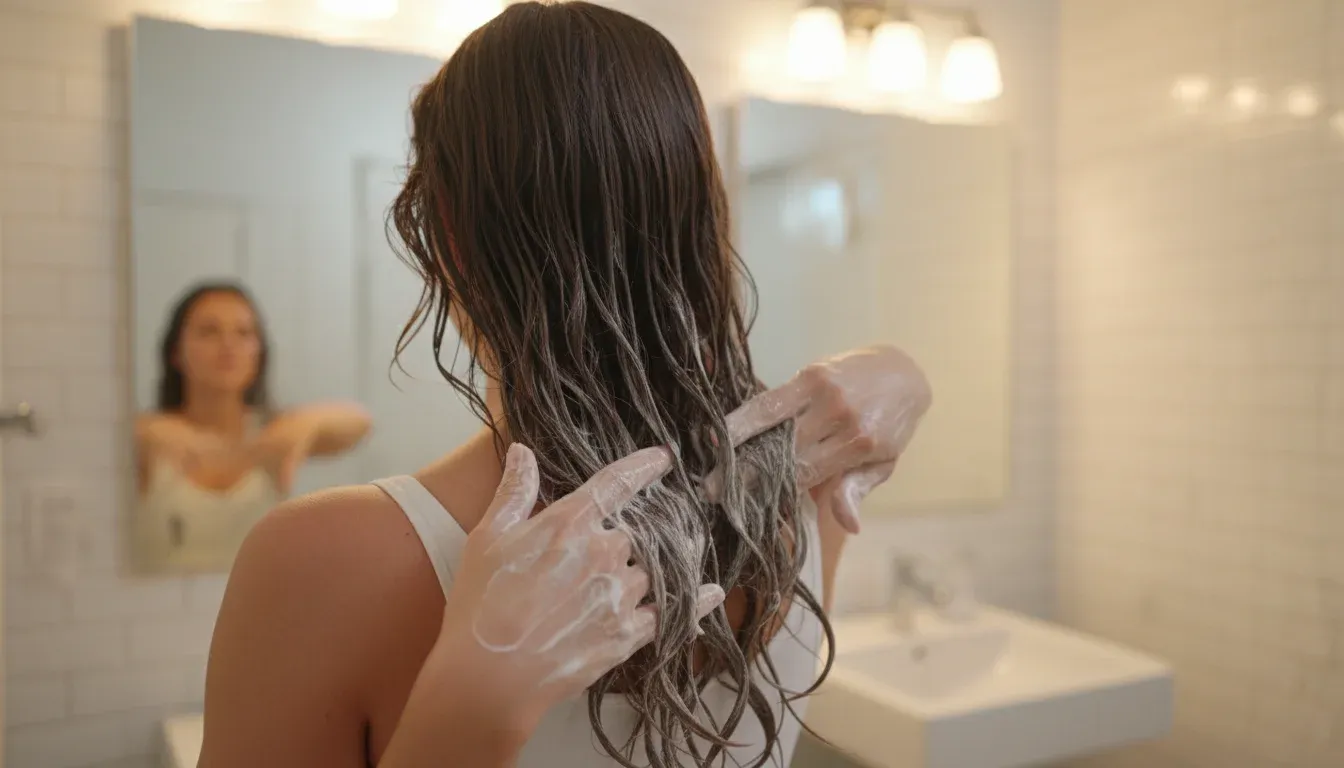
5. Be gentle with wet hair
Wet hair stretches, and stretched hair tears. Brushing it straight out of the shower is one of the fastest ways to rip the cuticle and make new splits.
Reach for a wide-tooth comb instead of a brush, and start at the ends, working up in small steps as the tangles clear. Hit a knot? Hold the hair above it so you’re pulling against your fingers, not your scalp. If your hair is straight, let it dry part of the way before you comb at all.
6. Sleep on silk or satin
This one’s a habit, not a cure, so don’t expect miracles. But it does cut down the friction that wears ends thin. A cotton pillowcase drags on your hair all night, and that constant rubbing roughens the cuticle over weeks and months.
Silk or satin lets the hair slide instead of catching. Tying your hair up in a loose braid or a loose bun before bed helps too, as long as it’s loose. The point is less movement, not more tension.
7. Ease off tight hairstyles
Ponytails, buns, and braids that pull tight keep the strands under constant tension, and tension weakens hair until it breaks and splits, usually right where the elastic sits.
You don’t have to give up tying your hair back. Use a scrunchie or a soft fabric-covered elastic instead of a bare rubber band, move a high ponytail lower now and then, and keep it loose enough that it isn’t tugging at your scalp.
When to call a professional
Split ends are cosmetic, so most of this is a job for you and a good pair of scissors. See a stylist if the damage is all over and a home dusting isn’t keeping up. They can shape it out properly.
A few signs point to something other than fraying ends, and they are worth a dermatologist’s eye rather than a trim: hair snapping off mid-shaft, breaking off in chunks near the scalp, or noticeable shedding and bare patches, especially if it has kept up for more than two or three weeks or keeps getting worse. Those are not problems a pair of scissors fixes, and a professional can look at what is actually going on. An itchy, flaking scalp is a separate concern from your ends; our dandruff guide covers that one.
Frequently asked questions
Can split ends be repaired?
No. Once the hair shaft splits, it can’t fuse back together. The hair is dead, so there’s nothing to heal. You can cut the split off (permanent) or coat it with a bonding product to hold it shut until your next wash (temporary). Anything promising to “repair” or “mend” split ends is doing the second thing, not the first.
Do split end repair serums actually work?
They work as a cover-up, not a cure. Protein and silicone serums glue the frayed end shut so it looks and feels smooth, but they wash out at the next shampoo and the split comes back. Useful before an event, useless as a long-term fix.
How often should I trim to stay ahead of them?
Every 6 to 8 weeks for most people, sooner if you use heat daily or your ends feel rough. You only need a dusting, a quarter to half inch, not a big cut.
Do split ends stop your hair from growing?
Not at the root. Growth happens at the scalp, and a split at the tip doesn’t reach it. But if you leave splits alone they travel up the strand, and the breakage that follows can cost you length faster than your hair gains it. That’s why hair can feel stuck at one length.