Table of Contents
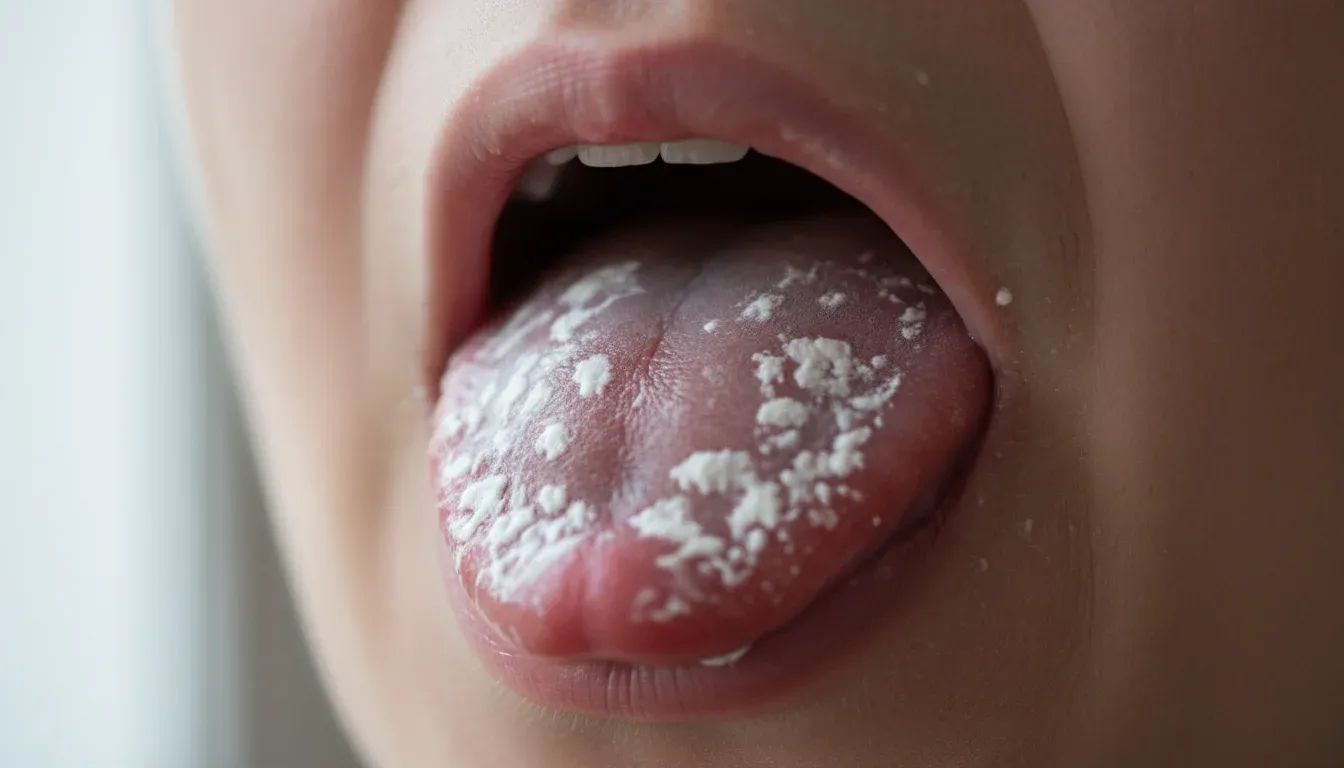
Oral thrush is a yeast infection in your mouth. The Candida fungus that normally lives there quietly overgrows, and you get creamy white patches on your tongue and inner cheeks that leave sore red spots (sometimes a little blood) when you wipe them. Your mouth feels raw, eating gets annoying, and taste goes flat.
For most healthy people it’s uncomfortable rather than dangerous, and it often settles with a handful of household steps that soothe your mouth and stop the yeast digging back in. Here’s what actually helps, roughly in the order worth trying, and the signs further down that mean stop treating it at home and get seen.
What causes it
Thrush shows up when something tips the balance in your mouth in the yeast’s favor. Working out which thing it was tells you which step below matters most for you.
The usual triggers:
- A steroid (preventer) inhaler for asthma or COPD, when you don’t rinse after using it. The residue feeds the yeast, and it’s one of the most common causes in otherwise healthy adults.
- Dentures, especially upper ones or a set that doesn’t fit well, and a dry mouth.
- A recent course of antibiotics, which knocks out the bacteria that normally keep Candida in check.
- Diabetes or high blood sugar, which leaves more sugar in your saliva for the yeast to live on.
- A weakened immune system, plus the extremes of age (babies and older adults are more prone).
- Smoking.
Thrush in a healthy adult with none of these is worth a proper look, because it can flag something underlying (Mayo Clinic).
1. Start with good oral hygiene
Before you reach for anything else, get your mouth genuinely clean. Brush twice a day, floss once, and gently brush or scrape your tongue, where a lot of the film sits. That film is the same stuff behind most bad breath, and a tongue scraper (the tool people use against tonsil stones) clears it fastest. If you wear dentures, clean them every day too.
Cleveland Clinic’s first move for a mild case is to do exactly this, properly, for three to four weeks and see whether the thrush clears on its own before trying anything else. It often does. Use a soft brush, don’t scrub the sore patches raw, and don’t share your toothbrush with anyone.
2. Rinse with warm salt water
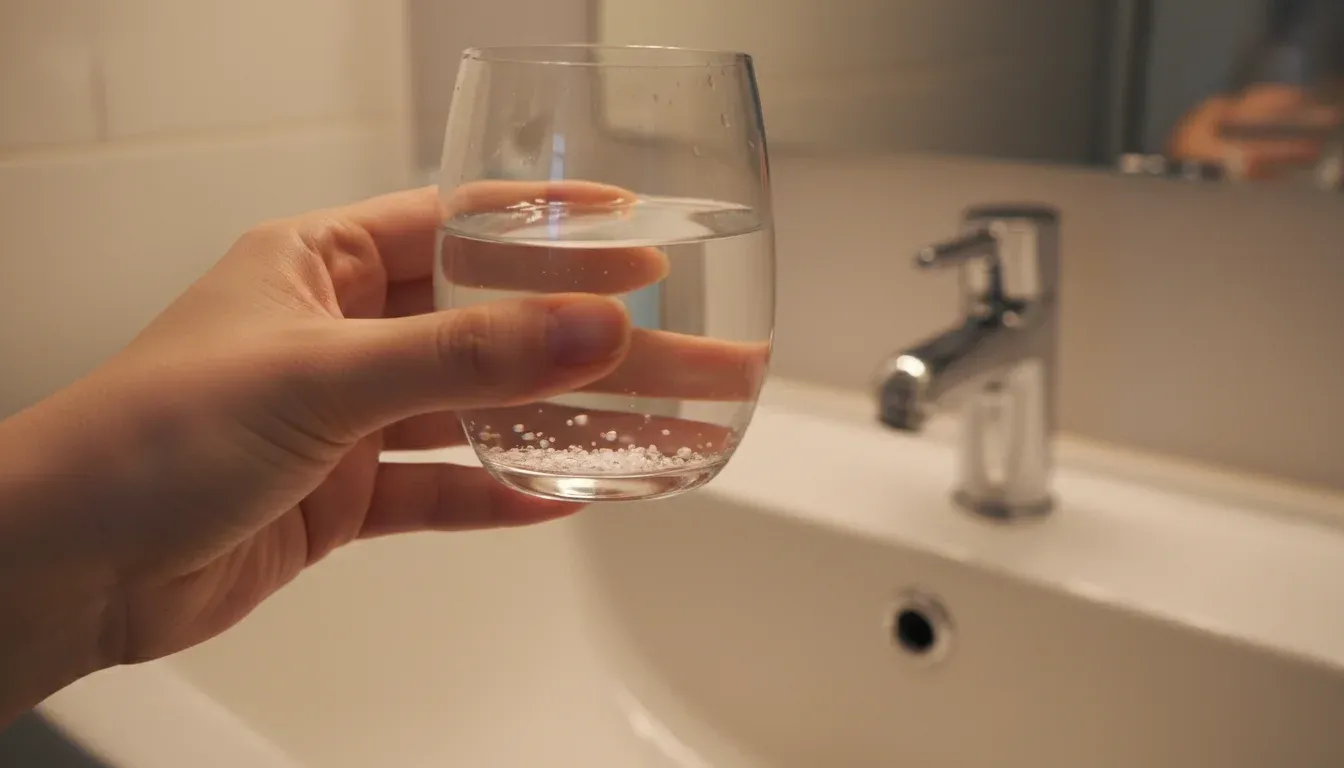
Dissolve half a teaspoon of salt in a cup of warm water. Swish it around for 30 seconds, then spit it out. Do it after meals and before bed.
Salt won’t cure thrush. What it does is clean the area and take the edge off the soreness, so your mouth feels less raw while the real work happens. Swish and spit rather than swallow, and it’s an easy step to keep up after meals and before bed.
3. Alternate with a baking soda rinse
Baking soda does a slightly different job. Mix half a teaspoon of baking soda (sodium bicarbonate) into a cup of warm water, swish, and spit. Don’t swallow it.
It nudges the acidity in your mouth back toward neutral, which makes the place less friendly to yeast, and it loosens the film on your tongue and cheeks. Alternate it with the salt rinse through the day. Keep to the half-teaspoon measure, because a stronger mix just tastes soapy and doesn’t work any better.
4. Disinfect anything that goes in your mouth
Your toothbrush, retainer, dentures, mouthguard, baby bottles and pacifiers all pick up yeast and hand it straight back to you. That’s how thrush drags on for weeks.
Replace your toothbrush once the infection starts clearing, and don’t share it. Boil or sterilize what’s built to take heat, like bottles and pacifiers. For dentures, take them out at night, clean them every day, and soak them the way your dentist recommends to disinfect them. Leave them out for at least six hours in every 24 so your gums get a break, and if they don’t fit properly, get them adjusted. An ill-fitting set is a standing invitation for thrush.
5. Rinse your mouth after every inhaler dose
If you use a steroid inhaler, this is probably the single most useful thing on the list for you. After each dose, take a mouthful of water, swish it around, and spit it out. That clears the residue that lets the yeast take hold in the first place.
A spacer (the plastic chamber that clips onto the inhaler) helps too, because less of the drug lands in your mouth. Don’t stop using your inhaler to dodge thrush, since the condition it treats matters more. Just build in the rinse. And if thrush keeps coming back despite it, ask your pharmacist to check your technique or your device.
6. Eat unsweetened yogurt or take a probiotic
Plain yogurt with live, active cultures won’t kill the yeast, but studies suggest the good bacteria slow its growth and help rebalance your mouth. It’s also soft and cold, which is welcome when everything hurts to chew.
Pick an unsweetened variety. Sugar feeds the yeast, so the fruit-on-the-bottom stuff quietly works against you. If you can’t stand yogurt, a daily probiotic supplement does the same job.
7. Cut back on sugar and keep blood sugar steady
Candida runs on sugar. Cutting back on sweets and sugary drinks starves it a little while you’re clearing an infection. If you’re diabetic or prediabetic this matters more: uncontrolled blood sugar leaves extra sugar in your saliva, and thrush will keep coming back until your glucose is under control. Not the fun answer, but the true one.
8. Stick to soft, bland food and skip the smoke
Hot, spicy and acidic foods, plus alcohol, set sore patches on fire (the same triggers that aggravate cold sores). Stick to soft, bland things (yogurt, mashed potato, scrambled eggs, soup that’s cooled to lukewarm) until it settles down. And if you smoke, stop, or at least cut back. Smoking dries your mouth out, and thrush loves a dry mouth.
9. Ask a pharmacist about an antifungal mouth gel
Everything above soothes your mouth and makes it less hospitable. If you want to actually clear the yeast, ask a pharmacist about an antifungal mouth gel. You can buy one over the counter, and the pharmacist will tell you whether it suits you.
Follow the directions on the label for how much to use and for how long, and finish the full course even after the patches disappear. Stopping early is the classic reason thrush bounces straight back. In the UK an antifungal mouth gel from a pharmacy is suitable for adults, children and babies over four months; a younger baby should see a GP rather than be treated at home.
When to call a professional
Home care handles most mild thrush. See a doctor, dentist or pharmacist, though, if any of these apply:
- It hasn’t improved after a week or two of home and over-the-counter care, or it keeps coming back.
- Swallowing hurts, or food feels like it’s catching in your throat. The infection may have spread further down.
- You’re treating a baby under four months, or you’re breastfeeding and your nipples are cracked, red, itchy or sore. Thrush can pass back and forth between the two of you.
- You have a weakened immune system (from cancer treatment, HIV, a transplant or immune-suppressing medicine) or diabetes.
- The white patches bleed when you wipe them.
- You’re an otherwise healthy adult with no obvious cause. Thrush is uncommon in that group, so it’s worth having someone check for an underlying reason.
Those signs come straight from the NHS and Mayo Clinic, and they’re the line between “handle it at home” and “get it looked at.”
Frequently asked questions
How long does oral thrush take to go away? A mild case often settles within a week or two once you keep your mouth clean and treat it, and an antifungal mouth gel usually works over about a week. If it’s dragging on past that, see someone.
Can oral thrush go away on its own? In healthy people a mild case sometimes clears with good oral hygiene alone over three to four weeks. If it doesn’t, or it’s spreading, don’t just wait it out.
Is oral thrush contagious? In adults, no. The NHS says oral thrush in adults isn’t contagious. The exception is between a breastfeeding baby and mother, where it can pass back and forth.
What foods should I avoid? Sugar and sugary drinks, because they feed the yeast, along with hot, spicy and acidic foods and alcohol while your mouth is sore.