Table of Contents
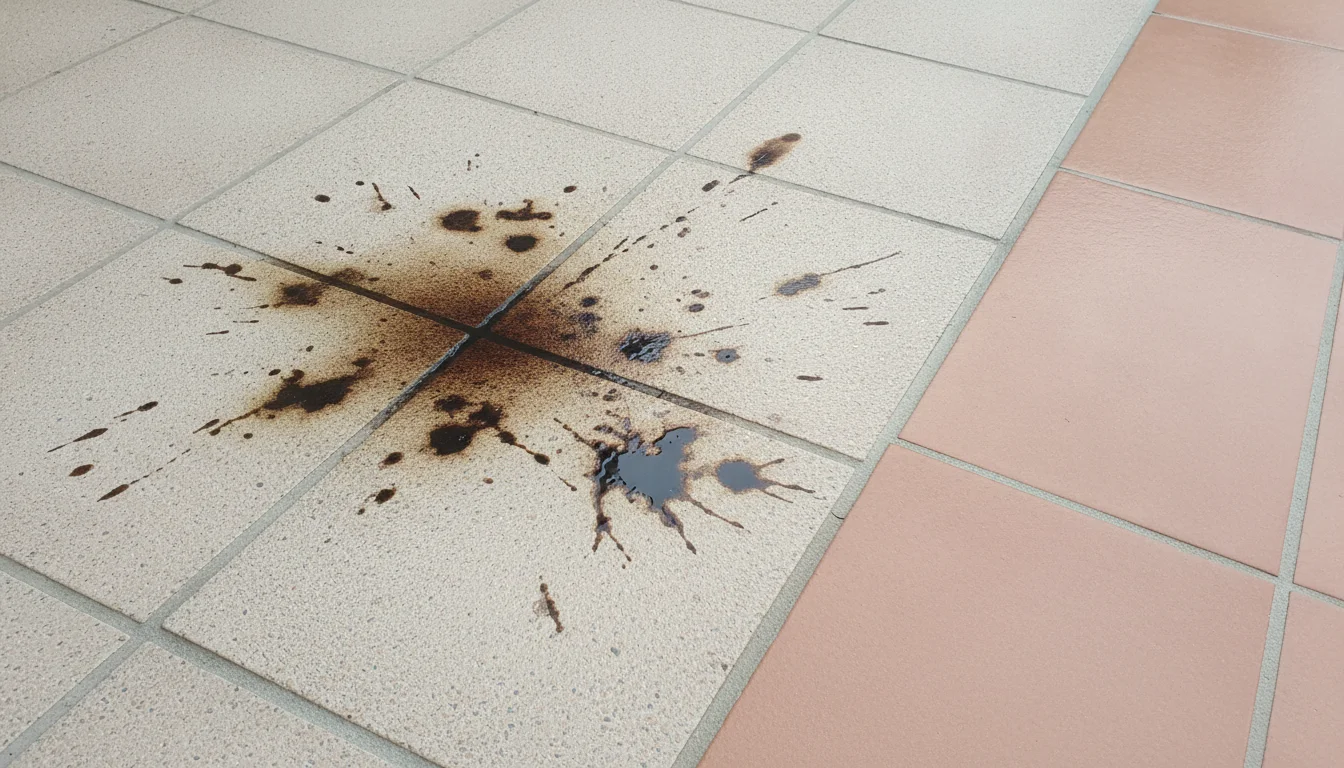
How to get rid of oil stains on tiles depends far more on the tile than on the oil. LATICRETE calls glazed ceramic and porcelain usually impervious or highly resistant to staining, so cooking oil, barbecue fat or motor oil sits on top and soap or a degreaser ends it. Grout is a different story: it’s cement-based and usually very porous. So are unglazed terracotta, sandstone, limestone and marble. They drink oil, and that’s when you need a solvent or a poultice.
Work out which you’ve got (method 2), then go gentle to strong. Most kitchen floors are done by method 3. Decking oil on balcony tiles usually needs method 5. Old oil in stone needs method 6.
1. Blot it, then bury it in powder
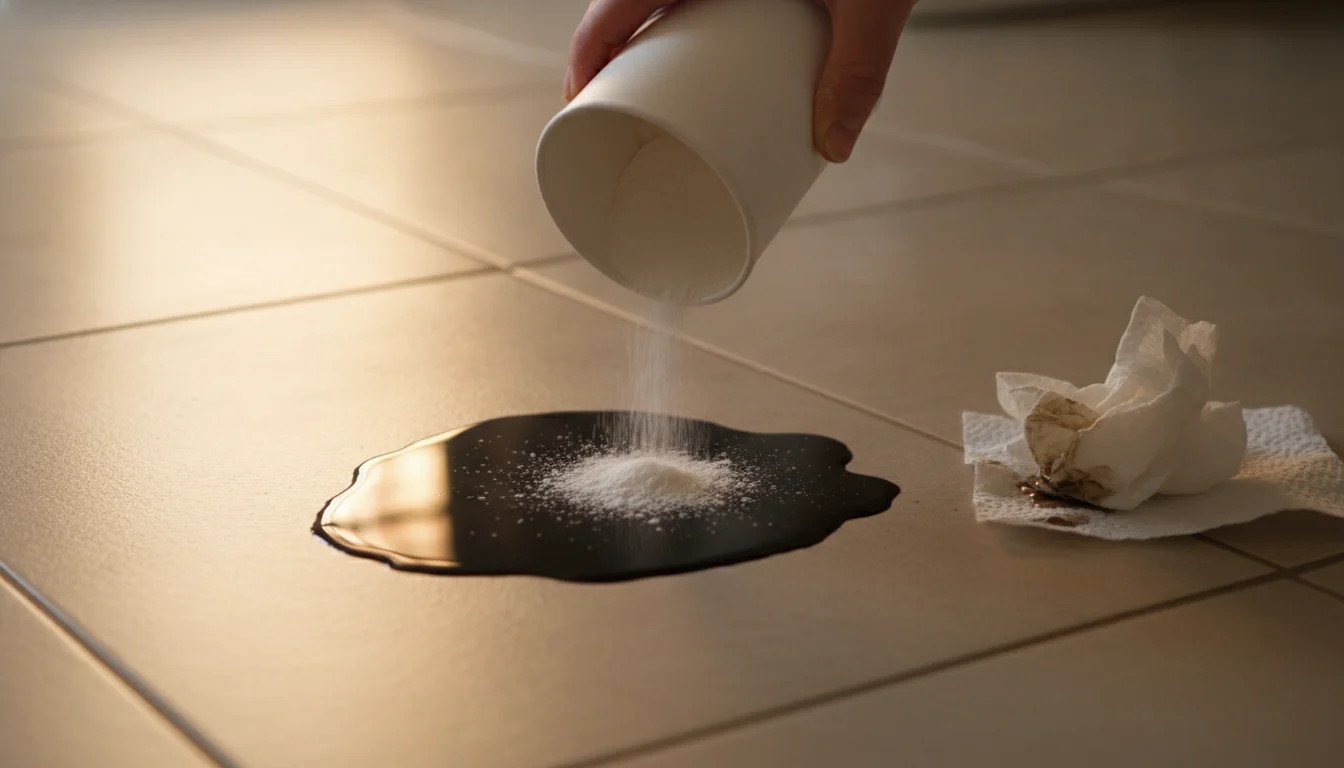
Blot a fresh spill with paper towels straight away. Don’t wipe, which spreads it. Then cover the spot with a thick layer of cornstarch or unscented talc, enough that you can’t see the oil through it. Leave it at least 30 minutes, or overnight on a heavy spill or one that has soaked into grout or terracotta. Brush it off and repeat while the powder keeps darkening.
On glazed tile this mostly saves you a mess. On porous tile it’s the difference between a stain and no stain.
2. Drip water beside the mark to see what you’re dealing with
Clean and dry a patch of tile a few inches from the stain. Put a drop of water about 1 inch (2.5 cm) across on it, and on the grout too, and leave them 5 to 30 minutes. That’s LATICRETE’s test for stone.
If the water beads and stands, the surface is glazed, sealed or very dense, and the oil is on top. If it soaks in and darkens the surface, it’s absorbent, and the oil is in the pores.
Test beside the stain, not on it. Oil repels water, so a drop on the mark tells you nothing.
3. Wash it with warm soapy water
Add about 1 teaspoon of dish soap per quart (1 L) of warm water. Wipe or mop the stain, then rinse with clean water, more than once, and dry with a soft cloth.
Don’t skip the rinse. Soap turns grease into an emulsion that can dry as a cloudy film, and Daltile warns that cleaner left on a floor tile cuts its slip resistance.
Most fresh spills on glazed kitchen tile end here. Splatter on the cooker itself is its own job: see grease on a stove top.
4. Scrub in a tile degreaser
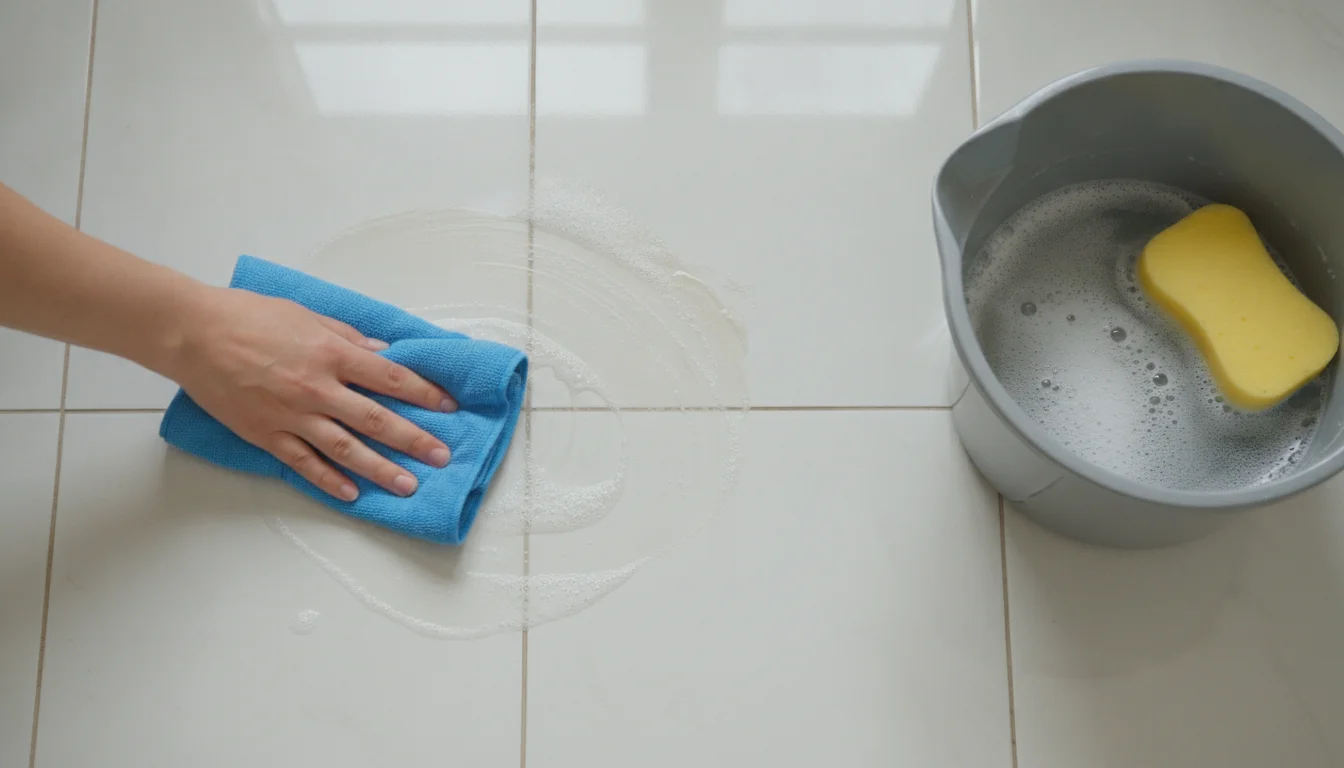
For heavy grease, LATICRETE’s advice is an alkaline cleaner made for ceramic and porcelain tile. Dilute it as the label says, wet the stain, and let it sit. Daltile gives heavily soiled tile 3 to 5 minutes. Scrub with a stiff nylon brush, then rinse well.
Outdoors, PROSOCO’s paver degreaser runs 1 part to 4 parts water for heavy stains, sits 1 to 3 minutes, then gets reapplied and scrubbed hard. It wants the surface at 50°F (10°C) or warmer, and a pressure washer at 400 to 1,000 psi can do the rinse.
Polished porcelain is the exception. Daltile strongly cautions against acid-based or solvent-based cleaners on it.
Skip vinegar and lemon on grout. LATICRETE lists vinegar among the acids that etch it, and warns against bleach, ammonia and abrasive cleaners on tile and grout.
5. Dissolve it with the right solvent
When soap can’t touch it, the oil needs a solvent, and the solvent has to match the oil. On a Bunnings Workshop thread about decking oil on outdoor tiles, a Bunnings team member said methylated spirits for water-based decking oil and mineral turpentine (mineral spirits) for oil-based. The poster’s turned out to be the water-based kind. For grease, cooking oil and other oil-based marks on stone, the Natural Stone Institute lists mineral spirits or acetone.
Work it into the mark with a cloth or stiff nylon brush, harder the longer the oil’s been there. Rinse, and judge it once it’s dry. Use pure acetone, not nail polish remover: Arizona Tile says some removers contain no acetone at all.
All of these are flammable. Open the windows, put gloves on, and keep flames and pilot lights away. Test a hidden spot first, and keep solvents off polished porcelain.
6. Draw old oil out of porous tile with a poultice
This is the fix for oil that has soaked into unglazed terracotta, sandstone, limestone or marble. On glazed tile it does nothing, because there’s nothing in the pores to pull out.
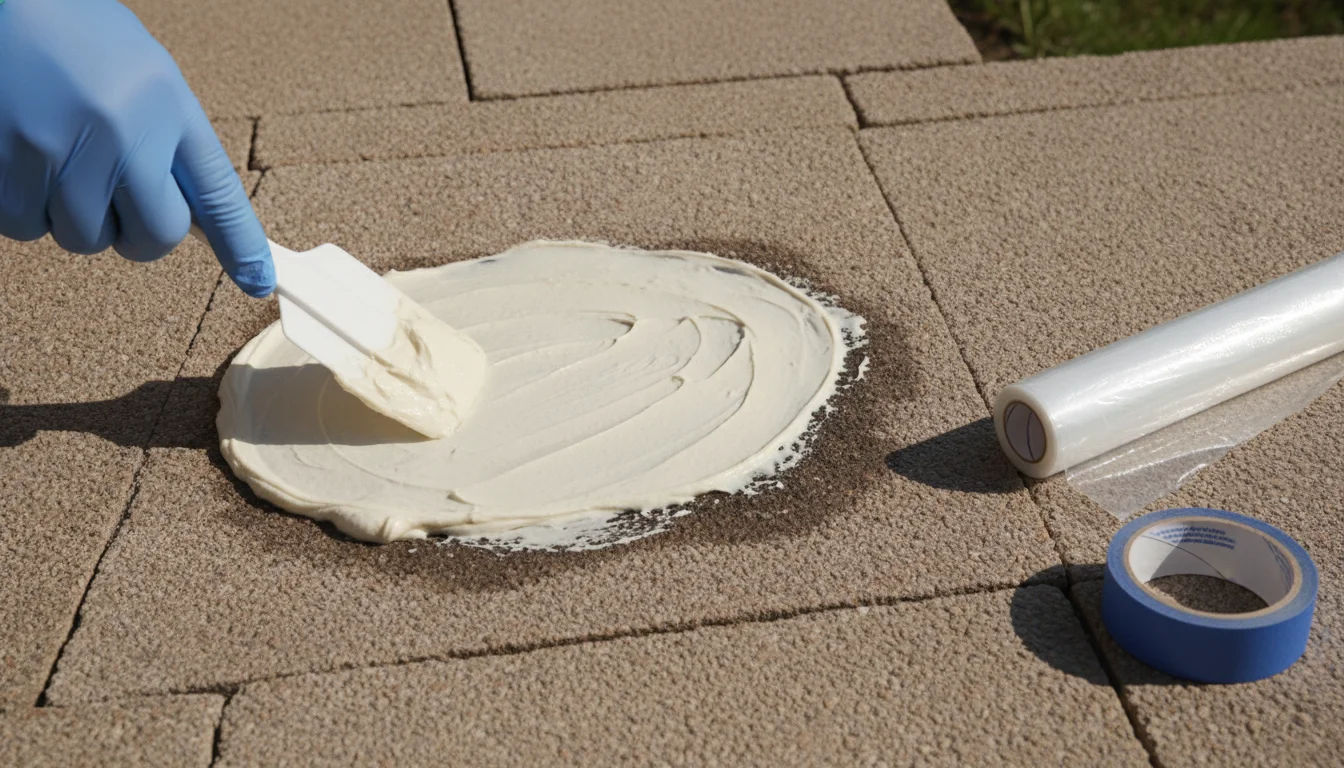
Mix a white absorbent powder (talc, whiting, kaolin or diatomaceous earth) with mineral spirits or acetone in a glass or metal bowl, until it’s about the consistency of peanut butter. The Natural Stone Institute says roughly 1 pound (450 g) of powder covers 1 square foot (0.1 m²). Spread it 1/4 to 1/2 inch (6 to 12 mm) thick over the stain with a wood or plastic spatula. Cover it with plastic wrap, tape the edges and leave it 24 to 48 hours. Scrape it off, rinse and look.
Ready-made poultices skip the mixing. PROSOCO’s pours on and dries in 5 to 8 hours, and it’s done when it has cracked all over. Expect a second round on an old stain. The Natural Stone Institute is plain about it: some stains never come out completely.
7. Check whether it’s a stain or an etch
A true stain is always darker than the tile around it. Arizona Tile is blunt: a mark that’s lighter, duller or rougher isn’t a stain at all. It’s an etch, where an acid ate the surface, or a bleach mark from a strong alkali.
A darker mark can come out with methods 3 to 6. A pale one can’t, because nothing is in the pores. Marble, limestone, travertine and many slates etch within seconds of acid contact, which is how a vinegar “fix” swaps an oil stain for a pale ghost. Polished marble can sometimes be buffed back. A honed finish, slate or mixed granite needs a pro.
8. Call a stone restoration specialist
If a poultice or two hasn’t shifted a mark in natural stone, or it’s an etch on a honed or textured finish, call a stone restoration company rather than reaching for stronger chemicals. Tell them what the oil was, what the tile is, and everything you’ve already put on it.
How to prevent oil stains on tiles
Seal the grout. LATICRETE says most glazed ceramic and porcelain doesn’t need sealing, but grout does, and an impregnating sealer protects it against both water- and oil-based stains. Hunker suggests resealing every one or two years.
Natural stone needs a sealer too. If a spill you blotted fast still stains, the seal has worn, and that’s the time to reseal, once the stain is out. Frying oil you’re done with? Dispose of the cooking oil properly, not down the sink. Concrete or pavers next to the tiles? See oil stains on concrete.
FAQ
How do you clean oil off floor tiles?
Blot, then wash with warm soapy water and rinse well. If it’s still greasy, use an alkaline tile degreaser and give it 3 to 5 minutes before you scrub. If the tiles come up clean but the grout stays dark, the oil’s in the grout, which is porous. That’s method 5, then method 6.
Does cola remove oil stains?
Don’t bother. We found no tile or stone maker that recommends it, and LATICRETE lists soft drinks among the acidic spills that can etch grout.
What should you not use on porcelain tiles?
LATICRETE says no bleach, no ammonia, no abrasives and no dyed household cleaners on porcelain and its grout. Daltile adds acid-based and solvent-based cleaners for polished porcelain.
Can porcelain be permanently stained?
Rarely. Glazed porcelain is usually impervious or highly resistant, so oil sits on the surface and washes off. Polished porcelain is the weak spot: Daltile says it’s more prone to staining. And when a porcelain floor looks stained, the culprit is usually the grout between the tiles.