Table of Contents
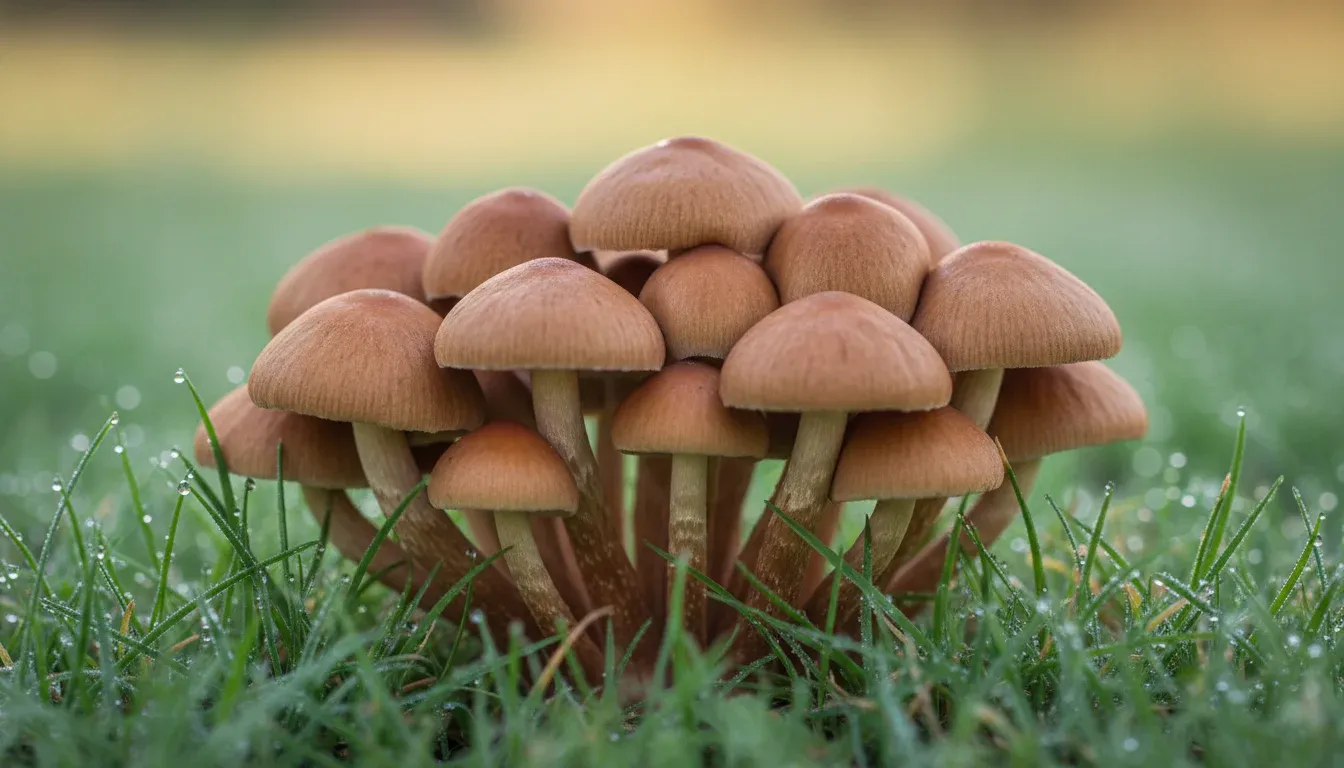
The mushrooms you see in your yard aren’t the organism. They’re the fruit of one. The actual fungus is a network of threads underground, breaking down buried wood, dead roots, or that tree stump you thought was gone five years ago. Kill the mushroom and you’ve done nothing. The network just sends up another one.
That’s why most advice misses the point. Vinegar sprays and baking soda solutions kill what’s visible while the mycelium keeps humming below. These four methods are honest about what they actually do – and which situations each one is right for.
1. Remove Them by Hand
Pluck mushrooms as soon as they appear, before they release spores. Wear gloves (some species cause skin irritation) and drop them in a sealed bag for the trash. Don’t compost them.
This won’t kill the underground network, but it stops reproduction. The mycelium needs to fruit in order to spread to new areas – deny it that and you’re slowing the whole operation down. Do it consistently for a few weeks and you’ll start to see fewer and fewer coming up. You’re not evicting the fungus, you’re starving the cycle.
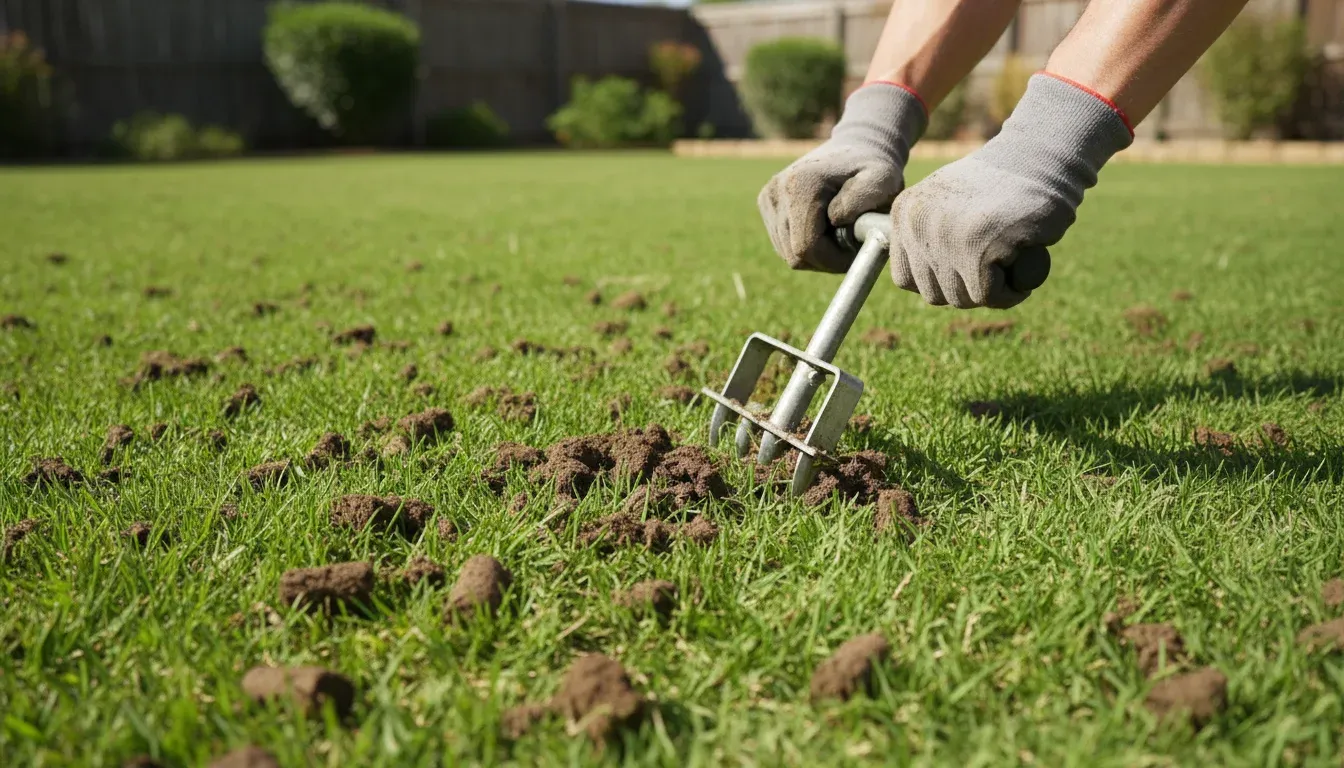
One addition worth the two minutes: after bagging the mushrooms, mix 2-3 tablespoons of dish soap into 2 gallons (7.5 L) of water and pour it into the soil around where they were growing. Use a screwdriver or garden fork to poke holes first so the solution reaches below the surface rather than just sitting on top. It won’t sterilize the soil, but it knocks back the top layer of mycelium and slows regrowth. Reapply after rain.
2. Mow Before the Gills Open
For a widespread patch, mow them down before the caps fully open. The gills are on the underside of the cap – as long as they haven’t spread open, the spores haven’t launched. Check before you mow. If the caps are open, you’re better off with method 1.
The obvious question: does mowing spread mushrooms? Yes, if you do it at the wrong time. Mowing open caps scatters broken pieces across the yard, and those pieces carry spores. Done right (before the gills open), mowing prevents millions of spores from setting up new colonies. Done wrong, you’re seeding your entire lawn.
If you have kids or pets, bag the mower clippings rather than leaving them on the lawn. Some mushroom species are toxic even in fragments.
3. Dig Out the Mycelium
This is the nuclear option. For a persistent cluster in one specific area – say, a patch that keeps coming back in the same spot every fall – dig down about 12 inches (30 cm) and remove the soil entirely. You’re physically excavating the fungal network. Fill the hole with fresh topsoil and reseed.
It’s labor-intensive and it looks ugly for a few weeks while the grass fills in. But it’s the only method that actually removes the organism rather than just suppressing it. The reason a cluster keeps returning to the same spot is that there’s something underground feeding it: a buried stump, old construction timber, a dead root system. When you dig, you’ll usually find it. Pull it out, fill the hole, reseed, and the mushrooms stop because there’s nothing left to fruit from.
Save this for spots where nothing else works and you’re tired of fighting the same patch every year.
4. Just Wait It Out
Mushrooms flush when conditions line up: cool temperatures, heavy rain, high humidity, usually in fall or after a wet stretch in spring. Most flushes last a week or two, then the soil dries out and they disappear on their own.
If the mushrooms aren’t a safety concern and you’re not bothered by the look, leave them. They’re actively improving your soil – breaking down organic matter and making nutrients available to your grass roots. Once the food source underground is exhausted, they stop coming up entirely.
The honest answer for a lot of people: you’re dealing with a temporary flush that will clear up without any effort on your part. Give it two weeks. If the same patch keeps returning season after season, that’s a signal the mycelium has a reliable food source underground and won’t stop until it’s gone. That’s when you move to method 3. But most of the time? They just stop.
Mushrooms are a symptom. The cause is always something underground decomposing. Fix that – remove buried wood, improve drainage, stop overwatering – and the mushrooms lose their food source. Keep plucking without addressing the cause and you’ll be plucking forever.