Table of Contents
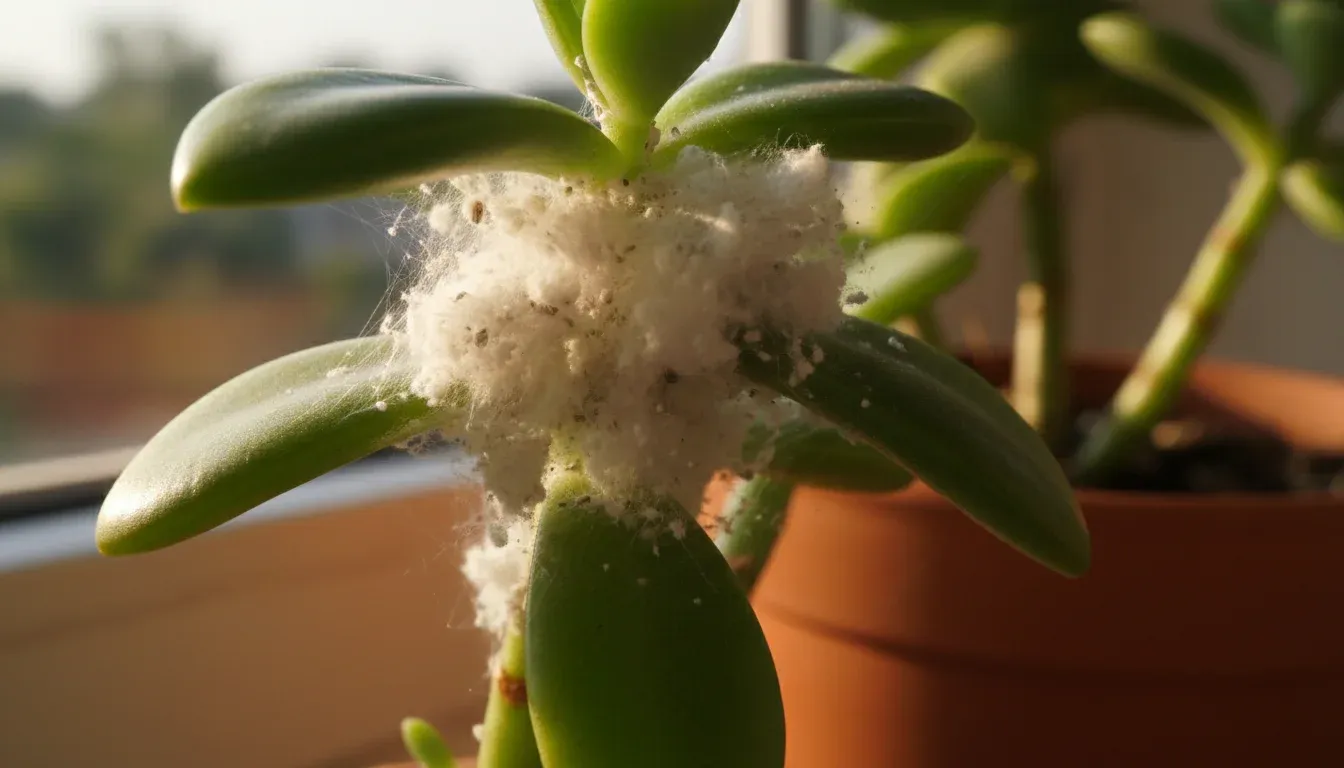
Those white cottony clusters on your plant stems are mealybugs – soft-bodied sap suckers that multiply fast and spread to every plant nearby. They’re not invincible. But they are persistent, and half-measures just delay the problem. Here’s the full playbook, from the first thing to do when you spot them to when to cut your losses entirely.
1. Quarantine the Plant
Move the infested plant away from your others right now. Mealybugs crawl between pots and hitch rides on your hands and tools. A different room is ideal. While you’re at it, check the neighbors – if one plant has them, others nearby probably do too.
Keep it isolated throughout treatment. Wipe down the spot where it was sitting with soapy water to kill any that dropped off. Don’t return it to the group until you’ve gone two full weeks without seeing live insects or new damage.
2. Blast Them Off with Water
Take the plant outside or into the shower and hit it with a strong spray. Focus on the undersides of leaves, stem joints, and anywhere you see those white fuzzy clusters – that’s where mealybugs concentrate and where their egg masses sit. This won’t kill them outright, but it knocks down the population significantly before you follow up with treatment.
Warm water works better than cold for dislodging egg masses. Let the plant dry completely before moving it back.
3. Swab with Rubbing Alcohol
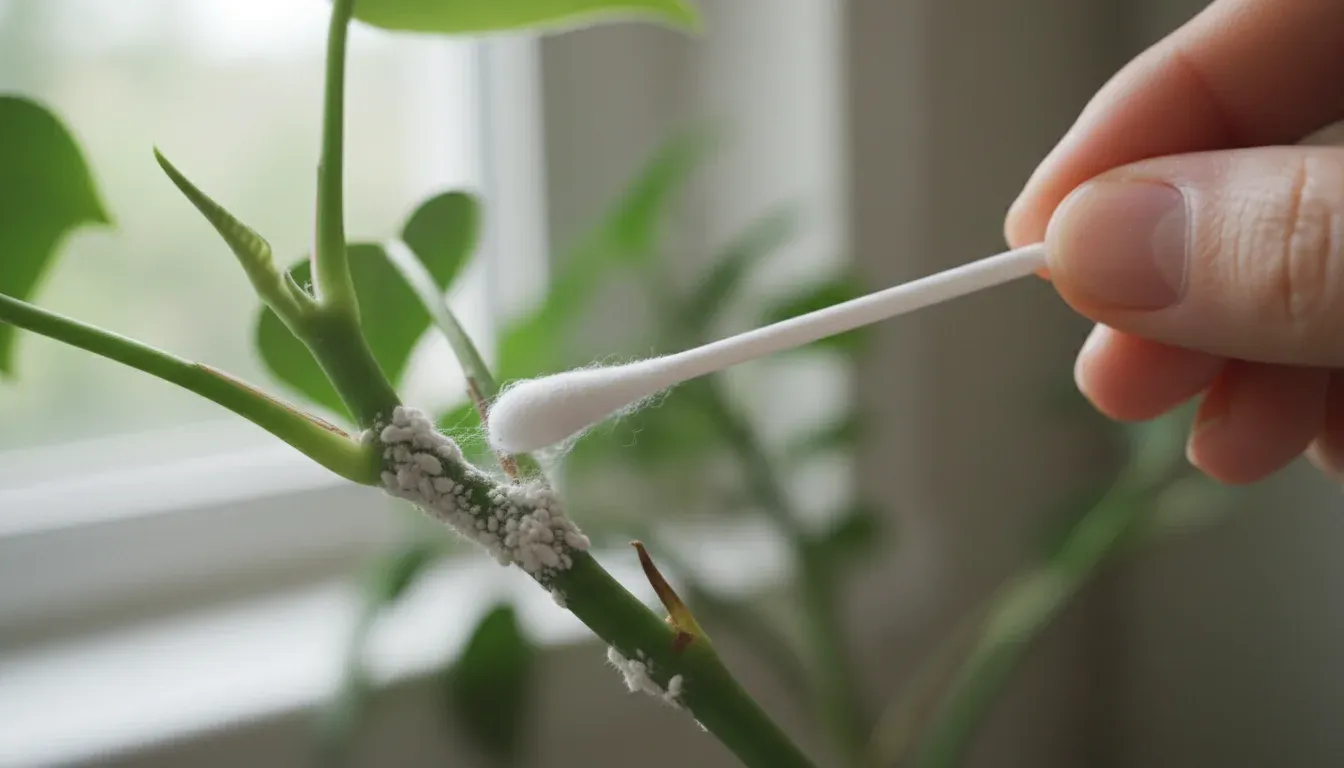
Dip a cotton swab in 70% isopropyl alcohol and go after every visible mealybug and egg sac you can find. The alcohol dissolves their protective waxy coat and kills them on contact. Use 70% specifically – higher concentrations can damage plant tissue on sensitive species.
Tedious, yes. But nothing else gets into tight leaf axils and stem crevices as precisely. Best for light infestations or as a follow-up spot treatment after a water blast.
4. Spray with Insecticidal Soap
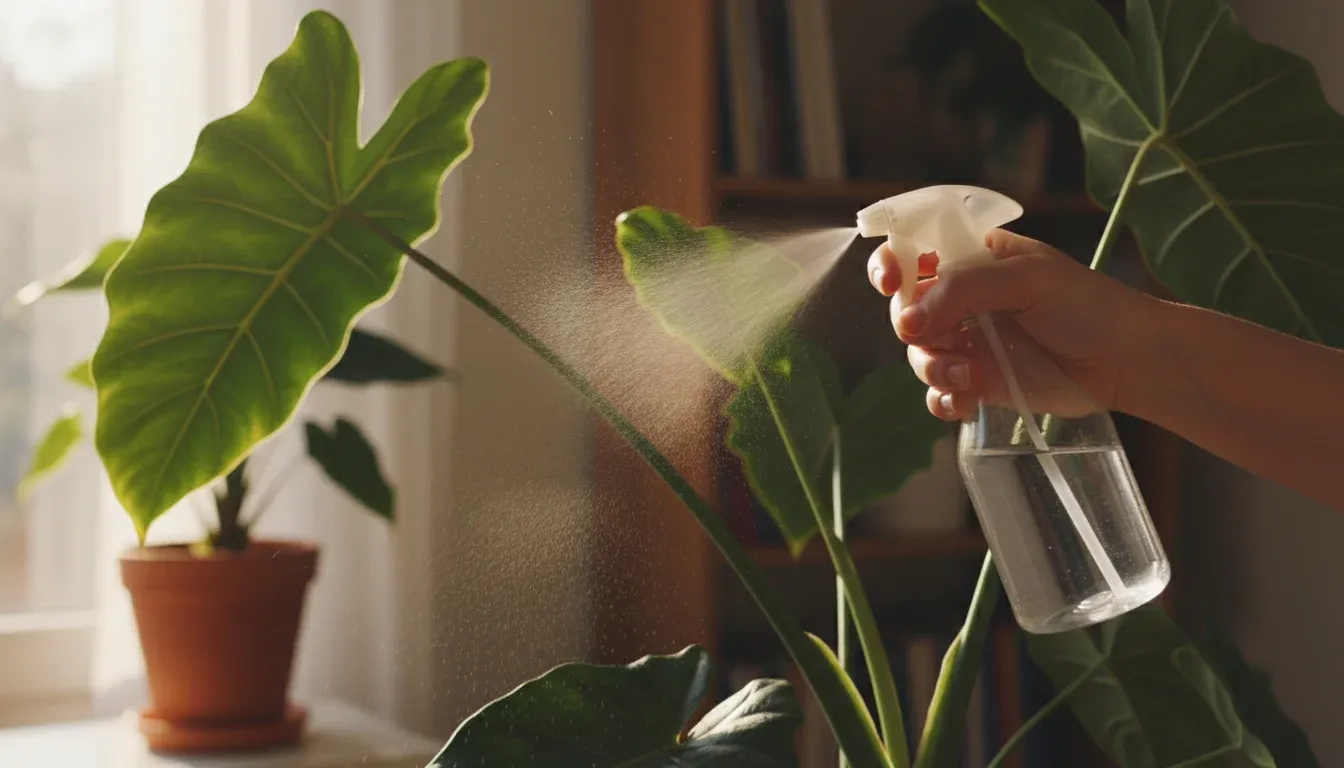
Mix 1 tablespoon of pure castile soap with 1 quart (1 L) of water and coat the entire plant – tops and undersides of every leaf, every stem crevice. The soap dissolves the mealybugs’ outer coating and dehydrates them. Don’t use dish soap with degreasers or antibacterial agents; they can burn plant tissue.
Soap has no residual action, so timing matters. Reapply every 5-7 days to match the egg hatch cycle. Apply in cool, shady conditions to prevent leaf scorch.
5. Apply Neem Oil
Neem disrupts mealybug feeding and prevents larvae from developing, unlike contact-only sprays. Mix 1-2 tablespoons per 1 gallon (3.8 L) of water with a few drops of dish soap as an emulsifier. Spray all plant surfaces, especially leaf undersides.
Apply in early morning or evening only – never in direct sun, which causes leaf burn. Reapply every 7-10 days. Keep going until you’ve had no new activity for at least three to four weeks, which covers the full lifecycle.
6. Use Horticultural Oil
Horticultural oil suffocates mealybugs by clogging their breathing pores – faster-acting than neem, no smell. Spray every surface until it’s dripping wet. The oil must physically contact the pest to work.
Don’t use on stressed or drought-stricken plants, and avoid temperatures above 85°F (29°C). Wait at least two weeks between applications – oil residue can accumulate and interfere with gas exchange.
7. Hit Them with Pyrethrin
For heavy infestations, pyrethrin (derived from chrysanthemum flowers) knocks mealybugs down fast. Cover all plant surfaces. Pyrethrin breaks down quickly in sunlight, making it safer indoors than most insecticides – but it doesn’t kill eggs, so reapplication a week later is non-negotiable.
8. Apply a Systemic Insecticide
Systemics like imidacloprid absorb into the plant’s vascular tissue, poisoning any mealybug that feeds on it. Apply as a soil drench or granules around the drip line in early spring. Takes one to two weeks to start working but provides lasting protection.
Use this only when other methods have failed. Do not use on vegetables, herbs, or any plant bees visit – systemics move into pollen and nectar.
9. Introduce Beneficial Insects
Lacewings, ladybugs, and the parasitic wasp Leptomastix dactylopii are natural mealybug predators. Order them online and release in the evening when temperatures are cooler. Water your plants first – predatory insects need moisture to establish.
This takes patience. Best for greenhouses, outdoor plantings, or anyone managing multiple infested plants long-term. Indoors, most released beneficials don’t stay put long enough to make a dent.
10. Toss the Plant
Sometimes an infestation is past saving – especially if mealybugs have colonized the root system, or you’ve treated repeatedly with no progress. Bag the entire plant, soil and all, seal it, and put it in the trash. Don’t try to salvage cuttings; pests hitch rides.
One infected plant is replaceable. The rest of your collection isn’t worth the risk.
After clearing an infestation, inspect weekly for at least a month. Mealybugs reappear from eggs you missed – that’s why they “keep coming back.” Catch the next wave early and a cotton swab handles it. Let it slide and you’re starting over.