Table of Contents
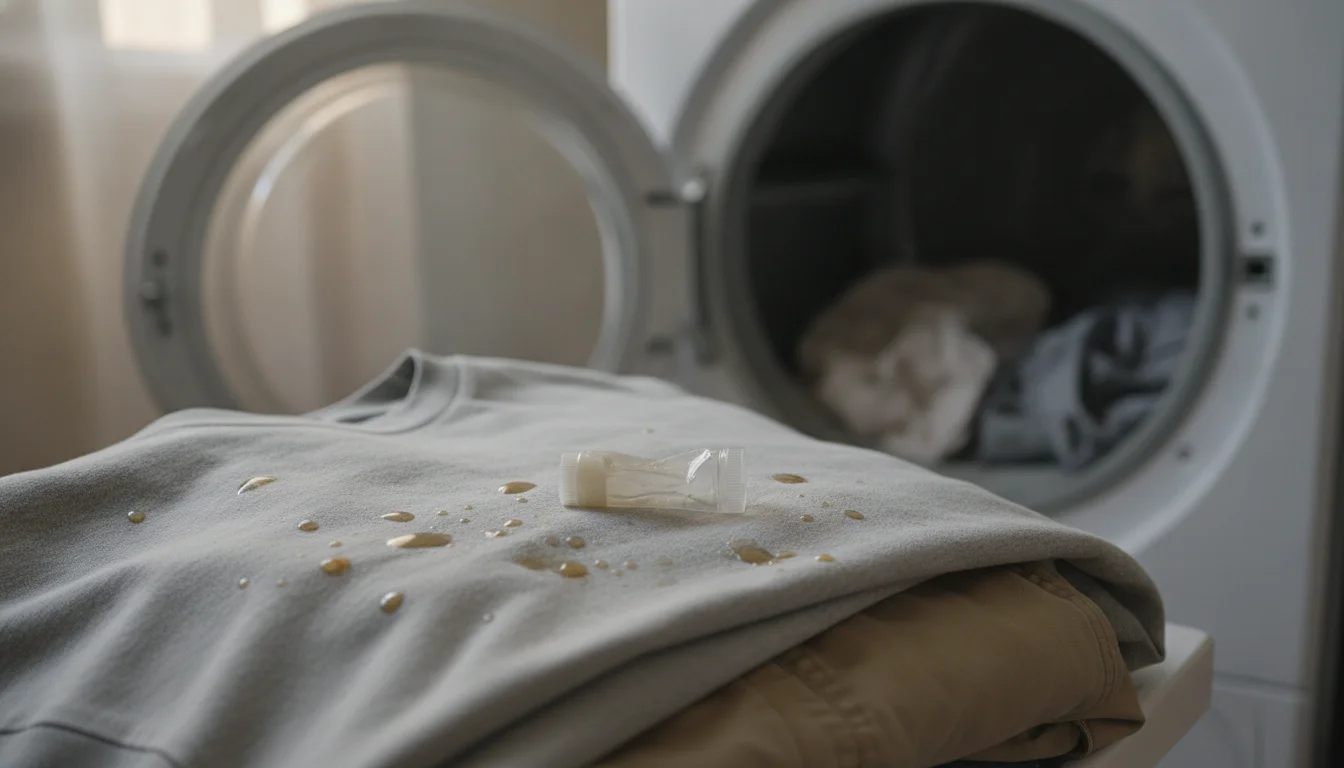
One forgotten tube in a pocket can spot an entire load. The wash on its own does little harm (lip balm is fairly waterproof, so a cold or unheated wash barely moves it). The dryer is the problem. It melts the balm, tumbles it onto everything, and lets it harden back into the fibers as dark, greasy marks. So how to get rid of lip balm stains on clothes comes down to two things.
First, what was in the tube. Formulas differ even within one brand, so read the ingredient panel rather than going by the name. If waxes (beeswax, carnauba, paraffin, microcrystalline wax) sit near the top, there’s wax to lift. If the list is mostly petrolatum or liquid oils, as in a squeeze-tube ointment, expect oil spots with almost nothing to scrape, and skip straight to the degreasers. Second, whether the clothes have already been dried. If they have, expect more than one round.
One rule covers every method below: nothing goes back in the dryer until every spot is gone.
1. Scrape off what’s sitting on top
Go through the whole load first, not just the shirt you noticed, and check the backs of fabrics and inside pockets, where wax collects.
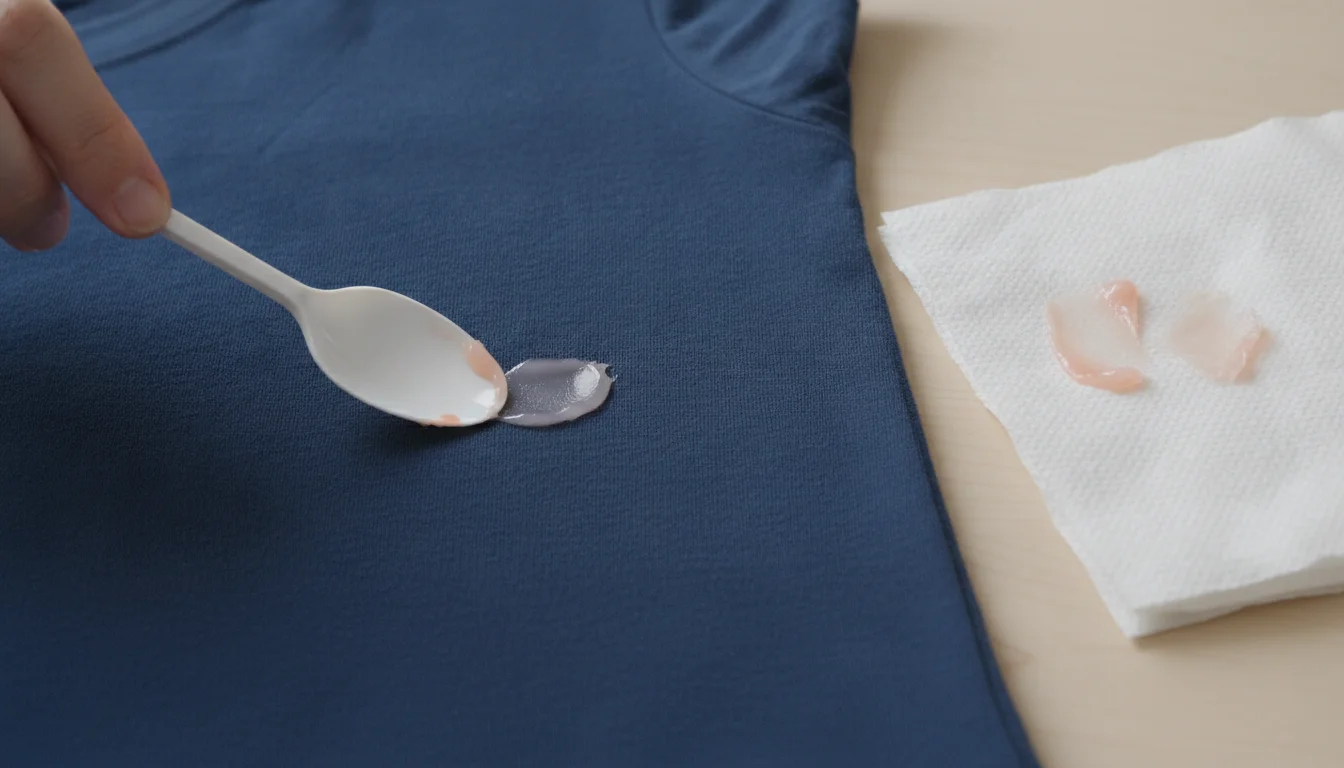
Then lift any lumps with a plastic knife, the bowl of a plastic spoon or an old credit card. Wipe the edge on a paper towel after every pass. Plastic matters; a metal blade can tear the weave. On a fresh smear that hasn’t been washed yet, put the garment in the freezer first (the same trick that gets gum off clothes), since hardened balm is easier to lift.
Ointment spots usually have nothing to scrape. Move on.
2. Iron the wax out into paper (stick balms)
Cut open a brown paper bag or use white paper towels. Put one sheet on the ironing board, lay the garment on it stain side down, and cover the spot with a second sheet. Press with the iron on a low setting for a few seconds. Don’t slide it around, or you’ll smear the wax. Lift, move to clean paper, press again. When fresh paper comes away clean, stop. That usually takes three or four rounds.
Go up toward medium only if nothing transfers, and never above what the care label allows. The iron takes the wax, not the oil, so treat the greasy shadow with method 3 straight away.
3. Grease-cutting dish soap (the one that does most of the work)
The method readers who’ve rescued a whole load keep coming back to. It works on both kinds of balm, and on most other grease stains too.
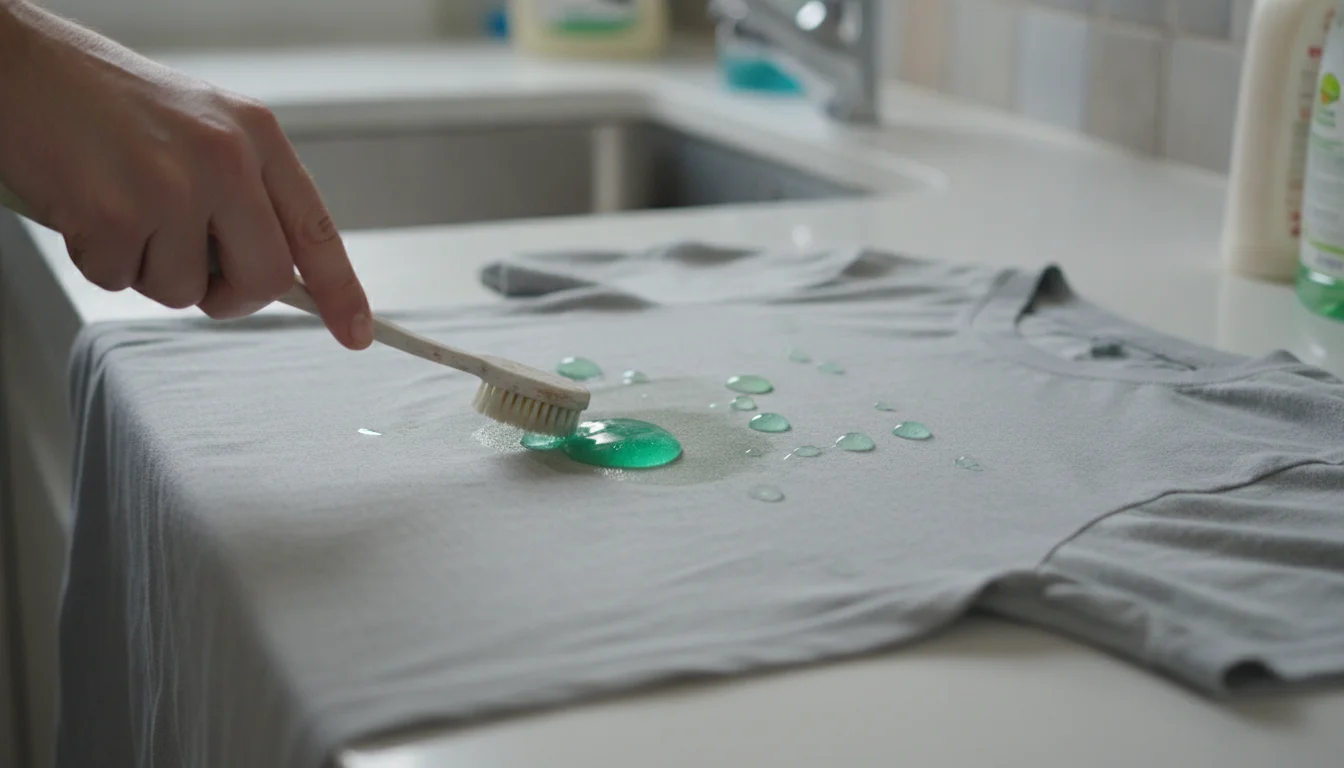
Put a dot of grease-cutting dish soap on every spot and work it in with an old toothbrush or a small brush. Clorox’s steps say 5 minutes; people rescuing an already-dried load gave it 30. One reader dotted every stain, brushed it, waited 30 minutes, rinsed in the sink, then washed with detergent and a few cups of white vinegar. Every spot came out.
Rinse the soap out thoroughly before the machine, or you’ll get a washer full of suds. Then wash in the hottest water the care label allows.
If a shadow is still there, use baking soda. Sprinkle it on the spot and scrub it in with the toothbrush. As it soaks up oil it rolls into little clumps. Brush those off, add fresh powder and scrub again. When it stops clumping, dish soap again, and wash.
4. A solvent spot remover for set-in or ointment spots
When dish soap hasn’t moved a spot that went through the dryer, go stronger. A citrus- or petroleum-based spot remover (Goo Gone is the one Home-Ec 101 says has never failed them on lip balm grease) dissolves oil that soap can’t reach.
Test it on a hidden seam first. Then lay the stain face down on paper towels and apply the remover to the back of the fabric, so the towels take up the oil as it loosens. Swap the towels as they pick up grease. Give it a few minutes, then wash with detergent in the hottest water the label allows. Open a window; these are solvents.
Skip this on delicates. Home-Ec 101’s advice is dish liquid instead: slower, but it won’t damage the fabric.
5. Rubbing alcohol for tinted balms
A tinted balm leaves two stains in one: the grease and the color. Get the oil out first with method 3 or 4, then go after whatever color is left.
Put a folded paper towel under the spot and sponge it with rubbing alcohol until the spot is wet through. Then rub in some liquid laundry detergent, let the garment air out, and wash. One parent with seven shirts ruined by tinted balm and gloss soaked each mark with 91% isopropyl and called it the secret. Alcohol is flammable, so keep it away from flames and use it in a ventilated room.
6. Soak the whole load in oxygen bleach
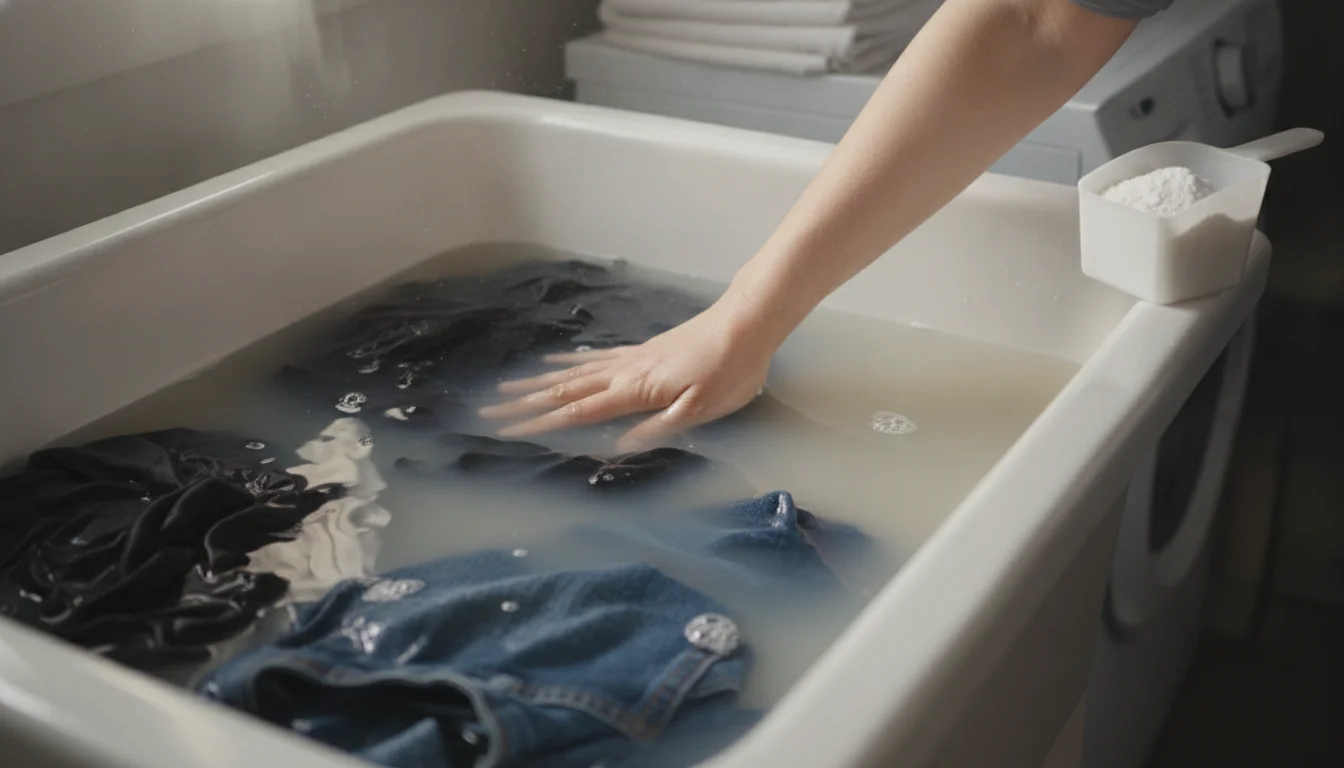
When every item is spotted, dot the visible spots with dish soap, then soak the lot. It’s the same soak that lifts yellow armpit stains.
Dissolve powdered oxygen bleach in warm water as the package directs, in a tub, a big bucket or a washer that can soak. Push the clothes under and leave them for at least a couple of hours. Then wash as usual. Oxygen bleach is the color-safe kind, but follow the tub’s directions and check each care label before anything goes in.
7. Air-dry and check before the dryer
Hang everything to dry. Then check every spot once the fabric is completely dry, not while it’s damp. One reader’s khakis looked perfect wet and showed every grease spot once dry.
Still there? Repeat method 3 or 4 and air-dry again.
There’s a safety reason too. Fire services and insurers warn that oil and grease left in fabric after a wash can heat up on their own after tumble drying, and an Irish insurer puts that ignition typically two to six hours after the cycle ends. So a load that still carries oil belongs on a line. If anything does go in the dryer, let it run its cool-down cycle, shake the laundry out to cool, and don’t leave it piled warm in a basket or in the drum overnight.
8. Clean the dryer drum before the next load
If the balm melted in the dryer, some of it is still on the drum, and the next hot cycle will paint it onto clean laundry.
Toss a few damp old rags into the empty dryer and run it on high for 5 to 10 minutes to soften the wax. Then soak a cloth in equal parts warm water and white vinegar, hold it on each waxy patch for about 30 seconds and wipe hard. Finish with a clean, wet cloth. Run a load of old rags before your good towels; if they come out clean, so is the drum.
Never use rubbing alcohol, nail polish remover, WD-40 or a solvent spot remover inside a dryer. They’re flammable. The vinegar smell clears on the next run.
When to call a professional
If the care label says dry clean only, don’t treat it at home: no soap, no solvent, no hot wash. Take it to a dry cleaner and tell them the spots are lip balm. The same goes for delicates you’re not willing to risk on a solvent.
For everything else, know when to stop. Spots that went through the dryer are hard to shift at best, and some never come out. If a stain is still there after two full rounds of treatment and washing, the odds are poor. Keep going only if you love the piece; otherwise, textile recycling.
FAQ
Does lip balm in the dryer ruin clothes?
Not always, but it makes the job much harder. Dryer heat melts the balm into the fibers and it sets as it cools. You’ll likely need several rounds, and a few spots may stay.
The lip balm went through the wash but not the dryer. Am I OK?
That’s the best case. Treat the spots with dish soap now, wash again and air-dry before anything sees a dryer.
Should I wash in hot or cold water?
Hot, as hot as the care label allows, because heat helps detergent lift oil. No label and not sure? Use cold.
Do I need to clean the washer too?
Check it. Scrub any greasy residue on the drum walls with a hot, damp rag and a little detergent, then run an empty wash cycle.