Table of Contents
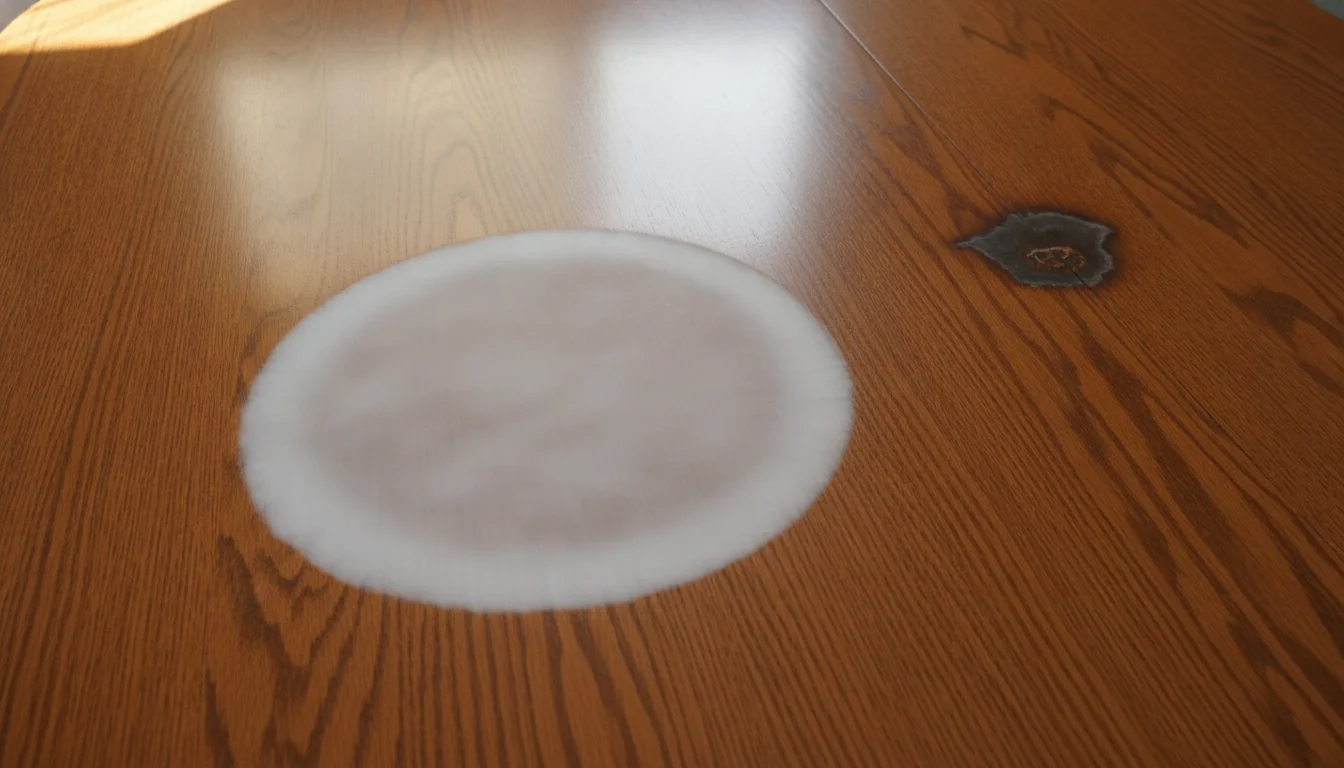
How to get rid of heat stains on wood depends on the color. A white or cloudy haze from a hot pot, mug or pizza box is moisture that the heat drove into the top of the finish. The wood underneath is fine, and the mark usually comes out. A brown or black mark is different: the heat got through the finish and scorched the wood itself. No hair dryer, mayonnaise or paste will lift that. It comes out only when the burned wood does.
The second thing to know is the finish, because the gentle fixes don’t work the same on all of them. So the first step below is a quick solvent test. Then come five fixes for white marks, gentlest first, and two scorch repairs. Test each on a hidden spot first.
1. Identify the finish before you treat it
Oregon State University Extension’s test needs a rag, two solvents and a hidden, wax-free spot (the underside of a table apron). Rub on a little denatured alcohol. If the finish softens or comes off, it’s shellac. If it doesn’t, try lacquer thinner: if the finish softens now, it’s lacquer. If neither touches it, it’s varnish or polyurethane.
Why bother? Furniture finisher Bob Flexner explains that shellac and lacquer redissolve in their own solvents, so heat or a solvent wipe lets the cloudy film close up clear. Varnish and water-based finishes don’t. And very hard catalyzed finishes, used on some modern furniture, shrug off even fine abrasives.
Veneer is a thin slice of wood over a cheaper core, easy to sand through. Plastic laminate printed to look like wood isn’t a wood finish at all.
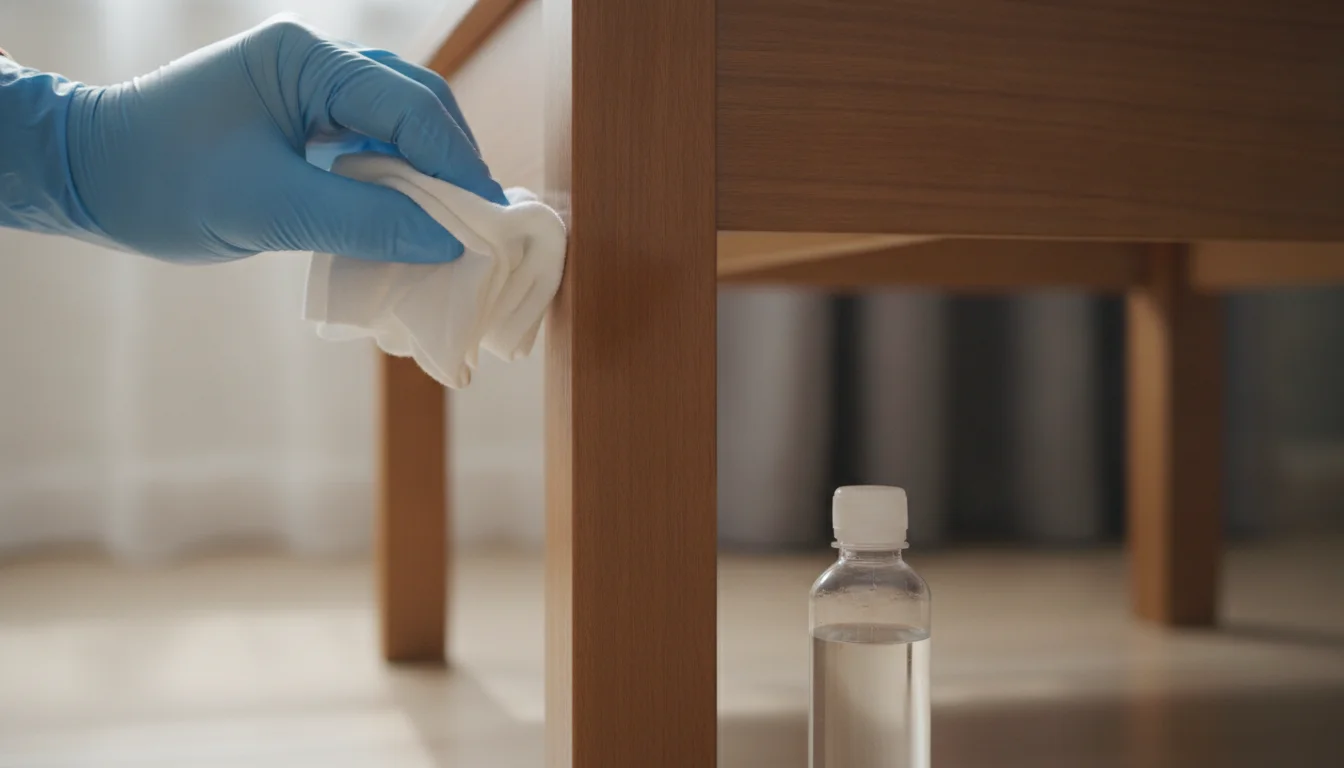
2. Drive out trapped moisture with gentle heat
Try this first on a white mark. Set a hair dryer to its lowest heat (not cool), hold it a few inches from the wood and keep it moving side to side. Bob Vila’s guide says a shallow mark starts fading within a minute or two. Nothing after a few minutes? Turn it up a level or two.
Still there? Empty an iron, switch the steam off, set it low, and lay a thin, dry cotton towel over the mark. Howard Products suggests pressing for 5 to 10 seconds at a time, then lifting the towel to check. Steam makes it worse: it’s moisture, which caused the mark.
Flexner warns that a finish heated too far blisters, and he notes that heat works only on shellac and lacquer. On varnish or polyurethane, don’t be surprised if the mark only shrinks: Bob Vila’s guide says it may fade without disappearing.
3. Leave an oily dressing on the mark overnight
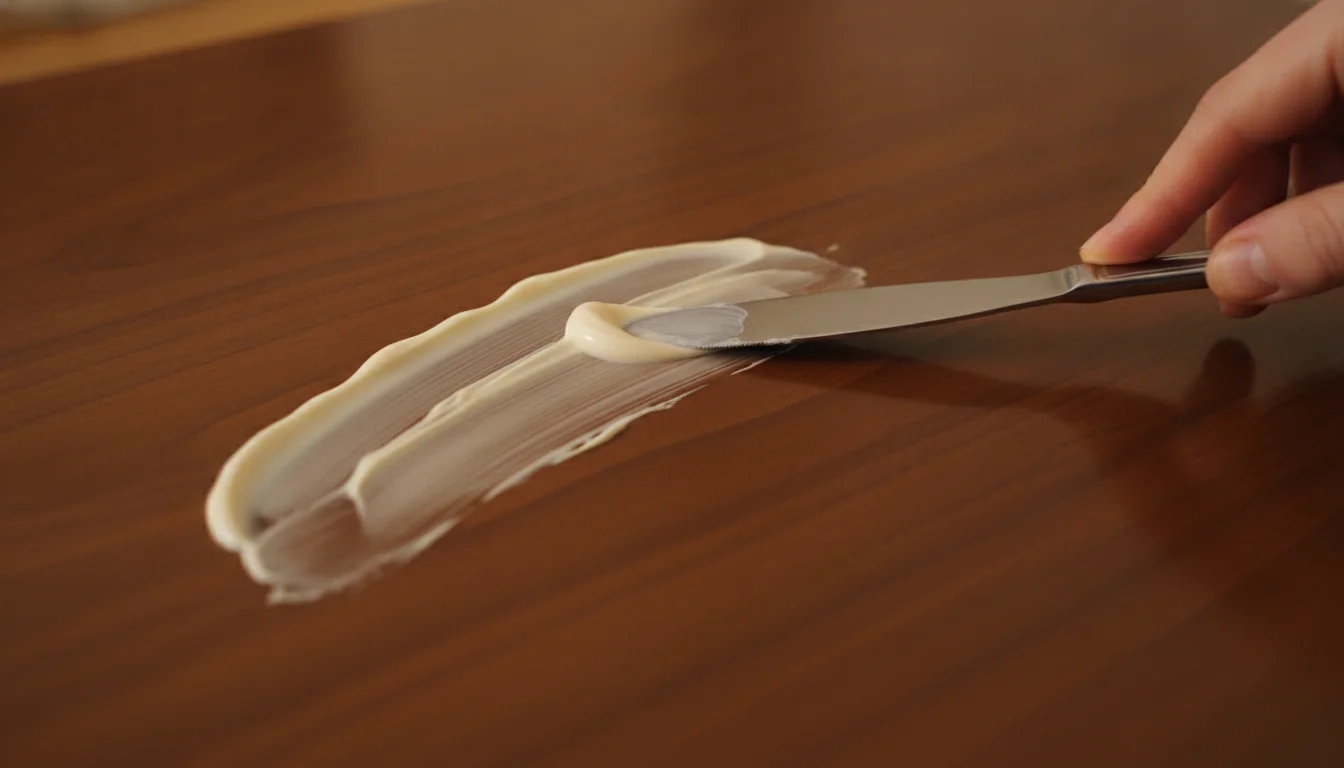
Spread mayonnaise or petroleum jelly thickly over the mark, leave it overnight, then wipe it off and buff with a dry cloth. Flexner’s explanation: the oil works its way into the finish the way the moisture did and fills the tiny voids that make it look white, and unlike furniture polish it doesn’t evaporate. In his words, it makes the mark fade “a little”. It’s cheap and you can sleep while it works. Skip it on bare, unfinished wood, where the oil soaks in and leaves a stain of its own.
4. Wipe with a barely damp alcohol cloth
For shellac, and sometimes lacquer. Wring a cloth dampened with denatured alcohol until it feels almost dry, and pass it once, lightly and quickly, over the mark. Let it dry, look, repeat. The Oregon State guide’s warning is the whole method: don’t leave it on, because the alcohol softens the finish, and speed matters.
On lacquer, the same trick works with lacquer thinner. A finisher on the WoodWeb forum describes one touch-and-go pass with a dampened pad, then waiting until it has evaporated before the next. Rub, or go back over a wet patch, and you’ll smear the finish into a dull blotch.
5. Rub out the mark with a mild abrasive
Flexner calls abrading the surest fix, and it works on every finish except the very hard catalyzed ones. Mix one part plain white toothpaste (not gel) with two parts baking soda, put a dab on a soft cloth and rub with the grain for about a minute. Wipe with a damp cloth and dry it straight away.
The Oregon State guide’s version: dip a finger in oil, then in salt, and rub. Keep them in separate dishes: mixed, the salt dissolves. Deep marks take a lot of rubbing.
The catch is sheen. An abrasive makes a glossy finish duller and a dull finish shinier, so stop the moment the mark goes.
6. Rub in a tinted finish restorer
When nothing above has shifted it, try a finish restorer before sanding. It’s a thin mix of oils and a little stain that soaks into the existing finish. Pick the shade closest to your wood and test it underneath. For a faint mark, rub it on with a cloth along the grain. For a stubborn one, put it on a pad of #0000 steel wool (the finest grade; anything coarser scratches) and rub firmly with the grain. Leave it a few minutes, then wipe dry.
Color is everything. Too dark and you swap a white ring for a dark one. Feather the edges. Not for laminate or vinyl wrap. Oily rags and leftover solvent go out the same way as old paint.
7. Scrape out the scorch and fill the hollow
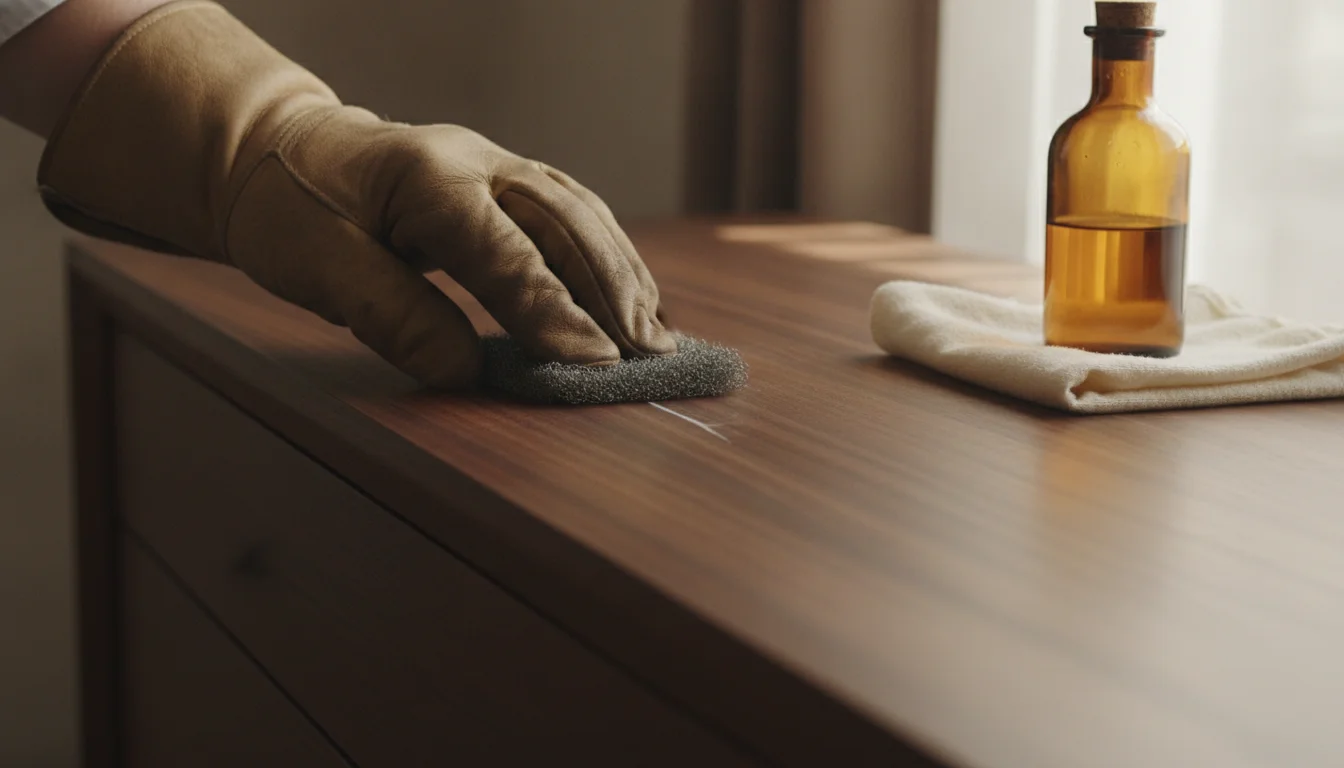
Now the dark marks. University of Georgia Extension first rubs a light scorch with #0000 steel wool. If the brown stays, the char has to come out. Scrape it away with a sharp knife or razor blade, only as deep as the black goes. Naphtha is flammable, so open a window or work somewhere with good airflow, and keep it away from any flame. Clean the hollow with a cotton swab dampened in naphtha, smooth it with fine steel wool wrapped round an orange stick, and cap the naphtha before you heat anything. Fill the hollow with a matching lacquer fill stick: warm a knife blade on an electric range’s surface unit (never over a gas flame) until it just melts the stick, press small pieces in, and level it with the reheated blade, keeping off the surrounding finish. Sand it flush with very fine (8/0) paper or an emery board, then rub with rottenstone and a few drops of boiled linseed oil to bring the shine back.
8. Sand and refinish the damaged area
For a scorch too big to fill, or a white mark that survived everything above. Vinson Fine Furniture’s repair guide tapes off the area, sands out the dark wood with 120 grit, smooths it with 220, then stains sparingly and topcoats. Matching an aged table’s color is hard; a near miss can look worse than the burn. Go very lightly, or not at all, on veneer. If the tape leaves anything sticky on the finish around the repair, how to get rid of tape residue starts with a gentle oil method that is safe on lacquered wood.
What causes heat stains on wood
Steam from a hot dish is driven into the top of the finish and trapped there, or leaves tiny voids that scatter light. That’s the white mark. Vinson notes that older lacquer and shellac blush far more easily than modern catalyzed conversion varnish. A dark mark means the heat went right through the finish into the wood fibers.
How to prevent heat stains on wood
Coasters under mugs, trivets under anything from the stove or oven, placemats at meals. In a pinch, a potholder. For a big dinner, Vinson recommends a felt-backed table pad under the tablecloth. Howard recommends a wax polish every three to six months as a protective layer.
When to call a professional
Get a furniture restorer for antiques, veneer you could sand through, high-gloss lacquer that needs spray equipment to match, many rings across a whole top, and any scorch that has left a hollow or a rough texture.
Frequently asked questions
Can mayonnaise be used to remove heat marks from wood?
On a white mark, partly. Leave it overnight. It does nothing for a dark scorch.
How do you get a white haze off a wood table?
Heat first (a hair dryer, then a dry iron through cotton), then an alcohol wipe on shellac or a toothpaste and baking soda rub on anything else.
How do you get rid of a cup ring on wood?
The same way, if it’s white: a cold glass marks the finish just as a hot mug does. A black ring is water in the wood, which is covered in how to get rid of water stains on wood.
Are heat stains on wood permanent?
White ones usually aren’t, but don’t count on them clearing by themselves. One owner on the WoodWeb forum waited five months for a pizza-box mark to fade, and nothing changed. A dark scorch is permanent until you remove the burned wood.