Table of Contents
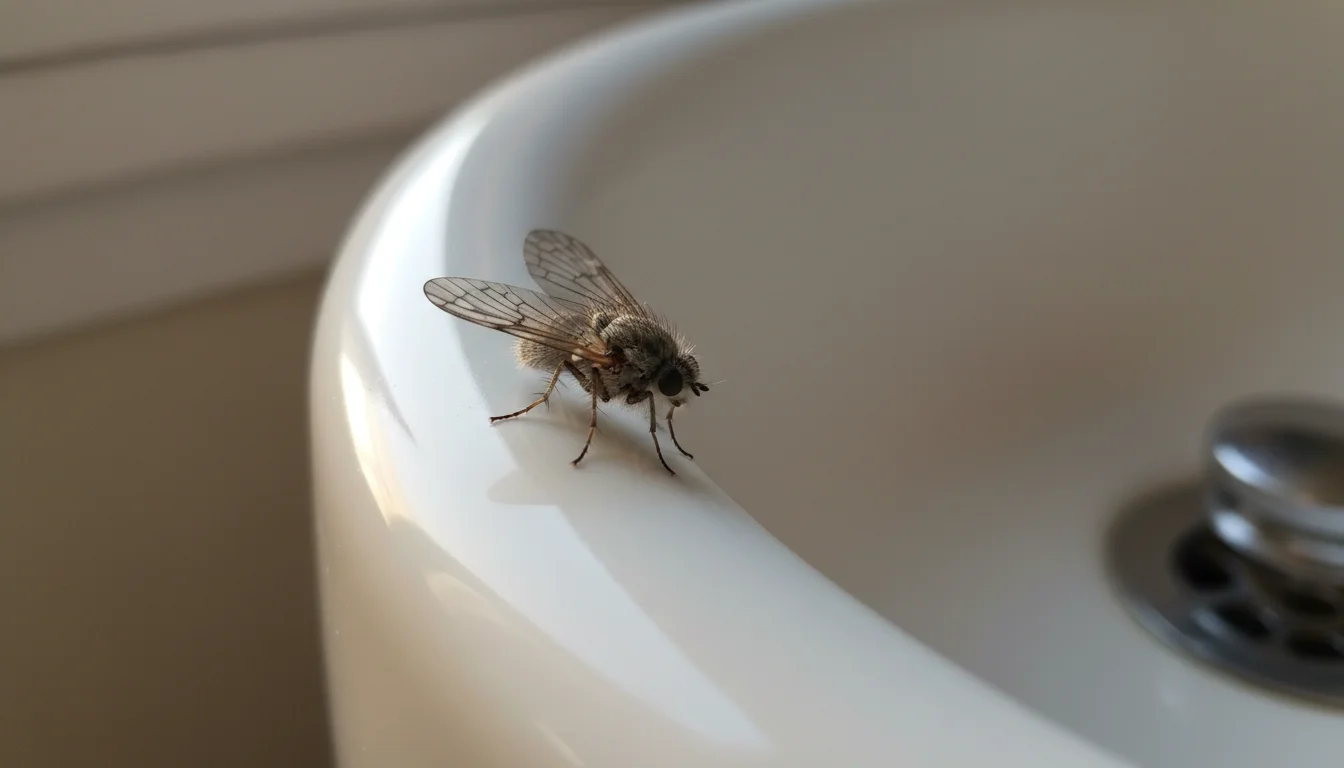
Drain flies breed inside your pipes, not just near them. That’s the part most people miss. They lay eggs in the slimy organic film that coats the inside of drain pipes – hair, grease, soap residue, food particles – and that biofilm is what you need to destroy. Pour bleach down there and you’ve done nothing useful; it flushes straight past the slime without touching it. Every method below targets the actual breeding ground.
What causes drain flies
Drain flies appear when organic material accumulates inside pipes. The most common causes:
- Slow or clogged drains. Partial blockages create the perfect breeding environment.
- Grease, hair, and soap buildup. Kitchen sinks and bathroom drains are the usual culprits.
- Unused drains. Guest bathrooms, floor drains, and laundry drains that sit dry allow the P-trap water to evaporate, giving flies a direct path from sewer breeding grounds.
- Leaking pipes. Any persistent moisture near a drain or pipe joint keeps the environment hospitable.
One thing that doesn’t help: bleach. It passes quickly down the drain without penetrating the thick biofilm where eggs are deposited. It may kill a handful of adults on contact, but it won’t touch the larvae or the film they live in.
1. Run a tape test to find infested drains
Before treating anything, figure out which drains are actually the problem. Make an X shape with strips of clear packing tape over each suspect drain opening at night. Don’t cover it completely – you need some airflow so the flies try to exit.
Leave the tape overnight. Drain flies are most active after dark. Any drain with flies stuck to the underside in the morning is an active breeding site. Test every drain in the house, including floor drains, laundry drains, and guest bathrooms you rarely use. Treating only the obvious ones is why infestations keep returning.
2. Clean the drain with a snake or brush
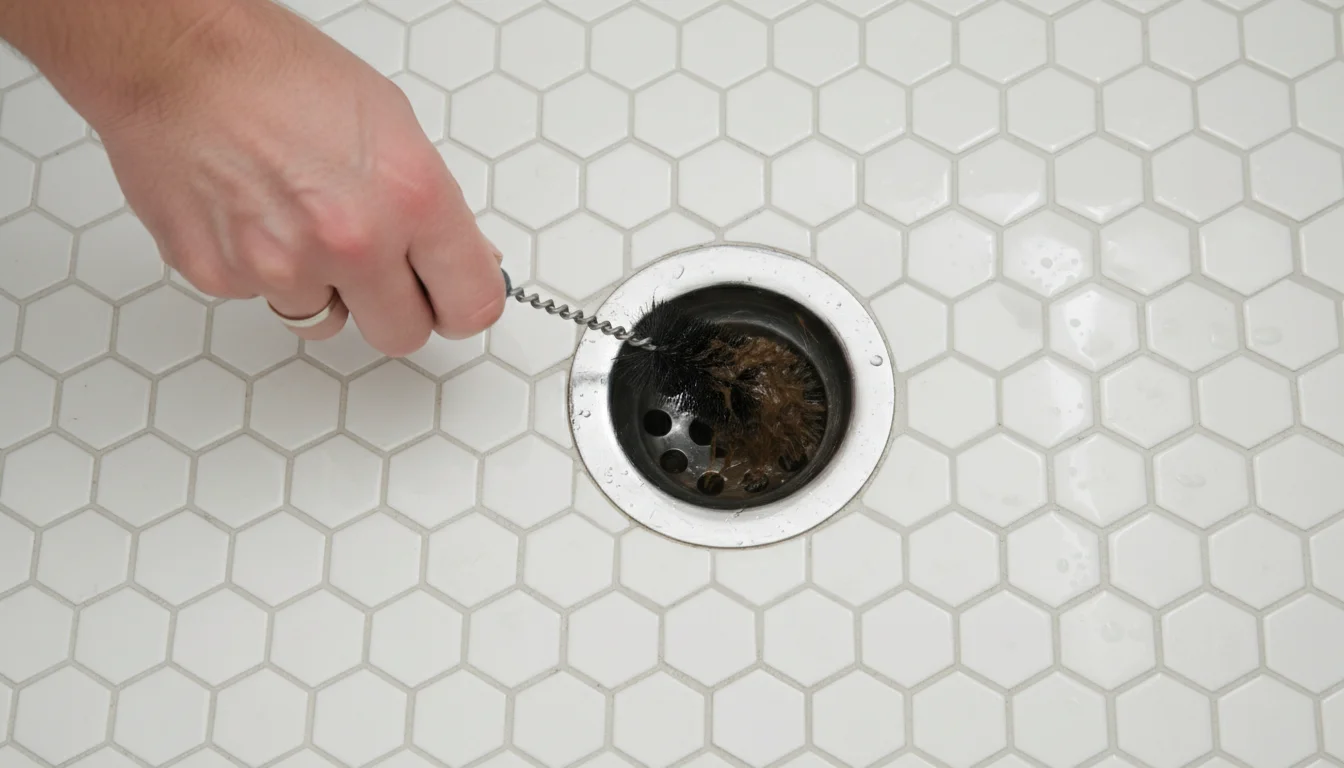
This is the most effective single step. Insert a drain snake or long pipe brush into the affected drain and use a steady up-and-down motion to scrape the slimy film off the pipe walls. Run warm water down first to soften the buildup. What comes out will be unpleasant. That’s the point.
A plunger can help pull out stubborn material after you’ve loosened it. Chemical drain cleaners are less effective here because you need to physically remove the biofilm – larvae live inside that film and a liquid treatment won’t reach all of them.
3. Use an enzyme drain cleaner
Use this immediately after the mechanical cleaning to catch whatever the brush missed. Enzyme-based cleaners use biological agents to digest the organic residue drain flies need. Pour the cleaner down the drain and let it sit for the time on the label – usually several hours or overnight.
Unlike chemical cleaners, enzyme formulas don’t damage pipes or septic systems, and they coat the pipe walls to slow future buildup. One application isn’t enough for a heavy infestation. Repeat weekly until the flies stop appearing.
4. Clean the P-trap
If flies persist after cleaning the drain, check the P-trap. The U-shaped pipe section under your sink holds standing water to block sewer gases, but it also collects debris that becomes a hidden breeding ground a drain snake can’t reach.
Place a large bowl under the trap, loosen the slip nuts on both sides, and remove it. Pour out the standing water (it will smell bad), scrub the inside of the pipe, reassemble, and run water to refill the seal. This catches buildup that surface-level drain cleaning entirely misses.
5. Set apple cider vinegar traps
While you’re eliminating the breeding ground, trap the adults flying around. Pour about a quarter cup (60 ml) of apple cider vinegar into a small bowl or jar. Add 1 to 2 drops of dish soap and stir gently. The vinegar attracts the flies, and the soap breaks the surface tension so they sink instead of landing and flying off.
Set several traps near affected drains and anywhere you see the most activity. Refresh daily. White vinegar doesn’t work as well – drain flies respond to the fermented, sweeter scent of apple cider vinegar.
6. Flush with baking soda and vinegar
Once the infestation is under control, do this weekly to stop it from coming back. Pour half a cup (120 ml) of baking soda down the drain, follow with half a cup (120 ml) of white vinegar, and let it fizz for 15 minutes. The reaction breaks down organic residue before it has a chance to build up into a breeding layer.
Finish by flushing with boiling water. Five minutes, cheap, and safe for pipes. Do it in every kitchen and bathroom drain, not just the one that had flies.
7. Install drain covers and strainers
The last step, and the easiest. Place mesh strainers over kitchen drains and hair catchers in shower and bathroom drains. These stop hair, food scraps, and debris from entering the pipe and forming the buildup drain flies need.
Clean the strainers out regularly. That’s all. Lowest effort and lowest cost of anything on this list.
How to prevent drain flies from coming back
- Run the baking soda and vinegar flush on a weekly schedule.
- Keep drain covers and hair catchers on all drains.
- Run water through unused drains at least once a week to keep P-traps full.
- Fix leaks under sinks as soon as you notice them.
When to call a professional
Most drain fly infestations clear within one to two weeks of consistent treatment. If flies are still appearing after three to four weeks and you’ve cleaned every accessible drain, checked every P-trap, and run the tape test on everything – there may be a hidden or inaccessible drain, a broken pipe, or a sewage leak inside a wall or under the slab. That’s a job for a plumber with a camera scope, not more vinegar.
Frequently asked questions
How do I permanently get rid of drain flies?
Physically remove the biofilm with a drain snake or brush, follow with enzyme cleaner weekly, and install drain covers. No single pour-down-the-drain solution works permanently because biofilm regrows. You have to scrub it out.
What can I pour down my drain to get rid of drain flies?
Enzyme drain cleaner is your best option. Baking soda followed by vinegar and then boiling water also helps. Bleach doesn’t work – it flushes past too fast to penetrate the biofilm where larvae actually live.
Why am I suddenly getting drain flies in my house?
Organic buildup (grease, hair, soap scum) coats the inside of your drain pipes over time. Drain flies lay eggs in that film. The population builds gradually and then seems to appear out of nowhere once it’s visible. Infrequently used drains and leaky under-sink pipes are often the culprits.
Will pouring bleach down a drain kill drain flies?
No. Bleach passes straight through the drain without contacting the deep biofilm where larvae live. It may kill a few adults on contact but won’t affect the breeding population. Enzyme cleaner or a drain brush will actually do something.