Table of Contents
Cooking smells don’t settle into your furniture and curtains during the meal – they settle during the hour after, when the heat dissipates and the volatile compounds start depositing on every soft surface they contact. Prevention means managing air and odor molecules while you’re cooking, not scrambling with air freshener after the damage is done. These six methods work at the source.
1. Open Windows and Run Fans While Cooking
Turn on the exhaust fan before you even unwrap the fish. Not after you notice a smell – before you start. Running the fan proactively evacuates volatile compounds as they’re released rather than letting them build up and spread through the house.
Create actual airflow, not just fan noise. Open a window on the opposite side of the kitchen from the exhaust fan to pull fresh air through. If your exhaust fan vents back into the kitchen rather than outside (a circulating hood rather than a ducted one), it’s doing very little – and a box fan pointing out an open window will do more. Run both for the duration of cooking and for at least 20 minutes after you’ve turned off the heat.
The difference between a well-ventilated kitchen and a poorly ventilated one is the difference between “you can tell someone cooked fish” and “you can tell what seasoning they used three hours ago.”
2. Use Disposable Gloves and Remove Trash Immediately
Wear disposable nitrile gloves while handling raw fish, meat, or garlic. It takes 10 seconds to put them on and completely prevents fish or garlic oils from reaching your hands. You can still do all normal prep work with gloves on.
After cooking, bag all food scraps, wrappers, and packaging immediately and take the bag directly outside. A fish fillet wrapper sitting in the kitchen trash can will release odor for hours and often into the next day. If you can’t take trash outside immediately, seal the bag and put it on the porch or in the garage. The kitchen trash can is one of the biggest sources of persistent cooking smells that people miss because they assume the cooking itself was the odor event – it wasn’t, the rotting packaging was.
3. Cook Fish in Parchment or Foil Packets
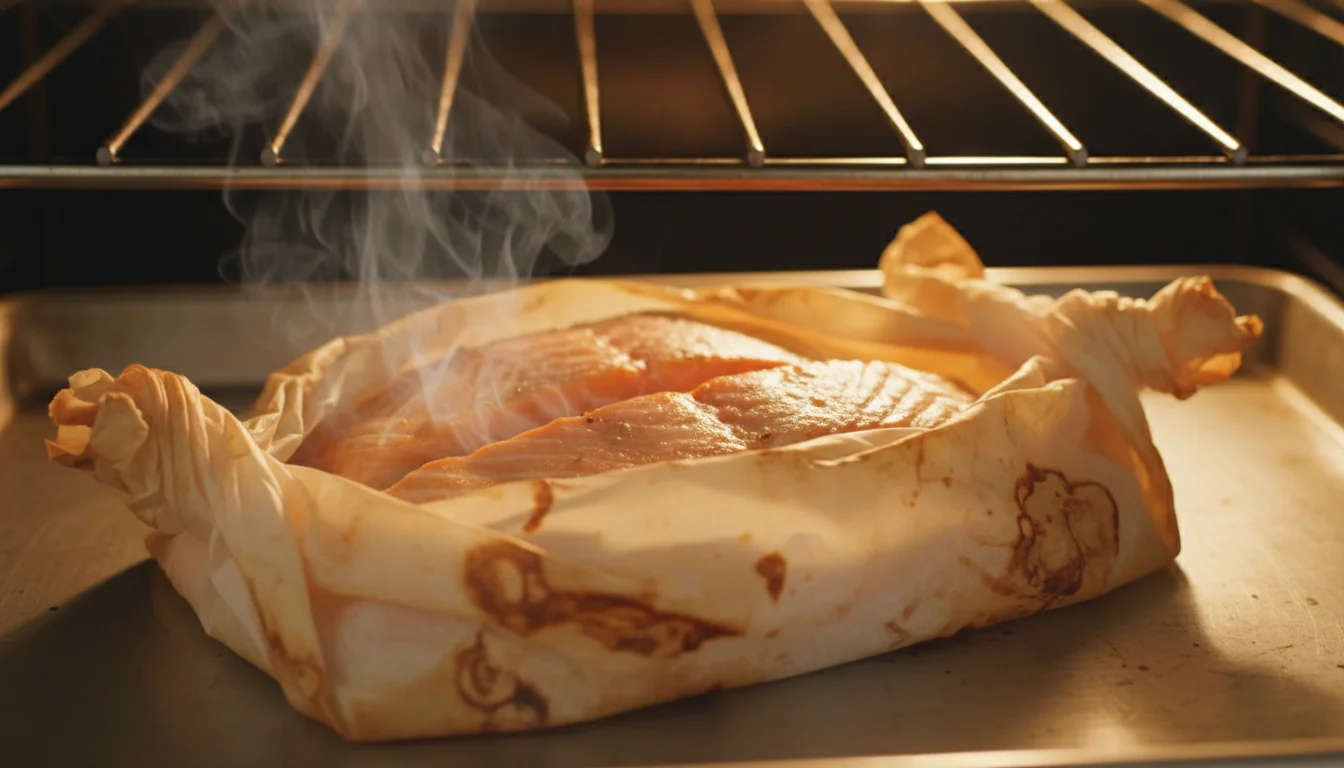
If fish smell is your main concern, this is the single most effective technique change you can make. The packet traps steam and oils inside, preventing them from being released into the kitchen air. Baked fish en papillote produces dramatically less smell than pan-searing or open baking.
It also cooks the fish better in most cases – the sealed environment keeps moisture in and produces a cleaner, more even cook than dry heat. Parchment is ideal for delicate fish; foil handles heartier fish and higher temperatures. Both make cleanup easy since you’re tossing the wrapper rather than scrubbing baking sheets. This method alone can make cooking fish a non-event in terms of household odor.
4. Wash Your Hands with Lemon or Stainless Steel
Fish, garlic, and onion smells bind to the oils on your skin and don’t release easily with regular soap alone. The soap can actually trap and spread the odor molecules rather than removing them.
Rub your hands with fresh lemon juice under cold water first, or rub them vigorously against your stainless steel sink basin before rinsing. The citric acid in lemon neutralizes sulfur compounds. The metal in stainless steel binds to those same molecules on your skin through a chemical exchange. Either works. Use one of these before regular soap, not instead of it – the order matters.
This also works on cutting boards and knives that have absorbed garlic or fish smell. Rub with a lemon half, then wash normally.
5. Simmer a Pot of Lemon and Ginger
While you’re cooking, or right after, set a small saucepan on the stove with a few sliced lemons and a handful of fresh ginger slices in enough water to simmer. Keep it on low heat for 30-45 minutes.
The steam carries citrus and ginger oils through the kitchen, which actively neutralizes odor molecules rather than just masking them. This outperforms candles because candles layer fragrance on top of the existing smell instead of breaking it down. The combination is particularly effective against fish and heavy seafood odors. Cost: a lemon and a bit of ginger.
6. Boil Cinnamon Sticks and Cloves
If lemon and ginger don’t cut through heavier smells (mackerel, sardines, strong curries), cinnamon and cloves are the more aggressive option. Simmer three cinnamon sticks and 1 tablespoon of whole cloves in water for 30 minutes.
The spice oils are more potent than citrus and handle odors that citrus won’t. The smell is strong but familiar and dissipates within a few hours. For mild cooking smells, stick with lemon and ginger – cinnamon and cloves can overpower a kitchen that didn’t need heavy artillery. But for genuinely pungent fish or fermented food smells, this is the one that actually finishes the job.