Table of Contents
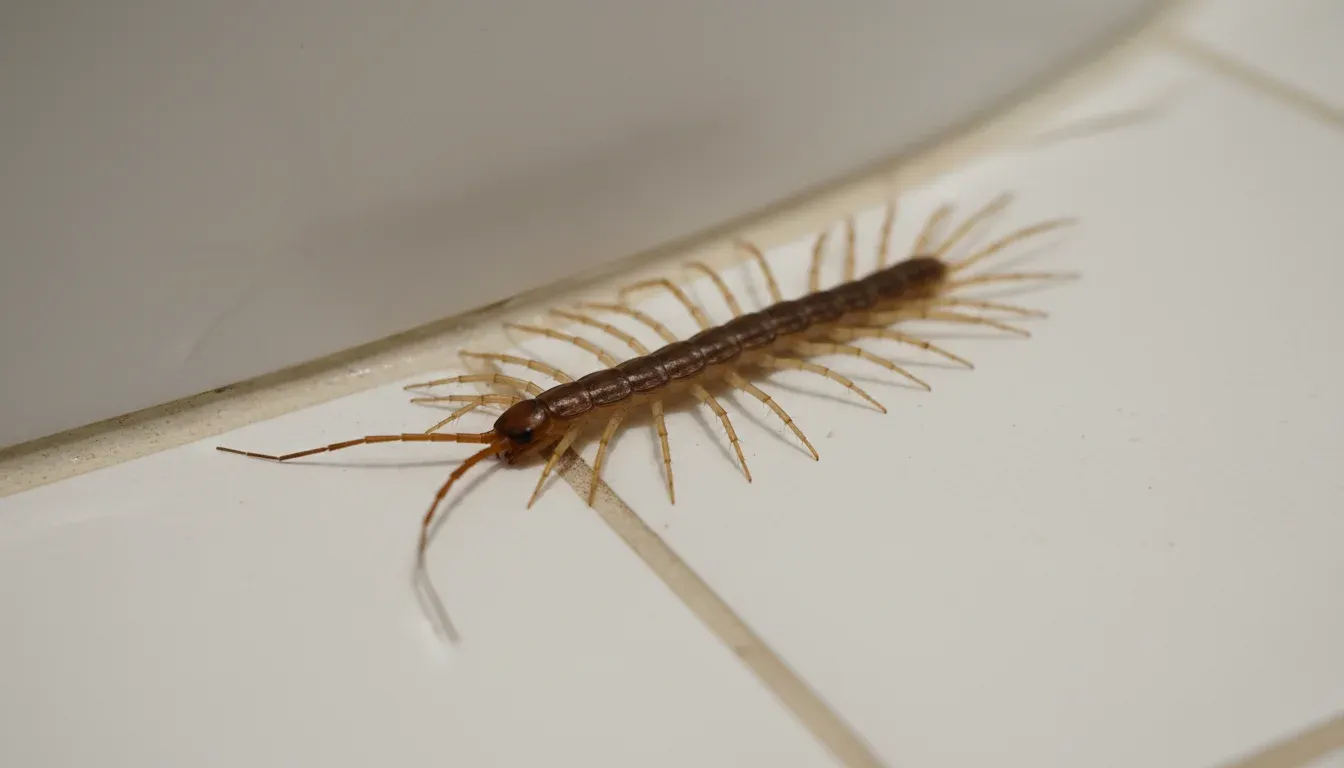
House centipedes are in your home because other bugs are in your home. They’re predators – they follow silverfish, spiders, cockroaches, and moths. Fix the conditions that support a prey insect population and centipedes stop having a reason to stay.
1. Fix Moisture Problems
Start here. Centipedes need humidity to survive, and a damp basement is basically a centipede hotel.
Fix plumbing leaks immediately. Run a dehumidifier in basements and crawl spaces – target below 50% humidity. Check around water heaters and under bathroom sinks for hidden moisture. Unclog gutters and extend downspouts so water doesn’t pool against your foundation. Most homes see results within a week once humidity drops.
2. Seal Entry Points
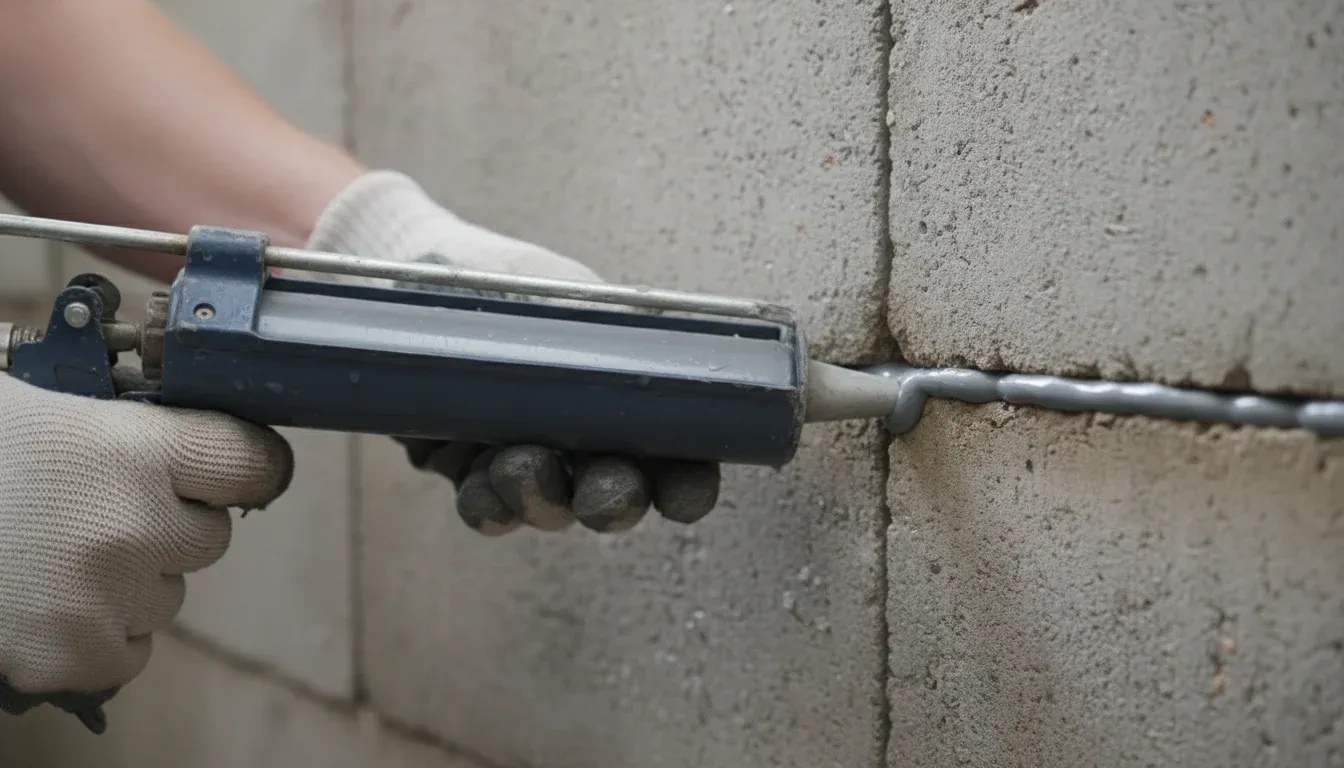
Centipedes can flatten their bodies and squeeze through gaps that look too small to matter. Walk your home’s perimeter and seal foundation cracks with concrete caulk or foam. Check where utility lines (cable, gas, water) enter the building – those penetrations are almost always under-sealed. Install door sweeps on any exterior door with daylight showing underneath.
3. Remove Food Sources
Centipedes eat other insects. If they’re in your home, they’re hunting silverfish, spiders, or cockroaches. Eliminate that prey population: fix moisture that feeds silverfish, reduce outdoor insect attractants like standing water and overnight lights. Fewer prey bugs indoors means centipedes move on.
4. Create a Perimeter Barrier Outdoors
Centipedes hide in organic debris during the day, then migrate indoors at night. Keep mulch, leaf litter, and firewood at least 12 in (30 cm) from your foundation – that’s their daytime cover and staging area.
Trim any plants or shrubs touching your exterior walls (vegetation is a bridge). Apply a granular insecticide along the foundation perimeter, focusing on areas near doors and windows.
5. Reduce Indoor Clutter
Cardboard boxes, stacked papers, and clothing piles in basements and garages are perfect centipede shelter – and perfect habitat for the silverfish they hunt.
Switch to plastic bins with tight-fitting lids. Cardboard absorbs moisture and creates crevices; plastic doesn’t. Vacuum along baseboards regularly.
6. Apply Diatomaceous Earth
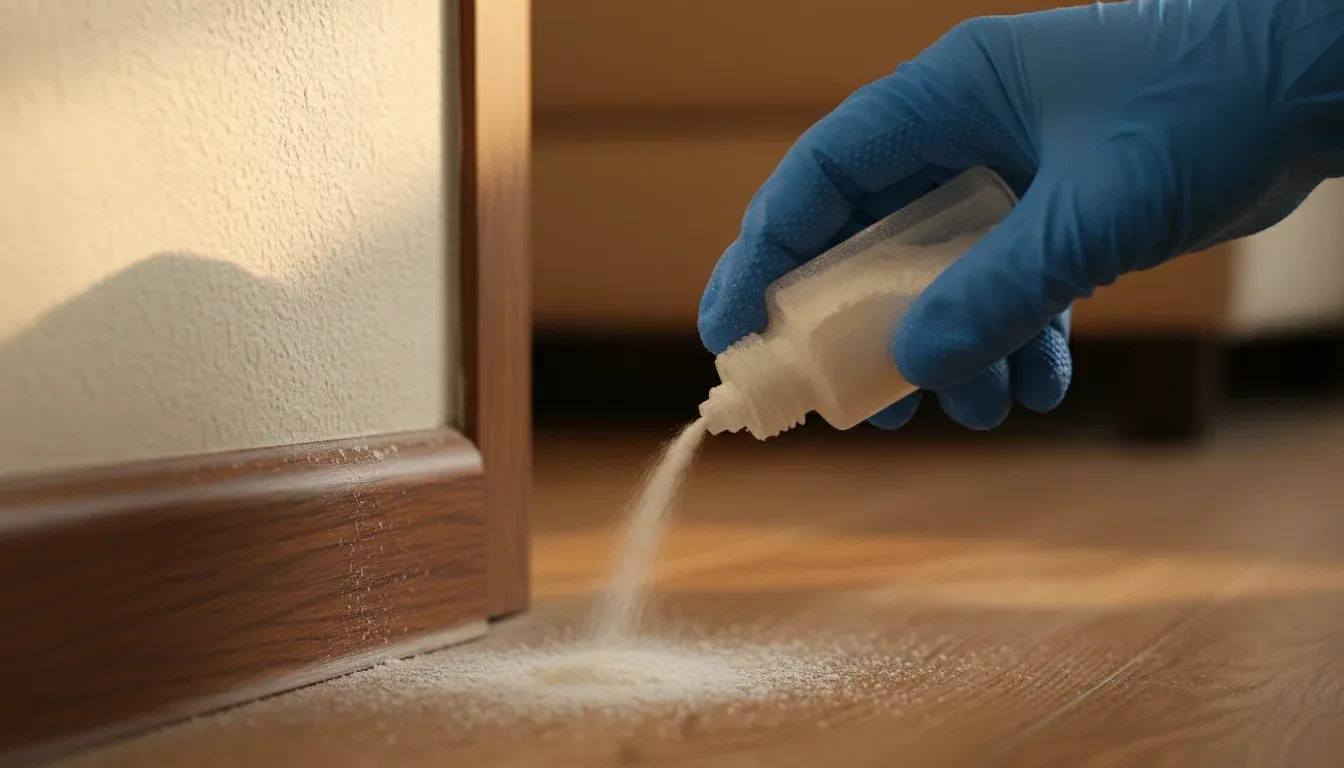
Food-grade DE shreds the waxy coating on centipede exoskeletons, dehydrating them over a few days. Spread a thin line along baseboards, around pipe penetrations, and in corners where you see activity.
Wear a dust mask during application – the fine particles irritate lungs. Reapply any time it gets wet, since moisture kills its effectiveness.
7. Use Sticky Traps
Place flat glue traps along baseboards, in corners, and near suspected entry points. Replace them weekly or when full.
They won’t solve an infestation, but they reduce the active population while your habitat fixes take hold. More usefully, heavy catches in specific spots tell you exactly where to focus sealing and DE work – and what prey insects you’re dealing with.
8. Apply Natural Repellents
Mix equal parts white vinegar and water with a few drops of dish soap and spray along baseboards, around drains, and near entry points. Reapply every few days. Cedar oil works the same way: 10 drops per cup (240 ml) of water, sprayed in the same spots. Neither kills on contact – they deter entry and work best as ongoing maintenance once the bigger fixes are in place.
FAQ
Why am I suddenly getting centipedes in my house?
Usually moisture. A damp basement or crawl space creates perfect conditions. They also follow their food – silverfish, cockroaches, spiders. Fix the humidity and you’ll see fewer of both.
Why should you never squish a centipede?
It’s counterproductive. House centipedes eat the bugs you don’t want – cockroaches, silverfish, spiders, moths. Deal with the conditions that brought them inside instead.
What smell keeps centipedes away?
Peppermint, cedar, and tea tree oil. Mix 10-15 drops per cup (240 ml) of water with a few drops of dish soap and spray along baseboards and entry points. Diluted white vinegar (50/50 with water) does the same. Neither kills on contact – they deter entry.