Table of Contents
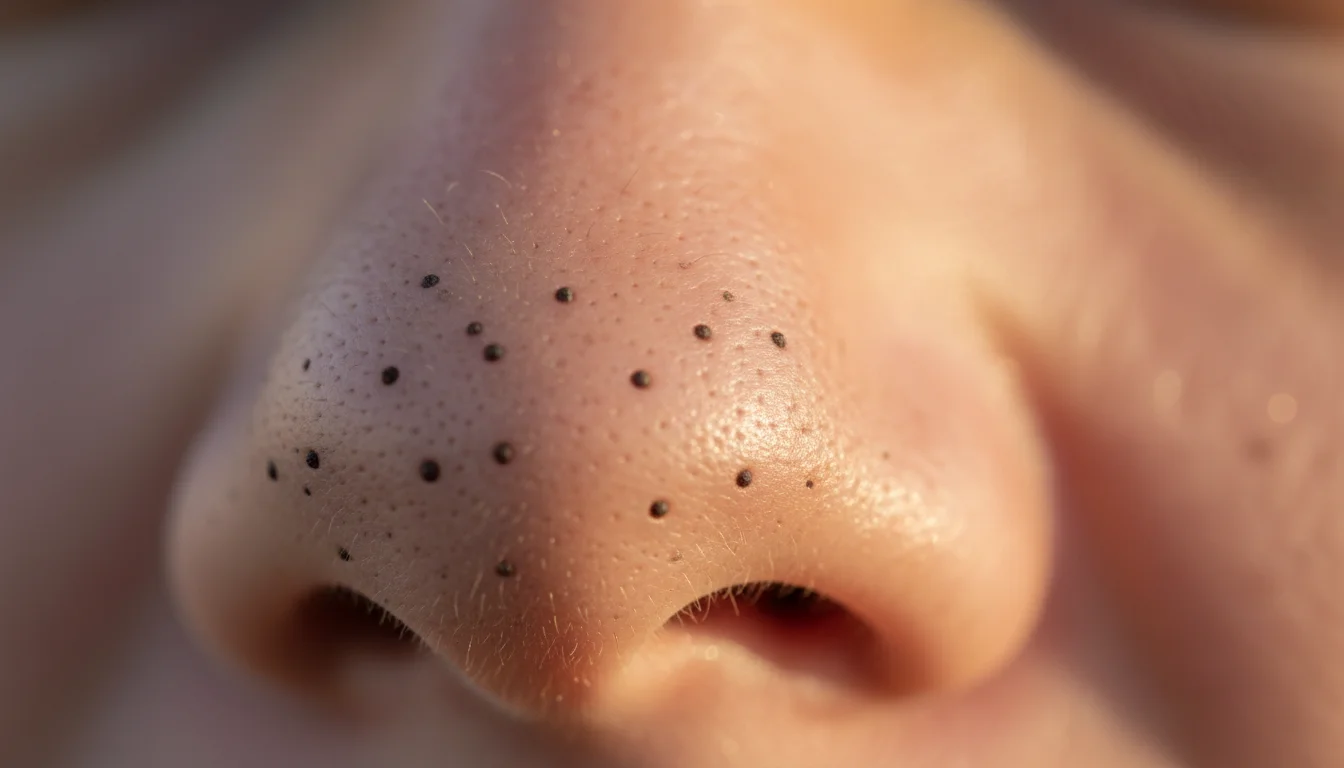
Blackheads aren’t dirt. They’re pores clogged with oil and dead skin cells, and the plug looks dark because exposure to air oxidizes the material, not because your face is grubby. They’re common, especially on the nose and chin, and no amount of scrubbing with a washcloth will fix them because the problem is inside the pore, not on the surface. Scrubbing hard just irritates acne-prone skin.
The upside: blackheads are open comedones, which means the pore isn’t sealed shut, so topical products can actually reach the clog. The catch: if you don’t address what causes them, they tend to come back. Here’s what actually works, starting with the single most effective option.
1. Exfoliate with Salicylic Acid (BHA)
This is the best thing you can do for blackheads. Salicylic acid is oil-soluble, which means it penetrates inside the pore and dissolves the mix of sebum and dead skin that forms the plug. AHAs like glycolic acid only work on the surface. BHA gets in there.
Use a leave-on product rather than a cleanser, which washes off too quickly to do much. Salicylic acid is sold over the counter for acne, so follow the directions on the label for how much to use and how often. Give it a few weeks: acne products work gradually, not overnight.
2. Use an OTC Retinoid
Adapalene (Differin) is a retinoid you can buy over the counter at 0.1% strength. It speeds up skin cell turnover and reshapes the pore lining so oil flows out instead of getting trapped, which is exactly what an open comedone needs. Use it exactly as the label directs.
Retinoids can cause dryness, peeling and irritation in the first few weeks; this often eases as your skin adjusts. The label warns that using more than one acne product at a time can make irritation worse, so add products one at a time and follow the directions on each.
3. Switch to a Water-Soluble Cleanser
Use a mild, non-comedogenic cleanser that rinses clean and does not leave your skin feeling tight or stripped. Dermatologists advise against harsh or abrasive products on acne-prone skin, so skip the gritty scrubs and anything that leaves your face raw.
Wash gently twice a day, morning and night, and again after you sweat. Use your fingertips, not a washcloth or scrub brush. Scrubbing irritates acne-prone skin and can make breakouts worse, which is the opposite of what you want.
4. Apply a Clay Mask Weekly
Kaolin or bentonite clay absorbs oil, and a clay mask can leave oily skin less shiny. Apply a thin layer to your T-zone (forehead, nose, chin), leave it on for the time the label says (usually about 10 to 15 minutes), and rinse. Once or twice a week is plenty.
Go easy if your skin is dry. Clay masks suit skin that is visibly oily by midday; on dry skin they can be too drying, without doing much for the deeper clogs.
5. Double Cleanse at Night
Oil dissolves oil. Start with an oil-based cleanser or micellar water to break down sunscreen, makeup and the day’s excess sebum. Follow with your regular water-soluble cleanser. The first step loosens everything; the second washes it away.
This is most useful on days you wear makeup or sunscreen, which a single quick wash can struggle to remove fully. On a bare-skin day, one gentle cleanse is enough.
6. Add Niacinamide
Niacinamide (vitamin B3) is a serum ingredient that can help regulate the skin’s oil, which is what feeds blackheads. Apply it after cleansing and before moisturizer, following the product’s directions.
It is easy to add to a routine, but introduce it gradually alongside stronger actives like salicylic acid or a retinoid, since using several at once can increase irritation.
7. Try an OTC AHA Exfoliant
An over-the-counter glycolic or lactic acid (AHA) exfoliant works on the surface and helps clear surface-level clogs. Use it exactly as the label directs.
Don’t pair an AHA with an OTC retinoid: the adapalene label says to avoid AHA or glycolic-acid products while you use it, because together they raise the risk of irritation. AHAs also make skin more sensitive to the sun, so use sun protection while you use the exfoliant and for a week afterwards.
8. Don’t Squeeze or Extract at Home
Don’t squeeze blackheads or dig them out at home. The American Academy of Dermatology warns that squeezing acne can cause infection and permanent scarring, and it treats blackhead extraction as a procedure for a dermatologist using sterile instruments, not a bathroom job. Loop extractor tools and pore vacuums sold for home use are no shortcut: safe extraction is a trained professional’s job, not a gadget’s.
Stick with consistent salicylic acid and a retinoid instead. They clear open comedones over a few weeks and reduce how many form in the first place, without the scarring risk. If a stubborn blackhead won’t shift, that is a job for a professional, not a squeeze.
What to Skip
Pore strips only pull the plug off the surface; they don’t treat what causes blackheads, so the pores fill again. At-home pore vacuums are easy to overdo and there’s little evidence they help. And “charcoal detox” products are marketed for pores with no good evidence they clear them. Save your money.
Stick with the chemistry – BHA, retinoids, niacinamide – and you keep blackheads under control far better than any gadget will. That’s the whole point.
When to See a Professional About Blackheads
The steps above clear open comedones. Now and then what looks like a blackhead problem is something the shelf can’t reach. See a dermatologist if:
- Deep, painful lumps sit under the skin and never come to a head. Unlike blackheads, this kind of spot under the skin can scar if left alone, so have it looked at rather than picked at.
- Nothing has shifted after about 12 weeks of consistent salicylic acid and an OTC retinoid used as directed.
- The blackheads come with spreading redness, pus-filled spots, or scarring that is getting worse.
- Products leave your skin so raw or irritated that you can’t keep any routine going.
A dermatologist can confirm what you are actually dealing with and, if you want to go further than an OTC routine allows, talk through the options based on your own skin. That is a conversation to have in person, not something to decide from a page like this.