Table of Contents
Bad fridge smells come from something specific, and until you find what, a fresh box of baking soda just perfumes the problem. Every listicle tells you to drop in baking soda and walk away. That works for a mild funk. It does nothing for a leaking bag of spinach at the back of the crisper, or for a smell that has already soaked into the plastic.
So match the smell to its source first, then work in order: discard, deep clean, deodorize. A low-level staleness needs a wipe-down and an absorber. A rotten, power-outage smell needs the full sequence and some patience.
What causes bad fridge smells
Most fridge smells trace back to one of a few places, and knowing which one saves you from cleaning the wrong thing.
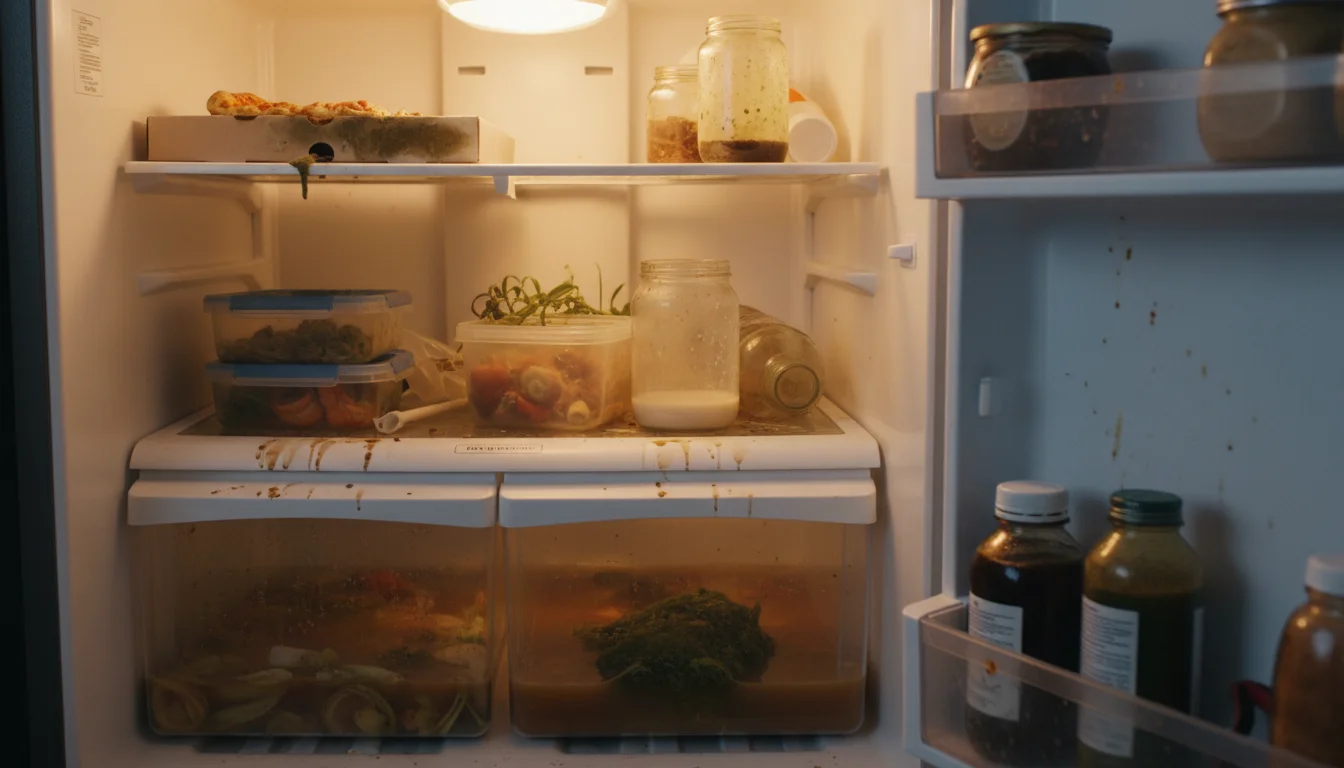
Spoiled food and old spills are the usual suspects: a forgotten container, a leaked marinade, produce that liquefied in the drawer. That is most cases and the easiest to fix. Past that, the smell hides. The drip pan underneath catches defrost water and grows mold you never see. The door gasket traps crumbs and moisture in its folds, and mold in those damp folds gives off a musty smell.
Then there is the bad one: odor that has penetrated the insulation behind the liner, usually after meat or fish juices leaked in during a long power outage. That is the smell cleaning can’t reach, and it changes the plan (see the last section).
1. Find the source and throw it out
Start here every time. Pull everything out and hunt for the culprit: check the back of the crisper drawer first, since that is where vegetables go to die and leak. Look for bloated packages, leaked liquid, fuzzy surfaces, and anything past its date.
When in doubt, throw it out, and do not taste food to check whether it has turned. Bag the spoiled items and get them out of the house, not just into the kitchen trash can where the smell keeps radiating. Half the time the smell leaves with the food and you are done.
2. Deep clean every surface
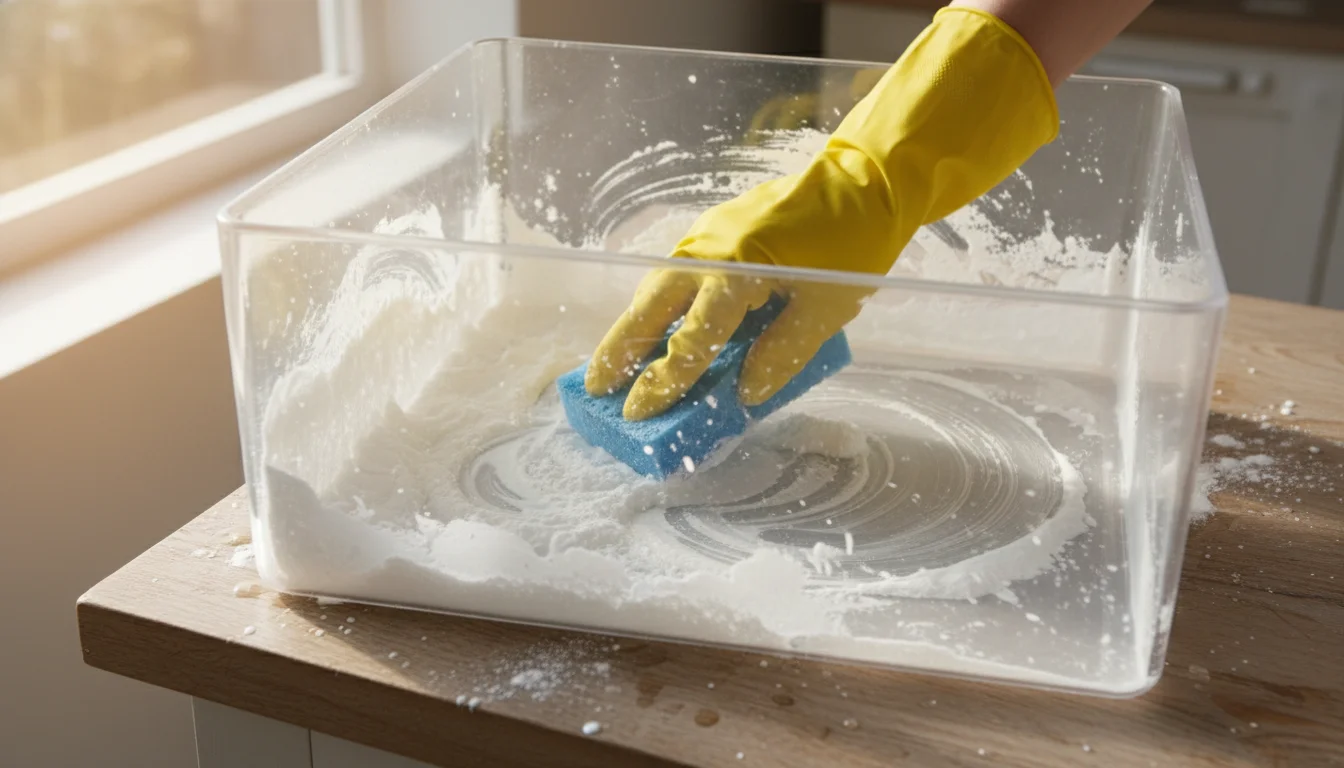
Unplug the fridge and take out every removable shelf, drawer, and bin. Wash them in the sink with warm water and dish soap. For odor rather than just grime, use a baking soda solution: 2 tablespoons in 1 quart (about 1 L) of warm water, or 1 cup in a gallon (3.8 L) for a big job, which cuts odor as well as grime.
Wipe down the interior walls and the door, and work into the folds of the rubber gasket with an old toothbrush, since crumbs and mold live in there. Don’t put fridge parts in the dishwasher; the heat can warp them. If the smell came from spoiled food, follow the wash with a food-safe sanitizer: 1 tablespoon of unscented chlorine bleach per gallon (3.8 L) of water, wiped on and left to air. Dry everything and leave the door open for 15 minutes before you plug it back in.
3. Check the drip pan
This is the step nobody tells you about, and it is often the whole answer when a spotless fridge still stinks. The drip pan is a shallow tray under the unit that catches condensation and defrost water. Spills collect there and grow mold, out of sight.
Pop the base grille off the front and slide the pan out. Tip out the water, wash it in warm soapy water with a little baking soda, rinse, dry, and slide it back. Not every model has an accessible pan, so check your manual first.
4. Wipe it down with vinegar or lemon
After the main clean, go over the shelves and walls with an acidic wipe. For a smell that lingers, use equal parts white vinegar and water. Lemon juice works as an alternative if you prefer its smell. Dry the surfaces before you restock.
5. Leave an odor absorber inside
Now let something quietly pull the last of the smell out of the air. Baking soda is the standard: tip it into a shallow dish rather than leaving it jammed in the box, and give it a day or so to work. Replace it every three months or so.
Activated charcoal (from a pet or aquarium shop) is another option, and coffee grounds work too if you don’t mind everything smelling faintly of coffee.
6. Pack it with newspaper and run it empty
For a corpse-grade smell that survives everything above (think rotten meat after a power cut) go nuclear. Empty the fridge, crumple sheets of newspaper into loose balls, and pack the shelves. Set a cup of water on the top shelf or sprinkle the paper damp. Run it empty for 5 to 6 days, swapping the newspaper every couple of days. Newsprint is good at pulling strong odors out of the air.
It is slow and it looks ridiculous. It also works, though the truly foul cases can take the better part of a week, so set your expectations.
Keep it from coming back
Store food in airtight containers so strong smells stay put and spills do not spread. Wipe up leaks the moment they happen. Keep the fridge at about 37°F (3°C); warmer and food spoils faster. Clean it out regularly and keep an open box of baking soda on a shelf between cleans. And if the kitchen still smells with a clean fridge, check whether the real culprit is a dishwasher smell instead.
When to call a professional
If the smell survives a full clean, the drip pan, the wipe-down, and days of absorbers, the odor may have penetrated the insulation behind the liner, usually from meat or fish juices during an extended outage. Cleaning cannot reach that. A technician can remove the liner and replace the insulation, though on many fridges people choose to replace the appliance instead. If you do scrap it, take the door off first so a child can’t get trapped inside.
Bad fridge smell FAQ
Why does my fridge still smell after I cleaned it?
The source is somewhere you didn’t clean: the drip pan underneath, the folds of the door gasket, the coils, or the insulation itself. Check the drip pan and try a vinegar wipe-down before you assume the worst.
What absorbs fridge smells the fastest?
There’s no clear winner. Activated charcoal, baking soda, and coffee grounds all pull odor from the air. Whatever you use, expose as much surface area as you can and give it a day or two.
How long does baking soda take to work?
Give it a day or so to noticeably cut a smell. It works best poured into a shallow dish rather than left in the box.
How do I get rid of the smell after spoiled food or a power outage?
Discard everything questionable (don’t taste it), wash every surface, then sanitize with 1 tablespoon of unscented bleach per gallon (3.8 L) of water. If it lingers, run the fridge empty for several days with charcoal or damp newspaper inside.
Does a smell that won’t leave mean I need a new fridge?
Sometimes. If the odor has soaked into the insulation and no cleaning reaches it, many people replace the fridge rather than pay to redo the liner and insulation. Everything short of that is worth trying first.