Table of Contents
You have found a box of old, corroded or water-damaged rounds and you want them gone safely and legally. The good news is that there is a free, boring, correct route, and it usually starts with a phone call to your local police or sheriff. The bad news is that the tempting shortcuts, the trash, a fire, a soak in water, are the dangerous ones. A cartridge does not need a gun to go off: a hard enough knock on the primer will fire it, which is exactly what a refuse truck’s compactor can do. So the whole job is really two things, knowing what never to do with ammunition, and knowing which handoff route your area actually runs. This is how to get rid of ammunition without hurting yourself, the crew who empties your trash, or the ground under your feet.
1. Keep ammunition out of the trash, fire and ground
Before any route, fix the boundary that all of them sit inside: ammunition never goes in the household trash or the recycling, is never burned, buried or flushed, and is never pulled apart at home. Each of those fails for a concrete reason. The trash and the curbside recycling both end in crushing machinery, and a compacted round can fire. Burning does not neutralize rounds, it makes them cook off and throw primer and casing fragments. Burying pushes lead and other metals into the soil and groundwater. And do not pull a cartridge apart at home to get at the powder; separating a live round is handling for a professional, not a household job. This step is not a route in itself; it is the set of things you must not do, which leaves the safe handoffs below as the only options.
One myth deserves a flat answer, because it is everywhere: soaking rounds in water or oil to kill the powder. It is not reliable. A metallic cartridge is sealed, so there is no guarantee the liquid reaches the powder or primer inside, and a soaked round can still be live. This is where ammunition differs from items you soak before you throw them out, such as fireworks. Do not treat a wet round as safe. Keep it intact and hand it to one of the routes below.
2. Call your local police or sheriff first
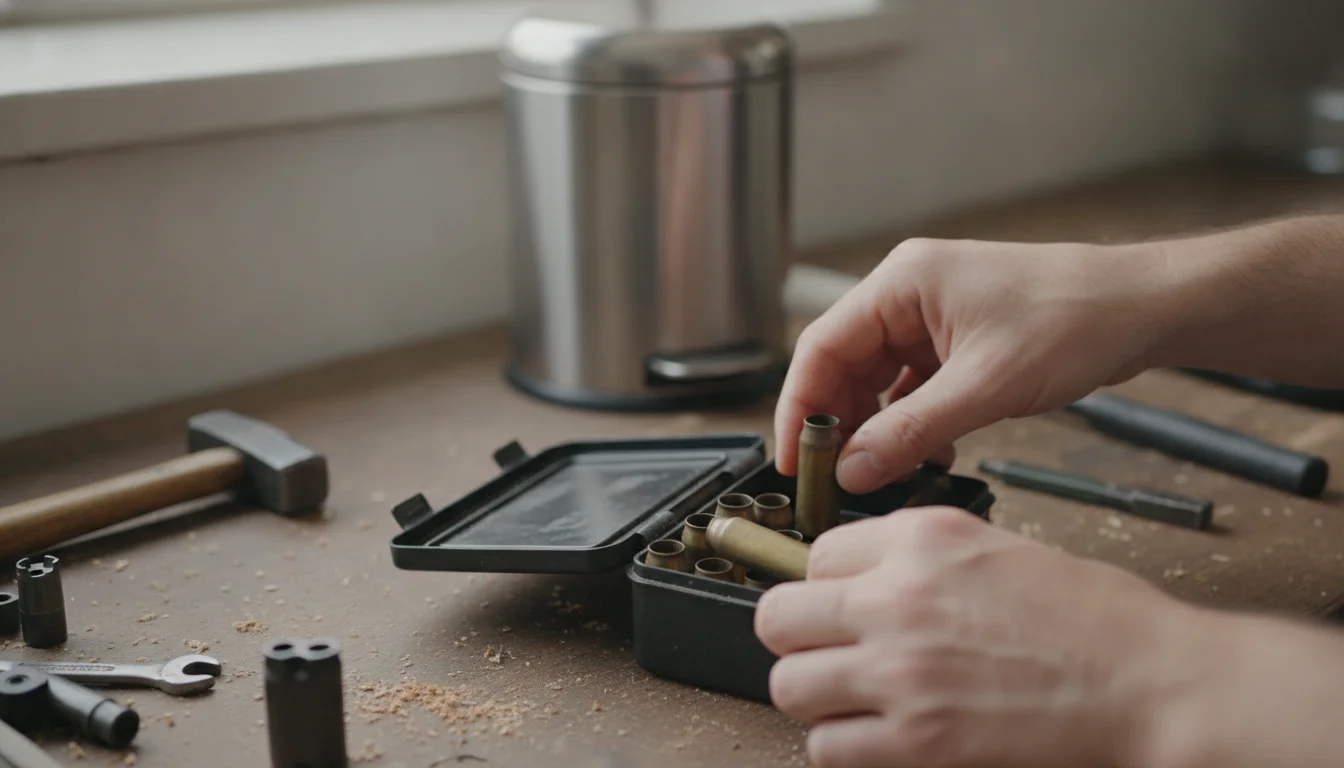
For most households this is the first call to make, and often the whole answer. Many local police departments and county sheriff’s offices take old or unwanted ammunition for disposal, usually free, because they already have a safe channel for it. The rule that makes it work is to phone the non-emergency line first, not to show up. Ask whether they accept ammunition, where and when to bring it, and how they want it handed over. Some take it at the counter by appointment, some have you wait in the parking lot while an officer comes out, and for a large or unstable quantity some will send someone to collect it.
Calling first is safety, not politeness, and it saves a wasted trip. Policies vary, and some departments have stopped accepting ammunition over storage limits and cost. When a department does take it, the standard instruction is to keep the rounds secured in the trunk or rear of your vehicle, tell staff what you have on arrival, and let an officer take it from there. Do not carry a box of live rounds into a public lobby, and never dial the emergency number for this. Have the basics ready: roughly how much, what type, and whether it is corroded or has been wet.
3. Take it to a gun store or licensed dealer
A local gun store or licensed firearms dealer handles ammunition every day, so it is a natural place to take a box you no longer want. Many will accept old or bad ammo for disposal, and some will pass usable rounds to a reloader who can strip and reuse the components. Phone first and ask two things: whether they take unwanted ammunition, and whether there is a charge. If they do not take it themselves, staff can usually point you to who does locally, because this is a routine question for them. A handful of mixed or corroded rounds is usually fine; a large, badly degraded stash is more likely to go to a police collection or a hazardous waste event. Bring the rounds in a closed container, tell the counter what you have, and hand them over intact.
4. Drop unwanted rounds at a shooting range
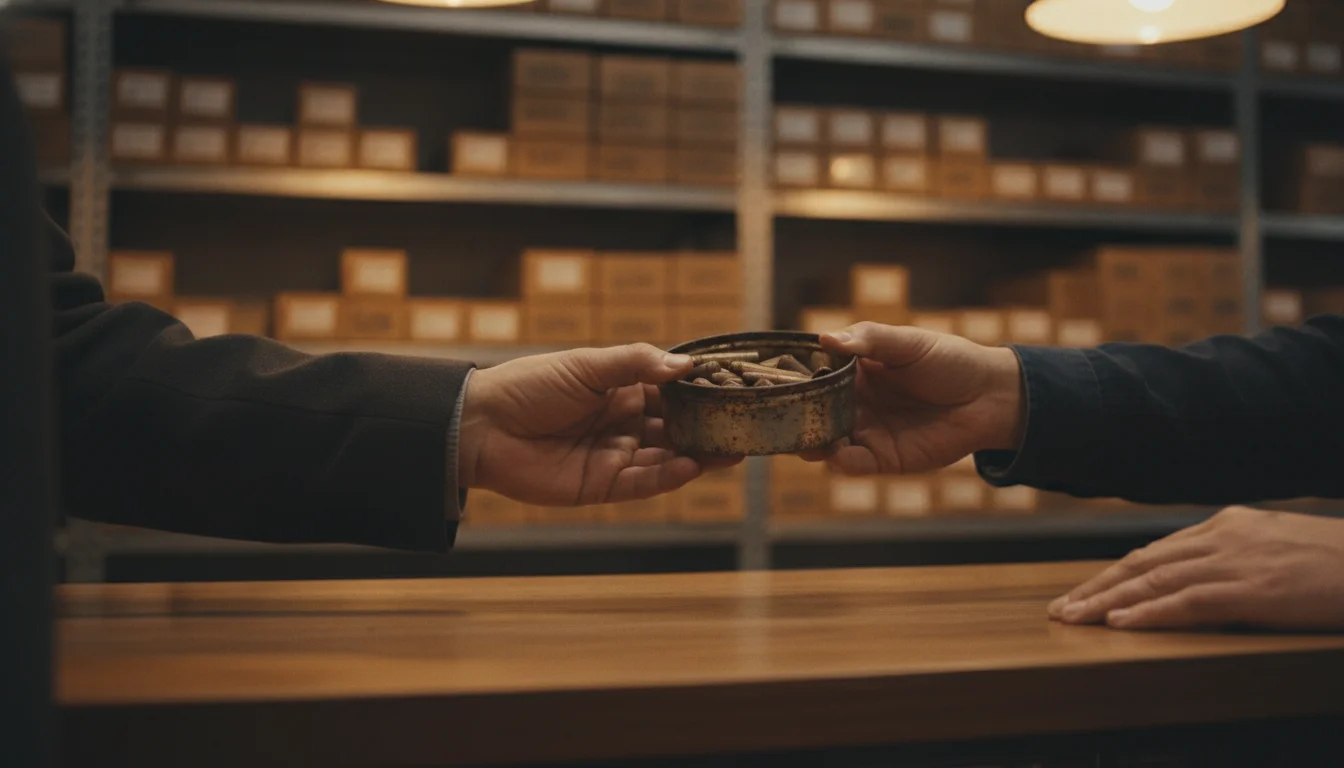
Many shooting ranges keep a container for dud and unwanted rounds and will take a small quantity off your hands. Ranges deal with misfires constantly, so they usually have an arrangement with local law enforcement or a recycler to clear the container safely. Ring the range first, say roughly how much and what type you have, and ask whether they accept drop-offs and where the container is. This route suits a handful of rounds or a box of duds rather than a bulk clear-out, but for a modest amount it is one of the easiest options, often at no charge. Do not tip rounds into the container unsupervised unless staff tell you that is how it works, and do not try to fire off old rounds yourself to save the trip.
5. Take it to a household hazardous waste collection
Your municipal household hazardous waste (HHW) program is a solid fallback when the police, a dealer or a range cannot help. The catch is timing: many HHW sites do not take ammunition at their everyday drop-off, but do accept it at specific collection events during the year. Look up your city or county HHW page, or use a recycling locator, to find whether and when they take it, then call to confirm. Do not turn up on spec at a routine drop-off day with a box of rounds they cannot take. Bring the rounds in a closed, secured container, hand them to staff rather than leaving them at an unattended kiosk, and let the program route them to a licensed disposer. These are the same events that take leftover paint or an old propane cylinder, so it is worth clearing those out on the same trip. It is usually free or low cost.
6. Check your local and state rules
Which route is open to you depends on where you live, so confirm the local answer before you load the car. Rules on transporting and disposing of ammunition differ by state and by city, and so do the services on offer: some areas run police collections, some rely on hazardous waste events, and a few have specific programs. Check your municipality’s waste page and your state’s guidance, or simply ask on the phone when you call a police department or HHW line. California, for instance, has its own guidance that differs from a rural county elsewhere. An official city, county, state or police page beats a forum post, and a direct phone call beats both because it reflects current practice. Checking the rule is the quickest step here and involves no handling; you are gathering information, not moving ammunition.
Ammunition disposal FAQ
Is it illegal to throw ammunition in the trash?
In many places, yes, and it is unsafe everywhere. A refuse truck’s compactor can strike a primer hard enough to fire the round. Whatever your local rule says, use a handoff route rather than the trash.
Does soaking ammunition in water make it safe?
No, not reliably. A metallic cartridge is sealed, so the water may never reach the powder or the primer, and the round can stay live. Do not depend on it. Hand the round over intact to a police collection, a dealer, a range or a hazardous waste program.
Will the police take old ammunition?
Often, yes, and it is usually free. Call the non-emergency line first to confirm they accept it and to ask their procedure. Many will have you keep the rounds secured in your vehicle until an officer collects them, rather than carrying live rounds into the station.
Can I burn or bury old ammunition?
No to both. Burning makes rounds cook off unpredictably and throws fragments, and burying leaches lead into the soil and groundwater. Neither settles anything safely. Route the ammunition to a proper handler instead.
Will ammo go off in a house fire?
Yes, loose ammunition caught in a fire will cook off. The reassuring part is what that looks like: industry fire testing found that sporting ammunition outside a firearm does not mass-explode, and the primer and casing fragments it throws are low-energy compared with a round fired from a gun. That is a reason to store ammunition away from anything that could burn, and a reason firefighters treat a burning building differently when ammunition is inside. It is not a reason to think burning is a safe way to destroy it: cook-off is uncontrolled, and burning is never a disposal route.
Does a store like Walmart take ammo back?
Treat the store that sold it as a dead end for disposal. If you want to ask a specific retailer, call first, but do not build your plan around it. The routes that reliably take unwanted ammunition are a police collection, a licensed dealer, a shooting range or a household hazardous waste event.
Is there a market for old ammunition?
Maybe for a dealer, rarely for you as a disposal question. A licensed dealer may buy or trade factory rounds that are clean, dry and in good condition, so if resale is your goal, ask one. But corroded, swollen, water-damaged or unknown ammunition is a disposal item, not a resale one, and offloading suspect rounds on a buyer just passes on the risk. If there is any doubt about the condition, treat it as disposal and use one of the routes above.
Can I scrap ammo as metal?
No. A live cartridge is not scrap metal: it still holds a primer and powder, so a scrap yard or metal recycler will not take it, and it must never go in the recycling. Spent, fired cases are ordinary brass and can be recycled, but a whole, unfired round has to go through a disposal route instead.
The safe path is duller than the dangerous one, and that is the point. None of it takes specialist knowledge, only a phone call before you move anything. Keep the rounds in their original box if you still have it, so whoever accepts them can see the type and quantity at a glance, and label the container if you cannot. If a firearm came with the ammunition, that is a separate process with its own rules; ask about it on the same call rather than assuming.