Table of Contents
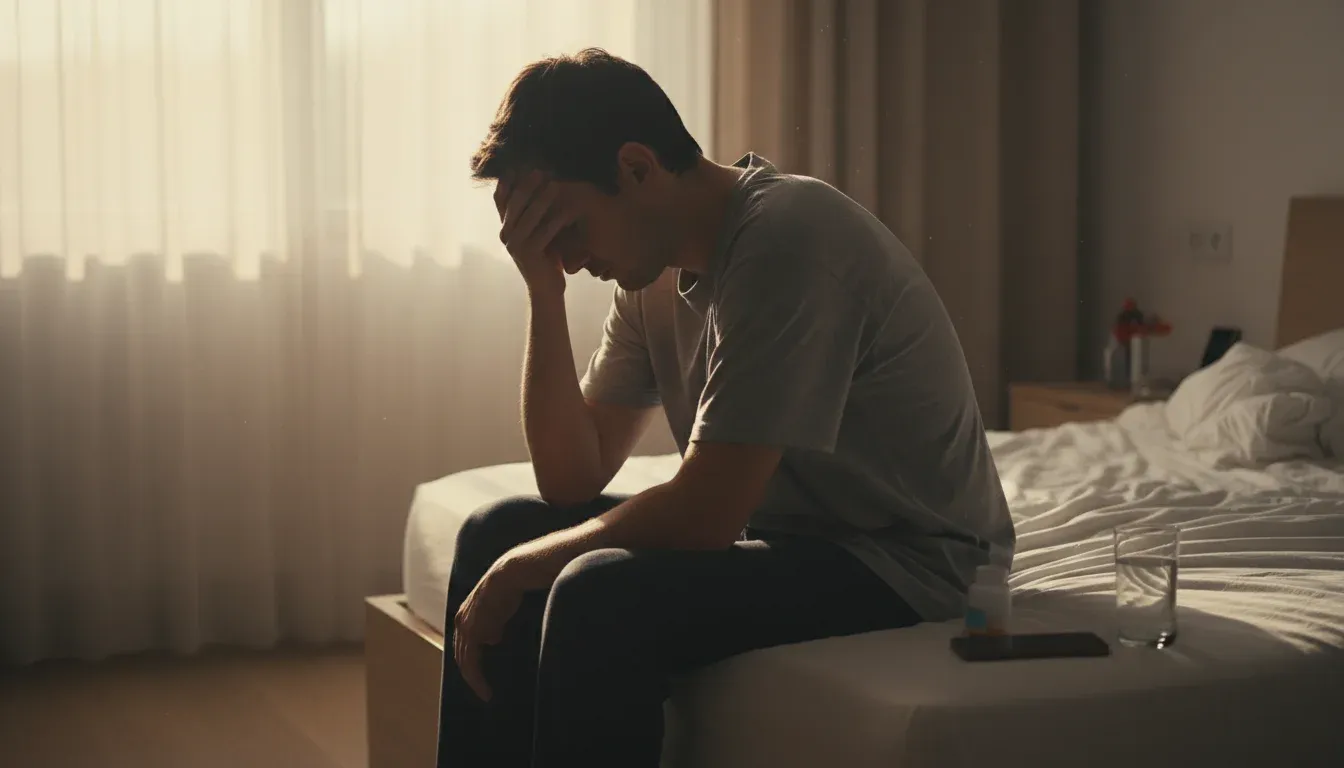
There are two kinds of dizziness after drinking, and they need different fixes. The first is the spins: you lie down at 1am and the room starts rotating, because alcohol has scrambled the balance signals from your inner ear and your brain can’t work out which way is up. The second shows up the next morning, when you stand and the floor tilts. That one is mostly fluid loss, low blood sugar and bad sleep, and it peaks as your blood alcohol drops back to zero.
Nothing makes your body clear alcohol faster. You can stop the spinning getting worse tonight, take the edge off tomorrow, and learn the signs that mean you need help. The first four steps are for the night of. The rest are for the morning after.
1. Stop drinking when the spins start
The first time the room tilts, that’s your last drink of the night. Switch to water and something to eat.
It can get worse after you stop. Alcohol that’s still in your stomach and gut keeps getting absorbed, so your blood alcohol can keep climbing for a while after the last glass. If you feel rougher a while after you stopped, that’s why. Another drink only adds to the pile.
Same rule in the morning. A “hair of the dog” drink doesn’t cure a hangover, it postpones it. And don’t drive home, even if you feel steadier than you did an hour ago.
2. Sit up, or lie on your side
Lying flat on your back is the worst place to be. Prop yourself up on two or three pillows or against the headboard so you’re sitting partly upright. It’s the position recommended for anyone who’s had a lot to drink, because it makes choking less likely if you’re sick.
If you have to lie down, lie on your side with one ear toward the mattress, not on your back. Anything that comes up then drains out instead of back down your throat. Put a bowl or a trash can within reach before you settle.
3. Keep one foot on the floor
An old trick with no research behind it, but it costs nothing and you’re already in bed. Sit or lie on the edge of the mattress and put one foot flat on the floor. The idea is that solid ground under your foot gives your brain one steady signal to hold on to while your balance system insists the room is moving.
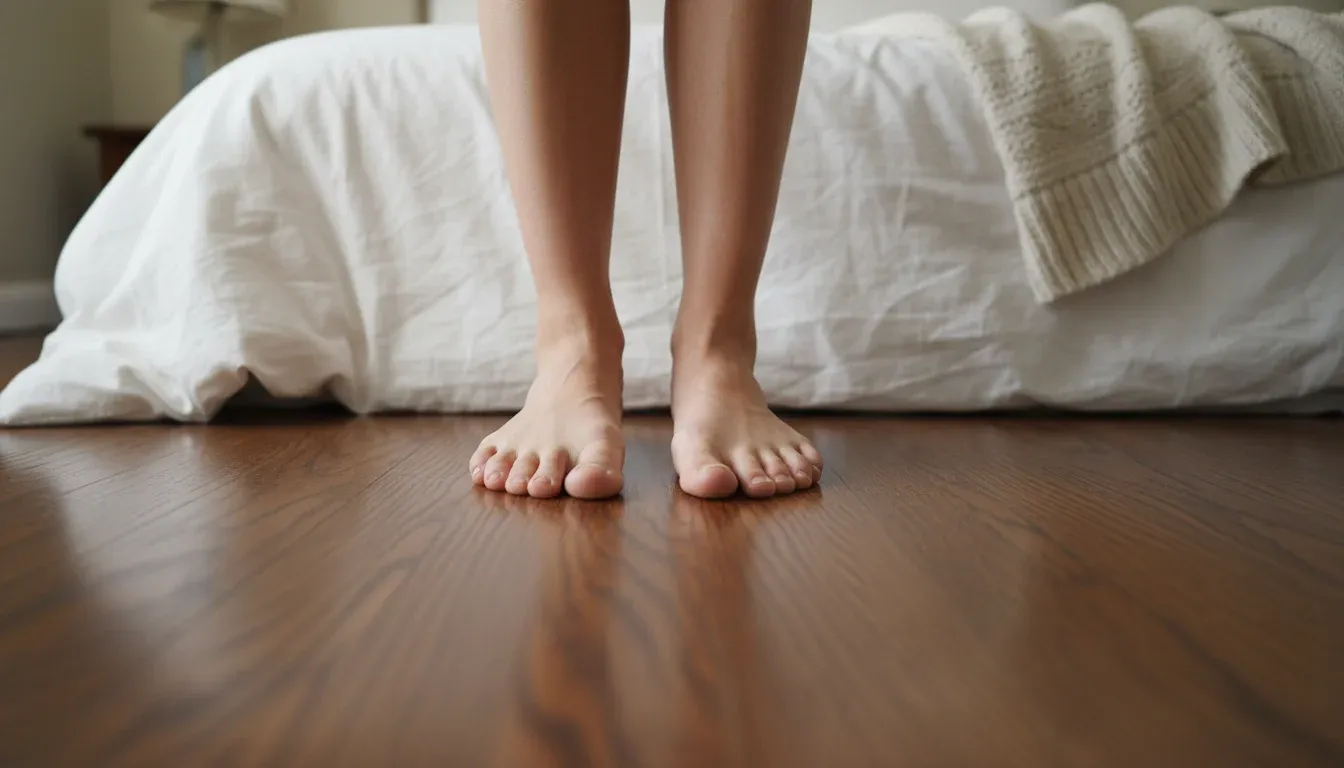
Pair it with sitting propped up (step 2). If it does nothing, move on to step 4.
4. Fix your eyes on something that isn’t moving
Pick one fixed thing you can see without turning your head: a light switch, a picture frame, the edge of a doorframe. Keep your eyes on it and keep your head still, because moving your head is one of the commonest things that sets dizziness off. Turn the lights down low, but not off (you still need to see your point, and the way to the bathroom).
It won’t end the spins. It gets you through each wave until the alcohol wears off.
5. Sip water, before bed and all morning
Alcohol makes you pee more by holding back a hormone that normally tells your kidneys to hang on to fluid. The fluid you lose feeds the thirst, the headache and the lightheadedness when you stand up.
Have a glass of water before bed and keep a full bottle on the nightstand. Sip rather than gulp: small, regular amounts sit better on a churning stomach than a pint downed at once. In the morning keep going with water, broth or any non-alcoholic drink until your pee is pale.
Sports drinks are fine if you like the taste. But research hasn’t found that added electrolytes make a hangover milder, and your body restores its own balance quickly once the alcohol wears off. Same goes for the IV drips sold as hangover recovery.
6. Eat something bland
Alcohol messes with how your body manages blood sugar, and low blood sugar leaves you shaky, weak, sweaty and woozy. Dry toast, crackers or a banana bring it back up without upsetting your stomach. A mug of salty broth adds fluid at the same time.
Eat a little, wait, then eat more if it stays down. Next time, eat before you drink: food in your stomach slows how fast alcohol gets into your blood.
7. Ginger for the nausea
When the dizziness drags nausea along with it, ginger is the classic kitchen remedy for a queasy stomach. The evidence is best for pregnancy sickness and thin for everything else, so treat it as comfort, not a cure. Steep a thumbnail-sized piece of peeled, sliced fresh ginger root in hot water for 5 to 10 minutes and sip it slowly. Ginger candies or a small piece of raw ginger work if you can’t face a cup.
Ginger ale only counts if it has real ginger in it; most is sugar water with flavoring. If you take a regular medicine, check with a pharmacist or doctor before using ginger.
8. Get up slowly
Morning dizziness is worst in the moment you stand, walk or turn your head. So don’t do any of those fast.
From lying down, roll to your side and push up to sitting. Sit on the edge of the bed with your feet on the floor for a moment. Then stand with a hand on the bed frame or the wall, and wait a few seconds before the first step. Squat instead of bending over, and turn your whole body rather than snapping your head round. If a wave hits while you’re on your feet, sit down right where you are, on the floor if you have to.
Dizziness raises your risk of falling and hurting yourself, so clear the route between the bed and the bathroom. And no driving, ladders or power tools until it has fully gone.
9. Give it time (and a dark room)
Your body needs about an hour to process one drink, and coffee, a cold shower or a morning beer won’t change that. A hangover peaks when your blood alcohol is back to about zero, and symptoms usually ease over 8 to 24 hours, though they can last longer.
So make the wait bearable: a dark, quiet room, water within reach, as much sleep as you can get. Your attention and coordination are still off during a hangover, not only while you’re drunk.
When to call a professional
Dizziness after drinking usually passes on its own. These signs mean you need help instead of waiting.
Call 911 now if you or the person you’re with:
- can’t stay awake, or can’t be woken
- is vomiting while drowsy or only half conscious
- has slow or irregular breathing
- has pale or blue-tinged skin, or feels cold and clammy
- is confused, can’t speak properly or can’t stand
- has a seizure
Don’t wait for all of them. One is enough. While you wait, stay with the person, because they could choke on their vomit or stop breathing. Sit them up if they’re awake. If they’ve passed out, roll them onto their side and check their breathing. Give them sips of water only if they’re conscious and can swallow without vomiting. Keep them warm. No coffee, no cold shower, no more alcohol, and don’t try to make them sick. And if it’s you, don’t drive yourself to the ER.
See a doctor if:
- the dizziness lasts past a day, or keeps coming back after the alcohol has worn off
- you’re finding it harder to hear, or there’s ringing in your ears
- you have double or blurred vision, or your face, arms or legs feel numb or weak
- it comes with fainting, a change in your pulse, or a headache that won’t quit
And if you’re getting dizzy after drinking often, or finding it hard to control how much you drink, that’s worth a conversation with your doctor too.
Dizziness after drinking FAQ
What helps dizziness after drinking immediately?
Sit down or lie down where you are, then keep your head still and fix your eyes on one thing that isn’t moving. Prop yourself up rather than lying flat, and sip water. None of it stops the spins instantly, but it stops them getting worse.
Does alcohol-induced vertigo go away?
Yes. It fades as your body clears the alcohol, and most hangover symptoms ease within 8 to 24 hours. If the spinning lasts past a day or keeps coming back when you’re sober, see a doctor. Our vertigo guide covers what helps in the meantime.
Can I take a painkiller for a hangover?
You can take an over-the-counter painkiller, following the directions on the label. Skip acetaminophen while there’s still alcohol in your system, because the combination can be toxic to your liver. Aspirin and ibuprofen can irritate your stomach, so go easy with those too.
Do electrolyte drinks or IV drips cure dizziness after drinking?
No. Research hasn’t linked electrolyte levels to how bad a hangover is, or shown that adding electrolytes helps. Water and time do the work.