Table of Contents
Some dog odor is normal. Healthy paw pads smell a bit like corn chips, healthy ears smell faintly yeasty, and every dog carries its own scent. What isn’t normal is a smell that’s sour, fishy or rotten, or one that comes back quickly after a bath. That usually starts in the skin, ears, teeth or anal glands, and shampoo won’t fix it.
And you’ve probably stopped noticing. The EPA calls it olfactory fatigue: the sense of smell deadens soon after a strong odor first registers. The person who lives with the dog is the worst judge of how the house smells. Ask a visitor.
The order below goes source first: the dog, then everything it lies on, then the air.
1. Bathe your dog with dog shampoo, then dry it fully
A bath fixes everyday smell and whatever your dog rolled in. Use a gentle shampoo made for dogs, not your own. Every 3 to 4 weeks is enough for most dogs unless your vet says otherwise. Bathing far more often strips the coat’s natural oils and dries the skin. If your dog has oily or sensitive skin, or needs frequent baths anyway, an oatmeal dog shampoo is gentler.
Work the lather down to the skin, and check the skin and inside the ears while you’re there.
Then dry it properly, the step people skip. Wet-dog smell is the coat’s microbes releasing odor compounds as the fur gets wet. A coat left damp goes musty, and one that’s wet most of the time harbors bacteria and yeast. Keep going until it’s dry down to the skin.
2. Brush the coat, outdoors when you can
Brushing pulls out loose hair, dander and dirt before they tangle into the coat and start to smell. Long, thick or corded coats need it most. On long-haired dogs, an occasional trim around the paws and other spots that stay damp keeps buildup down.
Do it outside when the weather allows. Brushing indoors throws hair and skin flakes into the air, and they settle into the carpet and couch you’re about to clean.
3. Brush its teeth
Sometimes the “dog smell” is breath. With dental disease, bacteria settle into pockets around the teeth and give off a foul, slightly sulfurous smell.
Brushing removes plaque before it hardens. Use a dog toothbrush and dog toothpaste, never yours: human toothpaste can contain xylitol, which is poisonous to dogs. A dental chew with the Veterinary Oral Health Council (VOHC) seal helps between brushings, but nothing a dog chews removes tartar that has already hardened. That takes a vet cleaning. More in how to get rid of bad dog breath.
4. Get a smell that a bath doesn’t fix checked by a vet
If the smell comes back quickly after a bath, or it’s sour, musty, fishy or rotten, something is producing it. Where it’s strongest tells you where to look:
- Ears: a strong musty or sour smell from the head, with redness, debris, head shaking or pawing at the ears. An ear infection smell doesn’t wash off.
- Skin: a musty “corn chip” smell with a greasy coat, redness, itching or hair loss, often on the neck, paws, armpits, skin folds and groin. Allergies are a common trigger.
- Rear end: a fishy smell with licking or scooting points to the anal glands.
- Mouth: see method 3.
Each needs a vet to diagnose and treat, with medicated baths, ear treatment, emptying the anal glands or a dental cleaning. A yeast infection can take weeks or even months to clear.
5. Wash the dog’s bedding every week
The dog bed soaks up skin oil and drool night after night. Wash everything that fits in the machine once a week: blankets, covers, fabric toys, the whole bed if it fits. Use hot water when the care label allows. A weekly hot wash is the EPA’s standard advice for bedding, and the EPA also suggests keeping pets off soft furniture.
The owner in the top-ranking Reddit thread was doing laundry three times a week and keeping air freshener in every room, and still avoided the couch because of the smell. Fabrics the dog lies on keep releasing it until they’re washed or treated. A spray only sits on top. For your own clothes, see how to get rid of dog odor in clothes.
6. Deep clean carpets and furniture with an enzyme cleaner
Carpet shampoo cleans the surface. The smell is organic residue (oil, dander and, after an accident, urine) that soaks into the carpet pad, and an enzyme cleaner made for pet odors breaks it down instead of perfuming it.
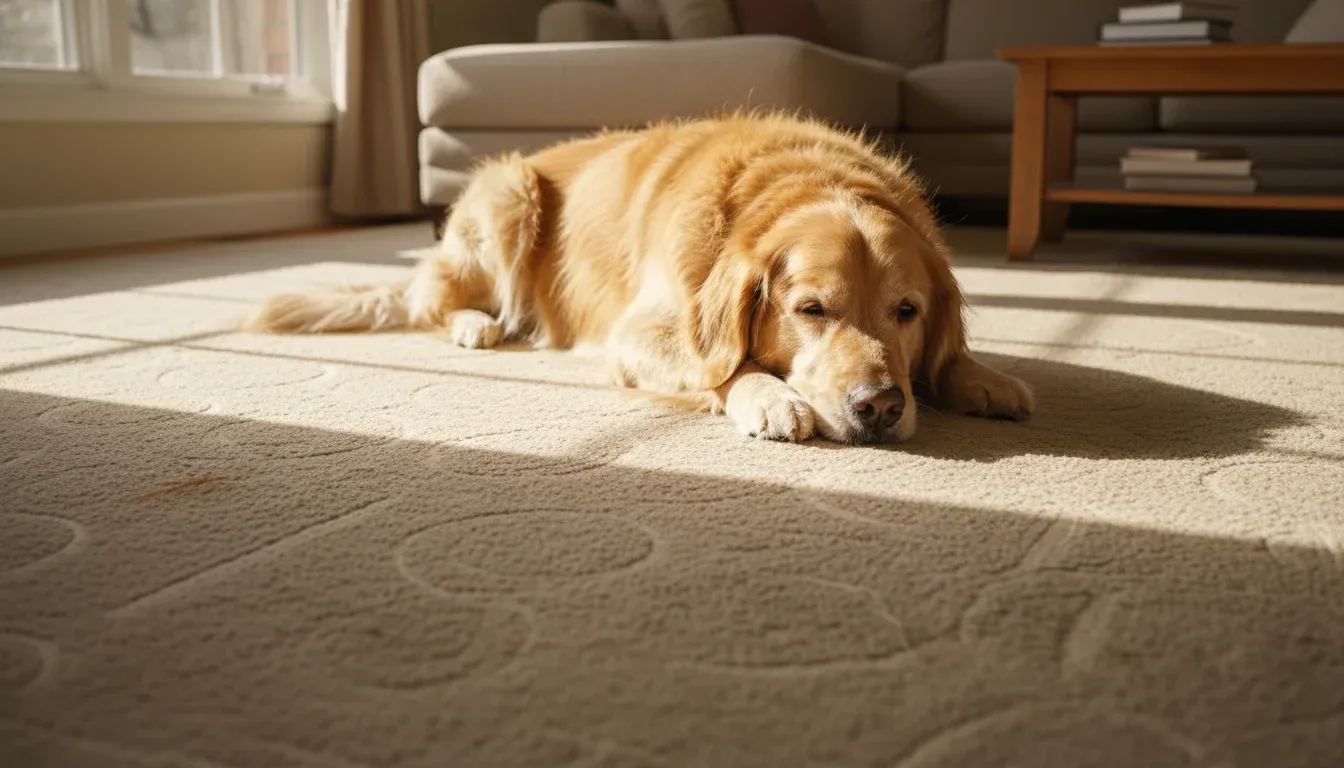
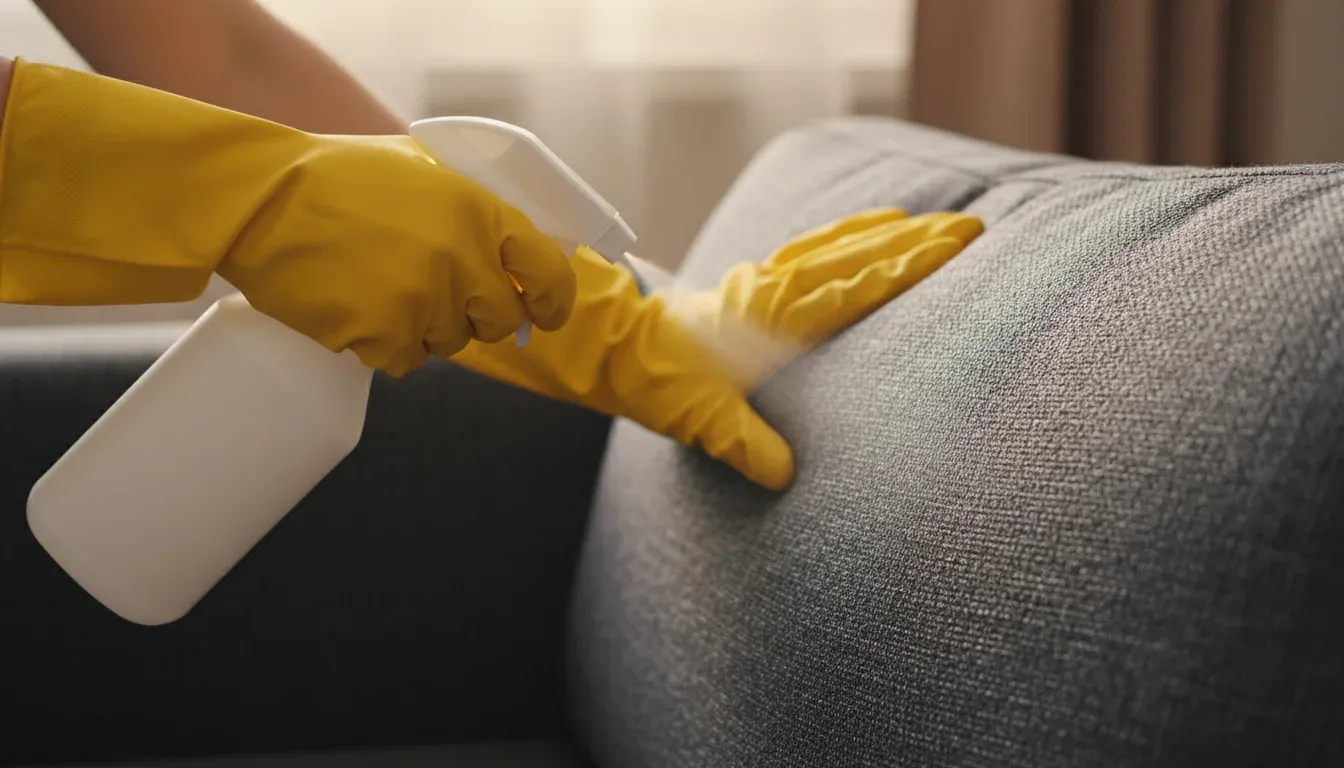
Saturate the spot rather than misting it, because a light spray never reaches the pad. Leave it for the contact time on the label, then blot or vacuum as the label says. Treat everywhere the dog lies, not just visible stains. In cleaning threads the same story repeats: the cheaper cleaner failed, the enzyme one worked.
7. Sprinkle baking soda, then vacuum
Maintenance for carpets, rugs, upholstery and the dog’s bed between washes. Sprinkle baking soda liberally, leave it at least 15 minutes (longer for a strong smell), then vacuum it up thoroughly. Baking soda neutralizes both acidic and alkaline odor molecules rather than covering them with a scent.
Grooming guides also suggest rubbing it into the coat to soak up oil. As a bath substitute it disappoints: the Reddit owner tried it alongside waterless shampoo, odor wipes and a deodorant spray, and none worked.
8. Open windows and run fans
When odors are a problem, the EPA’s advice is more outdoor air: open doors and windows, use portable fans, or run fans that exhaust outside, like the ones in a bathroom or kitchen. Open windows on opposite sides of the house so air moves through. None of this pulls smell out of a couch, so do it after the cleaning, not instead.
9. Run an air purifier with a carbon filter
A purifier deals with what’s left in the air. Get one with a true HEPA filter and an activated carbon filter. The HEPA layer catches particles like dander and dust. The carbon layer is the part that does anything for smell, because it adsorbs odor molecules rather than masking them. Run it where the dog spends most of its time, and change the filters on schedule: saturated carbon stops absorbing.
It won’t fix the source. Neither will air freshener, which adds a second smell (the EPA advises limiting strongly scented products indoors).
What causes dog odor
Three sources, each with a different fix.
The dog’s own scent. Dogs have scent glands at every group of hairs, sweat glands in the paw pads, wax glands in the ears and two anal sacs. Their secretions and the microbes living in them make the smell, strongest at the rear, ears and paws. A dirty or always-wet coat makes it worse. So can a fish-based food, or a lot of gas.
A health problem. Skin infections (often following allergies), seborrhea, ear and anal sac problems and dental disease each produce their own smell. That’s method 4.
The house. Everything the dog lies on absorbs oil, dander and drool and gives it back. Clean the dog and leave the couch, and the house still smells of dog. See how to get rid of pet smell in the house for any pet, and dog odor in the car for the car.
Frequently asked questions
Why does my dog still smell after a bath?
Either the coat wasn’t dried fully, or the smell has a source shampoo can’t reach: ears, skin, teeth or anal glands. If it’s sour, fishy or musty and returns quickly, see a vet. If the vet finds nothing, the smell is in the fabrics as much as the dog (methods 5 to 7).
Can I spray my dog with air freshener or perfume?
No. Air fresheners and human perfumes can irritate a dog’s skin, and some are toxic. Between baths, use a deodorant spray made for dogs. It’s a cover, not a fix.
How often should I bathe a smelly dog?
Every 3 to 4 weeks for most dogs, unless your vet sets a different schedule (common for a dog on medicated baths). If the smell is back soon after every bath, see the vet rather than bathing more.
Why can’t I smell my own dog when guests can?
Olfactory fatigue: your sense of smell deadens to a strong odor soon after you first notice it, so you stop registering a smell you live with. Guests haven’t adjusted. Judge progress by a visitor’s reaction, or by your first breath when you come in from outside.