Table of Contents
Hemorrhoids are swollen veins around your rectum and anus that itch, bleed, and make sitting down feel like a punishment. Most of the time they come from straining on the toilet and the constipation behind it, so the fix isn’t complicated: stop the straining, soften your stool, and soothe the swelling while it settles. Most cases calm down within a week of decent home care. This is the practical version, the household and drugstore moves that actually do something, in the order worth trying them, without the wall of diagnosis and surgery talk the clinic pages lead with. One thing up front: bleeding from your bottom can come from problems other than hemorrhoids, so anything more than a little bright red on the paper needs a doctor’s eyes, not a guess.
What causes hemorrhoids
Everyone has cushions of veins around the anus. Hemorrhoids are what you call them when those veins swell and start causing trouble. Internal ones sit inside the rectum and often show up only as bright red blood on the paper. External ones form under the skin around the anus and are the itchy, achy, you-can-feel-them kind. What swells them is pressure: straining during bowel movements, sitting on the toilet too long, ongoing constipation or diarrhea, pregnancy, heavy lifting, and simply getting older as the tissue weakens. You don’t need to work out which type you have to treat them at home, because the steps below help either way. But not every lump down there is a hemorrhoid, so a new one is worth getting checked.
1. Don’t strain
This is the big one. Forcing a bowel movement jams blood into those veins and swells them further, so if you’re sitting there pushing, stop. Go when you feel the urge and don’t put it off, because holding it in backs things up and makes the next trip harder.
And don’t camp out on the toilet. Reading, scrolling, sitting long after you’re done, it all piles pressure on the same veins. In and out. A footstool that lifts your knees above your hips puts you in more of a squat, which straightens things out and takes some of the work out of it. If constipation is the root of it, a cup of prune juice is a cheap old household nudge that gets things moving.
2. Load up on fiber and fluids
Hemorrhoids feed on constipation, and constipation feeds on a low-fiber diet. Fiber softens and bulks up stool so it passes without a fight, which is the whole game here.
Eat more fruit, vegetables, whole grains and oatmeal, and add the fiber gradually. Pile it on overnight and you’ll just trade straining for gas and bloating. If food alone isn’t enough, an over-the-counter fiber supplement such as psyllium does the same job; follow the directions on the label. Drink enough water and other non-alcoholic fluids through the day to keep stool soft, since fiber needs water to work. During a flare, go easy on heavily spiced food, which can make the burn worse on the way out.
3. Take a sitz bath
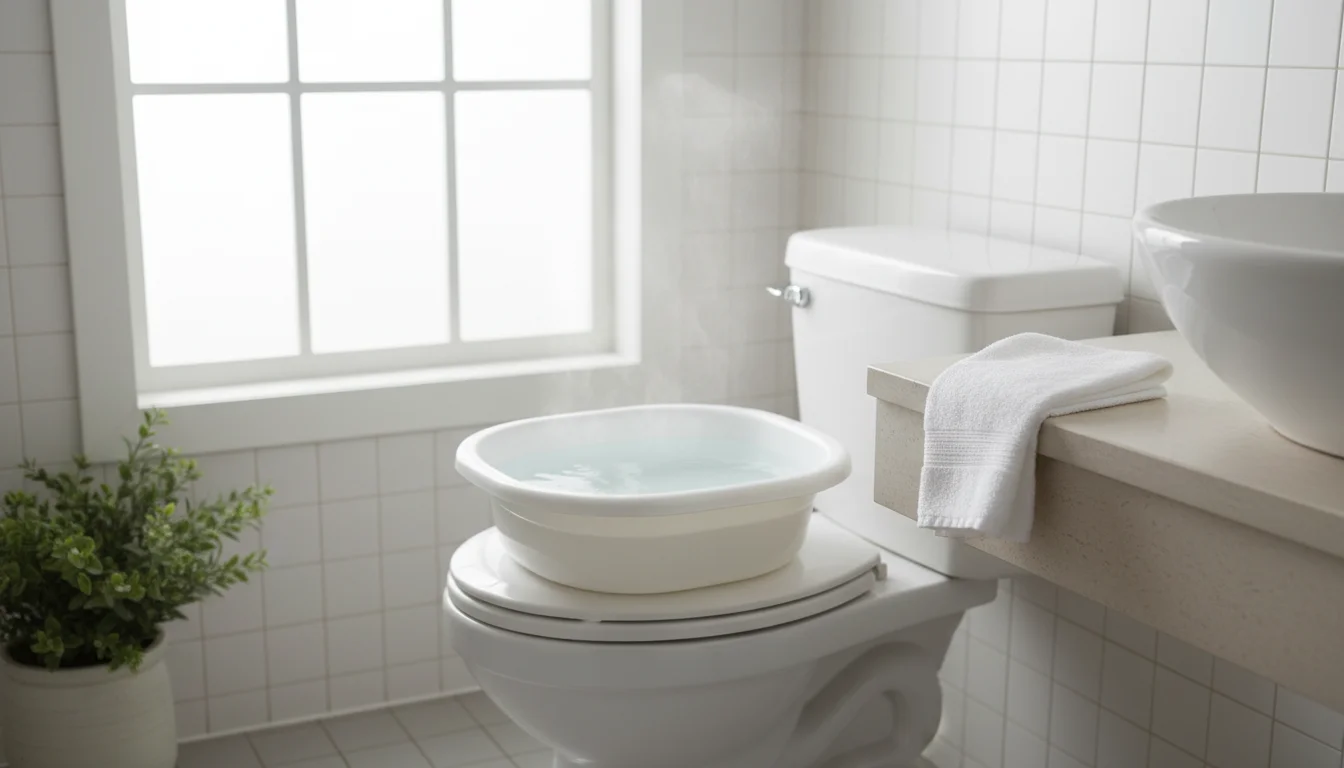
A sitz bath is just sitting in a few inches of plain warm water for 10 to 15 minutes, two or three times a day and especially after a bowel movement. The warmth relaxes the area, eases pain and calms swelling, and it keeps things clean at the same time. Skip the soap and bubble bath, which can irritate already angry skin. You don’t need anything special; a basin that fits over the toilet seat makes it easy to do often, but the tub works fine.
4. Apply a cold compress
For an external hemorrhoid that’s swollen and throbbing, cold helps. Wrap an ice pack or a bag of frozen peas in a thin cloth, never bare ice against skin, and hold it against the spot for 15 to 20 minutes at a time. It numbs the pain and shrinks the swelling. Repeat every few hours through a bad day.
5. Use an over-the-counter hemorrhoid cream
The drugstore shelf is full of creams, ointments, suppositories and medicated pads made for this. The common ingredients are witch hazel, a numbing agent like lidocaine, or low-dose hydrocortisone, and they take the edge off the itching, burning and swelling. Follow the directions on the label. Witch hazel pads are the gentlest option and double as a wipe. Hydrocortisone is a steroid that thins skin with overuse, so most labels tell you not to use it for more than about a week; stick to that. These ease the symptoms, they don’t fix the cause, so keep up the fiber and bathroom habits alongside them.
6. Reach for an OTC pain reliever
If it plain hurts, an over-the-counter pain reliever like acetaminophen or ibuprofen can take the edge off. Follow the directions on the label and don’t double up thinking more works faster. One caution: skip ibuprofen and aspirin if your hemorrhoid is actively bleeding, since they can make bleeding worse, and stay away from any painkiller with codeine in it, because it causes constipation and that’s the last thing you want here.
7. Keep the area clean and dry
Leftover residue makes everything itch more, and scratching a hemorrhoid is asking for a worse time. Wipe gently with warm water or a fragrance-free, alcohol-free wipe instead of dry toilet paper, and pat, don’t rub, the area dry afterward. (Wipes go in the trash, not down the toilet.) Skip perfumed soaps and wipes on the area, because the fragrance stings. Loose cotton underwear lets things breathe and keeps moisture down, so the skin isn’t sitting damp and irritated all day.
When to call a professional
Most hemorrhoids settle within a week of home care. See a doctor if yours don’t improve after about a week, if the pain is severe or getting worse, if a lump doesn’t settle within a week or two, or if you keep getting them.
Bleeding needs more than a wait-and-see. Rectal bleeding can come from problems other than hemorrhoids, so get checked if it’s heavy, keeps coming back, or shows up with a change in your usual bowel habits. Dark or tarry stools, or feeling dizzy, faint or wiped out (possible signs of blood loss), also mean see someone. Go to the emergency room or call 911 if you’re bleeding non-stop, passing a lot of blood or large clots, or in severe pain. And never try to pop, lance or band a hemorrhoid yourself; that’s a fast route to bleeding and infection.
Frequently asked questions (FAQ)
How do you get rid of hemorrhoids fast? For quick relief, stack the symptom soothers: a sitz bath, a cold pack, and an over-the-counter cream or pain reliever used as the label directs. They calm the itch, pain and swelling within a day or two while the hemorrhoid heals.
How long do hemorrhoids last? Most ease within a few days to a week with home care. If yours are still going strong after a week, see a doctor.
Do hemorrhoids go away on their own? Often, yes. Many settle in a few days once you stop straining and soften your stool. The fiber and bathroom-habit changes are what keep them from coming back.