Table of Contents
No dog. No cat. And something keeps biting your ankles. Figuring out how to get rid of fleas without pets starts with one fact: every flea came from an animal. With no pet in the house, that animal is somebody else’s. Maybe the last tenant’s dog. Maybe a raccoon in the attic or a stray cat sleeping under your porch.
That changes the plan. The usual flea advice assumes a pet you can treat, and most pages on the no-pet version list the possible sources and then tell you to book an inspection. You can do most of this yourself. Find the host first, confirm what you’ve got with a pair of white socks, clean the floors (gaps in the hardwood included), then get the animal out and close its way in. Skip the first step and you’re spraying fleas that a squirrel keeps replacing.
What causes this problem
Fleas are nest parasites. They live where their host sleeps, and the eggs, larvae and pupae sit in that bedding, carpet or crawl space dirt while the adults ride the animal. With no pet, it’s one of these:
- The last occupant’s pets. Fully formed fleas wait inside their cocoons until something warm walks past. Texas A&M puts that wait at up to 5 months, and UC IPM says up to 12 months in cool conditions. That’s why a vacant home or apartment can “come alive” with fleas a few days after you move in.
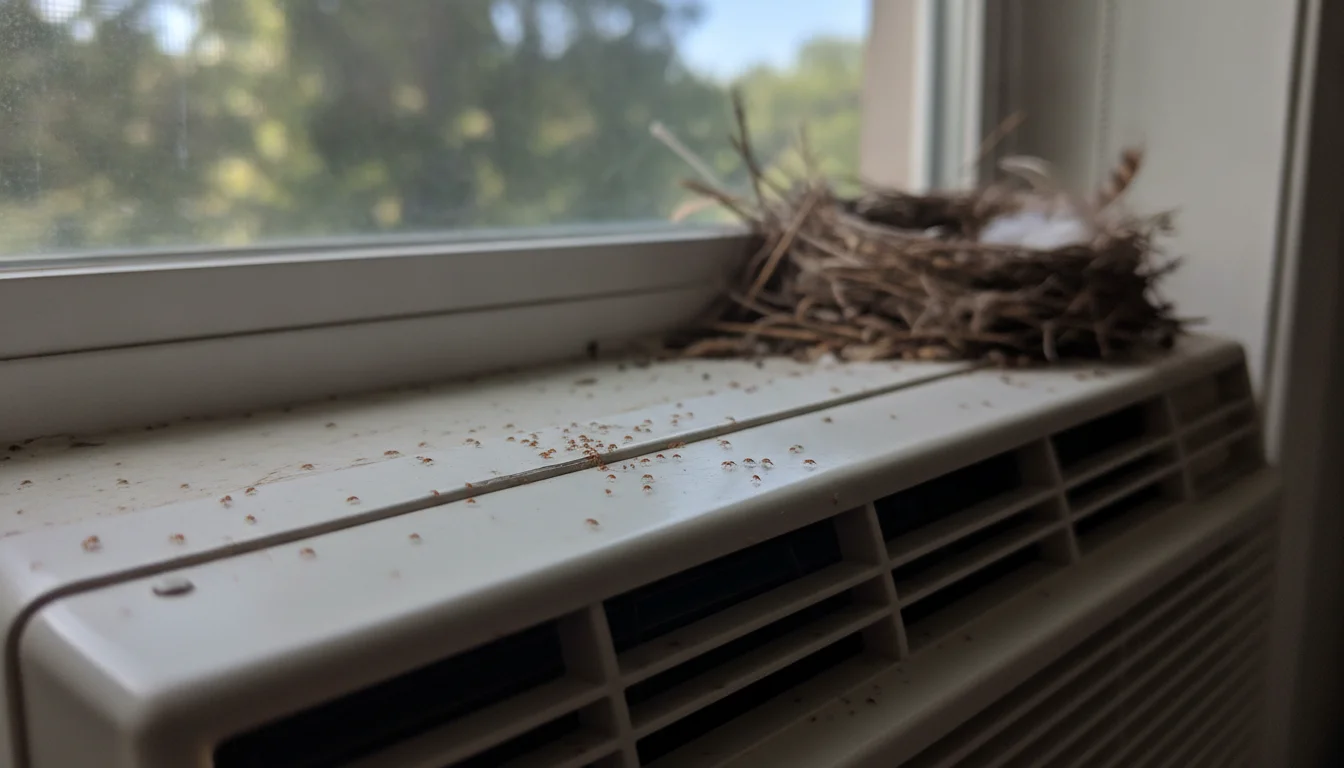
- Wildlife in or under the house. When there are fleas and no pets, the University of Kentucky names raccoons, opossums, skunks and squirrels in the attic as the usual culprits: a family in the attic or chimney, or a skunk or feral cat living beneath the home.
- Rats and mice. Rats and mice carry fleas into walls and crawl spaces. Cornell lists squirrel fleas and northern rat fleas among the hidden sources.
- Strays on the porch. Cats and dogs that rest on porches, decks and doorsteps leave fleas right where you walk in.
- Something you brought home. A secondhand couch or rug can carry them.
One r/pestcontrol poster had fleas for six months with no pets before noticing scratching noises in the crawlspace. That’s the pattern to watch for.
1. Find the animal the fleas came from
This is the step everyone skips, and it’s the one that decides whether the rest works. Match your situation to a source:
- Moved in recently, bites within days: the previous occupant’s pets. Good news: once you’ve hatched and killed what they left, it’s over.
- Bites in one room, noises above or below it: wildlife or rodents in the attic, walls or crawl space next door.
- Bites near the front or back door, cats seen outside: strays resting on the porch or deck.
- Bites started after a furniture haul: the furniture.
Catch a flea on clear tape or in a sealed bag and take it to your county extension office or local vector control district. Most fleas are picky about hosts, so the species points to the animal. Don’t crawl into an occupied crawl space to look. Rodent fleas can carry plague and murine typhus, and a cornered animal bites.
2. Walk the floors in white socks
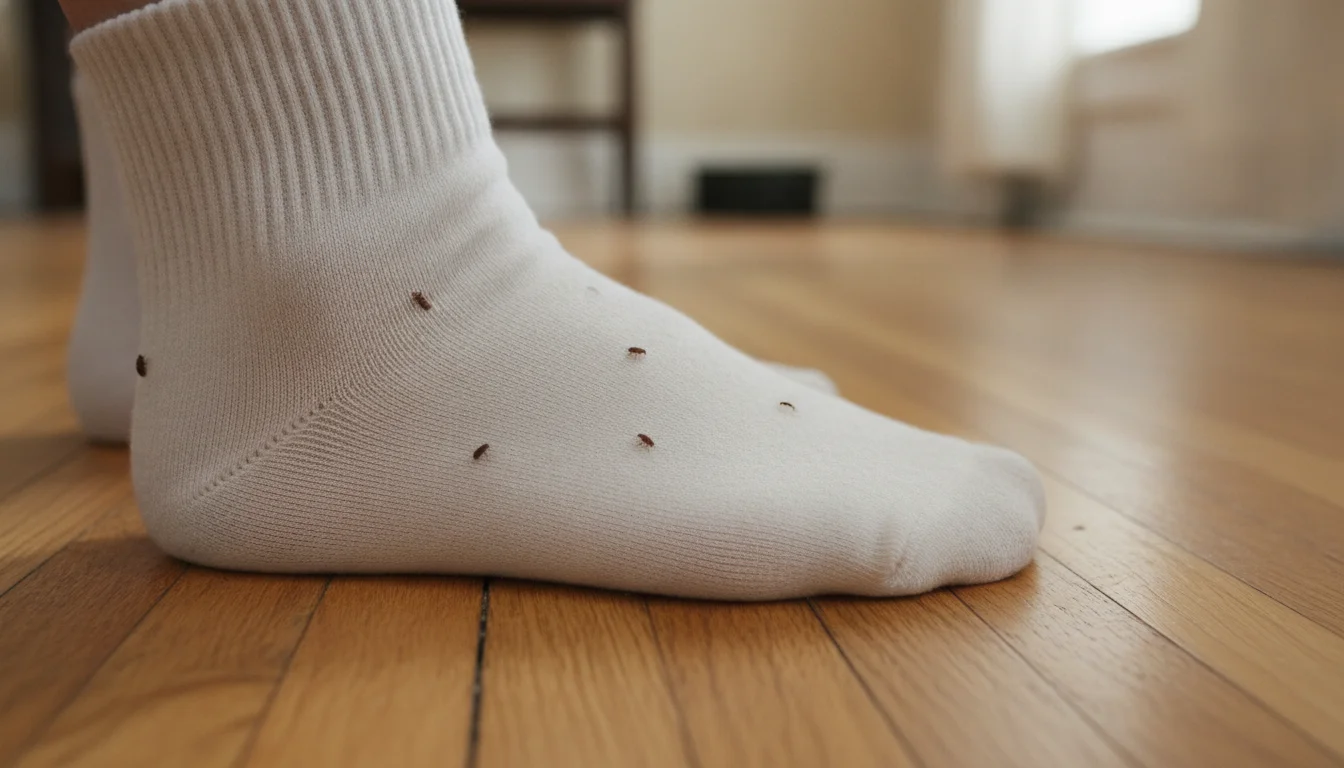
Pull long white socks up over your trouser cuffs and shuffle slowly through each room. Fleas waiting for a host jump at warmth and movement, and against white they show up as dark specks. Fleas can jump 8 to 10 inches (20 to 25 cm), which is why the bites land on your ankles and lower legs.
Check your socks between rooms. The room where you collect the most is where to focus, and it’s often the room beside the source.
Hardwood is harder to read. Wipe the dust out of the board gaps and the floor-wall edge with a damp cotton swab and look for reddish-black flecks. Dab suspect specks on a damp paper towel: flea dirt (it’s digested blood) turns reddish-brown. Ordinary dirt doesn’t.
3. Vacuum everything, including the floorboard gaps
Vacuuming is the workhorse. Texas A&M found it removes up to 30% of flea larvae and up to 60% of the eggs from carpet, plus the dried blood the larvae eat. Better still, the vibration and warmth make waiting adults break out of their cocoons, which is the only way to reach them. Pupae shrug off insecticide.
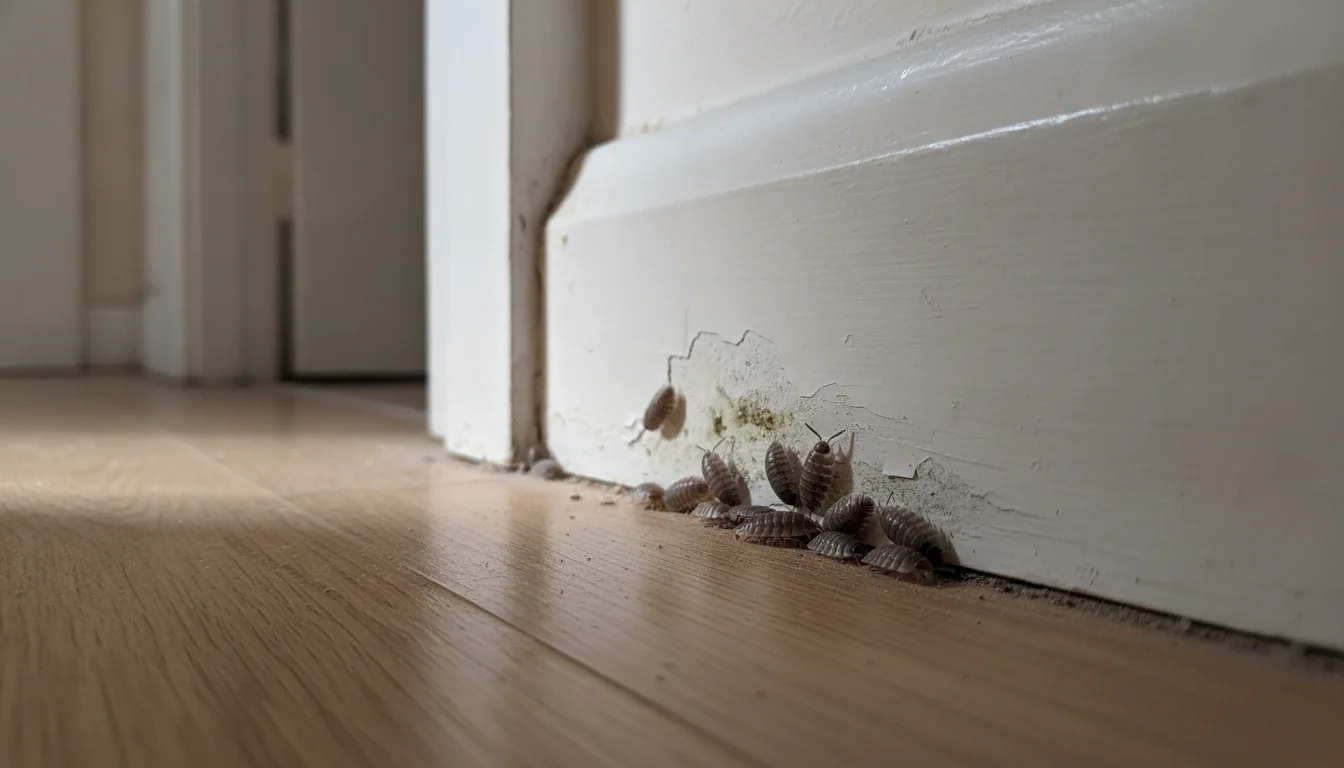
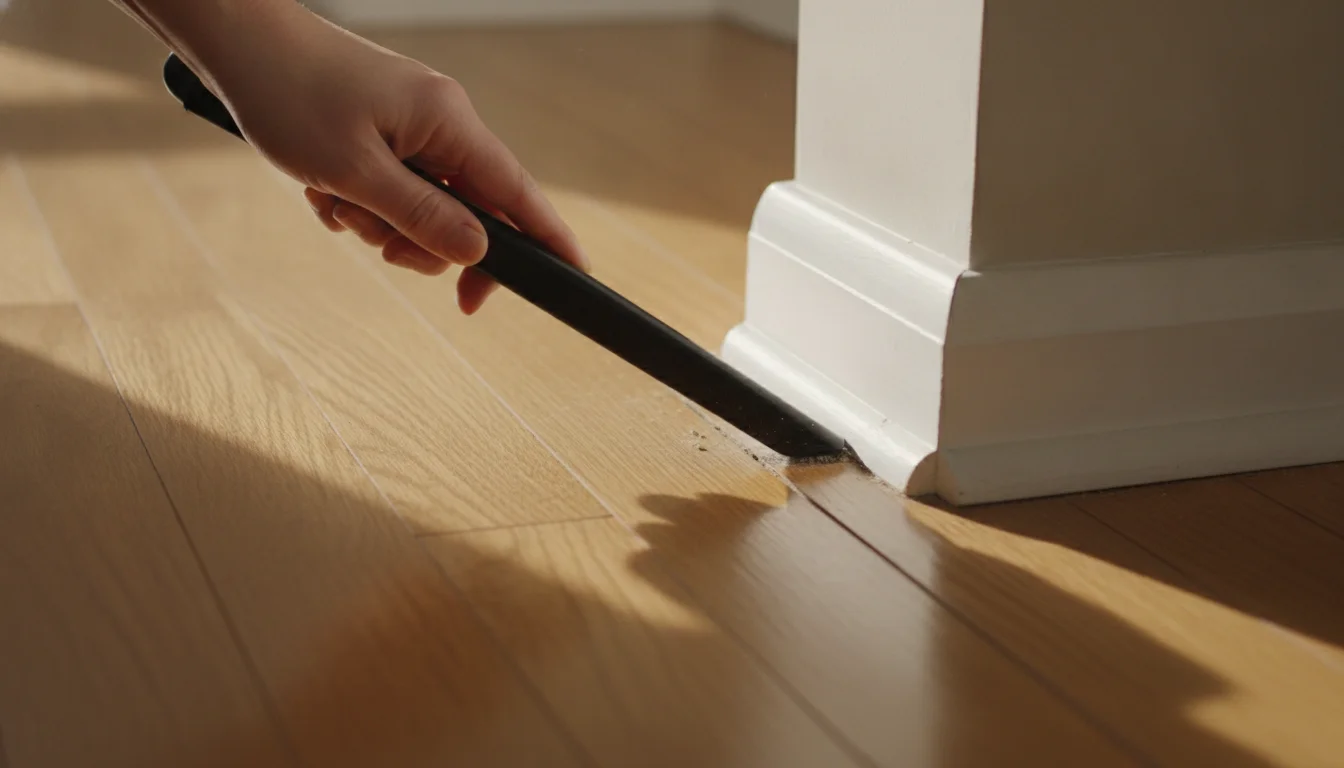
Do carpets, rugs, under beds and furniture, under cushions and along every wall, daily or every other day. Then deal with the hardwood. Cornell flags floors with gaps between boards as a real problem: larvae, pupae and flea dirt collect in the gaps and along the floor-wall junction, out of reach of a floor head. Run the crevice tool down every gap. Compressed air can blow debris out of the deep ones, but go carefully (you can just as easily blow fleas into the next room).
When you’re done, seal the bag or the canister contents in a garbage bag and take it to the outside trash.
4. Steam clean carpets and floor gaps
Steam reaches what vacuuming leaves behind. The EPA says the heat and moisture kill fleas at every life stage, and Cornell recommends it both for larvae at the base of thick carpet and for the gaps in hardwood floors. Vacuum first, then go over carpets, upholstery, baseboards and the floor-wall edge. Once is the minimum during an active problem. You can rent a machine for this.
5. Wash bedding and fabrics in hot water
Fleas jump from the floor to the bed, so the bed gets washed. One r/pestcontrol tech who’s solved hundreds of flea problems says he has never sprayed a bed: vacuum and spray under it instead. Sheets, blankets, throw rugs and anything you’ve been sitting on go in at 130°F (54°C) or hotter, then a full dryer cycle on high heat. Repeat weekly while you’re still finding fleas.
6. Spray an insect growth regulator
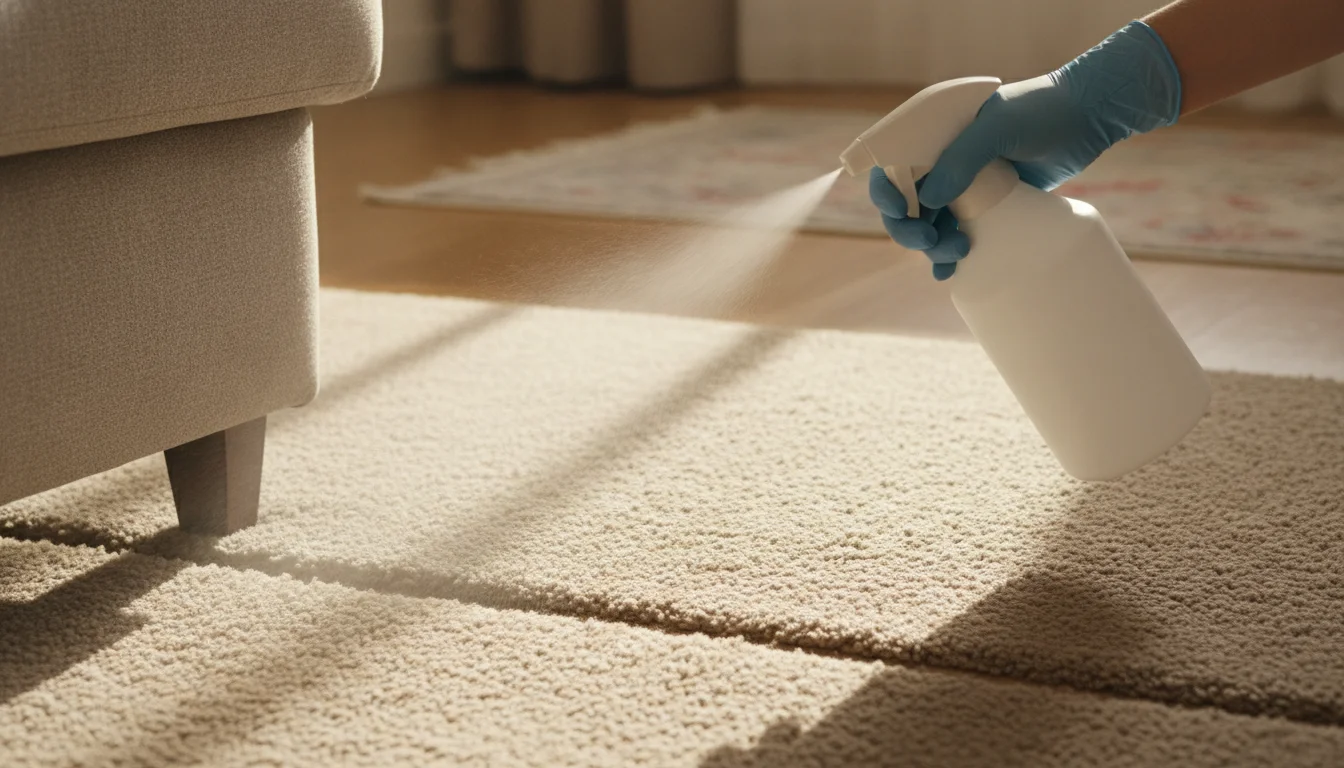
An insect growth regulator (IGR) with methoprene or pyriproxyfen stops eggs and larvae from growing into adults. UC IPM says the most effective indoor flea sprays include one. Use a product that is EPA-registered and labeled for fleas and for each indoor place you’ll treat, and follow its label for where, how much and how often. Spray carpets, under furniture and along baseboards. According to Kentucky, hardwood, tile and concrete floors generally don’t need spraying, just vacuuming.
Then be patient. The spray doesn’t kill pupae, so fleas keep emerging for about 2 weeks. Keep vacuuming and don’t spray again for several weeks. Re-treatment only makes sense if you’re still seeing adults past 4 weeks. Skip the bug bombs: Kentucky and NPIC both say foggers rarely reach where larvae live. One Redditor said they “only killed the fleas for a month or two.”
7. Get the animal out
If the source is living in the attic, chimney, walls or crawl space, it has to go, and the house gets treated after. Kentucky’s advice is to have feral animals removed by a nuisance wildlife or pest control professional. Ask them how they’ll deal with the animal and whether they’ll check for young before removing an adult or closing an opening. Babies left behind starve. Get a written estimate that says which entry points they’ll seal.
8. Seal the way in
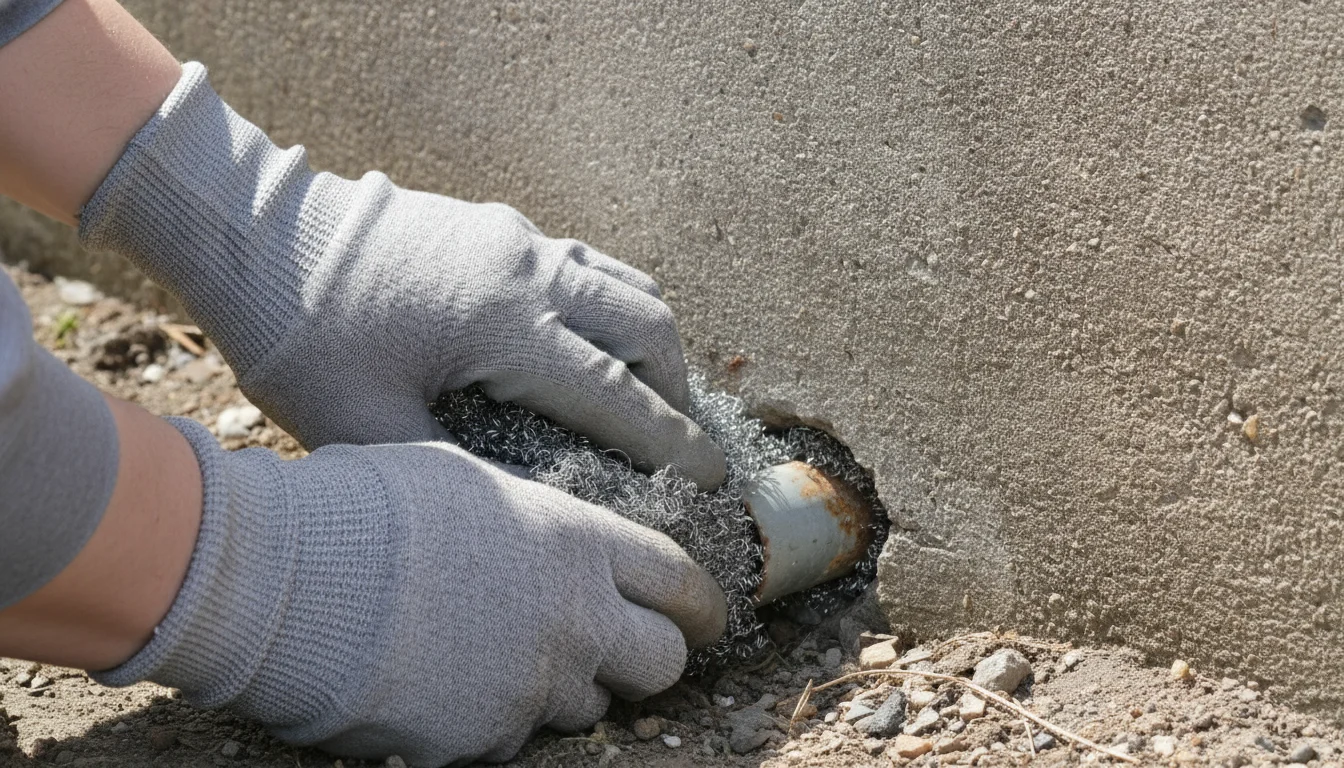
Small rodents fit through a gap the size of a dime, about 1/4 inch (6 mm). Check the roofline, soffits, vents and pipe and utility entry points. Pack small gaps tightly with steel wool, then seal over it with expanding foam (rodents chew through foam alone). For bigger holes, screw 1/4-inch hardware cloth over the opening and seal the edges with cement or caulk. Don’t seal an opening while an animal is still inside.
9. Stop feeding the neighborhood
UC IPM’s advice on feral cats, opossums, squirrels and coyotes is to limit their food, water and shelter on your property. Use lidded trash cans, keep pet food and bird seed spills cleaned up, and close off the space under porches and decks. Strays that stop finding dinner at your door stop sleeping on your porch.
10. Treat the porch and crawl space resting spots
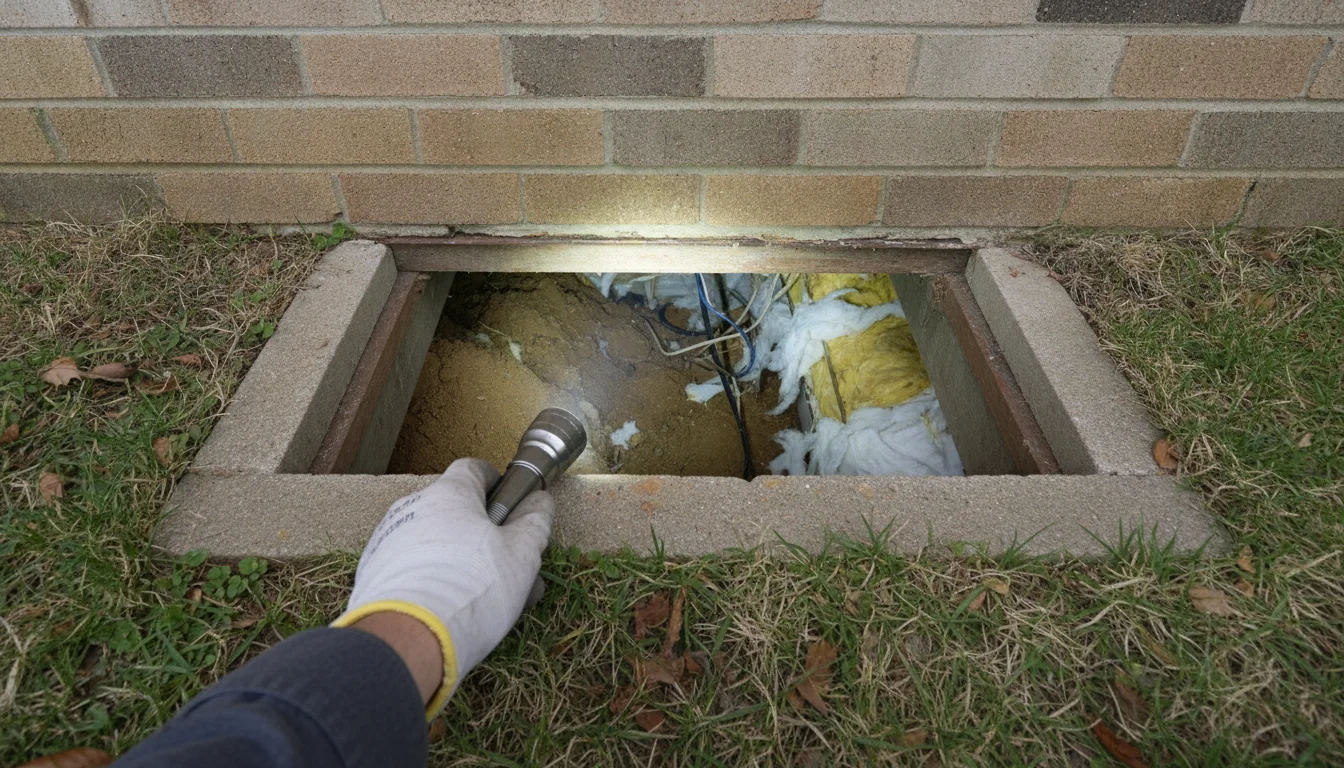
Outdoor fleas concentrate where animals rest in shade: under decks and porches, next to the foundation and in crawl spaces under buildings where feral animals sleep. Sunny lawn isn’t the problem. Trim low vegetation to let light in, because immature fleas don’t survive in direct sun. For a heavy outdoor problem, use an outdoor insecticide that is EPA-registered and labeled for fleas and for the site you’re treating, and follow its label. Cornell recommends a professional for those shaded spots.
11. Set a dish trap to check your progress
A shallow dish of soapy water under a desk lamp on the floor overnight. Fleas jump toward the warmth and light and drown. It won’t clear an infestation, but it tells you where fleas are concentrated and whether the count is falling. When the trap stays empty for a week and your socks come back clean, you’re done.
Prevention
Keep the gaps from step 8 closed and check them once a year. Keep vegetation low around the foundation. Clean secondhand furniture and rugs before they come inside. If you’re moving into a place where pets lived, vacuum thoroughly before you unpack.
When to call a professional
- An animal is living in the attic, chimney, walls or crawl space. That’s a wildlife professional, not a flea spray.
- You’re still seeing adult fleas more than 4 weeks after treating.
- The fleas keep coming back. San Mateo County’s vector control district points to wildlife denning in, under or around the house, and suggests a licensed pest control company to help find the source.
How to get rid of fleas without pets: FAQ
Will fleas eventually go away without pets? Not reliably. Newly emerged adults must find a blood meal within about a week or they starve, but they will bite people when no other host is around. And pupae can wait for months. If a wildlife host is still around, they won’t die out.
What kills fleas instantly in your house? Nothing gets all of them at once, because pupae resist sprays. Steam kills every stage it reaches. For the rest, vacuum daily and spray an IGR, and expect about 2 weeks of stragglers.
How long until fleas infest a house? At normal room temperature, the full life cycle takes about 18 days. A home left empty can be infested the day you move in, because the pupae were already waiting.
Can fleas live in your bed? They can hide there, but in the pest tech’s experience the ones biting you in bed are jumping up from the floor. Vacuum and treat under and around the bed, and wash the bedding hot.
For the pet version of this problem, see how to get rid of fleas.