Table of Contents
Something tiny is biting you indoors, mostly at night. Maybe a pest company already came, found nothing and sprayed anyway. Now the internet says bird mites. Here’s how to get rid of bird mites for good.
It might be right. A pest supplier that takes these calls every day says plenty of people sure they have mites turn out to have bed bugs, no-see-ums or biting gnats, and each of those needs a different fix. So the order matters. Catch one, get it named, then find the bird. The good news first: bird mites can’t breed on human blood, so they can’t set up a lasting infestation in you or your house. Take away the nest and they run out of time.
What causes bird mites in the house
Bird mites live on wild and farm birds and in their nests. Pigeons, starlings and house sparrows are the usual culprits on buildings, and robins and pet birds can carry them too.
Trouble starts when the birds leave. Baby birds fledge in late spring, an adult dies or a nest is abandoned, and the hungry mites go looking for another host. If the nest is on your house, the nearest warm body is you. Iowa State Extension says the mites wander the whole house but are most common close to the nest.
1. Catch a specimen before anyone sprays
Do this first: vacuuming and spraying destroy the evidence. North Carolina State’s diagnostic clinic won’t look through vacuum bags or examine anything treated with pesticide.
You can see bird mites. Cornell’s Insect Diagnostic Lab says even tiny biting mites (bird, fowl and rat mites) are visible crawling on surfaces with normal eyesight or reading glasses, about 1/32 inch (under 1 mm) long. A real mite walks. A speck that sits still is almost always lint (static can make lint seem to jump).
Collect as many as you can, three ways:
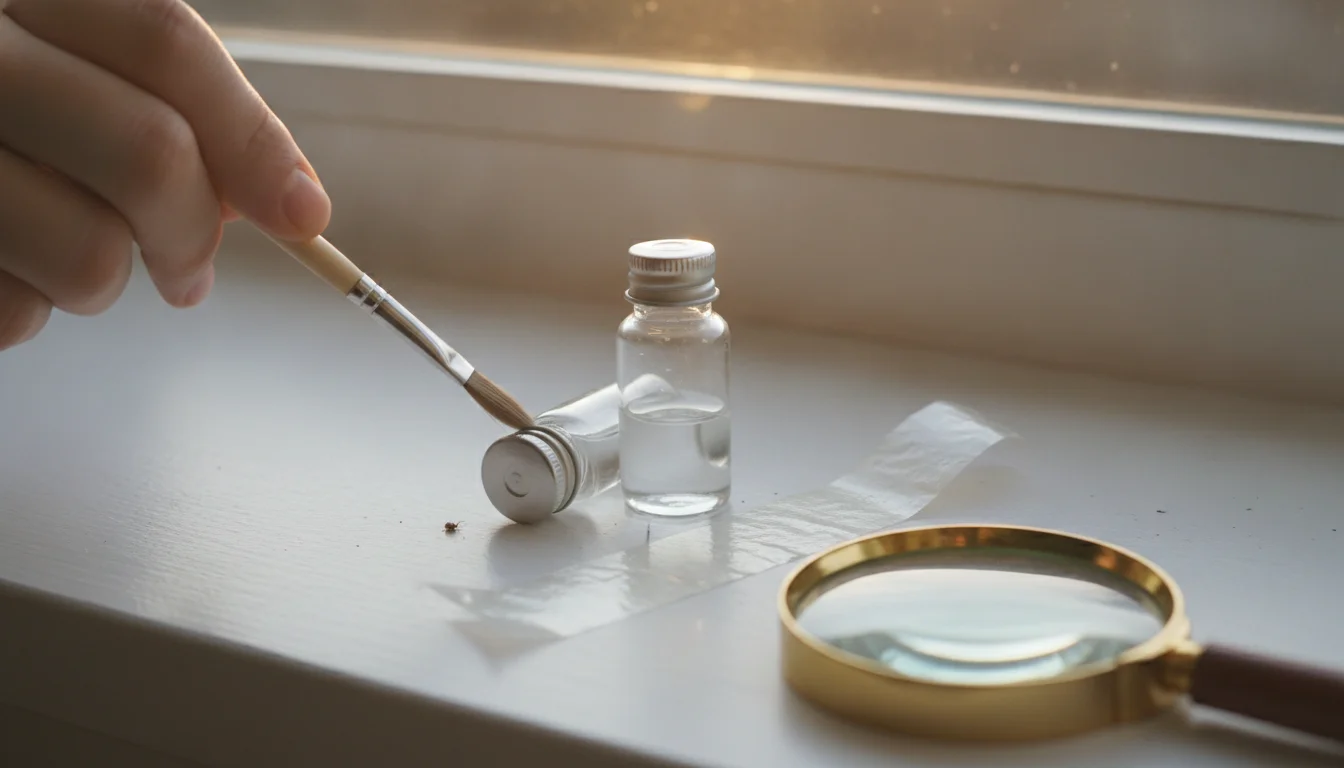
- Alcohol vial. Brush or pick them with tweezers into a small sealed vial of 70% rubbing alcohol. One Reddit user who dropped mites in 91% alcohol watched them stop, then start moving again after about a minute, so keep the lid shut.
- Damp paper towel. Wipe them up and seal it in a zip bag.
- Tape. Lay clear packing tape sticky side up where they move, and sweep them on with a soft paint brush. Labs disagree on tape: Wisconsin’s lab asks you to avoid it, and Cornell wants it never folded over. Send a vial too if you can.
Call your local extension office and ask how its insect diagnostic lab wants it mailed. Use a small box, never a flat envelope, and note the date and the exact spot you found them. Some labs, Cornell’s and Wisconsin’s among them, won’t take anything collected from skin unless a doctor sends it.
2. Find the nest from where the mites show up
The bites and the crawling mites point to the nest. Start in the room where they’re worst, then check the outside wall nearest it.
Common sites, by where people get bitten:
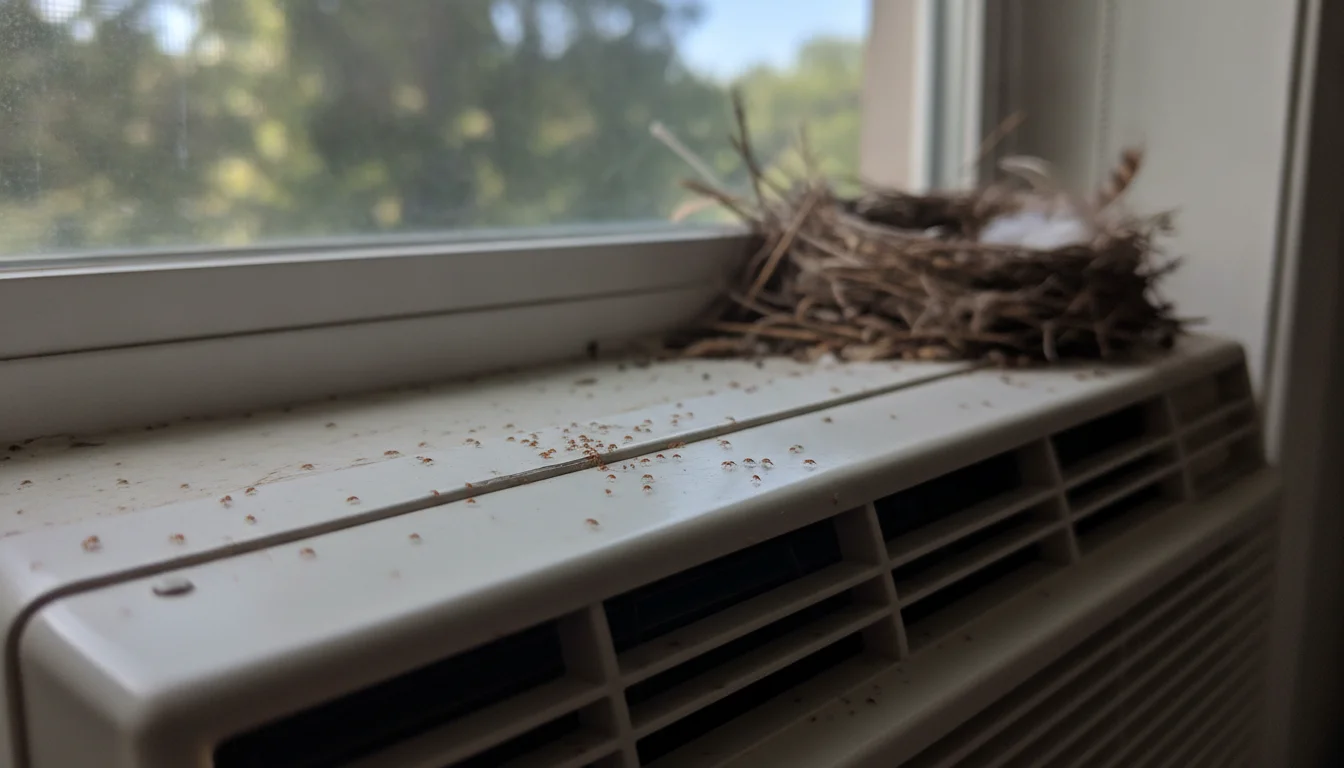
- A bedroom or living room window: a window air conditioner, the sill, or the eaves directly above. University of Maryland Extension says mites from outside nests usually come down the wall and in through window frames.
- A bathroom, laundry room or kitchen: the exhaust vent, dryer vent or range hood vent. Michigan State Extension names vents, air conditioners and sills as the usual nest sites on homes.
- An upstairs room or a whole floor: the attic, the chimney or a gap in the soffit.
Then check whether birds are still using it. Birds flying in and out, or loud, constant chirping, mean it’s active. That decides step 3.
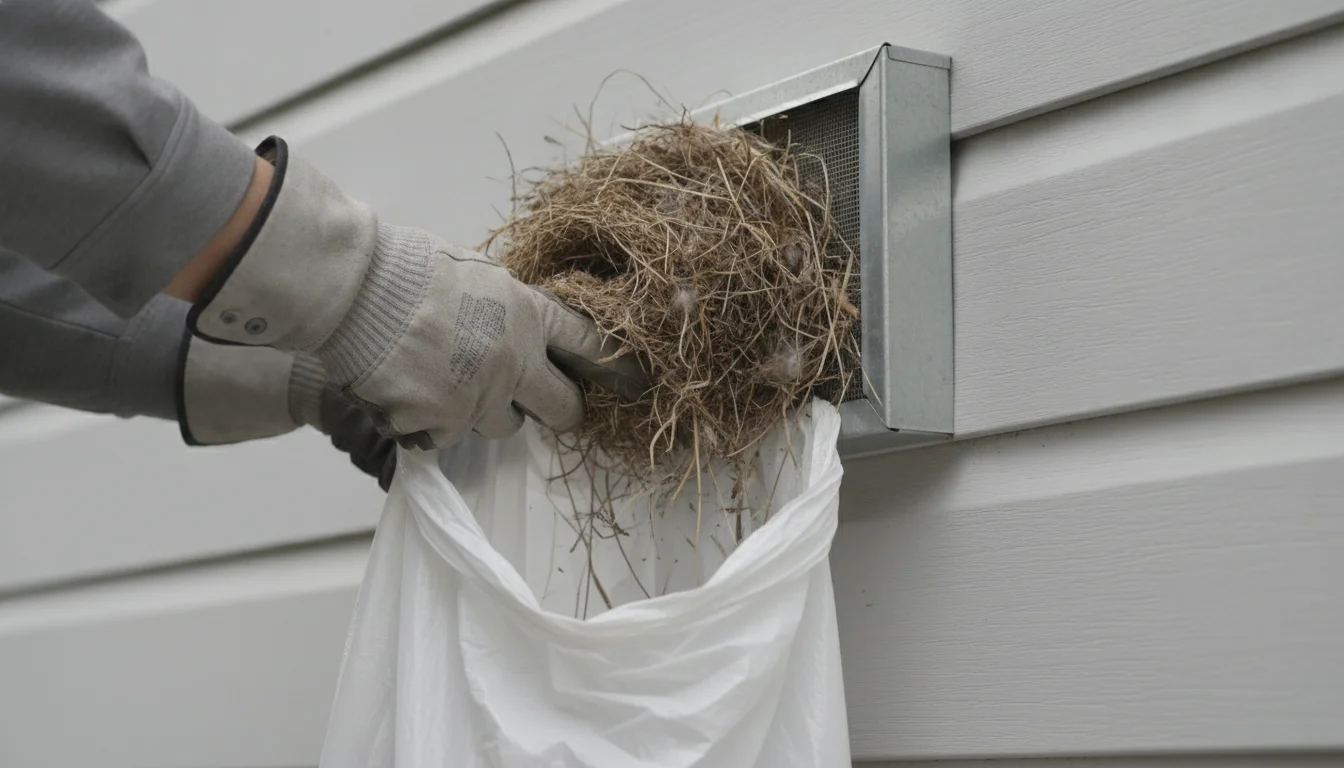
3. Remove the nest
University of Minnesota Extension calls physical removal the most effective control, and Iowa State calls finding and removing the nest the first step.
The law decides when. Pigeons, starlings and house sparrows aren’t federally protected, so you can take their nests any time. For protected songbirds, leave the nest alone while it holds eggs or young. Once the young have gone, it’s yours to remove.
Bag the whole nest and any dead birds, and throw them out.
4. Vacuum and wipe up the stragglers
Vacuum carpets, rugs, curtains and furniture in the rooms with mites, and wipe hard surfaces with a damp cloth. Minnesota Extension points out that vacuuming doesn’t kill them, so take the bag out straight away, seal it, and freeze it or throw it out.
5. Wash and dry the bedding
Wash and dry the bedding, curtains and clothes in the affected rooms, and repeat a few times a week until the mites stop. One Reddit user did laundry every day and bagged dirty clothes until it was over. They called it probably overkill.
6. Seal the opening the bird used
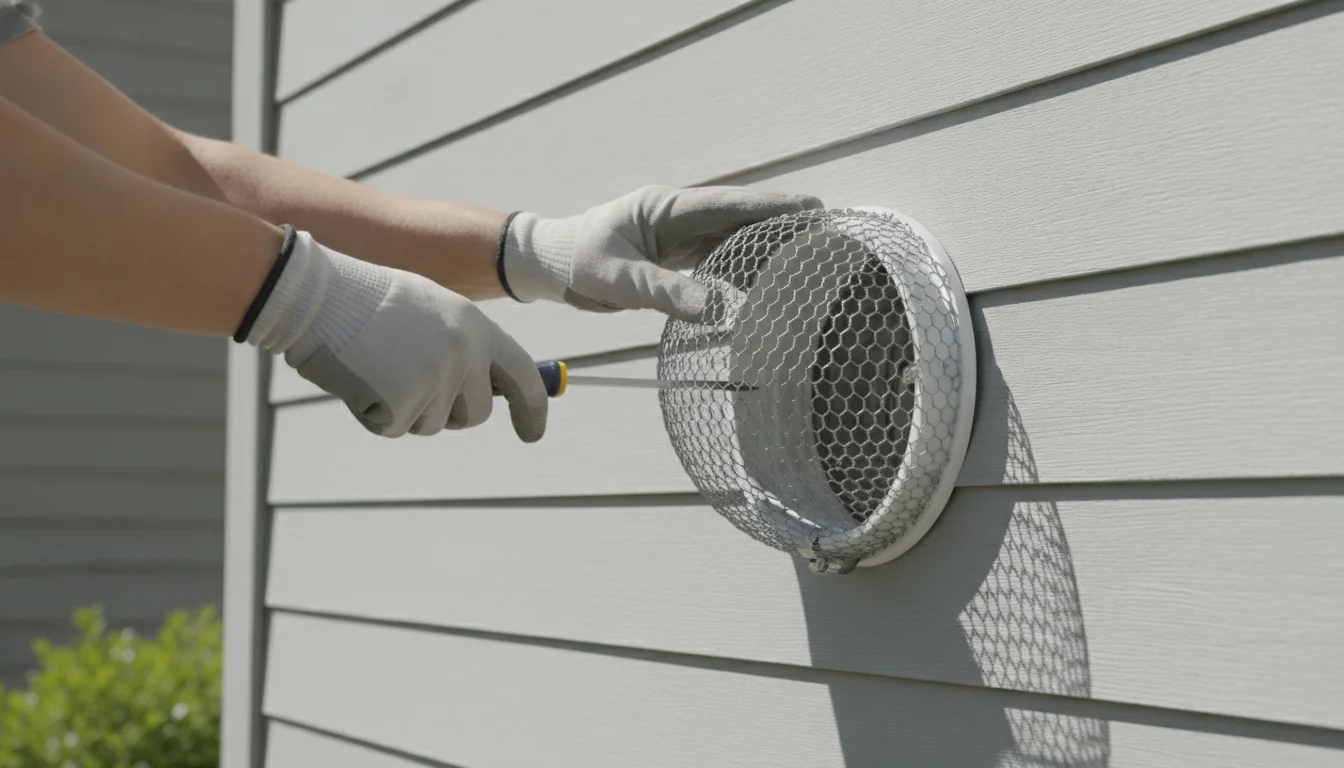
Once the nest is out, close the door behind it. Put screens or covers on exhaust and dryer vents, and fix the gaps in the eaves, roof and walls that birds got into. Otherwise next spring’s nest goes in the same spot.
7. Spray entry points, last
Insecticide comes after the ID and the nest, not instead of them. Minnesota Extension recommends treating the outside around windows, doors and other entry points with a product containing permethrin, beta-cyfluthrin or deltamethrin. Iowa State and Michigan State add cracks, crevices and corners near the nest and where the mites showed up indoors.
Never treat beds or surfaces where food is made or eaten. Use a product labeled for indoor use inside, and follow the label.
How to prevent bird mites
Keep birds from nesting on the house. Screen vents before spring, take down old nests in the off-season once they’re empty, and look over the eaves, sills and AC units each year before nesting starts.
When to call a professional
Call a wildlife control company when the nest is somewhere you can’t safely reach: inside the chimney, behind a vent in a wall, high in the eaves or deep in the attic. They remove birds and nests and seal the openings, the same exclusion work they do for squirrels in the attic.
Call a pest management company if mites keep turning up after the nest is gone.
If the bites go on and you’ve found no nest and caught no mite, see a doctor. Something else may be causing it, and a doctor can send a specimen to a lab for you.
How to get rid of bird mites: FAQ
Can bird mites live in your bed?
They can bite you in it, and Michigan State’s lab once identified bird mites a man collected from his bed. But they can’t reproduce on human blood, so they can’t keep an infestation going on you.
How long until bird mites are gone?
It depends on the species. Minnesota Extension says northern fowl mites last 2 to 3 weeks without a bird. Michigan State says a month or more, and Washington State says chicken mites can survive up to 8 months. One Reddit user saw the first mite in early June and the last in mid August.
Does rubbing alcohol kill bird mites?
Not reliably. In one home test with 91% alcohol, mites stopped moving on contact and started again a minute later. Use alcohol to collect specimens, not to treat the house.
What do bird mites look like?
Tiny, about 1/32 to 1/25 inch (around 1 mm), with eight legs and an oval body. Color runs from whitish or see-through before feeding to red after a blood meal, then grayish brown or black as it digests.