Table of Contents
A shop vac doesn’t make a smell. It blows one. Every time the motor runs, air rushes over whatever sits in the tank, hose, foam and filter, and pushes it out of the exhaust. So how to get rid of shop vac smell isn’t a question of scent. It’s finding what the air passes over.
Most guides on this are really filter-cleaning guides, or they’re about household uprights. Your nose is a better guide. Sour or musty means water or wet gunk was left inside. Hot or burning means switch it off now. Dusty means fine dust is getting through the filter. Each has its own fix.
How to get rid of shop vac smell: what causes each type
| Smell | Where it comes from | Go to |
|---|---|---|
| Hot, burning, electrical | Choked airflow (clogged filter, full tank, float up, blocked hose) or a motor fault | Method 1 |
| Sour, musty, rotten | Dirty water or wet debris left in the tank, a damp foam sleeve or filter, gunk lining the hose | Methods 2 to 6 |
| Dusty, chalky | Fine dust (drywall, plaster, ash) passing a standard filter | Methods 7 to 9 |
One exception: RIDGID says a brand-new motor can smell hot for its first several minutes while the varnish on its windings burns off. On a vac that isn’t new, any burning smell means method 1.
1. Switch it off and unplug it at a burning smell
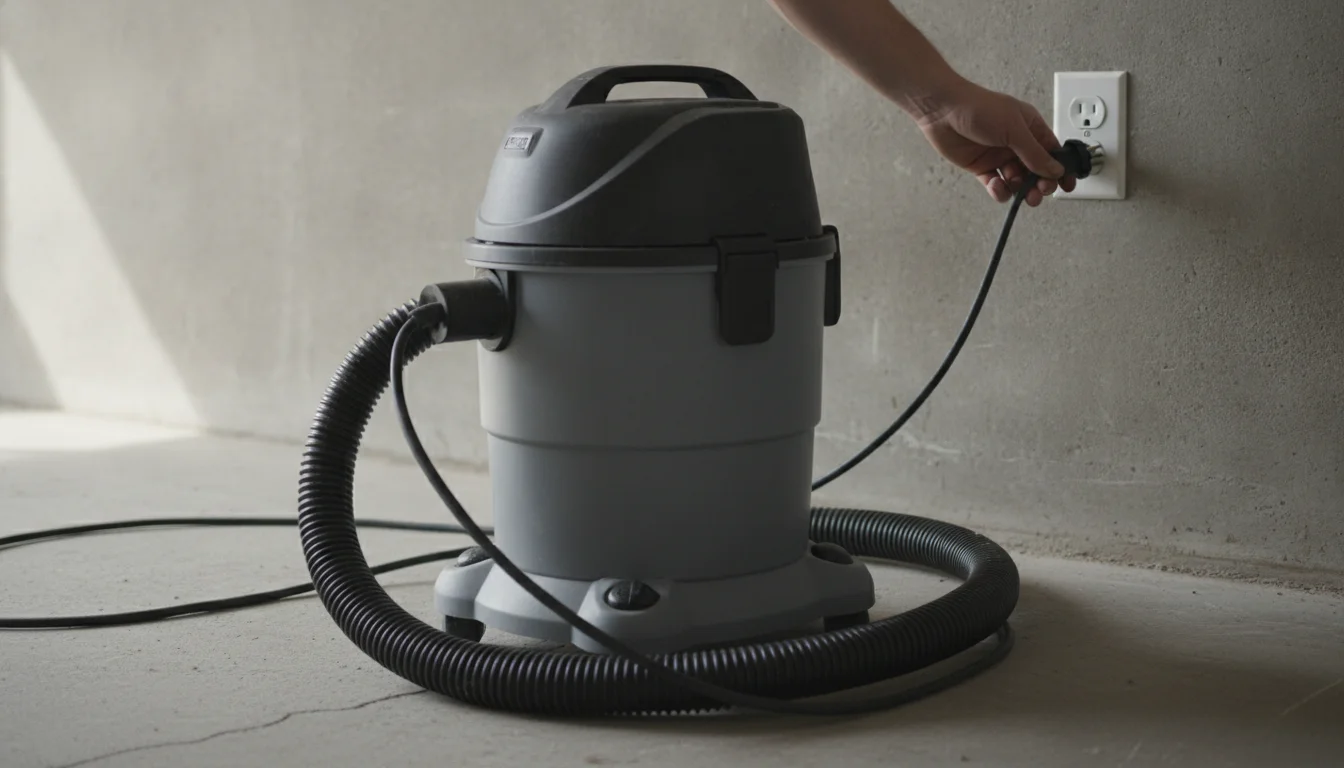
Switch off and unplug. If the exhaust is smoking or the motor is sparking, don’t turn it back on at all. RIDGID’s instruction for a burning or electrical smell on a vac that isn’t new is to unplug it and start a warranty claim.
Once it’s cool, check the airflow, which is also what cools the motor. Shop-Vac’s manual warns that a clogged filter can cause overheating and damage the cleaner. Empty the tank, clean or swap the filter, and feel along the hose for a blockage. On wet jobs, listen for the float: when the tank fills, it seals the motor intake, the pitch rises and suction drops. Switch off right then, or the motor takes real damage.
Cleared all of that and the burning smell comes back? Stop using it. Don’t open the motor housing.
2. Empty, rinse and dry the tank after every wet job
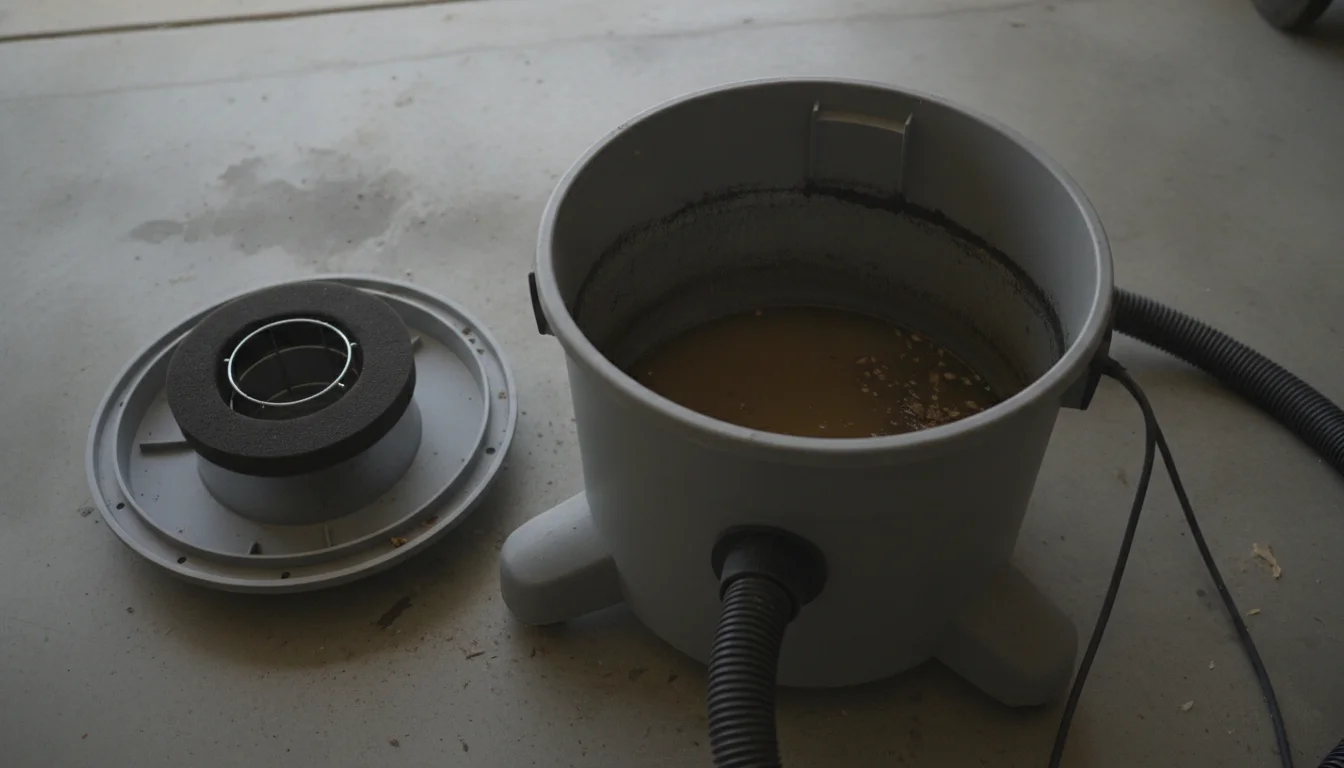
The big one for sour and musty smells. Dirty water in a closed, dark drum grows mold and mildew fast. The groomer Daryl Conner describes it on PetEdge’s blog: vacuum up damp fur, forget to empty the canister, and the next day the air around the machine smells like “YUCK.”
So: switch off when the job’s done, unplug, and pour the water out (or use the drain cap, then screw it back tight). Rinse with clean water, and scrub slimy walls with hot, soapy water. Wipe the underside of the lid too, where the filter cage and float sit; Shop-Vac’s manual says to clean and dry both before storage. Then flip the tank upside down and leave the lid off overnight.
3. Wash and dry the foam sleeve
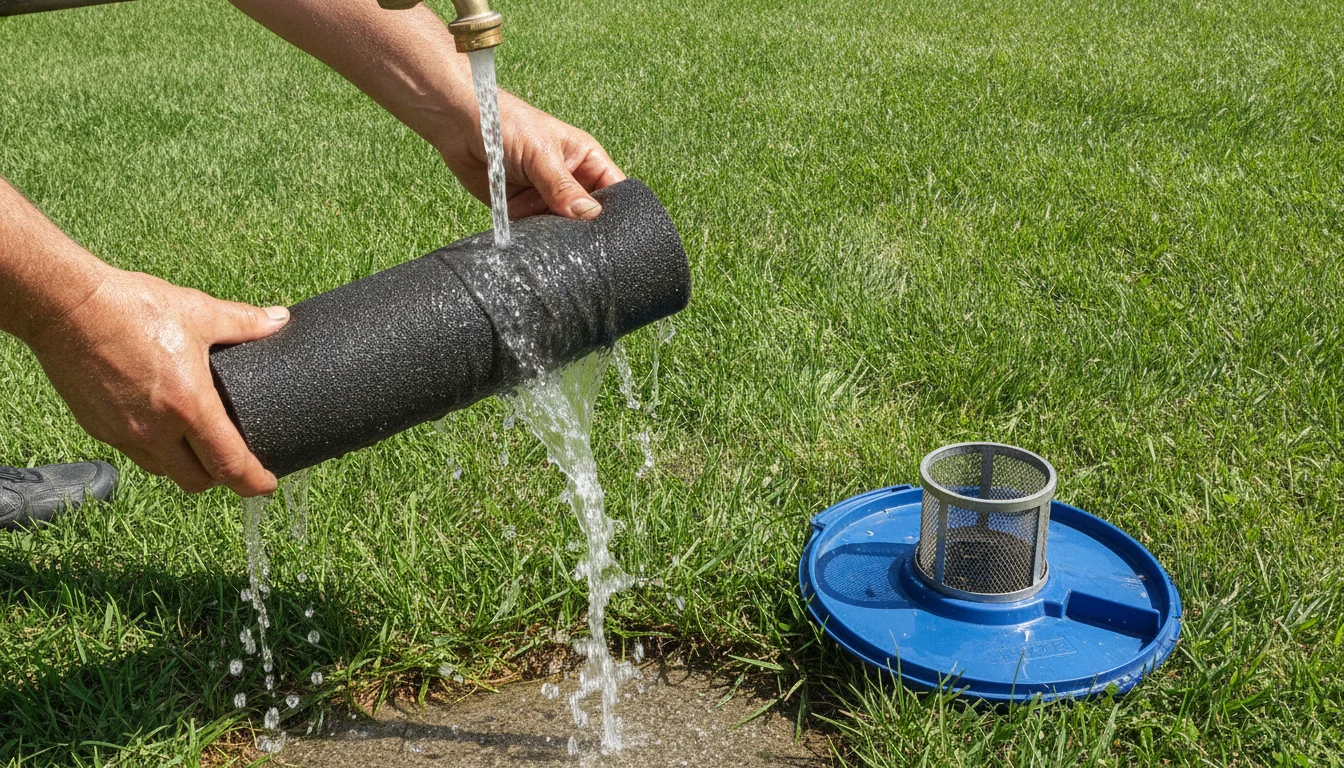
The spongy wet-pickup filter goes musty if it’s put back damp. Slide it off the cage, shake it with a quick up-and-down motion, then hold it under running water for a minute or two, rinsing from the inside out. After a sticky kitchen spill, the manual says to wash it in warm, soapy water. Dry it right through, in the sun if you can. Replace a torn one.
4. Disinfect the tank with bleach
If a rinse doesn’t kill the smell, disinfect the tank. The plastic drum is hard and non-porous, which is what bleach is for. Dilute it with water at the strength and contact time printed on your bottle’s label for disinfecting hard surfaces; concentrations differ between products, so don’t borrow a ratio from another brand. Wear rubber gloves, work outdoors, rinse with clean water, and dry the tank upside down. Never mix bleach with another cleaner.
5. Flush the hose with disinfectant, then clean water
The hose is the part people forget. Conner’s routine: take the filter out, mix hot water with a disinfectant at the strength on its label, and use about a third of the tank’s capacity (about 5 gallons, or 19 L, for a 15-gallon vac). Suck it up through the hose and the attachments you use most. The clear solution comes out full of debris from the hose. Dump it, then suck up the same amount of clean water to rinse. Hang the hose by one end so it drains, ideally outdoors for 24 hours.
A hose flush alone isn’t always enough. One r/homeowners poster vacuumed up pulled pork that had leaked in the fridge, then sucked up soapy solution and ran hot water down the hose, and the exhaust was still unbearable. Rotting food needs the full routine: hose, tank, sleeve and filter.
6. Wash the cartridge filter and dry it fully
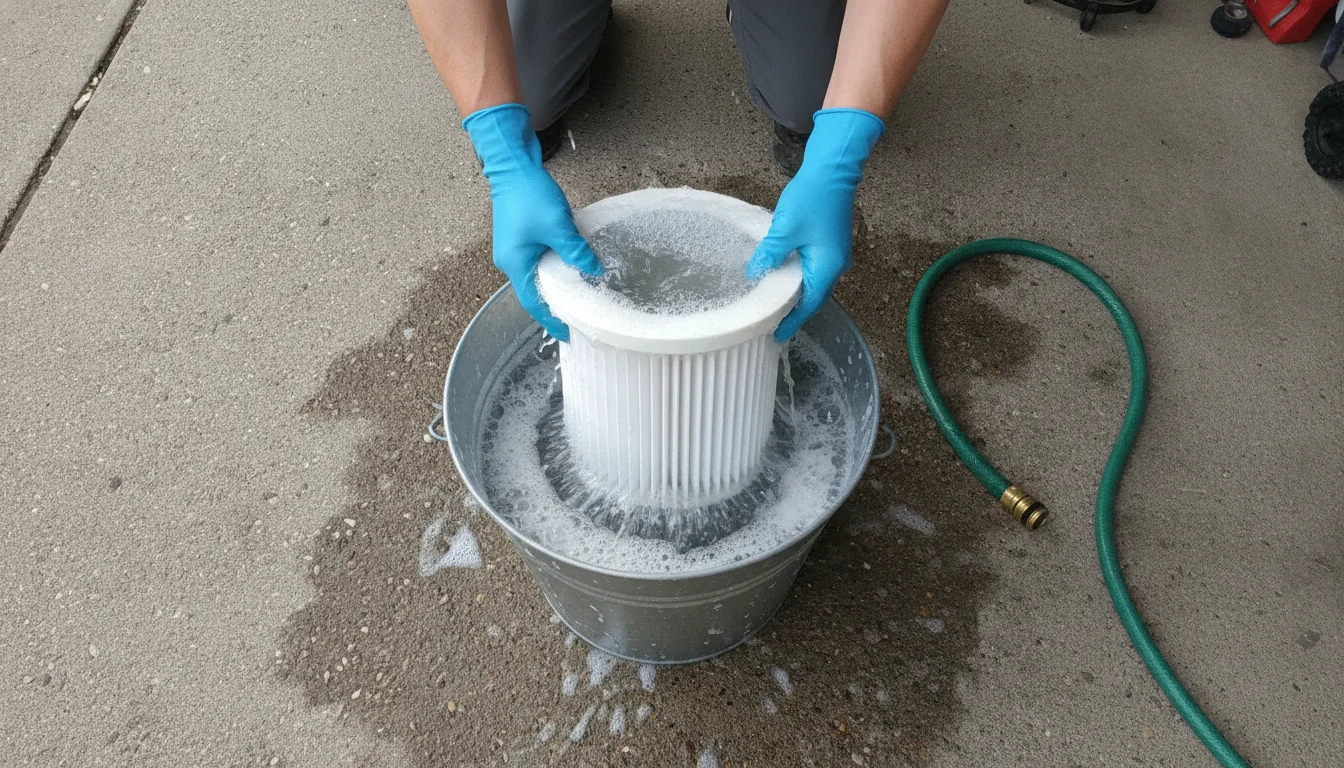
A pleated filter that got wet goes musty and stays that way. First check it’s washable (many paper filters aren’t). If it is, wash it in warm, soapy water and rinse it from the inside out, which is the direction Shop-Vac’s manual gives. Then dry it completely, which Shop-Vac’s manual puts at about 24 hours. Bob Vila’s guide warns that a wet filter put back and used turns dust into a concrete-like paste, and one put back and left grows mold. If the filter still smells strongest up close once it’s dry, replace it.
7. Knock out and blow out the cartridge filter
Dusty smell or a caked filter? Take it outside, wear a dust mask and glasses, and tap it against the inside of a trash can. Lift packed dirt out of the pleats with a plastic putty knife (brush bristles shred the paper). If you have a compressor, blow from the inside, the clean side. Ask the Builder explains why: blowing into the dirty side drives the fine dust deeper. Replace it if it’s torn.
8. Fit a high-efficiency filter bag for fine dust
If the garage smells chalky every time you vacuum up drywall dust, plaster, concrete dust or cold ash, the standard filter isn’t stopping it. Shop-Vac’s manual is blunt: for fine dust or powders, a high-efficiency drywall filter bag must be used, together with the cartridge filter. The bag catches the bulk before it reaches the cartridge. Dry work only, and change it when it’s full.
9. Upgrade to a fine-dust or HEPA cartridge
The paper filter that ships with most vacs is fine for sawdust and dirt. A fine-dust pleated cartridge holds back finer dust than the standard paper one, and a HEPA filter is rated to catch 99.97 percent of particles at 0.3 microns. Either fixes a dusty exhaust for everyday sawdust and dirt. Seat it firmly, or dust goes around it.
A HEPA cartridge doesn’t turn a shop vac into a HEPA vacuum, though. The EPA’s lead renovation guidance says to use a vacuum designed to run with a HEPA filter, not a shop vac fitted with one: a retrofitted vac isn’t necessarily sealed, so some air can get around the filter. For lead paint or mold cleanup, use a vacuum built and sold as a HEPA vacuum and follow the EPA’s cleanup guidance for that job.
How to keep it from smelling again
- Empty and rinse the tank the same day as every wet job.
- Foam sleeve for wet work, dry filter for dry work. A cartridge used wet must be cleaned and dried before dry pickup.
- Keep a spare filter, so a wet one gets its full 24 hours.
- Bag in for drywall and plaster.
- After anything that rots (food, pet mess), flush the hose that day. A heavily used vac gets the full flush about monthly.
The same leave-it-wet rule is behind a smelly washing machine and a stinking trash can.
When to call a pro
Smoke from the exhaust, sparks at the switch or motor, or an electrical or burning-plastic smell means the vac stays off until it’s been checked. Same for a burning smell that returns after you’ve cleared the filter, tank and hose. Don’t open the motor housing. Under warranty, it goes back to the maker; otherwise, take it to a repair shop. If the smell is in your house rather than the vacuum, see a burnt smell in the house.
Frequently asked questions
Why does my shop vac stink every time I use it?
The exhaust blows air over the source every time it runs: water or gunk in the tank, a damp sleeve or filter, debris lining the hose. Clean and dry that, and the smell goes.
What neutralizes a musty smell in a shop vac?
Drying it. Musty means mold or mildew grew in moisture left inside. Clean the tank, sleeve and filter, then let every part dry completely before reassembly.
Can I put baking soda, essential oils or air freshener in it?
Skip all three. They cover the smell without removing what causes it, and a fine powder like baking soda ends up in the filter pleats. Clean and dry the part that smells instead.
Is my shop vac ruined?
Usually not. A musty or sour vac comes back with a proper clean and dry, plus a new filter if the old one still smells. A burning smell that returns after the airflow is clear is the one that means repair or replacement.