Table of Contents
Most guides on how to get rid of weed smell are written for the person holding the joint: smoke in the bathroom, buy a spray, hide it better. Useless if the joint belongs to your parents, your roommate or the guy downstairs, and nobody’s asking your permission.
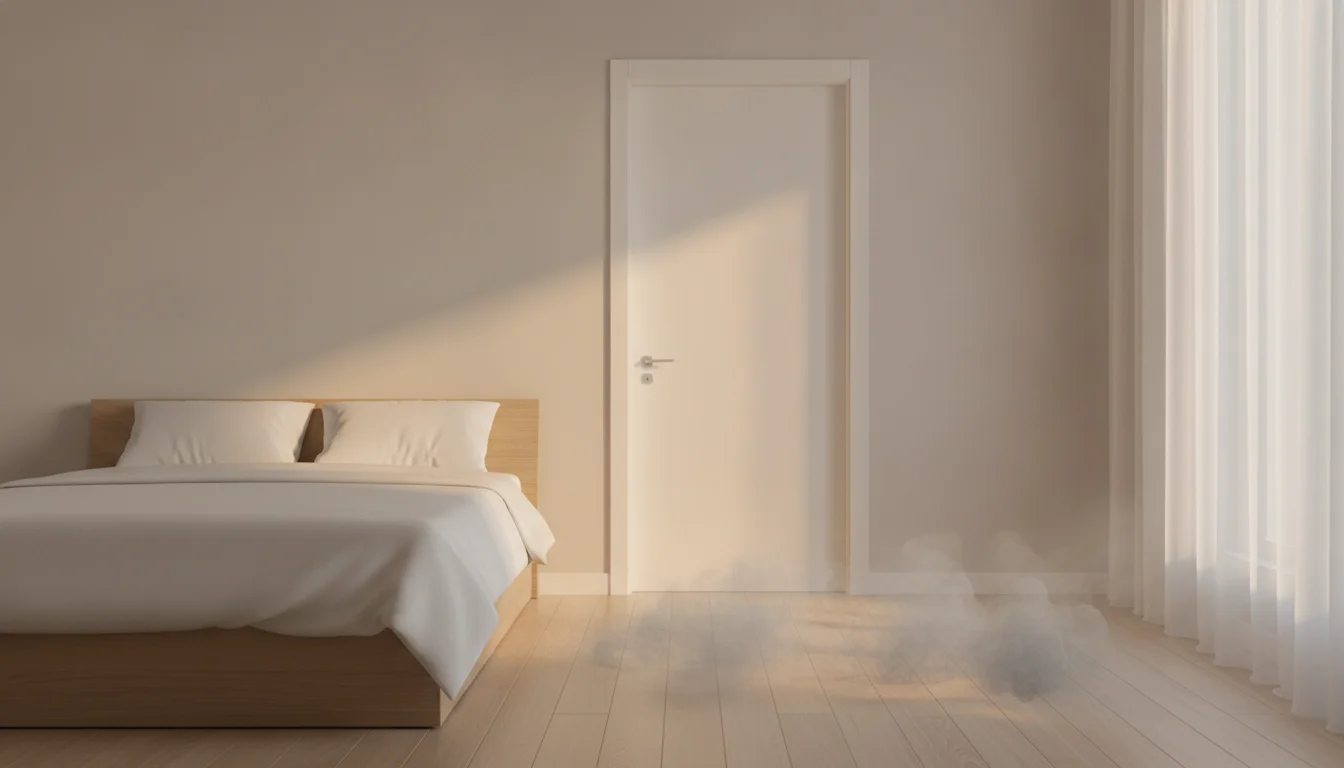
So this one assumes you don’t smoke, you can’t make them stop, and you have one room to defend. The smell gets to you on moving air. Find where that air comes in, block it in order, run outdoor air into the room, filter what slips through, then wash out what already settled. The order matters: clean sheets in a leaky room go straight back to smelling like weed.
One honest limit: you can cut this. You can’t make it zero.
1. Trace the drafts with an incense stick
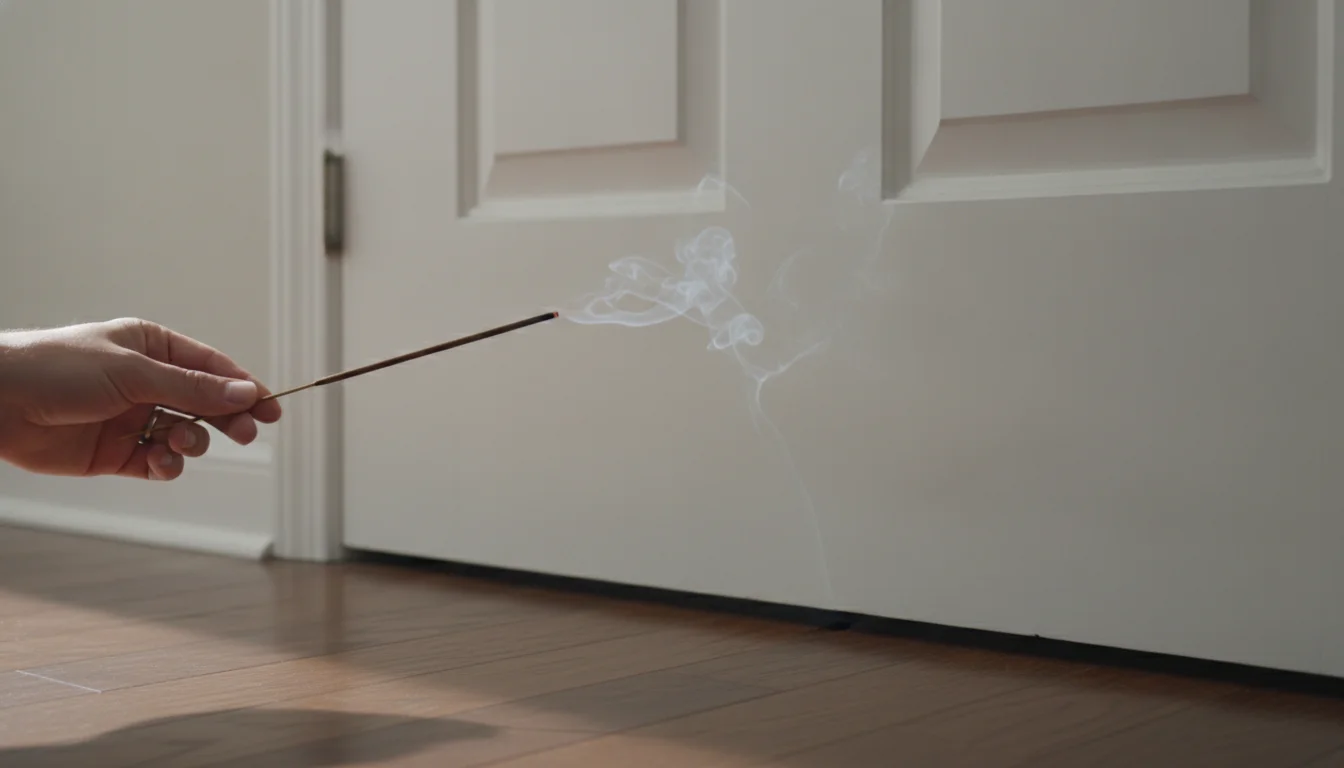
Wait for a windy day, shut the window and the door, and hold a lit incense stick next to each suspect spot: under the door, around the frame, at the vents, at every outlet and switch, along the baseboards, around pipes. Where the smoke wavers, gets sucked away or gets blown at you, air is moving. Keep it away from curtains and bedding. No incense? A damp hand works, because a leak feels cool on it.
Then the free test. Next time someone lights up, go around the room and sniff the same spots. The incense tells you where air moves. Your nose tells you which draft carries the weed. Mark the bad ones with painter’s tape.
2. Seal the gap under the door
In a shared house, start at the door. The smoke is in the hallway, and the gap under your door opens right onto it.
Screw or stick a sweep to the bottom of the door so the rubber touches the floor all the way across, without bowing up in the middle. Run foam weatherstripping around the frame wherever the door doesn’t seat tightly. A rolled towel holds you over until the sweep arrives.
Make sure the door still opens easily.
3. Sort out the vents
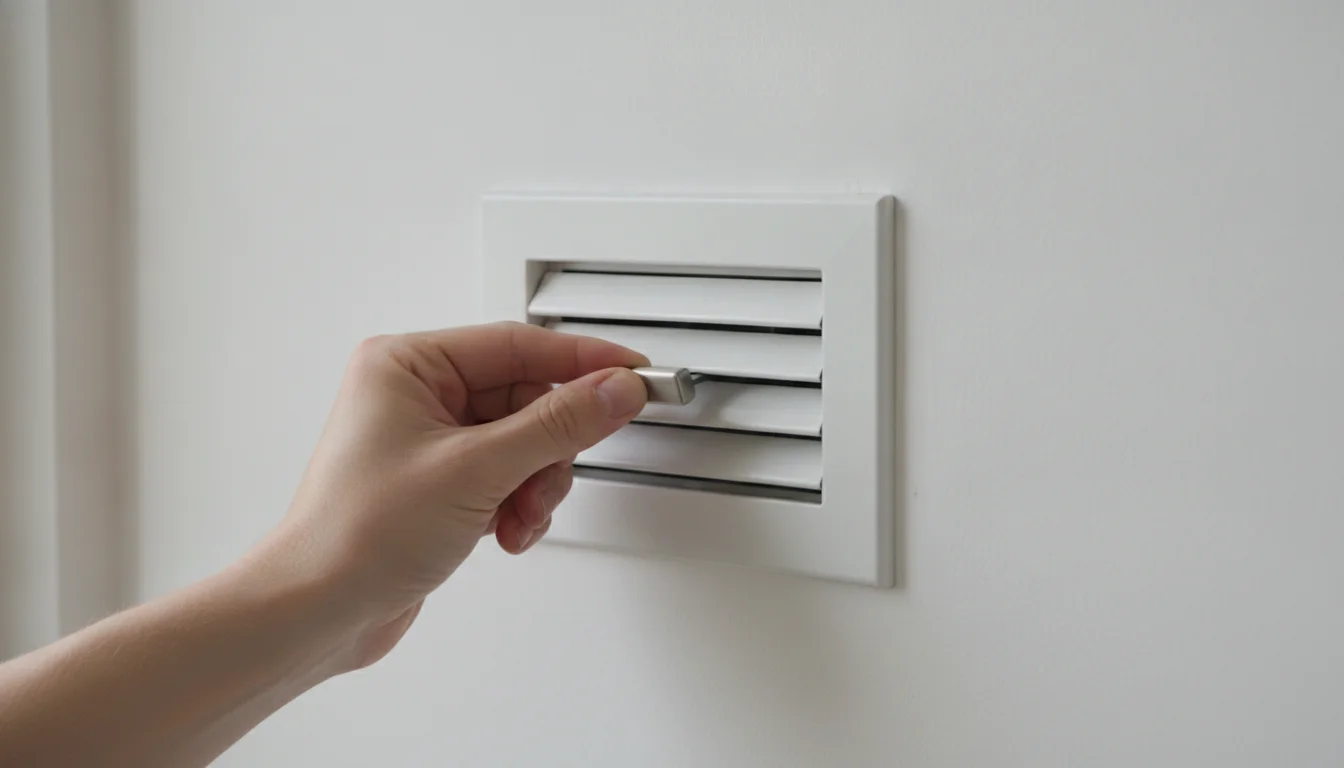
Central air pulls air in through the return grilles, usually in a hallway, and blows it back out of the supply registers. So smoke from the living room can arrive in your bedroom through the ceiling.
Stand at your register when the blower starts. If the air smells, close the louvers while they smoke and open them again after. If it’s clean, leave it open: in a closed room with no return grille, supply air builds pressure and pushes outward. A  Florida study of 70 homes measured exactly that. Got a return grille of your own? It can do the opposite and drag hallway air under the door, so step 2 matters double.
Don’t cover any return grille, and don’t shut every register in the house.  Lawrence Berkeley National Laboratory advises against closing more than 60% of them, because furnaces can end up running on their high-limit switch and cooling coils can freeze. Ask whoever handles the furnace for a fresh filter, the highest rating the system takes. It catches smoke particles while the blower runs. It won’t catch the odor gas.
4. Put foam gaskets behind the outlet plates
The  EPA names wall outlets and light fixtures as routes for secondhand tobacco smoke into an apartment, and the fix costs almost nothing. Switch the circuit off at the breaker, unscrew the plate, press a foam gasket over the outlet, screw the plate back on. Do every outlet and switch on the shared wall.
Not your breaker panel? Get whoever runs it to do this part. And never push caulk or foam into the box itself.
5. Caulk the shared wall
Run caulk along the joint between baseboard and wall, around window trim, and around any pipe or cable that comes through. Fill cracks. Use foam sealant where the gap is too wide for caulk. If you rent, ask the landlord first.
Researchers spent hours sealing each apartment in  six Minnesota buildings and improved the ventilation too. The share of air coming from other units fell by a median of 29%. Good, not magic.
6. Run a window fan blowing in
People get this one backward. A fan blowing out empties your room, and the replacement air comes in from wherever it can: under the door, out of the outlets, off the hallway full of smoke. A fan blowing in does the reverse. It pushes outdoor air into the room and raises the pressure slightly, so air tends to leak out through the gaps instead of in. It’s the same reason the EPA tells people setting up a clean room in wildfire season to run an exhaust fan only briefly: it can bring in more smoke from the rest of the house.
The mechanism is solid. The result isn’t proven: we found no study that tested a window fan against drifting smoke.
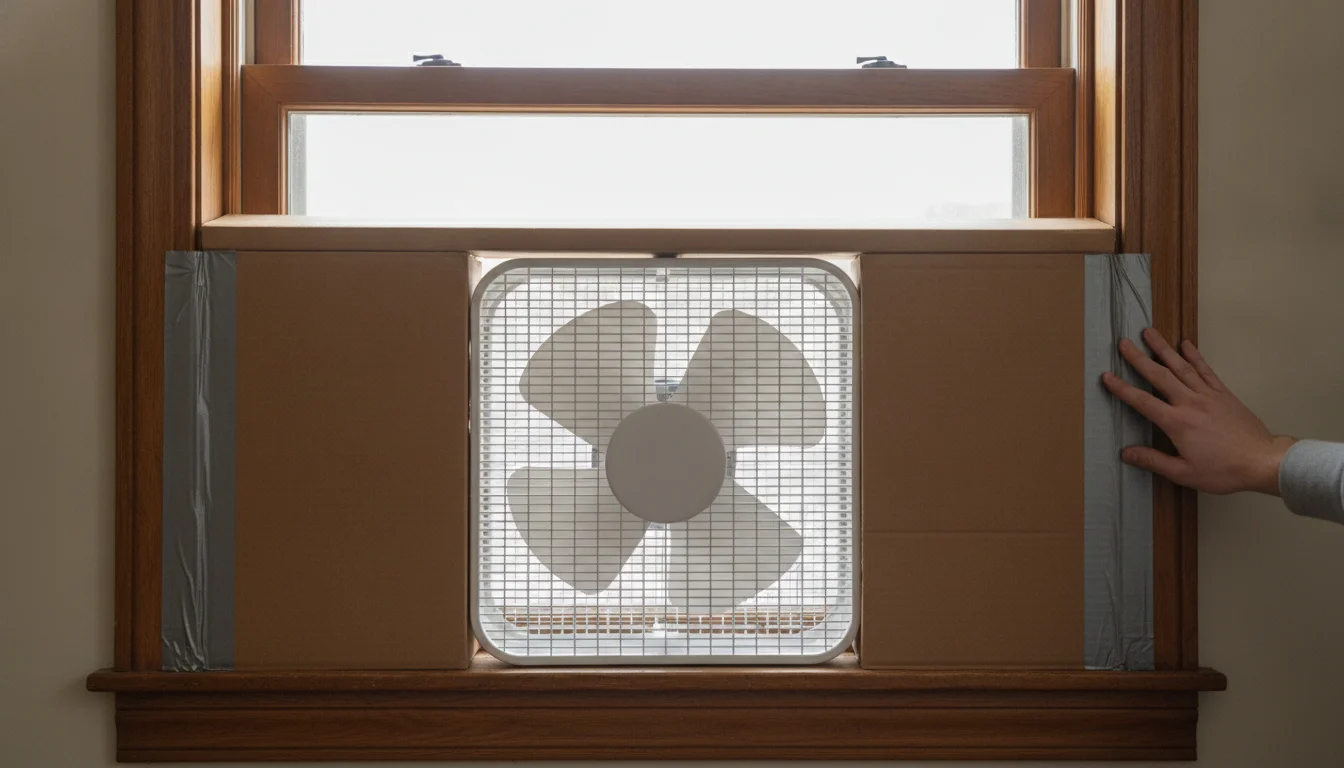
Shut the door, set the fan in the window facing in, and fill the space around it with cardboard or towels so the air can’t slip straight back out. To check which way the air is going, hold a strip of tissue at the bottom of the door. Blowing toward the hall means air is leaving there. It doesn’t prove the smell is held out, so use your nose too. If they smoke on the balcony under your window, use a different window or skip this step, because you’d be pumping it straight in.
Don’t block a window that’s your way out in a fire.
7. Get a purifier with real carbon in it
HEPA alone won’t fix this. Smoke is particles plus gas. The smell is gas, and gas goes straight through a HEPA filter. The  California Air Resources Board says it outright, and adds that carbon matters by the pound: beds run from 1 to 12 lb (0.45 to 5.4 kg), and a thin carbon sheet works only briefly. So look for HEPA plus a heavy carbon filter, and run it in your room the whole time.
Don’t buy on the CADR number alone. It rates particles only. And skip anything that makes ozone. The EPA calls it a lung irritant.
8. Wash every fabric in the room
With the leaks shut, strip the room in one go: curtains, bedding, throws, cushion covers, the clothes on the chair. Use your usual detergent and the warmest water the care label allows. Air-dry and smell before anything goes near a dryer. If it still smells, wash it again. The  Thirdhand Smoke Resource Center says fabric may take several rounds, depending on how bad it is. That’s advice for tobacco. We found no study on weed smell.
Clothes have their own routine in getting smoke smell out of clothes. Carpet and mattresses are the bad news: the same tobacco advice says what can’t be submerged and scrubbed keeps holding residue.
9. Wash the walls and hard surfaces
Tobacco smoke leaves residue on walls that gets back into the air later. That’s the same source as step 8, and we found nothing on how much weed smell comes off a wall. Soapy water is cheap, so wash anyway.
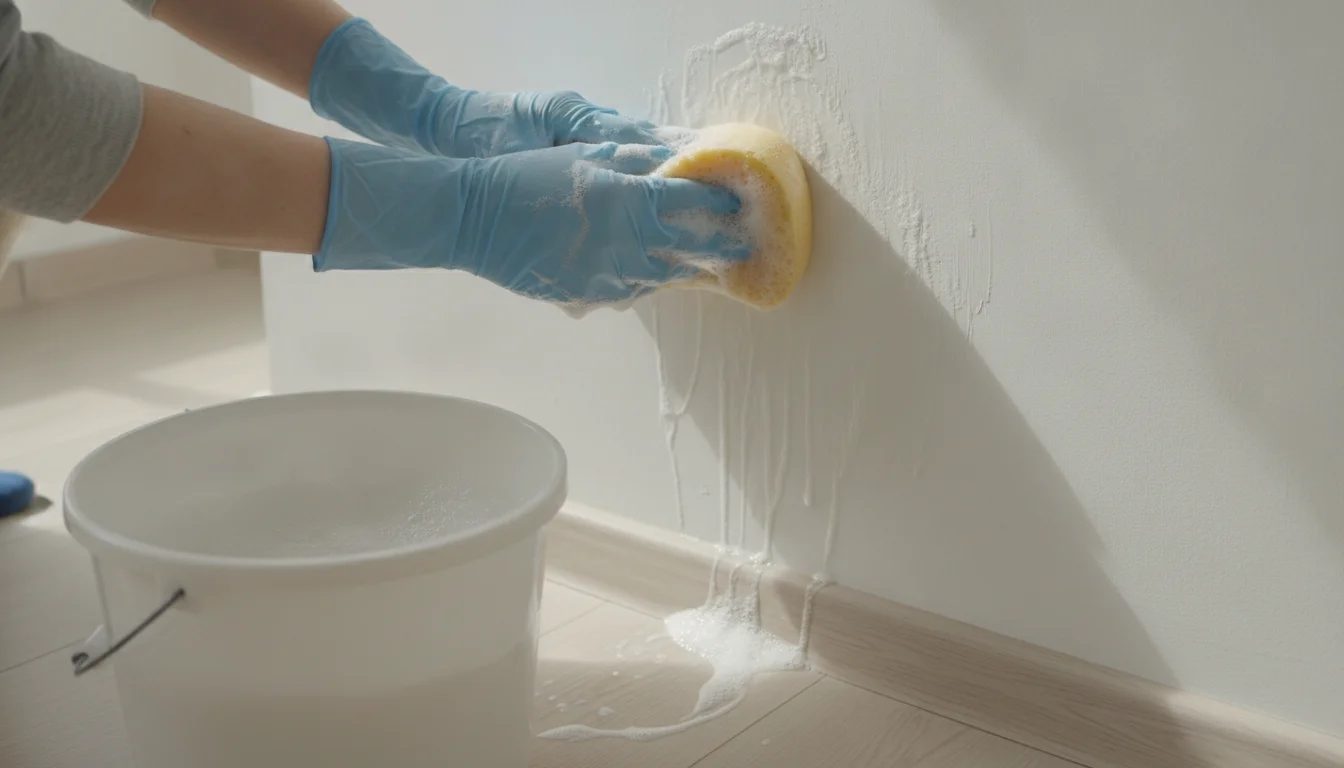
Use a few drops of dish soap in a bucket of warm water, ceiling first, then walls, then doors and trim, and change the water once it turns gray. Do the spots nobody does: tops of door frames, switch plates, insides of drawers. One cleaner at a time, and never mix bleach with vinegar or ammonia.
If people smoked cigarettes in there too, the tar film is a bigger job: follow the cigarette smoke smell guide. Stale rather than smoky? That’s musty smell in the house.
10. Ask for a fan in their window, not a sermon
Forget asking them to quit. Ask for one cheap change.
Same physics as step 6, flipped: a fan in their window blowing out, with their door shut. Their room loses air, so replacement air tends to come in under their door instead of smoky air going out. Same limit too: that’s which way the air goes, and nothing we found measured the smell. Don’t do it if their window is next to yours and your fan is blowing in. Offer to buy the fan.
One warning: a fan pulling air out of a tight house can draw exhaust back down the flue of a gas furnace or water heater. Keep a working carbon monoxide alarm in the house.
When to call a professional
If you rent, read your lease or building rules for a smoke policy, then write to the landlord and keep a copy. Log it first: times, rooms, how it smells, where you think it comes in. Ask for something specific, such as sealing on both sides of the shared wall, better ventilation filters, or a move to another unit. Your local health department can tell you which smokefree rules apply.
Call an HVAC contractor if the smell arrives whenever the blower runs. If the room still smells after washing and sealing, a restoration company can quote for what’s soaked into carpet and drywall.
Frequently asked questions
What makes weed smell go away fast?
Outdoor air, while it lasts. Open the window, run the fan blowing in, take any smelly laundry out of the room. Whatever’s in fabric and on walls is a separate job: steps 8 and 9.
What scent covers up the smell of weed?
Nothing for long. Sprays, candles and incense add a second smell on top of the first. You end up with weed plus vanilla.
How long until weed smell goes away?
The air clears once the smoking stops and you bring in fresh air. Fabric and walls take as long as it takes to wash them, maybe more than once, and if smoke keeps drifting in, the clock restarts every time.
Does an air purifier get rid of weed smell?
It helps when the filter holds a lot of carbon, it’s sized for your room and it runs constantly. It won’t beat an open gap under the door or a soaked curtain.