Table of Contents
You found them, you swept them up, and then you read that you shouldn’t have. Most people do. So this guide on how to get rid of rat droppings also covers what to do now if the broom or vacuum got there first.
The rule is wet it, wait, wipe it. Dry droppings and dried urine break up into dust, and the dust is how infections travel.
But rats bring a risk the generic guides skip. Their urine can carry leptospirosis (Weil’s disease), which gets in through cuts, eyes, nose and mouth. That changes how you dress for the job. Mice have smaller droppings and their own guide.
Why you have rat droppings
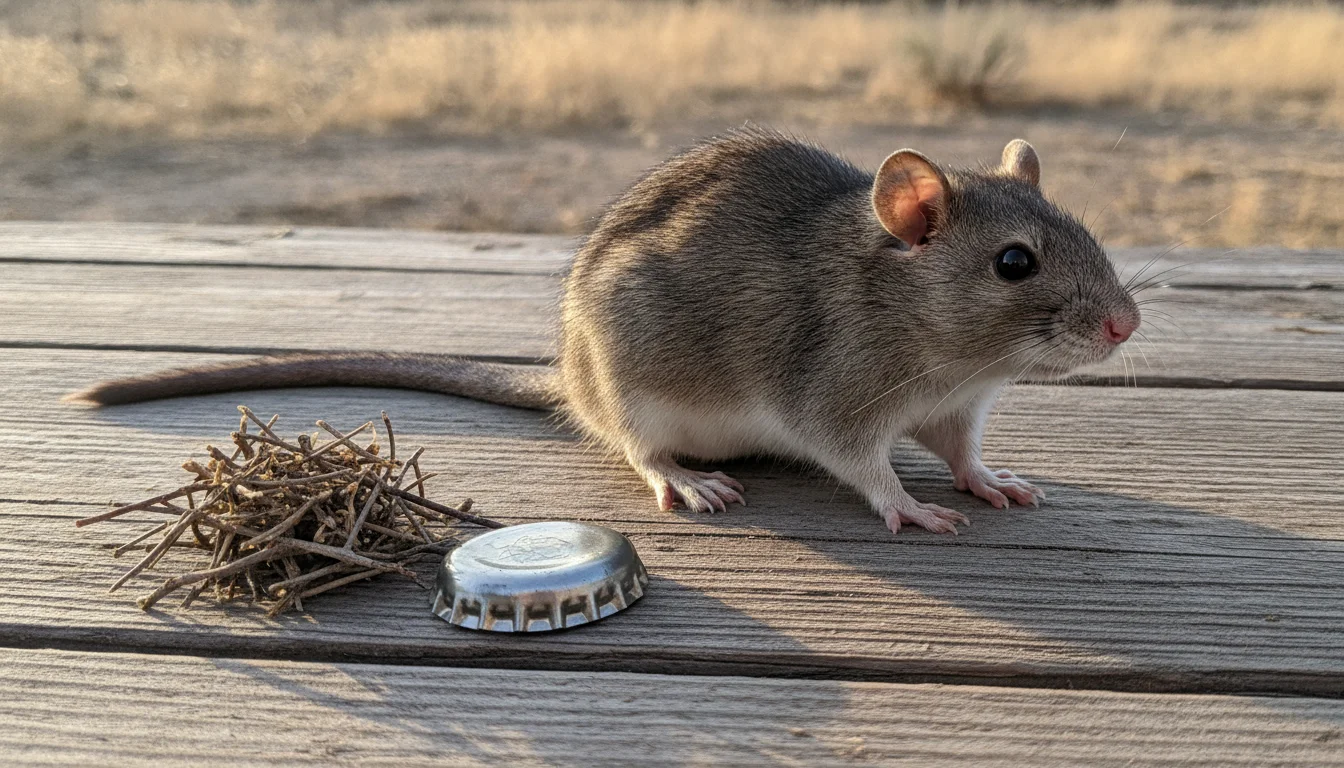
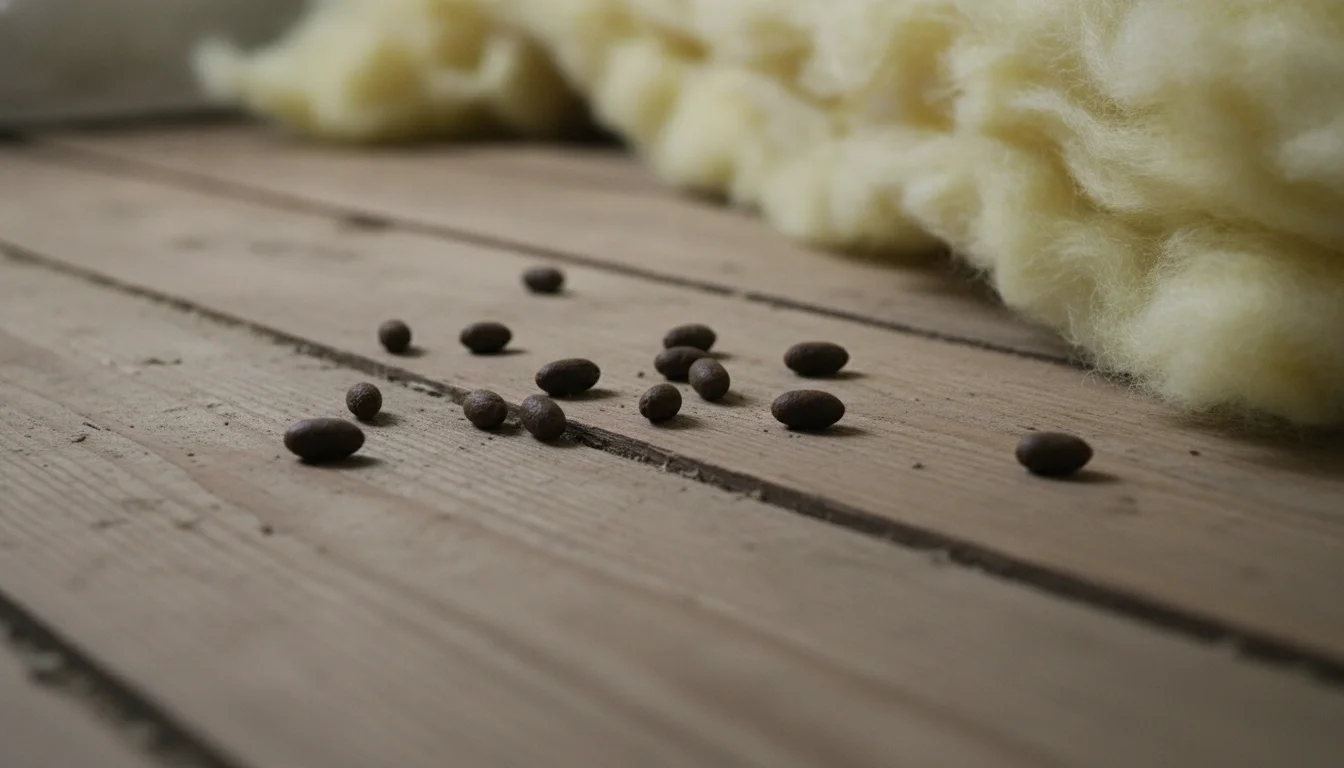
Rat droppings are dark, about 1/2 to 3/4 inch (1 to 2 cm) long, shaped like a fat grain of rice or a jelly bean, and often blunt at one end. Mouse droppings are a fraction of that, and if that’s what you’ve got, you’ve got mice. Fresh ones look shiny and moist; they go dull and dry within hours.
Rats leave 40 to 50 droppings a day and use them, and their urine, to mark routes to food. Big and small droppings together mean adults and young: a breeding group. Dark greasy smears along walls and around holes are rat runs too.
In the UK it’s usually the brown rat, in lofts, cavity walls, garages and sheds. Tennis-ball-sized holes near decking, sheds or compost bins are its burrows.
1. Disinfect droppings before wiping them up
This is the method. Everything else is this, adapted to a place or material.
- Put on rubber gloves.
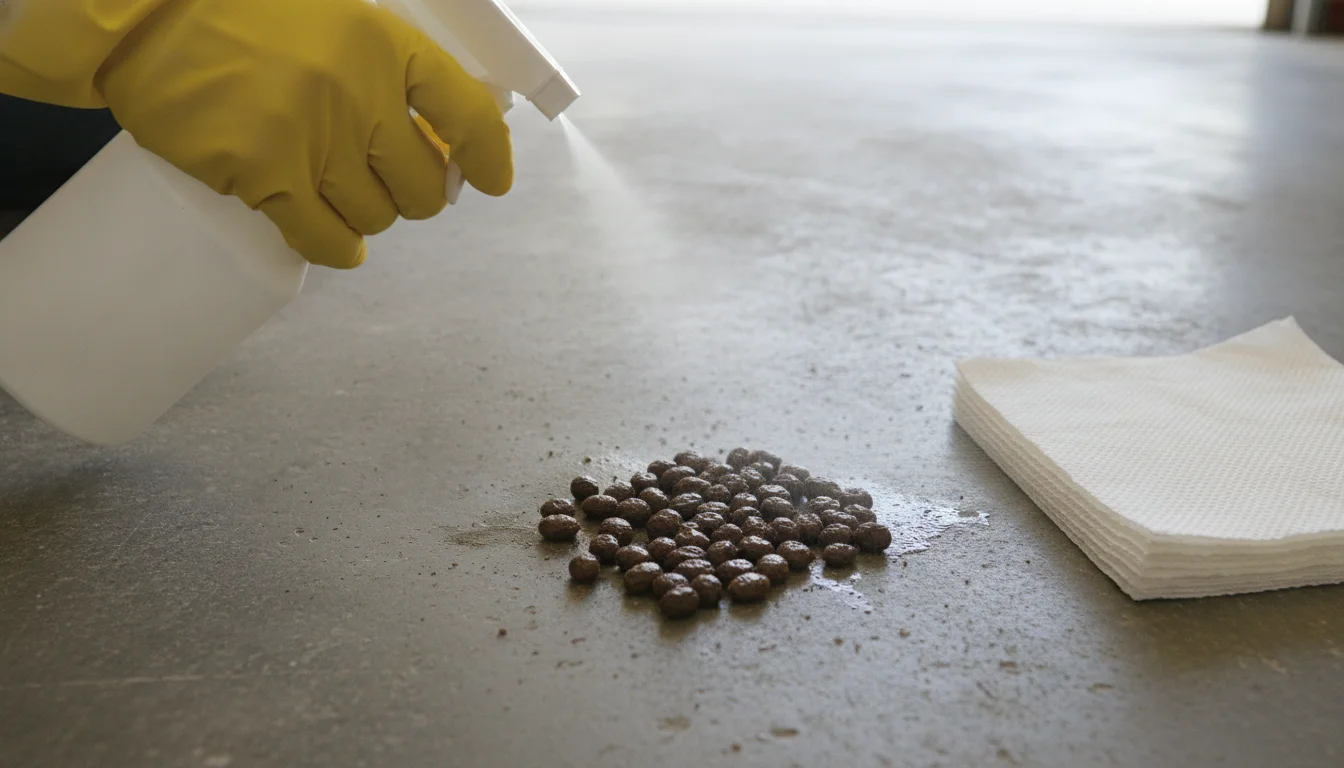
- Spray the droppings and any urine stains until they’re soaking wet. Use a product with the word “disinfectant” on the label, or a fresh mix of 1.5 cups of household bleach in 1 gallon (3.8 L) of water.
- Leave it 5 minutes, or the time the label gives.
- Wipe it all up with paper towels and bag them.
- Mop or sponge the whole area with disinfectant, along with nearby counters, shelves and drawers.
- Wash your gloved hands, take the gloves off, then wash your hands with soap and warm water.
Never mix bleach with any other cleaner.
A dead rat or nest gets the same soak, then goes in a knotted plastic bag inside a second knotted bag.
One ex-pest-control manager on Reddit put the logic plainly: the soak kills most of what you’re worried about and dampens the droppings so they can’t go airborne.
2. Gear up, and cover every cut
Gloves. An FFP2 dust mask. Long sleeves.
The bit everyone skips: put a waterproof plaster on every cut and graze on your hands and forearms first. That’s the leptospirosis precaution from UK health and safety guidance, because rat urine causes it by getting into a cut or your nose, mouth or eyes. Keep your hands off your face, and if urine splashes onto bare skin, wash it off right away.
When you’re done, take the mask off by the straps only. The front is the dirty part.
3. Air out the loft or shed for 30 minutes
Open every door, window and hatch of a shut loft, shed or garage, and walk away for 30 minutes. Then go back in and run method 1. A dirt floor gets sprayed, never swept.
4. Already swept or vacuumed? Clean out the vacuum
The question the ranking pages dodge. First, the room: switch off, open the windows, and leave for half an hour. Then wet-clean whatever you missed with method 1. That’s the CDC’s advice if you already vacuumed.
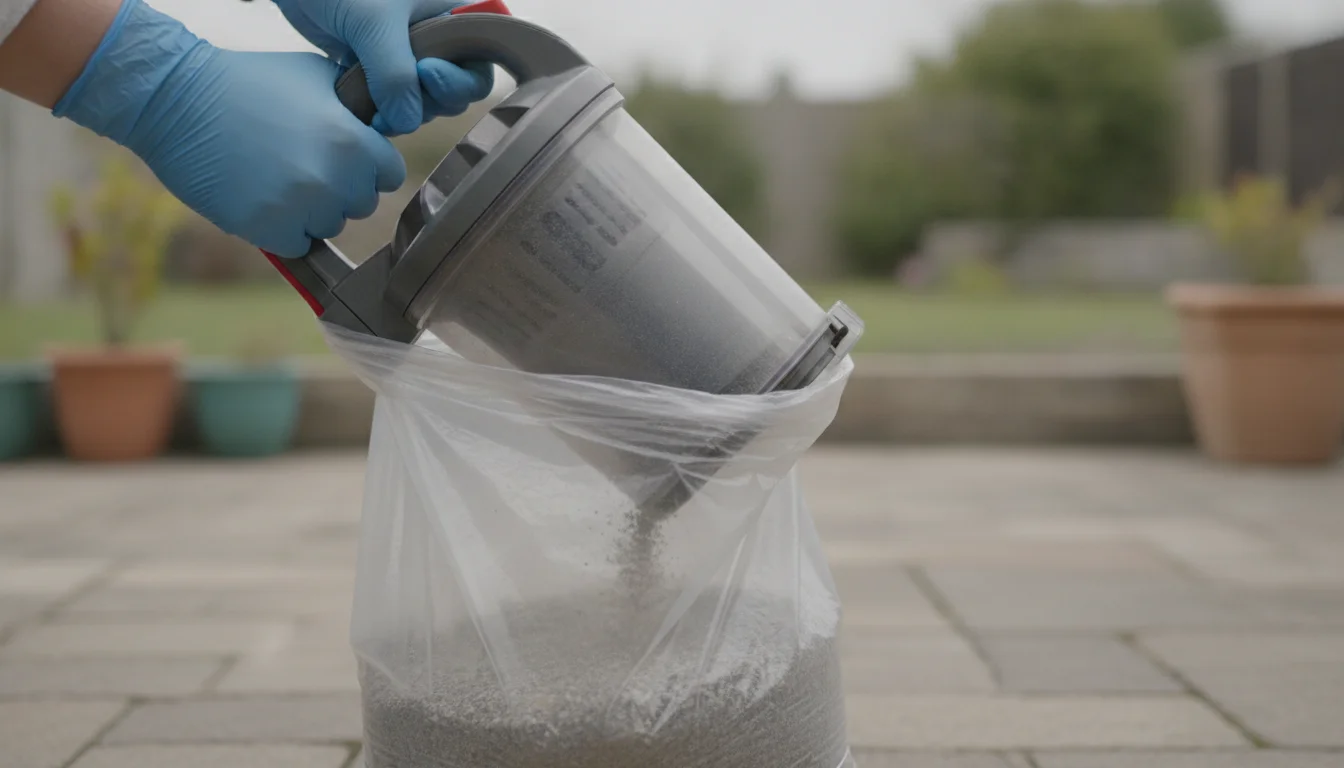
Then the machine, because the droppings are in it. Take it outside and put on the gloves and mask. The CDC’s rule for hard, nonporous things is to disinfect them, so the canister, hose and attachments get the method 1 treatment: wet them with the bleach solution, wait, wipe. Not in the kitchen sink. If you use the bathtub, disinfect it afterward. The broom and dustpan get the same.
Then breathe. The UK’s health agency rates the public risk from rat hantavirus as very low. The FAQ covers what to watch for.
5. Bag soiled loft insulation
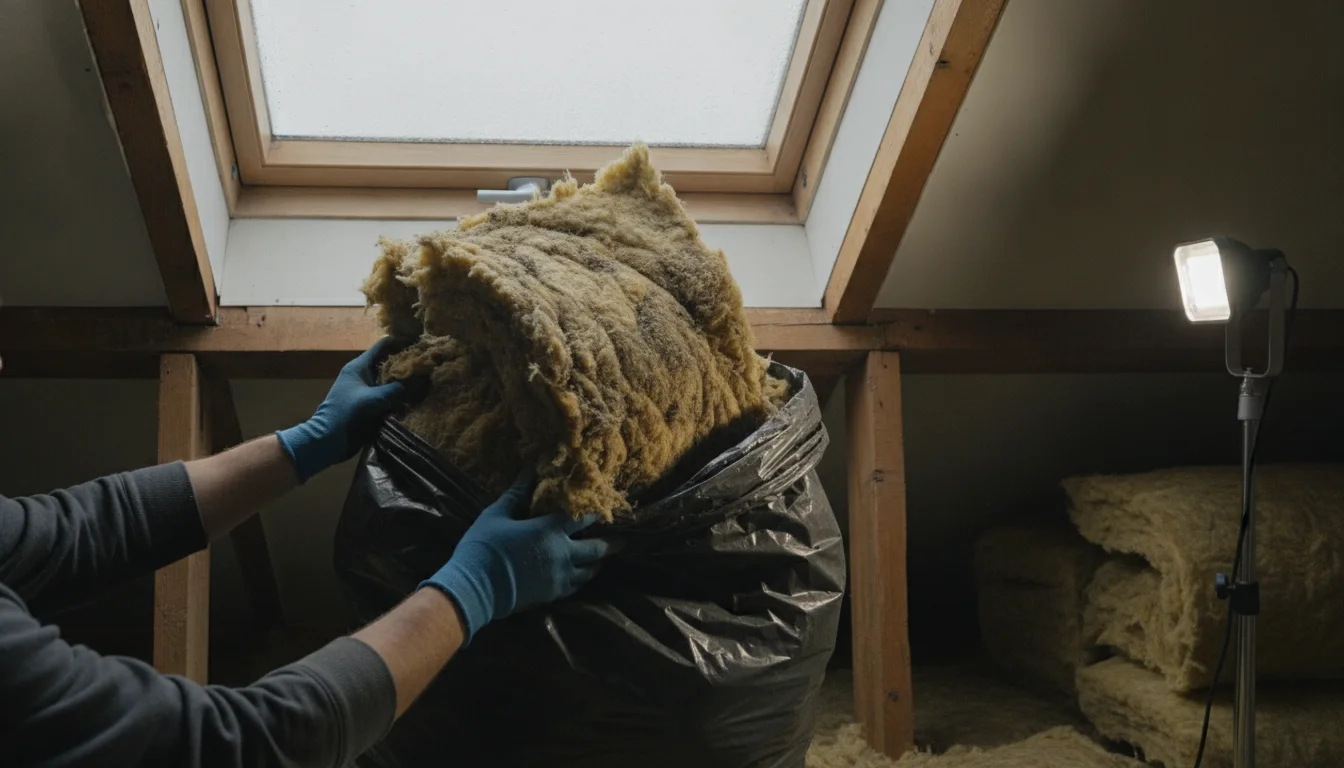
You can’t wipe insulation. If the soiled patch is exposed and reachable, wet it, lift it into heavy plastic bags, and knot them. Never rake or vacuum it dry. Wipe the joists underneath with method 1. Droppings through the whole loft, or insulation inside a wall, is a job for a pro.
6. Sort stored boxes outdoors
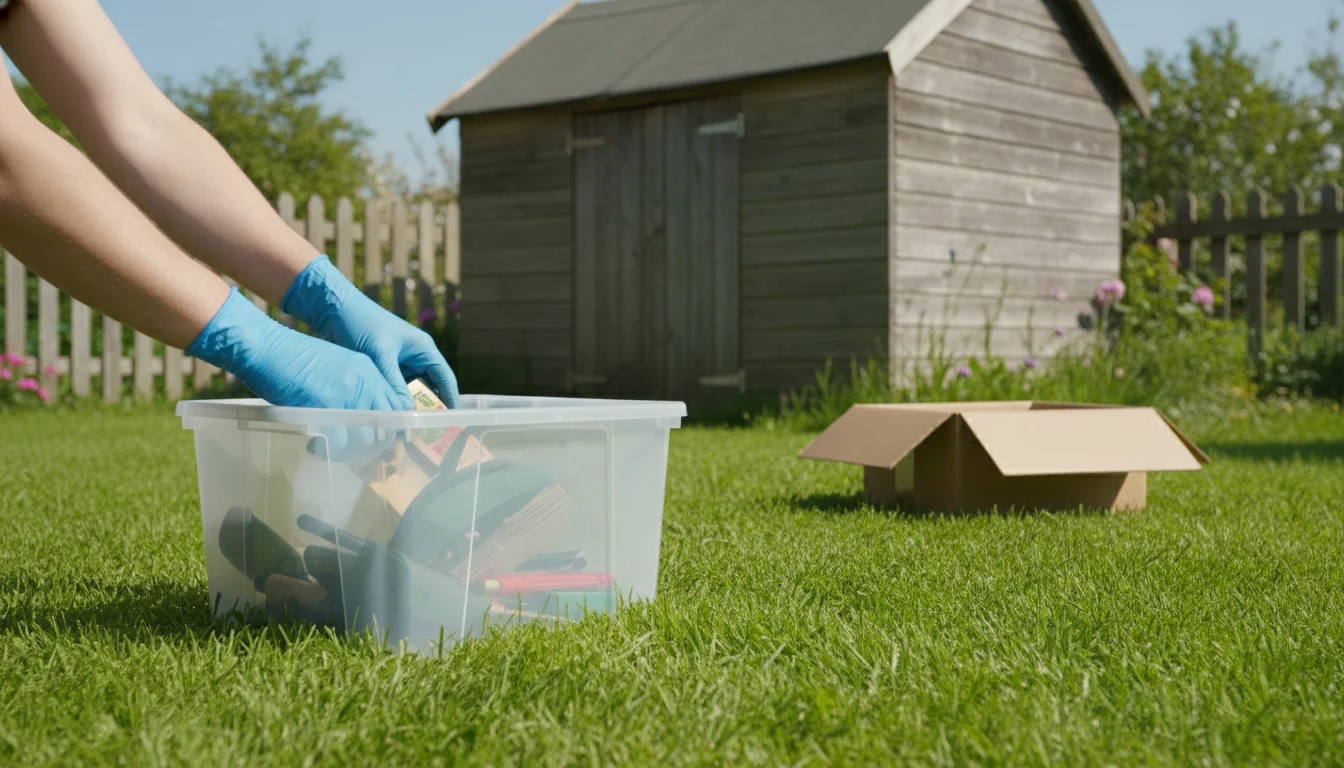
Carry the boxes out of the loft, shed or garage into open air and sun, stand upwind, and unpack there.
Cardboard with droppings or urine on it goes in the trash. No arguing. Plastic, glass and metal containers get disinfected, along with hard items inside. Pile cloth and paper separately.
7. Rest books and papers in the sun
You can’t spray a photo album. Leave anything liquid would ruin in direct sunlight for several hours, or shut it in a room free of rodents for at least three weeks (the CDC strongly suggests six). Write the date on the pile.
8. Wash fabrics on the hottest setting they allow
Wet-wipe visible droppings off first. Then into the machine, with your gloves on and without shaking anything, on the hottest wash the care label allows. Dry on high, or hang it in the sun. Then wash your hands.
9. Steam or shampoo carpets and upholstery
Wet and wipe the droppings first, and skip the usual “vacuum before you steam” habit. Then shampoo the rug or sofa with a commercial disinfectant, or go over it with a commercial-grade steam cleaner. Keep bleach off carpets and fabric; it wrecks them.
10. Kill the urine smell with an enzyme cleaner
The smell matters for more than your nose: traces of urine mark the trail for the next rat. Disinfecting kills germs but doesn’t break down what smells. An enzyme cleaner does.
Disinfect and dry the spot first. Then soak it with the enzyme cleaner, keep it wet for 10 to 15 minutes, and scrub. On carpet or concrete use more than seems sensible, because the urine went deep. A layer of baking soda left overnight soaks up what’s left.
When to call a professional
Hand it over if:
- Droppings keep coming back after you’ve cleaned. New droppings mean the rats are still active and your control isn’t working yet.
- You find burrows, or hear scratching in the loft or walls that won’t stop. Those are the signs the UK’s pest control trade body lists for calling in a qualified controller.
- Droppings or nests are in your heating or ventilation ducts. The CDC sends that to a rodent control or duct-cleaning firm.
- The mess is big: piles of droppings, several nests or dead rats, or insulation you can’t reach and bag.
How to get rid of rat droppings for good: keep rats out
Walk round the outside of the house. Look for broken air bricks, old pipe holes, and gaps under doors and around pipes. Brown rats get through gaps under 1 inch (25 mm), and US extension services say to seal anything over 1/4 inch (6 mm), with steel or copper wool, welded wire mesh or cement. Ivy against the walls is a ladder to the loft.
Keep pet food and birdseed in lidded metal or thick plastic bins, and clear leftover bird seed by mid-afternoon. Stand compost bins on heavy-gauge mesh. Block off the space under decking and sheds where you can.
Then set rat-sized snap traps where you found droppings. A mouse trap won’t kill a rat. If one died somewhere you can’t reach, the dead mouse smell guide covers finding and clearing it.
FAQ
How long do rat droppings stay infectious?
No health agency gives a safe age. UK guidance is to presume every rodent carries these infections, and dried droppings and urine are exactly what it warns against breathing in. Old ones get the same wet treatment as fresh.
Does rat poop mean an infestation?
Not on its own; one rat leaves 40 to 50 a day. Big and small droppings side by side mean a breeding group, and droppings that come back after you clean mean they’re still active.
Is rat poop dangerous?
It can be. In the UK the two to know are leptospirosis, from rat urine, and Seoul hantavirus, which rats carry and which spreads mainly by breathing in dust from droppings and urine. Both are rare. The wet method and covered cuts deal with both.
I feel unwell after cleaning up. What should I do?
Leptospirosis symptoms usually show 7 to 21 days after exposure, and hantavirus usually within 2 to 4 weeks (sometimes up to 8). The NHS says to see a GP if you might have been exposed and get a high temperature, headache, vomiting, diarrhea, body aches, red eyes or loss of appetite. Ask for an urgent appointment or contact NHS 111 for yellow skin or eyes, a rash, not being able to pee, swollen ankles, feet or hands, chest pain, or shortness of breath. Outside the UK, see your doctor. Either way, tell them you cleaned up rat droppings or urine.
What’s the best disinfectant for rat droppings?
A fresh bleach solution on hard surfaces, or any product labeled “disinfectant” that lists your surface. Use the disinfectant around fabric and carpet.