Table of Contents
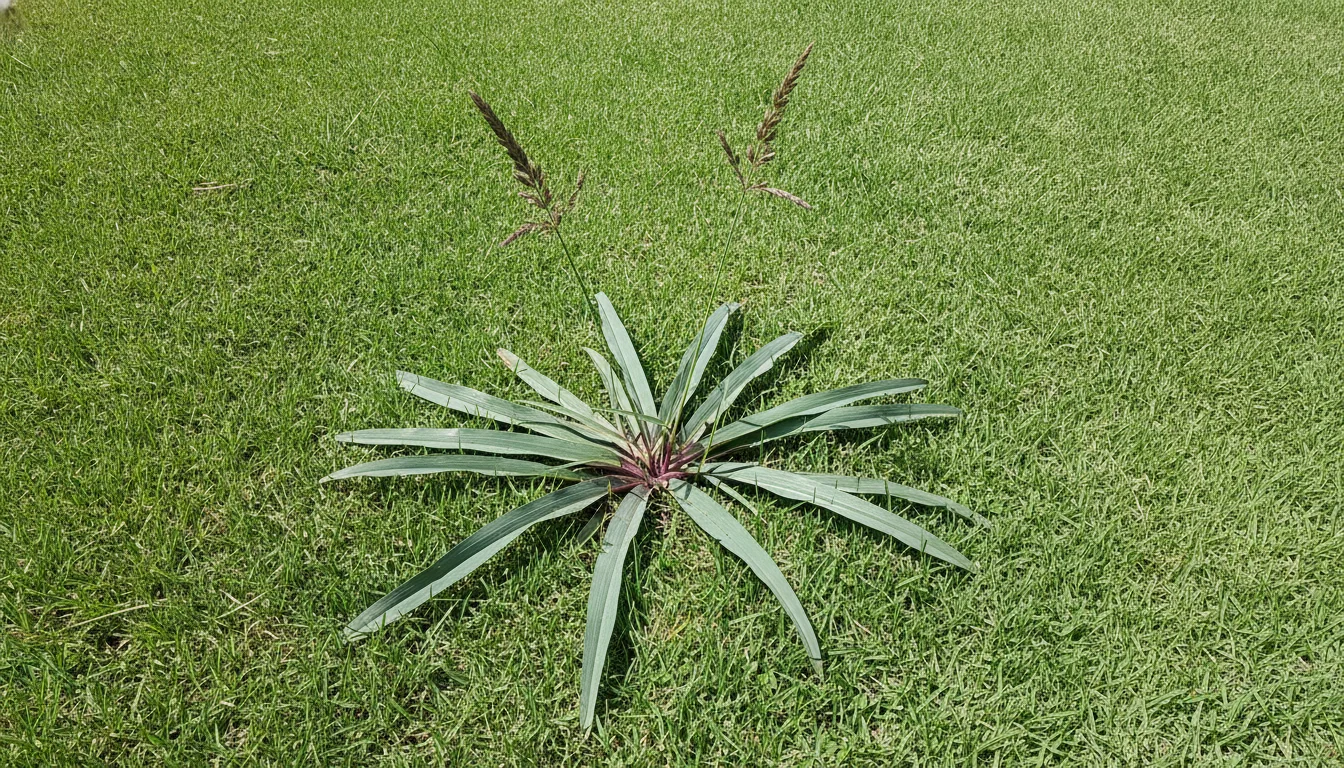
Coarse, gray-green clumps that grow faster than the rest of the lawn. Seedheads popping up a day after you mow (Texas gardening writer Neil Sperry puts it at within 36 hours). That’s dallisgrass, not crabgrass. It’s a perennial that regrows every year from short underground stems called rhizomes, so yanking the leaves does nothing. Here’s how to get rid of dallisgrass: dig what you can, spot-spray the rest in fall with a herbicide matched to your lawn, then close the gaps. And forget MSMA, the old fix plenty of pages still recommend. EPA canceled its use on residential lawns at the end of 2009.
Plan on more than one season. University of California IPM says control often takes two to three years.
What dallisgrass is (and why it isn’t crabgrass)
People mix them up, and the difference decides what works. Crabgrass is an annual: it dies each year and comes back from seed, so a pre-emergent stops it. Dallisgrass lives for years. A pre-emergent won’t touch an established clump.
To tell them apart, dig one up. UC IPM says dallisgrass has short rhizomes with joints so close together they look like concentric rings. Crabgrass doesn’t. Other tells: wide blades (1/4 to 1/2 in, or 6 to 13 mm) with a prominent midrib, a papery ligule about 1/4 in (6 mm) long where the blade meets the stem, and seedheads with 2 to 10 drooping branches. Clumps widen every year, and the center of an old one sometimes dies out.
It loves wet spots, poor drainage and lawns that get a big soaking with long gaps in between. It germinates once the soil reaches 60 to 65°F (16 to 18°C).
1. Dig out each clump and its rhizomes
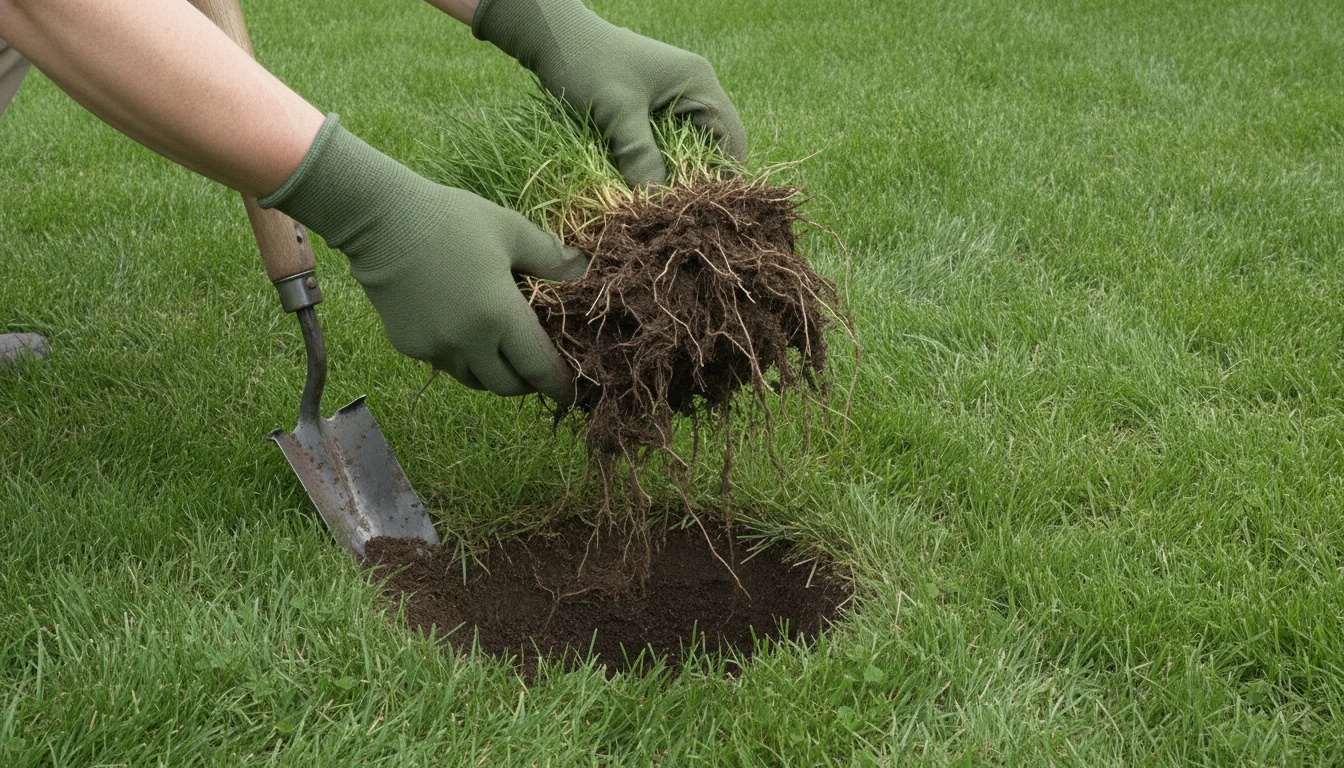
For a handful of clumps, digging wins. UC IPM calls removing young plants before they form rhizomes or set seed the best strategy there is.
Take the whole clump with a sharpshooter or shovel. Leave rhizomes behind and it regrows. Moist soil makes it easier (University of Maryland Extension). Texas A&M AgriLife says to backfill with topsoil and seed or plug lawn grass into the hole right away. Sperry lays sod the same day.
Bag the clumps. Don’t compost them.
2. Spot-spray with glyphosate, then replant
When a clump is too big to dig, glyphosate is often the fastest, easiest and cheapest option, says UC IPM. It kills the clump. It also kills any lawn grass it touches.
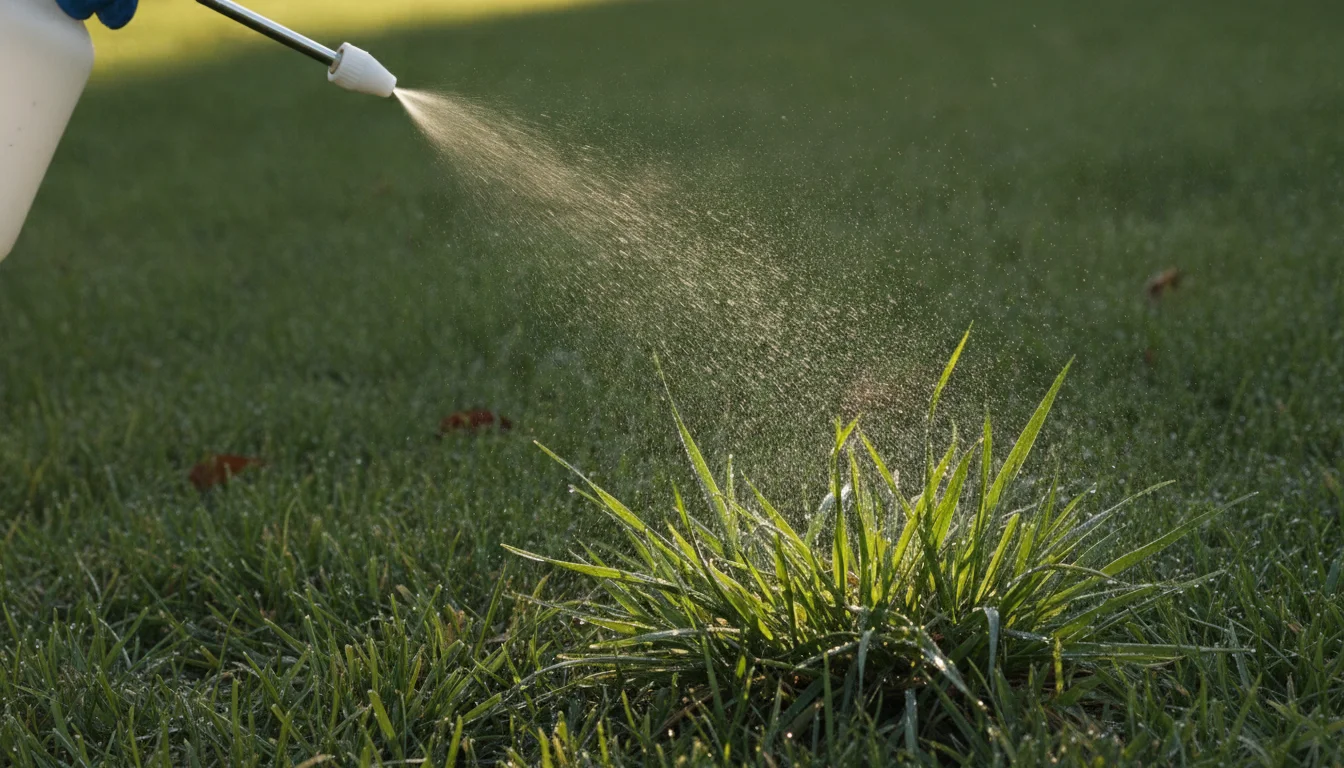
So shield it. Sperry’s trick: cut the bottom off a 1-gallon (3.8 L) plastic jug, press it over the clump and spray down through the neck. The dead patch stays jug-sized. Mix at the rate on the label. Even careful spot treatments damage the lawn around the clump, UC IPM warns, so plan on patching.
Bermudagrass lawns get a bonus. Bermudagrass goes dormant before dallisgrass in late fall, and University of Tennessee Extension says that leaves about a two-week window when the lawn is brown and the clumps are still green. Confirm full dormancy first. Texas A&M says to check the whole canopy carefully.
Wait until it’s dead. University of Maryland Extension says to reseed only once you’re certain of a complete kill. Check the product label for any waiting period before you replant.
3. Use a selective herbicide in fall
This kills dallisgrass without killing the lawn, if you get three things right.
Timing. Fall. Texas A&M research found early to late fall sprays, while the weed is still growing, beat late spring or summer. Start in September at the earliest, once the 24-hour average air temperature has stayed below 72°F (22°C) for three days. Spray again 4 to 6 weeks later, and a third time in mid to late spring when it regrows. Three applications are the minimum for established clumps.
Your lawn type. The product has to be safe on your grass:
- Bermudagrass and zoysia: products such as Tribute Total, Revolver and Monument. University of Arkansas turf guidance says repeated Tribute Total sprays will suppress dallisgrass in residential bermudagrass lawns.
- St. Augustine and centipede: Celsius, sprayed on its own as a spot treatment. Texas A&M calls it the only selective option there.
- Tall fescue: fluazifop, sold for home lawns as Ornamec. One fall application gave over 80 percent control for 12 months in Texas A&M research.
Never put the bermudagrass products on fescue, bluegrass or ryegrass. They’ll badly damage it.
Spot-spray, don’t broadcast. UC IPM and UT both found that spot sprays work better.
Rates are on the label. Most of these products only claim to “suppress” dallisgrass, and UC IPM notes many are sold only to licensed applicators.
4. Solarize the soil with clear plastic
For a patch, or a bed overrun with grass, you’re willing to kill and replant. UC IPM says solarizing with clear plastic significantly helps control dallisgrass seed and reduces regrowth from the rhizomes. Lay clear plastic (not black) tight against the soil, weigh down the edges and leave it for four to six weeks in the hottest part of summer. Then reseed or sod.
5. Pre-emergent herbicide in late winter
This stops the seedlings, not the clumps. Apply it in late winter or early spring, before the soil warms to germination temperature. UC IPM says the crabgrass preventers usually work on dallisgrass seed too. Water it in with about 1/2 in (13 mm) of water soon after.
6. Stop the seed spreading
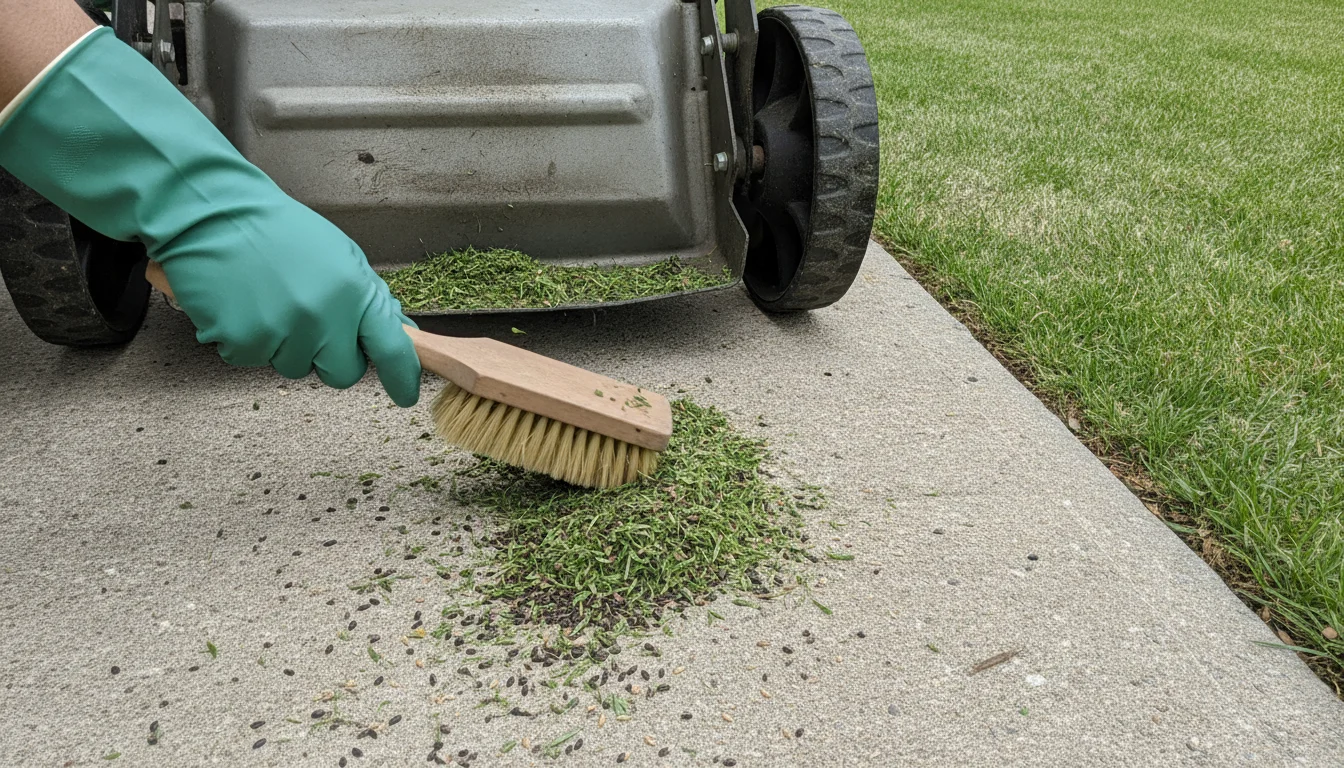
Mow before seedheads ripen, and check for low ones: UC IPM says they lie almost flat, dodge the blade and spring back up. Clean the mower deck after cutting an infested patch. Look over new sod before you accept delivery, and don’t patch bare spots with soil from an infested area. UC IPM also suggests going easy on spring aeration in an infested lawn: the holes give seedlings somewhere to start.
7. Grow a thick lawn
Mowing doesn’t remove dallisgrass. A dense lawn keeps new seedlings out. Mow at the right height for your grass, and water and feed it on a steady schedule. Skip the big soak with long gaps in between, and fix soggy spots (University of Maryland). And fill bare patches with seed, plugs or sod, because open soil is where the seed takes hold. For the wider routine, see weeds in your lawn.
When to call a professional
If dallisgrass covers much of the lawn, UC IPM says a full renovation is often faster and cheaper than fighting it clump by clump, and UT calls it the best option when the pressure is that high. That means killing the lot and starting over, and a lawn care company can do it.
Call one too if your lawn needs a product sold only to licensed applicators where you live. They can run the whole fall-to-spring program.
Frequently asked questions
What kills dallisgrass and not the lawn?
A selective herbicide labeled for your grass type, sprayed in fall and repeated. In bermudagrass and zoysia that’s a product like Tribute Total. In St. Augustine and centipede, Celsius. In tall fescue, fluazifop (Ornamec). Glyphosate kills the lawn too.
What is dallisgrass, and is it the same as “Dallas grass”?
The same weed, misspelled. Dallisgrass (Paspalum dilatatum) is a South American perennial brought to the US as forage in the late 1800s. It’s now a lawn weed across the South.
Can I still buy MSMA for dallisgrass?
Not for your lawn. EPA canceled residential lawn use at the end of 2009. Texas A&M and UT both say it’s now prohibited on lawns. The uses they still list are golf courses, sod farms and highway rights-of-way, all under restrictions.
Why does dallisgrass keep coming back?
Rhizomes left behind after digging. One spray where three were needed. Or old seed in the soil, sprouting wherever the lawn is thin.
Can I get rid of dallisgrass naturally?
On a small scale, yes. Dig out young clumps with all their rhizomes, or solarize a patch in summer. Neither clears a badly infested lawn quickly.