Table of Contents
The first thing to know about how to get rid of mothball smell: it doesn’t linger. It’s being made, right now, by a mothball you haven’t found yet. That’s why the vinegar bowls and the scented candles never quite win: they’re mopping up air while something in the attic, the crawl space or the back of a closet keeps topping it up.
So this goes in a strict order. Find and remove every piece of the source first. Then flush the air, then deal with the clothes and the rooms, and only then decide what’s too far gone to save. Skip step one and you’ll be doing the rest of the list for months.
Why the smell won’t go away
Mothballs, moth flakes, crystals and cakes are a pesticide in solid form. Today’s are almost 100% active ingredient, either naphthalene or paradichlorobenzene, and both turn slowly from solid straight into gas at room temperature, according to the National Pesticide Information Center (NPIC). How fast depends on how many there are, how much air moves around them and how warm it is.
That gas soaks into drywall, carpet, furniture and clothes. NPIC puts it bluntly: if you can smell mothballs, you’re breathing the pesticide.
No mothballs anywhere? Paradichlorobenzene is also the main ingredient in some toilet and urinal deodorizer blocks, and a dry drain trap or a neighbor’s mothballs can produce a similar smell.
1. Find and bag every last mothball
This is the method. Everything else is cleanup.
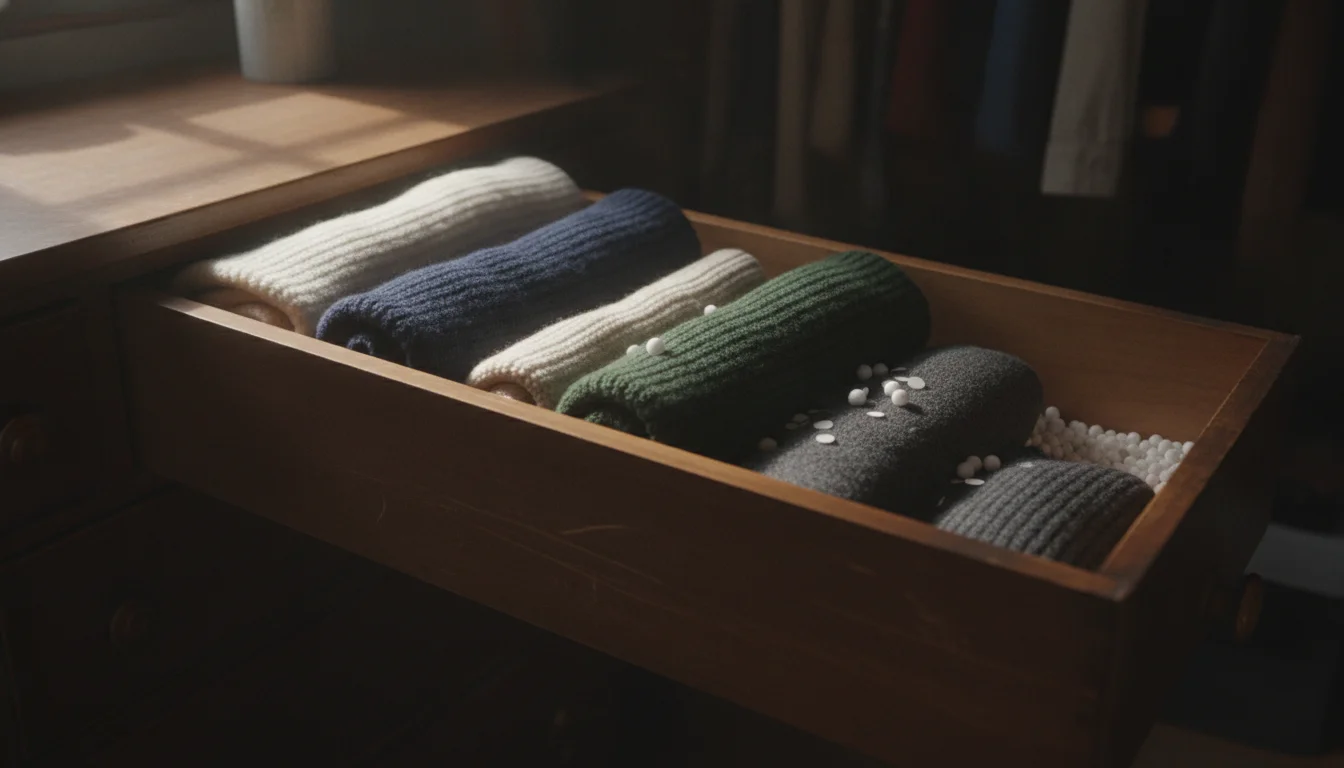
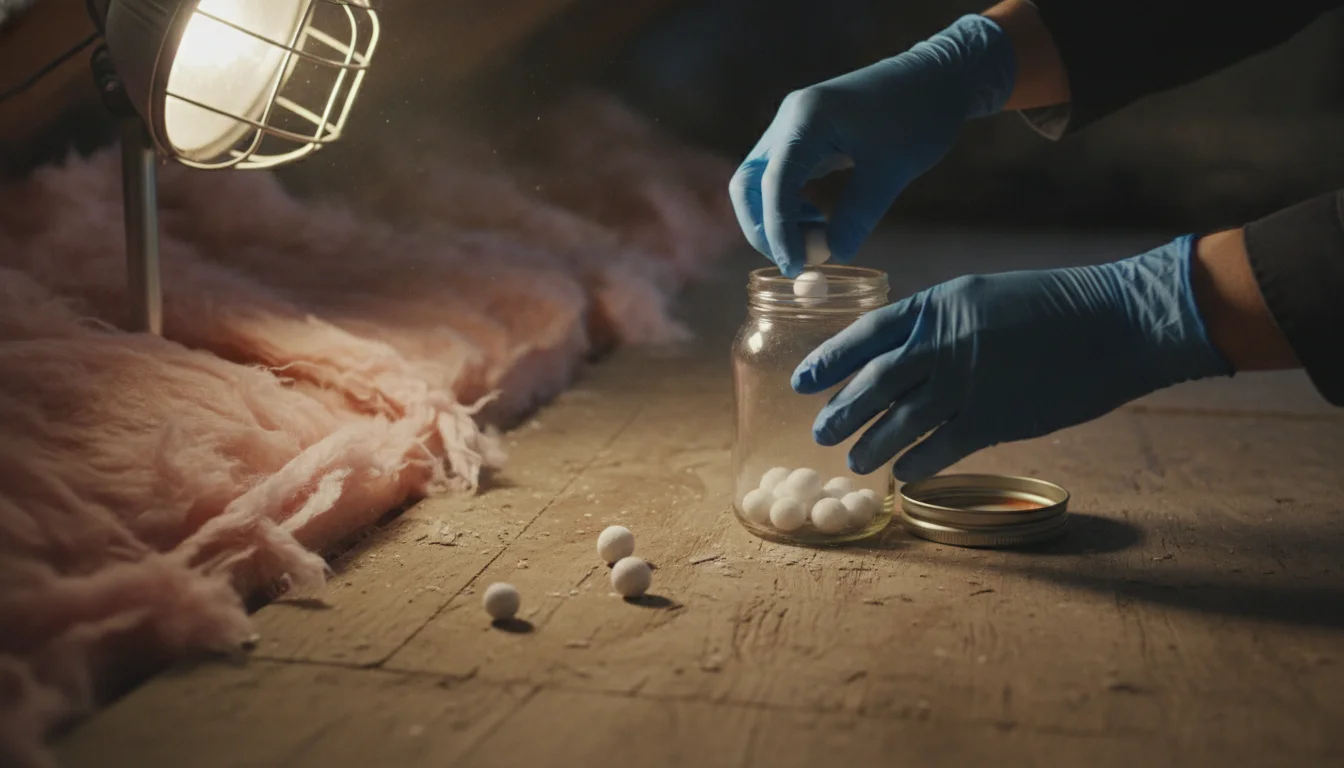
Put on gloves (the labels say to keep them off your skin) and search every closet, drawer, chest and garment bag. Then search where people throw them to scare off rats, snakes, squirrels and possums: the attic, crawl space, basement, under the house or shed, near air returns, and in the car. A previous owner or a landlord is the usual culprit. Follow your nose; the smell is strongest close to the source.
Find a package? Read the active ingredient. It tells you which chemical you’ve got, plus the label’s own disposal and first aid directions.
Bag them properly. Mothball labels warn against garbage bags and dry cleaning bags because the vapor escapes through them, and one paradichlorobenzene label allows only polyethylene or polypropylene containers because the chemical damages some plastics. A glass jar with a tight lid works. Take it to a household hazardous waste drop-off. Don’t bin it, don’t flush it.
2. Open the windows and push the air out
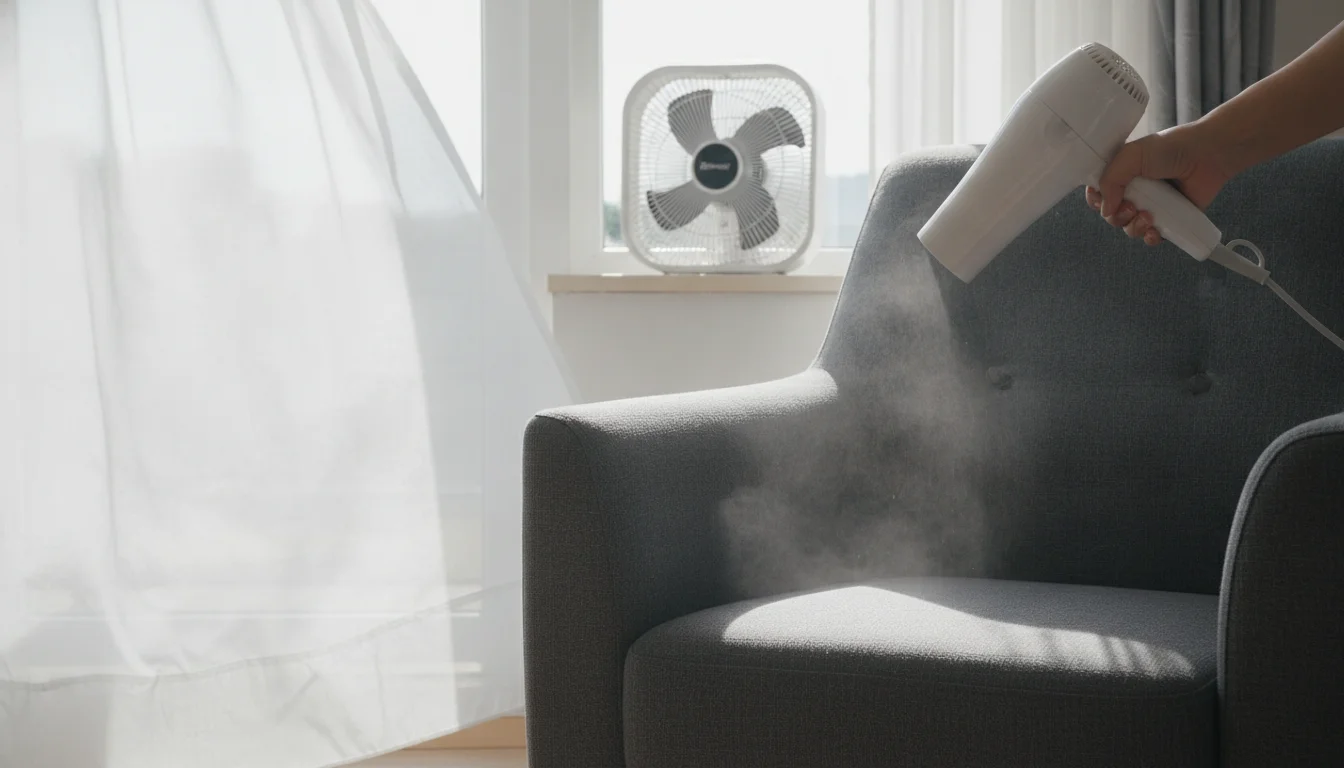
Once the source is gone, ventilation does most of the work. Open windows on opposite sides of the house and run fans. One trick from people who’ve done this: set a box fan in an open window facing out, so it pulls the smelly air out instead of blowing fresh air around the room.
NPIC’s advice to one family whose house filled with mothball fumes was to open the doors and windows, use a fan, and leave the house while it aired. That’s a good plan if anyone’s feeling queasy.
3. Turn up the heat while you air out
Absorbed odor comes back out of walls and furniture faster when they’re warm. InspectApedia, a building inspection reference, recommends warm temperatures plus plenty of fresh air together, before anyone starts tearing out carpet. Heat without ventilation just concentrates the smell. One condo owner learned that the hard way when the neighbors upstairs scattered mothballs, sealed the place up with the air conditioning off for a Florida summer, and left.
For a single chair or wooden dresser, air it first, then go over it with a hair dryer on low or medium. A University of Georgia Extension tip for wood furniture follows that with bowls of baking soda, activated charcoal or white vinegar set around the piece.
4. Hang stored things outside
Blankets, coats and anything that came out of a mothballed trunk should go on a line outdoors before you decide they need washing. Fresh air does a lot here, and the label on one brand of paradichlorobenzene mothballs claims the odor “quickly vanishes when articles are aired.”
Don’t count on that for something that sat in a mothballed trunk for years, though. If it still smells after a day or two outside, wash it.
5. Wash the fabrics, and smell before you dry
For clothes, Bob Vila’s method is to soak them in equal parts water and white vinegar, or run a wash with vinegar only, then a normal wash with detergent. For curtains, throws and bedding, add 1 cup (240 ml) of white vinegar to the rinse cycle, the same routine that gets smoke smell out of clothes. Anything you can’t wash goes to the dry cleaner.
Then the part that matters: smell the load before it goes in the dryer. Bob Vila warns that dryer heat can set any mothball smell that’s left. InspectApedia says the opposite for some washables, that a medium-heat dryer run alone can be enough. Both can be true. If the clothes smell clean wet, dry them however you like. If they don’t, wash again.
6. Baking soda on the carpet
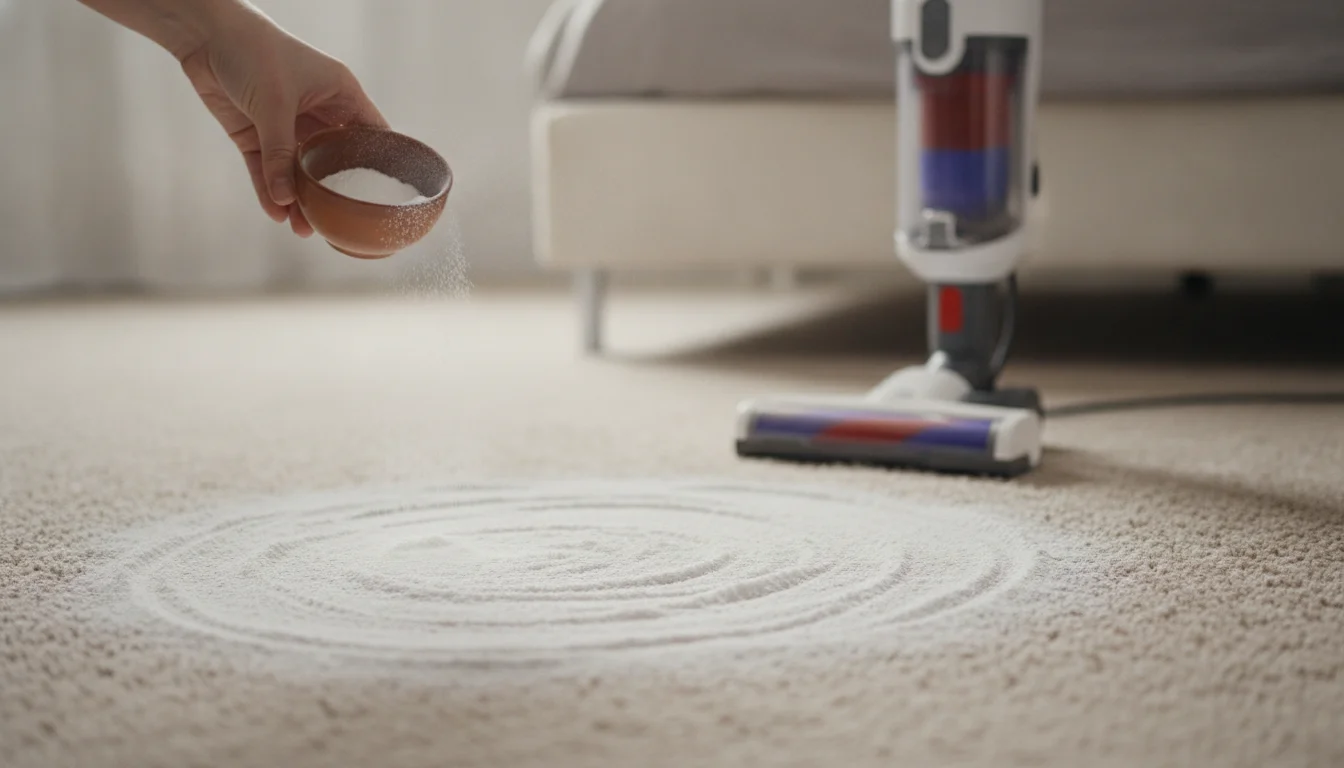
Sprinkle baking soda generously over carpet and fabric upholstery, leave it for six to seven hours, then vacuum it up. That’s the timing from a cleaning expert quoted by Apartment Therapy, and it’s longer than most people bother with.
7. Wipe the hard surfaces with vinegar
Mix equal parts white vinegar and warm water and wipe down walls, baseboards, shelves and the inside of closets and drawers. Or put it in a spray bottle, mist, and let the room air out. The vinegar smell takes over for a while, then clears once you open a window.
8. Change the furnace filter
If mothballs were in the attic or near an air return, your heating and cooling system has been carrying the vapor into every room. One renter’s landlord put mothballs in the attic; a week later the smell was still pouring through the vents and clinging to their clothes.
Change the filter after the source is gone and before you run the system again, and check the returns and ductwork for mothballs someone tucked in there. A new filter cleans the air, not the ducts. If the smell blasts out every time the system starts, the ductwork needs a professional cleaning.
9. Set out activated charcoal for closets and drawers
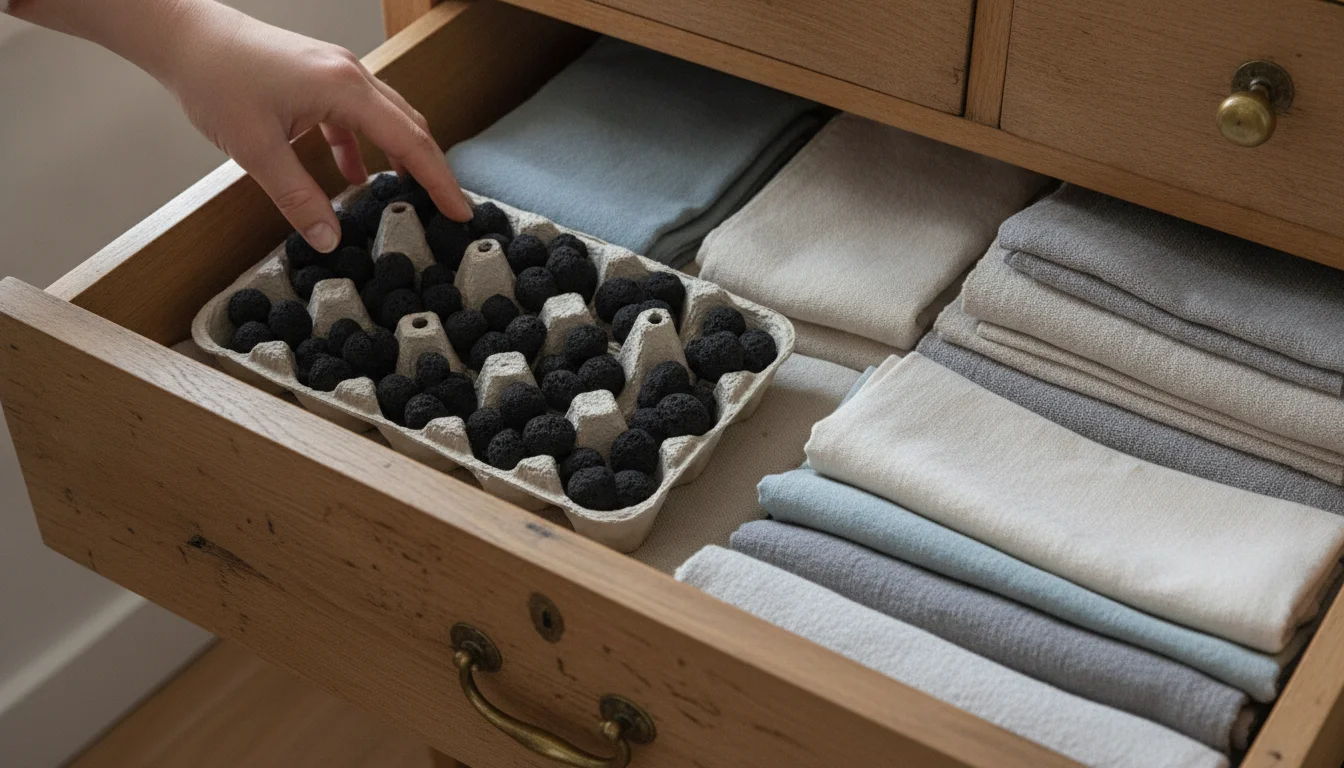
Charcoal works best in small, closed spaces. One reader on InspectApedia put charcoal in an egg carton in their drawers for a week and said it absorbed the smell, for about $10. Another family selling a grandmother’s place left charcoal pellets in a small closet for a few weeks, swapping them out as they went. Pet stores often sell the pellets.
For a whole house, skip it. InspectApedia thinks charcoal and portable air purifiers move too little air to matter outside a very small space, and it does nothing to the source.
10. Get rid of what won’t come back
Some things soak up so much that no cleaning reaches it. Carpet and especially carpet padding, attic insulation, upholstered furniture, mattresses and pillows can keep releasing mothball smell into rooms you’ve already cleaned.
The test is simple. Clean it properly, let it dry, and smell it. If the smell is still there, that item is now a source, and replacing it is the fix. Bag it before you carry it through the house.
11. Seal what you can’t replace
For drywall, wood shelves and closet interiors that still smell after cleaning, seal them, the same last resort that works on cigarette smoke smell. A shellac-based primer such as Zinsser B-I-N blocks the odor from coming back out of porous surfaces; then paint over it. Prime the whole affected area, not just the worst spots, and ventilate well, since shellac primer has strong fumes of its own. One coat does most surfaces.
Keep it from coming back
Use mothballs only as the label says: inside closed, airtight containers such as trunks and garment bags, never loose in a closet, attic, crawl space or yard. They don’t work as animal repellents anyway. Better still, wash clothes before storing them and keep them in sealed containers, which keeps moths in the closet out without the smell.
When to call a professional
Call someone in when mothballs were dumped inside a wall or ceiling cavity you can’t reach; that means opening, cleaning and resealing the cavity. Same if the smell is still strong after every piece is gone and you’ve aired the place for weeks, or if it comes back every time the heating runs. If the source is a neighbor’s unit, the building manager is your professional.
And don’t buy or rent an ozone generator for this. InspectApedia warns that ozone used wrongly can create new odors that are worse than the one you started with.
How to get rid of mothball smell: FAQ
How long does mothball smell last?
There’s no fixed answer. It depends on how much was used, how much air moves and how warm it is. One InspectApedia reader who overdid it in a cabin crawl space said it took several months to clear most of the smell. It won’t start fading until the last piece is gone.
Is mothball smell harmful?
NPIC says that if you can smell mothballs, you’re breathing the pesticide, and lists headaches, nausea, vomiting, diarrhea, eye and nose irritation and coughing among the effects of exposure. If someone has symptoms or swallowed a mothball, call Poison Control at 1-800-222-1222. For a pet, call your vet, the ASPCA Animal Poison Control Center (888-426-4435) or the Pet Poison Helpline (855-764-7661); both may charge a fee.
Why does my house smell like mothballs when I don’t use them?
Usually a previous owner, landlord or neighbor did. Check the attic, crawl space and air returns. If you still find nothing, look for toilet deodorizer blocks and dry drain traps (run water into rarely used drains, as in our guide to drain smell).
Do air purifiers get rid of mothball smell?
Not much, outside a small closed room. They clean some of the air but leave the source untouched.