Table of Contents
You’ve killed a few hundred tiny flies and they keep coming back. Knowing how to get rid of phorid flies starts here: the fly isn’t the problem. Somewhere in the house, or under it, a patch of wet, rotting organic matter is breeding them, and phorid flies need less of it than any other small fly. One commenter on r/pestcontrol calls them the hardest small fly to source, because all they need is wet organic material. Not fruit, not soil, not standing water. Just gunk.
So this is mostly a search. Traps and tape tell you where to look, and cleaning removes what you find. If nothing in the house turns up, the problem may be a broken pipe under the concrete.
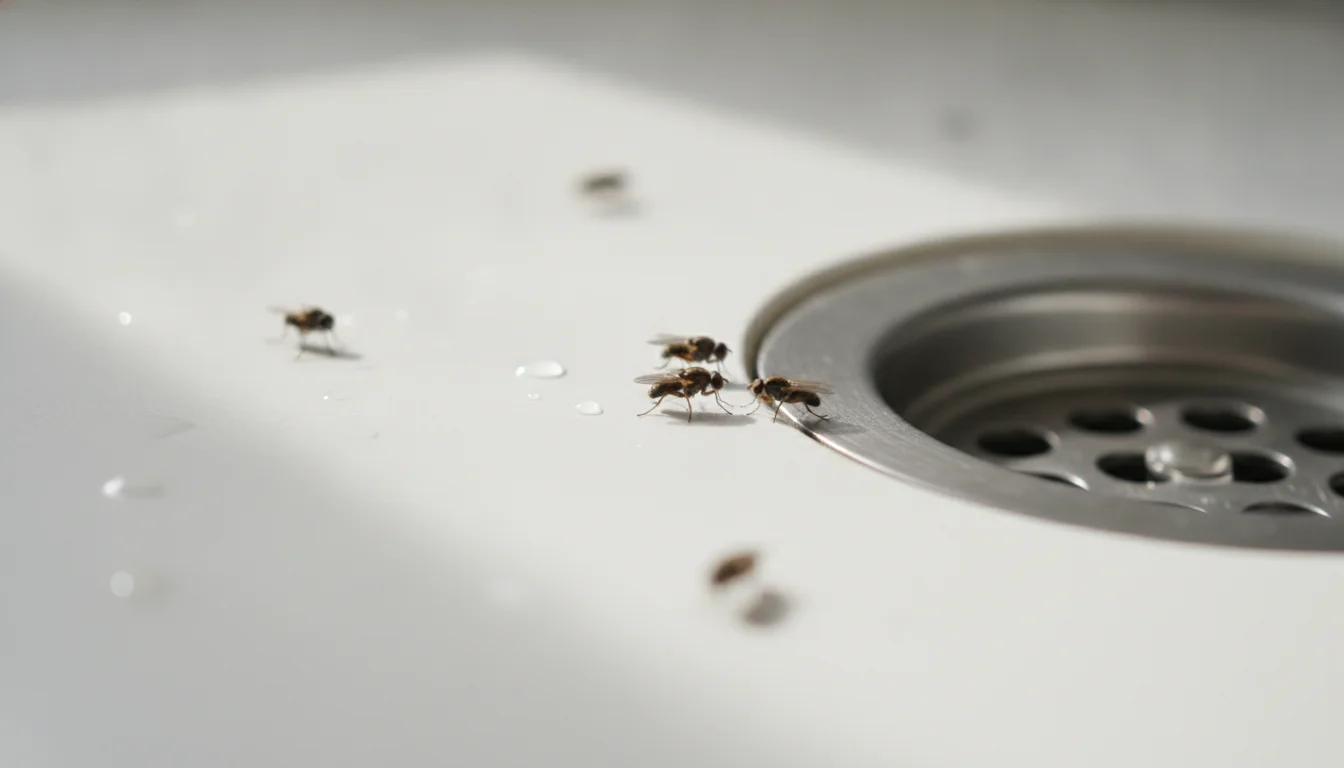
First, make sure it’s a phorid. Look for a small (about 1/8 in, or 3 mm) brown or tan fly with dark eyes and a humped back. And watch how it moves: it runs across counters and walls in short, jerky bursts instead of flying off. That habit is why they’re also called scuttle flies.
Why phorid flies keep coming back
Phorid larvae live in moist, decaying plant or animal matter: drain film, trash can sludge, a forgotten bag of potatoes, pet waste, a fridge drip pan, a slow leak, a vase of dead flowers, a dead mouse in a wall. Mississippi State’s extension entomologist puts it bluntly: if you’re finding phorids inside, they’re almost surely breeding inside.
They also breed fast. A single female can lay over 700 eggs in her lifetime, and egg to adult can take about 10 days in warm conditions. Kill the adults without removing the source and a fresh batch replaces them within days.
The hard case is under the floor. When a drain or sewer line breaks below a slab or crawl space, waste soaks the soil and phorids can breed there entirely out of sight. The adults come up through cracks and open expansion joints, and the University of Maryland Extension notes that extremely large numbers on a first floor can point to exactly this. That’s why spraying “works” for a week or two, then fails.
1. Sticky traps
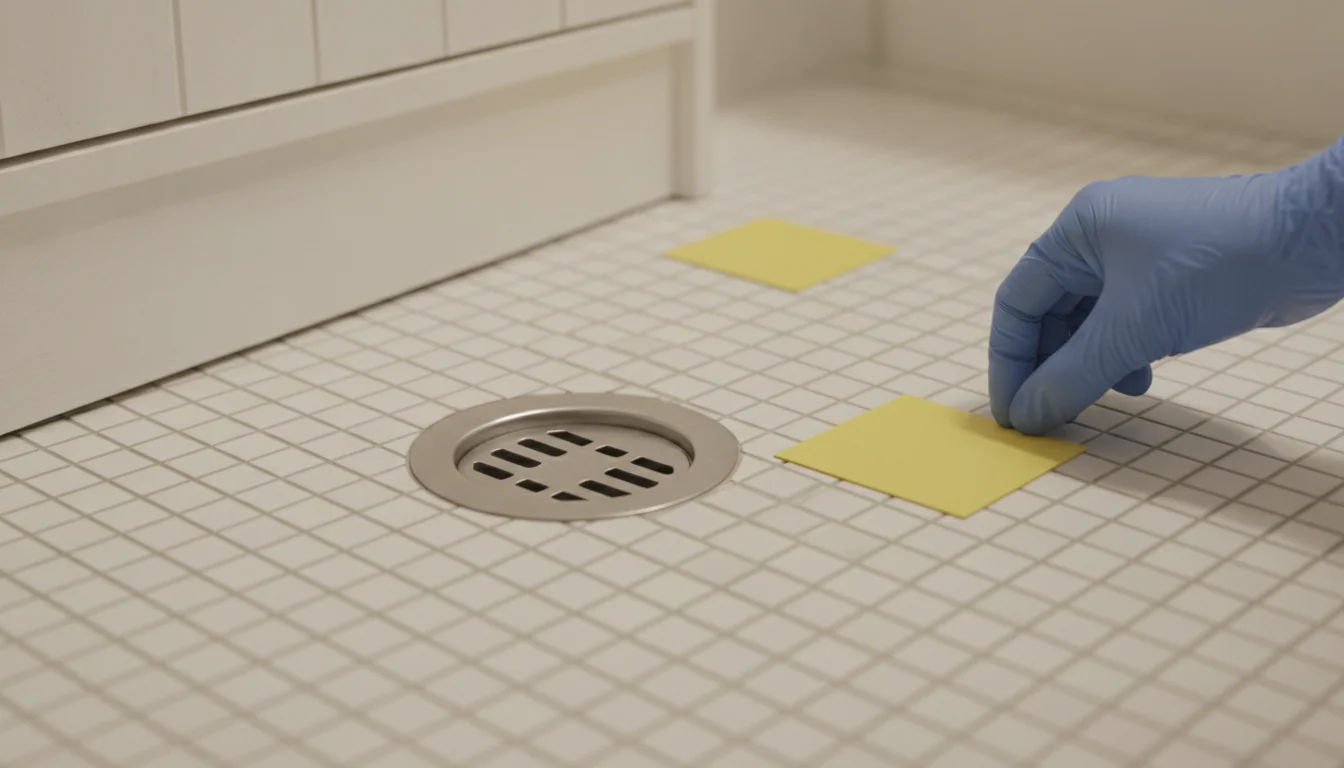
Start by mapping, not killing. Put sticky traps in every room where you see flies (near drains, the trash can, the fridge, windows and damp corners) and leave them a few days. Then compare. The trap that fills fastest is your search area.
Catching adults isn’t progress. One Reddit poster trapped 31 flies in 4 days after deep-cleaning the whole home. Fewer flies, same source.
2. Find and remove the breeding source
This is where most infestations actually end. Search the area your traps flagged, and search it properly: under and behind appliances, the bottom of the trash can (under the liner too), pantry corners where produce rolls, recycling, litter boxes and pet bowls, potted plants, the garbage disposal.
Real answers are rarely obvious. A basement trash can full of old fridge clean-out waste that “somehow didn’t smell.” An open jar of grease under the kitchen sink. A diaper pail forgotten for a few weeks after potty training. One household bought a whole new fridge, convinced it was the source, and the flies were back two weeks later.
When you find it, throw it out or clean it completely. Half-cleaning a breeding site leaves larvae behind.
3. Clean the drip pan
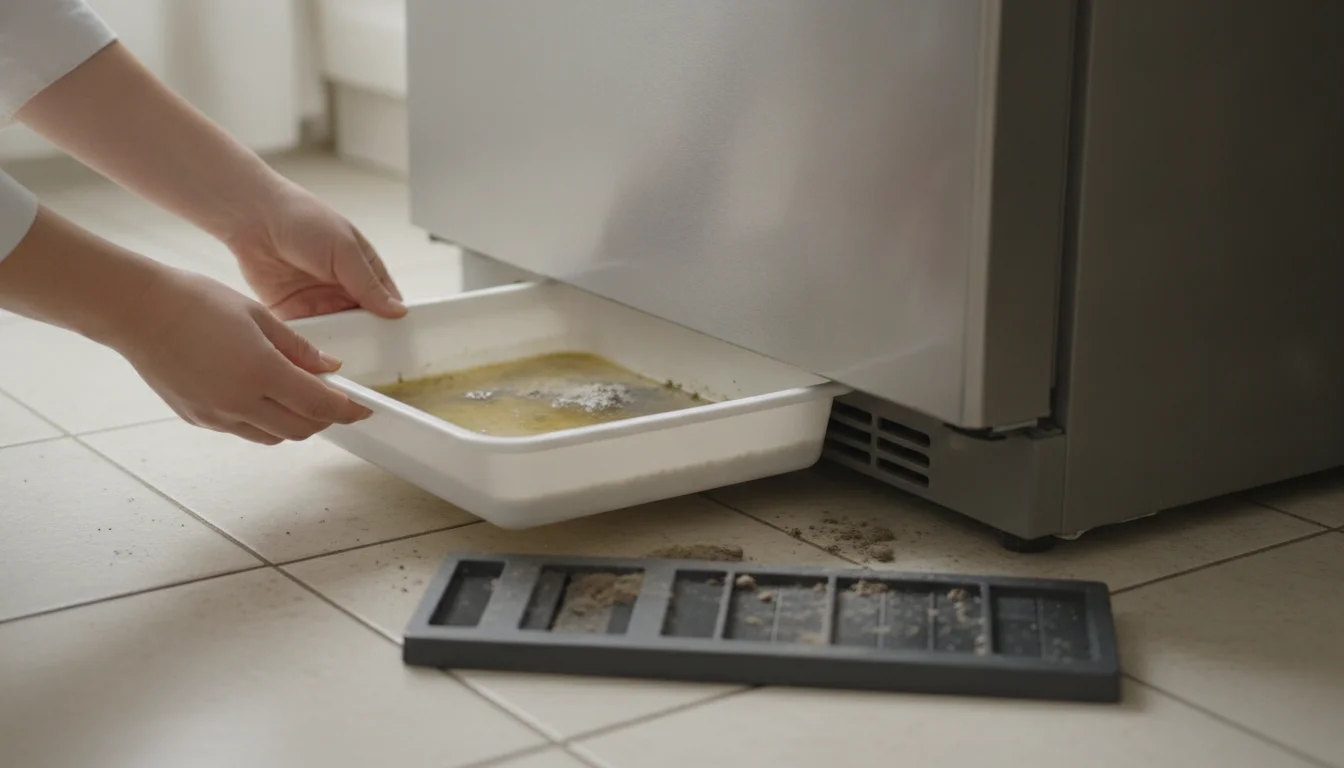
The shallow pan under your refrigerator collects condensation, dust and spills, and it’s a classic phorid breeding site because nobody ever looks at it (it’s behind plenty of bad fridge smells too). Pull off the front grille, slide the pan out, empty it and scrub it with hot soapy water. Do the same for the condensation pans on air conditioners and dehumidifiers.
4. Fix leaks and dry out wet spots
Larvae only survive in matter that stays moist. Check under sinks, around toilet bases, behind the dishwasher and washing machine. Feel for damp cabinet floors and soggy sponges, not just puddles. Fix the leak. What comes next depends on what leaked.
If it was clean water, such as a supply line, the fridge’s water line or AC condensate, dry the area within a day or two. Drywall can dry in place if it hasn’t swollen and the seams are intact. Swollen drywall, and insulation that can’t be dried and cleaned, has to be cut out and replaced.
If it was a drain, a toilet or a sewer line, treat the water as possibly carrying sewage. Don’t dry it out yourself and don’t point fans at it. Call an experienced water-damage or remediation professional, who works with protective gear and containment.
5. Tape your drains
Before you treat any drain, find out which ones are actually producing flies. Lay strips of tape sticky side down over each drain opening (sinks, tubs, showers, floor drains, and that guest bathroom nobody uses), or turn a clear bowl upside down over it. Don’t seal it airtight. Check after a day or two. Flies stuck on the tape or under the bowl mean that drain is a breeding site.
No flies on any drain is useful too. It sends you back to step 2, or forward to step 8.
6. Scrub the drain film out
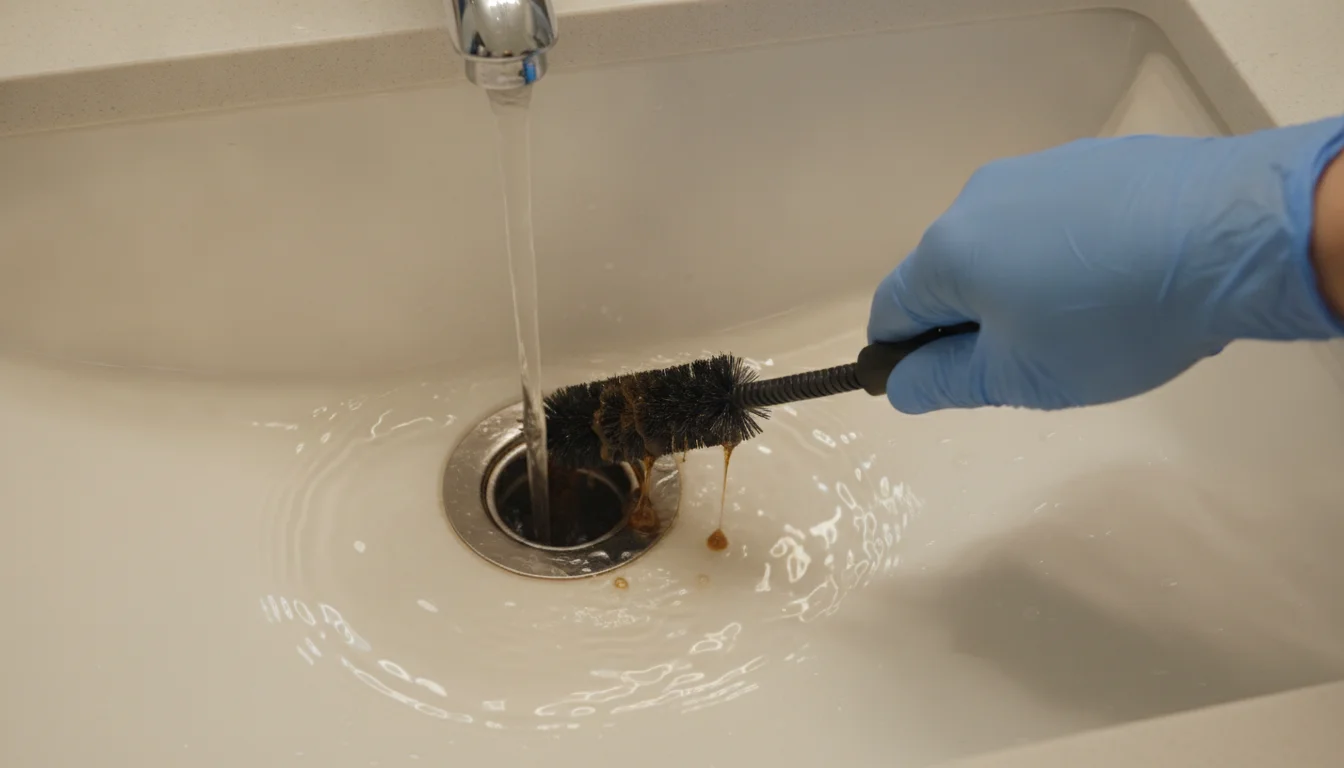
The larvae live in the slimy film lining the pipe, and you have to physically remove it. Run warm water to soften it, then work a stiff drain brush or a drain snake up and down the pipe walls. It’s gross. That’s how you know it’s working.
Don’t bother with bleach or boiling water. Purdue Extension says bleach and hot water will not eliminate breeding sites in drains. NC State Extension says bleach won’t kill the larvae, and it warns against pouring bleach down drains at all, since it can react with other chemicals in the line. A pest company told one Reddit reader to do exactly that.
7. Follow up with an enzyme drain cleaner
After brushing, use an enzyme or microbial drain cleaner to digest what the brush missed. Foam is the form extension guides prefer. Follow the label for contact time and repeat until the tape test from step 5 stays clean.
8. Tape the floor cracks
If the drains test clean and flies still keep showing up on the ground floor, check whether they’re coming up through the floor itself. The Los Angeles County public health guide describes the test: lay strips of masking tape over cracks in the slab and expansion joints, leaving small gaps between the strips so air moves through. Flies coming up from below get stuck.
The stronger version: tape over most of the crack, leave one short opening, and put an upturned clear glass bowl over that opening. If breeding is happening below, flies show up under the bowl.
Flies on the crack tape and none on the drain tape point under the slab.
9. Have a plumber test the drain lines
When everything above comes up empty, or step 8 comes up positive, call a plumber. There are three ways to find a break without tearing up the floor first. A smoke test blows harmless smoke into the drain system, and it often escapes through the same cracks and expansion joints the flies use. A camera inspection feeds a small camera through the pipes and shows the break itself. A leak test fills the lines with water and watches which section loses it.
One catch: a camera can’t reach every small pipe under a slab, so a clean camera run doesn’t fully rule out a leak. If the flies persist, ask about adding a smoke test.
Prevention
Clean drains, the disposal and the trash can on a schedule, not when flies appear. Keep produce in the fridge or in sight. Empty litter boxes daily. Let potted plant soil dry between waterings (overwatering feeds fungus gnats too). Check the fridge drip pan every few months. And fix leaks the week you notice them.
When to call a professional
Call a plumber if you’ve done steps 1 through 7, the flies are steady and heavy on the lowest floor, and you can’t find a source. Call a pest professional if you can’t identify the fly or find where it’s breeding. A good one searches for the source rather than just spraying.
If the plumber does find a broken line under the slab, know what you’re in for. Replacing the pipe is only half the job. The sewage-soaked soil has to be dug out and replaced, or the flies keep breeding in what’s left. On a slab that means opening the floor, and it’s expensive and disruptive. Drilling the slab and injecting insecticide into the soil rarely works, and if the soil has to come out later anyway, the treated soil can be harder to dispose of.
Frequently asked questions
How do I tell phorid flies from fruit flies, drain flies and fungus gnats?
Fruit flies have red eyes. Phorids have dark eyes and a humped back. Drain flies are fuzzy and look like tiny moths. Fungus gnats are slender and long-legged, with long antennae, and hang around potted plants. Phorids are the ones that run instead of fly.
How do you catch phorid flies?
Sticky traps near where they gather, and tape over drains and floor cracks. Traps show where activity is heaviest, but won’t end an infestation alone.
Which drain cleaner kills phorid flies?
None does it alone. Brush the film out first, then use an enzyme or microbial cleaner, foam if you can get it. Bleach doesn’t work.
Do phorid flies bite?
No. They’re a nuisance and a hygiene problem, since they breed in filth and can carry bacteria onto food and counters, but they don’t bite people or pets.
How long until they’re gone once I remove the source?
Expect a lag of a week or two while eggs and larvae already laid finish developing. If they’re still coming after that, there’s another source.