Table of Contents
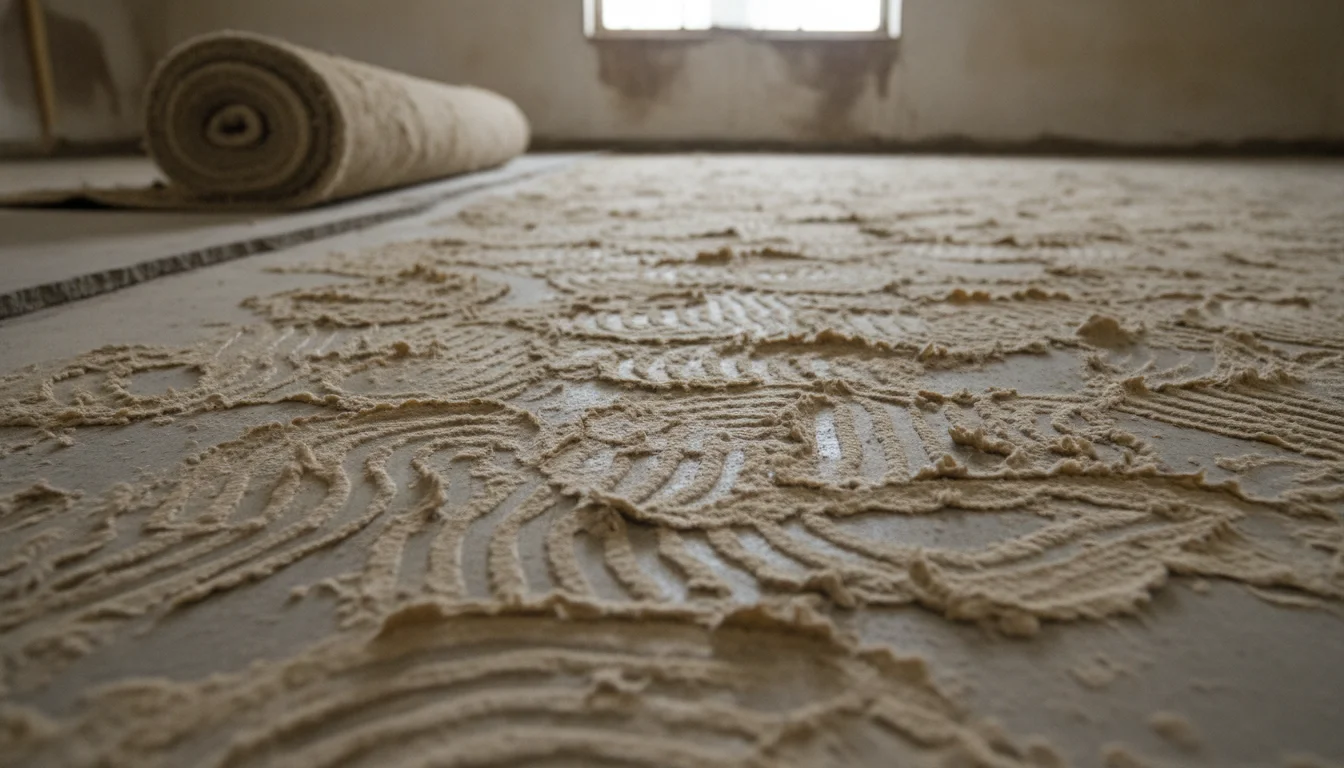
Pull up old carpet and you’ll usually find one of two things underneath. Yellowish or tan glue that goes soft when you wet it, which is a messy afternoon with a bucket and a scraper. Or a thick black layer stuck fast to the concrete, which is the one to leave alone until it’s been tested. Some older floor adhesives contain asbestos, and the US EPA says you generally can’t tell by looking. Plenty of popular guides skip that and go straight to sanders and angle grinders. Don’t. Grinding untested glue turns a stuck-down material into dust. Here’s how to get rid of carpet adhesive from floor concrete or wood, starting with that test.
After that, match the method to the glue and the subfloor, and clean off any remover, or the next floor’s glue won’t grip.
1. Get old or black adhesive tested before you touch it
Step zero. The Resilient Floor Covering Institute (RFCI), the flooring makers’ trade body, says to presume a floor adhesive contains asbestos unless you’re certain it doesn’t, and notes that some black asphaltic “cutback” adhesives did. EPA lists floor tile adhesives among the materials that may contain it.
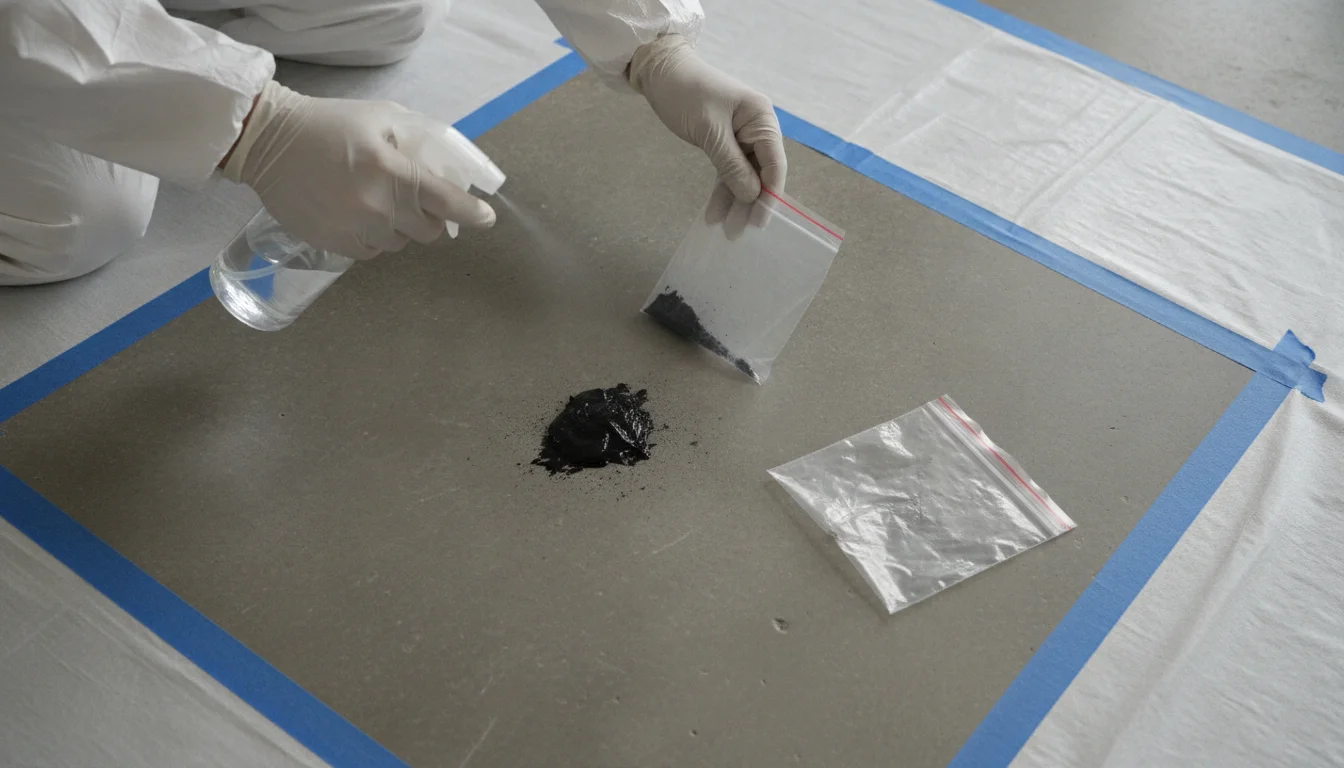
Don’t take the sample yourself. EPA doesn’t recommend it, because a badly taken sample can release more fibers than leaving the stuff alone. Have a trained, accredited professional take it and send it to a lab.
An older house raises the odds, but EPA notes that buildings put up after 1975 can contain asbestos too. So the age of the house is a reason to test, never a reason to skip it. And black isn’t proof either way. Only the lab result is.
2. Lay the new floor over it
You don’t always have to get it up. If the new floor is a floating one, such as laminate, it can usually go straight over thin, well-stuck residue. Bosch says laminate and parquet can go directly over adhesive residue. EPA’s own advice for asbestos flooring is to install the new floor covering over it, if possible, and RFCI calls removal “the final alternative.”
What matters is a flat base. Don’t scrape untested or positive adhesive: skim ridges and fill hollows with leveling compound and the primer its maker specifies, or call a trained asbestos professional if it’s too uneven to cover. Only tested-negative adhesive gets its loose lumps wet-scraped off, never sanded.
One catch for glue-down floors: RFCI doesn’t recommend painting an asbestos encapsulant over old cutback first, because it can stop the new adhesive bonding. Ask the new floor’s maker what it needs underneath.
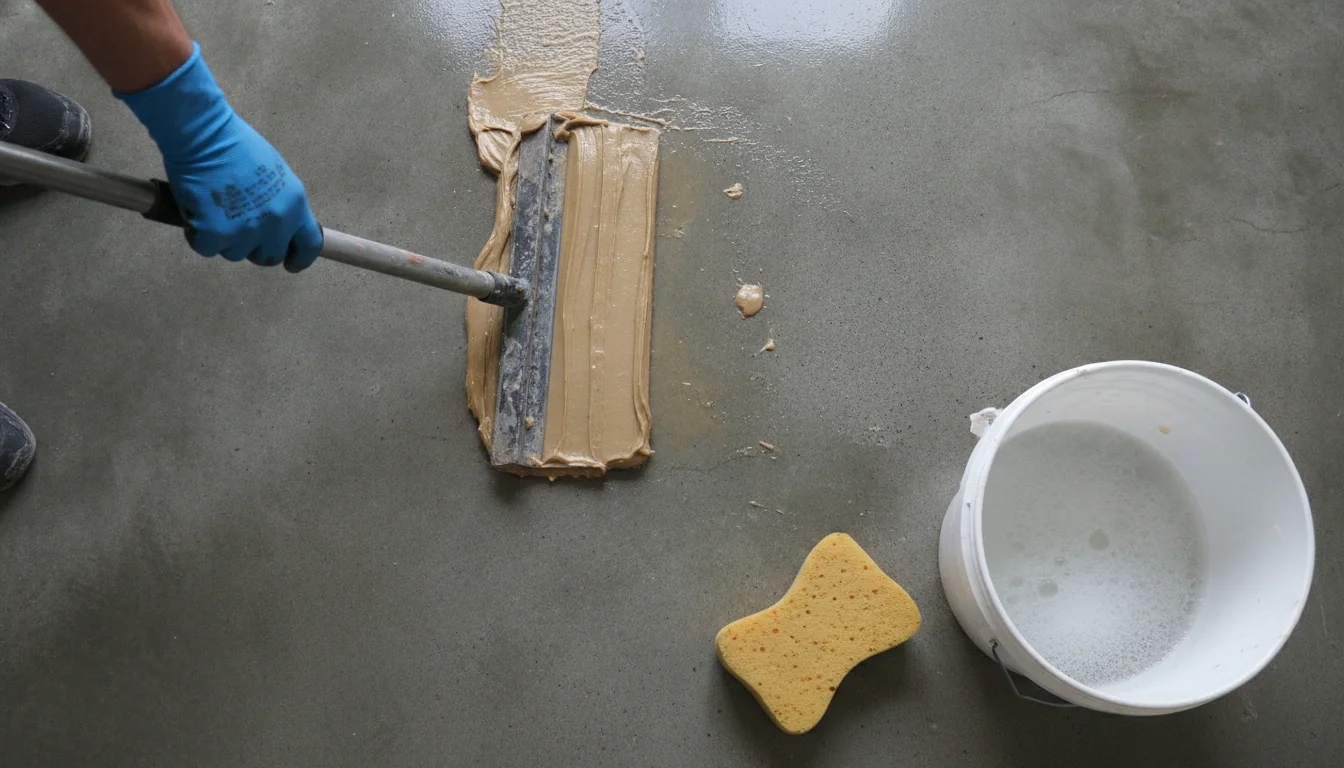
3. Soapy water and a floor scraper
The cheap one, for glue tested free of asbestos. Bosch notes modern carpet fittings use water-soluble glue, and RFCI says latex adhesives come off by wetting the residue until it softens, then scraping.
Squeeze dish soap into a bucket of warm water, wet a section and keep it wet. Bosch suggests about an hour of soaking for water-soluble glue. Then push a stiff floor scraper under it. Small sections, because the glue hardens again as it dries.
On concrete you can go hotter. Bob Vila suggests boiling water left 5 to 10 minutes. One basement renovator on Reddit found boiling water beat everything else they tried: messy and tedious, but essentially free. Wear waterproof boots.
On a plywood or board subfloor, don’t do that. RFCI warns that too much water can damage wood subfloors. Dampen with a sponge, scrape and towel it up as you go.
If a wet test patch stays hard, it’s not water-based glue. Move down the list.
4. Heat it with a steamer or heat gun
Heat softens glue that water won’t. A wallpaper steamer or heat gun warms a patch, then a scraper lifts it while it’s still soft.
It’s slow. One Reddit renovator held a wallpaper steamer on each spot for about 15 seconds before scraping, and their “30 minute job took 8.5+ hours.” A hair dryer suits a strip of carpet tape, not a room.
Keep a heat gun moving, and only use heat on adhesive that’s been tested free of asbestos.
5. Floor adhesive remover under plastic
For stubborn glue on concrete that’s tested free of asbestos. Use a remover sold for floor adhesive or mastic, pour it on, spread it, and cover it with plastic sheeting so it doesn’t dry out while it works. The DIY Nuts used a floor adhesive remover under a plastic garbage bag for 1 to 3 hours on a basement bathroom floor. A Reddit user left a mastic remover under cling film for 24 hours on concrete steps, and some spots still needed more than one coat.
Then scrape. Ventilate, wear gloves and eye protection, and follow the label, including its disposal directions for leftover remover and soaked rags. Check your local household hazardous waste rules too, as with old thinner and paint stripper.
6. Wet-scrub concrete with a floor machine
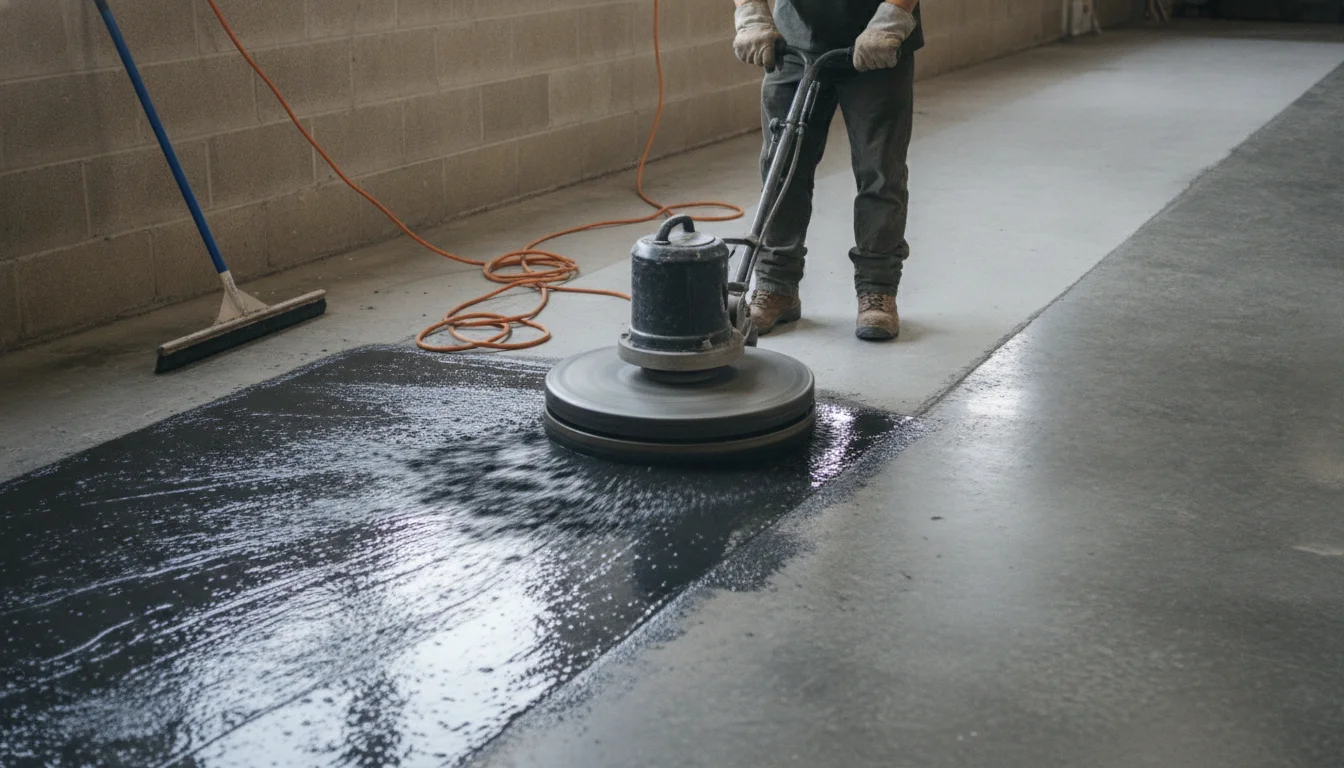
For a big concrete floor where the glue has tested negative, rent a rotary floor machine. RFCI’s procedure for removing black cutback is entirely wet. Start in the corner farthest from the door. Spray or mop a removal solution over a section and let it soak 5 to 10 minutes. Run the machine with a black stripping pad, keeping the floor wet the whole time. Squeegee the slurry aside to check progress, and do the edges by hand with a cut piece of pad.
Plug the machine into a GFCI outlet: it’s electrics on a wet floor.
Laying new tile with an asphaltic adhesive over cutback that’s tested negative? RFCI says you don’t need it all off. Wet-scrape with 1 oz of dish soap per gallon (30 ml per 3.8 L) of water down to a thin, smooth film.
7. Clean off the remover before the new floor goes down
RFCI warns that solvent removers can leave a residue in the subfloor that affects the new adhesive or floor covering, and the new floor’s warranty won’t cover it.
Wash the floor with hot soapy water and a scouring sponge, wet-vac the dirty water and repeat until it no longer feels oily or tacky. Let it dry fully. For a glue-down floor, read the maker’s subfloor requirements and do any moisture or pH tests it asks for. If a basement slab keeps testing damp, sort out the damp basement first.
When to call a pro
Call an accredited asbestos professional if a lab test comes back positive, or if you have black or old adhesive you won’t test and still want removed. EPA recommends removal and major repair be done by people trained and qualified in handling asbestos, and some states and localities require it. Your state agency keeps the list of accredited firms.
FAQ
Will Dawn dish soap remove carpet adhesive?
On water-based glue, yes. Dish soap in warm water helps the water soak in so the glue softens, and RFCI uses a dish soap solution in its own wet-scraping method. It won’t touch glue that water doesn’t soften.
Does a citrus adhesive remover work on carpet glue?
Goo Gone and other citrus removers can, on a small patch. For a whole floor, a remover made for floor adhesive is the better buy. Either way, wash off the residue before new flooring.
Does WD-40 remove carpet glue?
It’s an oily penetrant that loosens sticky residue, so it can help with a small spot. It leaves an oily film, though, and on a floor that’s getting new glue-down flooring that film has to come off.
How do I remove sticky carpet tape from a floor?
Warm it with a hair dryer until it softens, then scrape or peel it while it’s warm. The rest is ordinary tape residue: an adhesive remover, then soapy water.