Table of Contents
Dry erase ink is built to let go of one thing: a slick, intact whiteboard. Everywhere else it acts like any other marker. It contains alcohol, though, so knowing how to get rid of dry erase marker stains mostly means knowing how much alcohol each surface can take.
The catch is the surface. In two cases the stain isn’t really ink at all: a board that keeps showing old writing has a worn coating, and a flat-painted wall you scrubbed now has a shiny patch. Neither cleans off.
Find your surface below (whiteboard, then walls, then fabric). Each one says what not to use on it.
1. Write over old whiteboard marks with a fresh marker
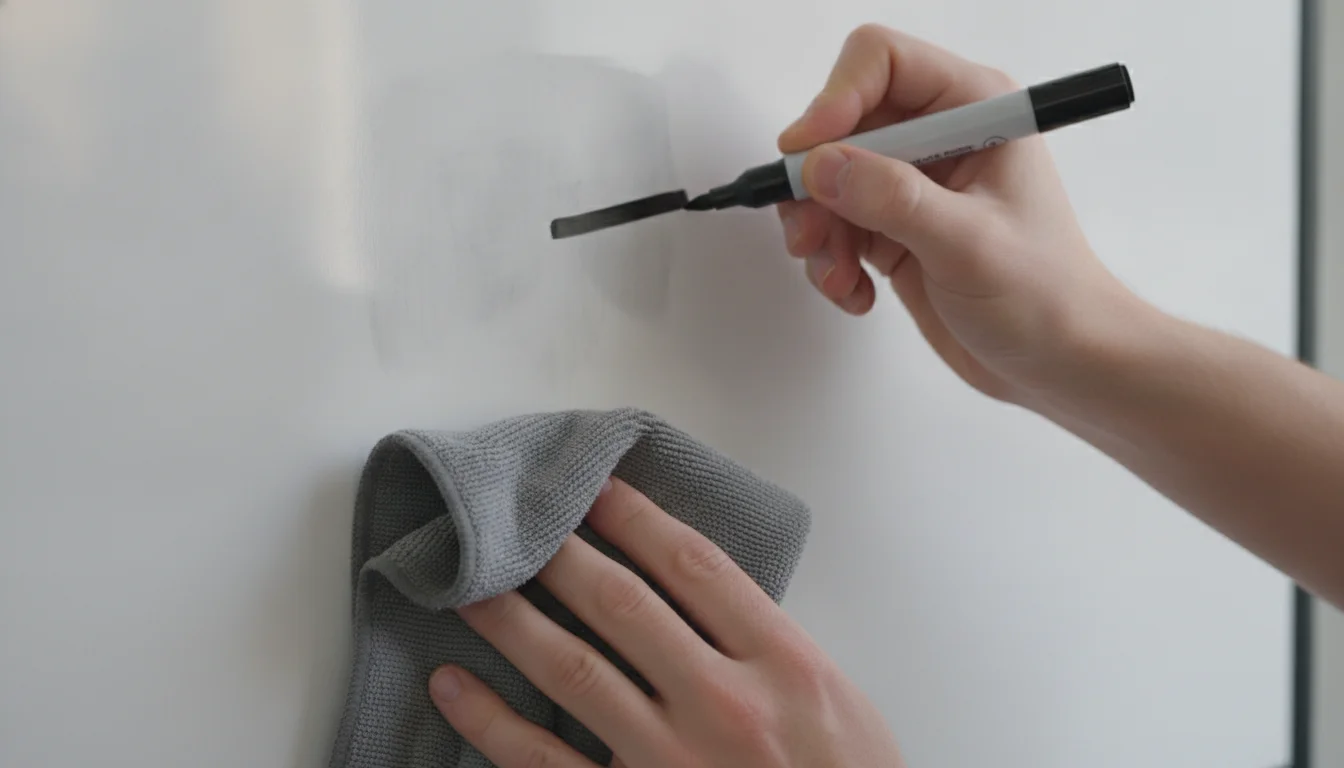
For marks that have sat for days or weeks. Take a fresh dry erase marker (a dark one covers best) and color over the old mark until it’s completely covered. Wait a few seconds for it to dry, then wipe the whole patch with a clean microfiber cloth.
The wet ink re-dissolves the old layer and both come off together. Whiteboard maker EVERWhite uses the same move on stray permanent marker. Use a clean cloth: a dirty one prints old ink straight back on. If a shadow is still there after two rounds, go to alcohol.
2. How to get rid of dry erase marker stains with rubbing alcohol
The workhorse, and the same solvent that shifts tape residue. Blue Summit Supplies tested eight whiteboard cleaners and 90%-plus isopropyl won. How you use it depends on where the ink is.
On a whiteboard: use 90% to 99% isopropyl. Put it on a microfiber cloth, not on the board, and work the mark in small firm circles. Hand sanitizer works in a pinch, since it’s mostly alcohol. Not as a daily habit, though: Blue Summit warns that repeated alcohol wears away the board’s coating.
On clothes: rinse the stain under cold water until the water runs clear. Push a wad of paper towels inside the garment behind the stain, then dab alcohol on with a cotton ball until the mark stops coming up. Move to a clean bit of towel as the ink transfers. Check the label first: alcohol damages acetate, triacetate, modacrylic and acrylic.
On carpet: test a hidden corner first to make sure the color holds. Put a little alcohol on a white cloth and blot, working from the outside of the stain inward. Change cloths as they pick up color, then rinse with plain water and blot dry, as you would coffee on carpet. Don’t scrub (it spreads the ink and damages the fibers), and keep acetone and bleach away from wool or colored carpet, because both can strip the dye. A big stain on wool is a job for a carpet cleaner.
On a painted wall: don’t. Paint maker Benjamin Moore puts alcohol on its list of harsh cleaners to keep off painted surfaces, whatever the sheen. Walls get soapy water instead (section 5), after you’ve checked the sheen in section 4.
3. Resurface or replace a board that keeps ghosting
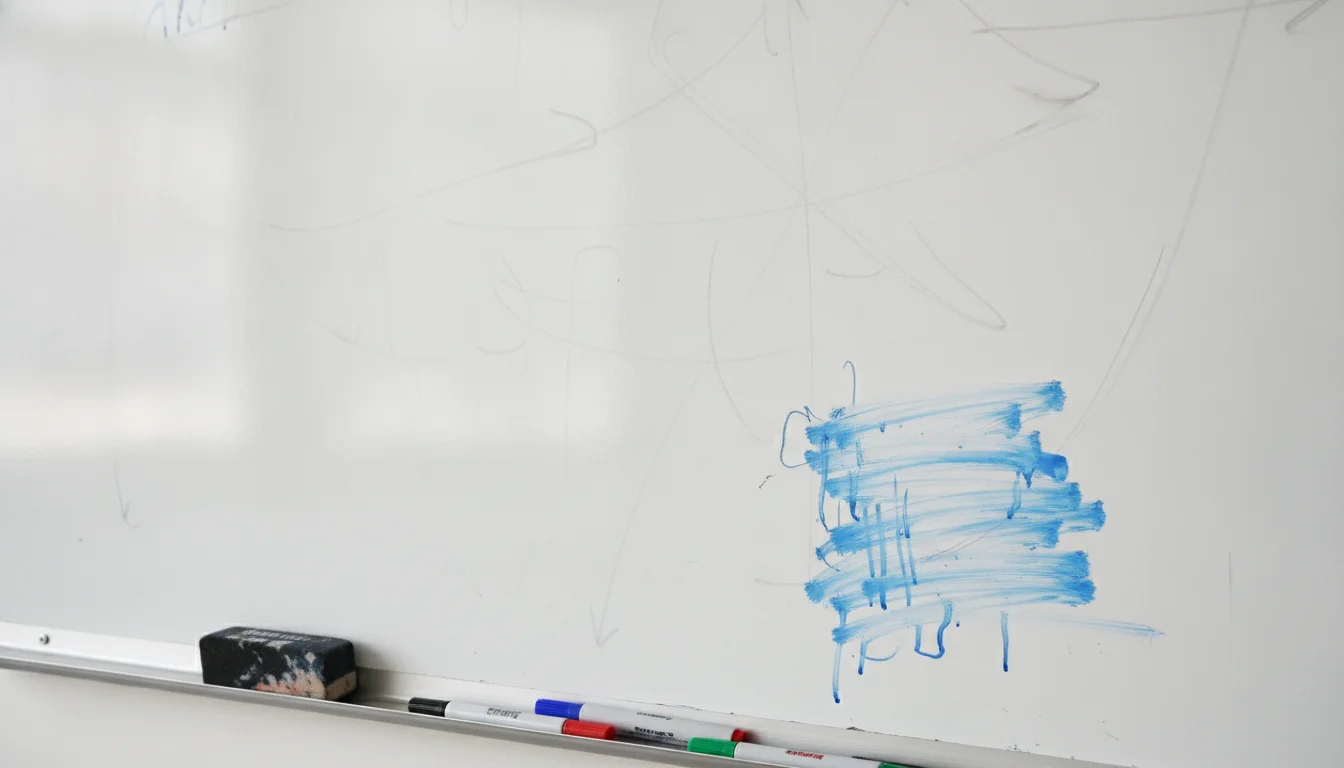
If the faint shadow of old writing keeps coming back after a proper alcohol clean, the board’s coating has worn out. Ink now soaks into the surface instead of sitting on top, and no cleaner reverses that. EVERWhite says the same: ghosting that keeps returning means resurface or replace.
Quick test before you spend money: wash or swap the eraser, clean one patch with 90% alcohol until it’s white, then use the board as normal. If the ghost returns on that clean patch, it’s the board.
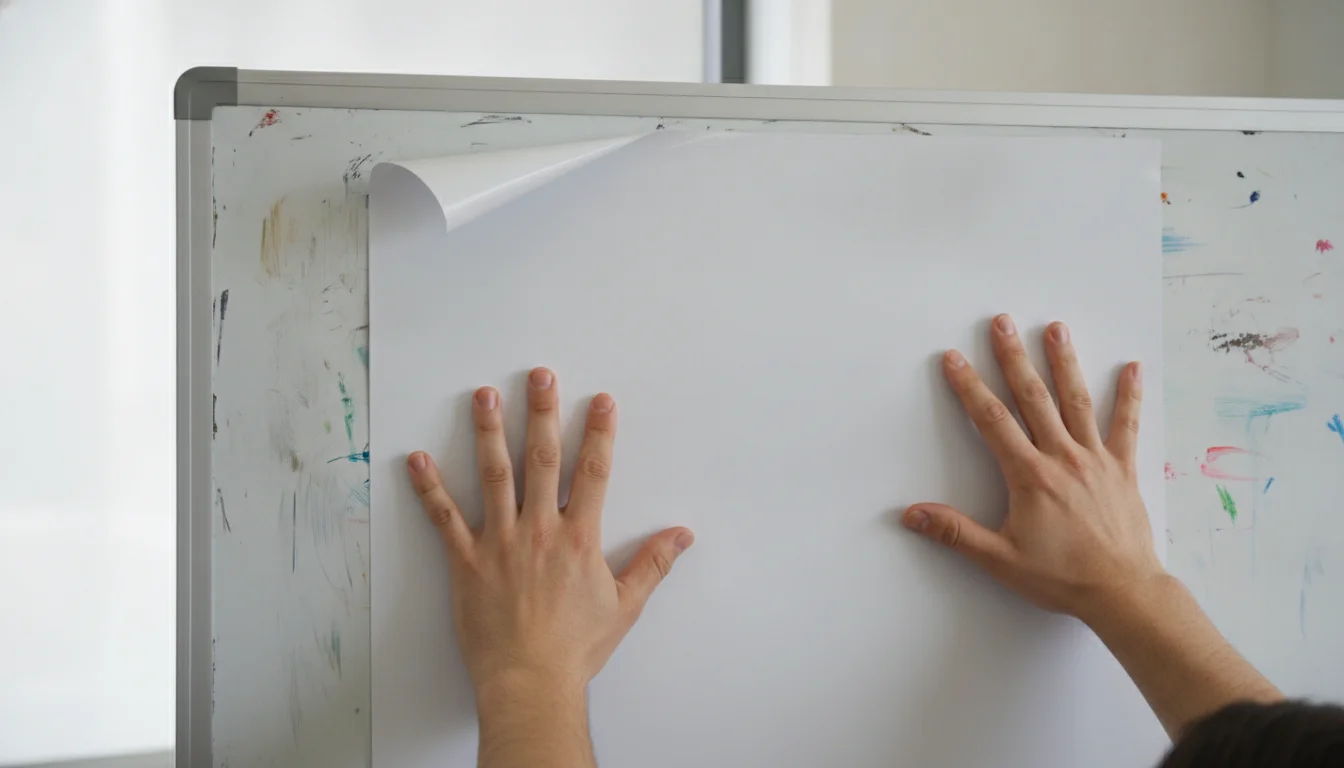
An adhesive resurfacing sheet or peel-and-stick panel over the old surface is usually cheaper when the frame is sound. Buying new? Heavy ghosting on melamine boards is often permanent and rare on porcelain, so buy porcelain or glass.
And skip the abrasives. Scouring pads, powdered cleansers, toothpaste and baking soda scratch the coating, and scratches are exactly where ghosting starts.
4. Check the wall’s paint sheen before you touch it
Look along the wall with a window or lamp to one side. No reflection at all means flat or matte paint. A soft glow is eggshell, a clear shine is satin, and a mirror-like reflection is semi-gloss or gloss.
Flat paint takes gentle blotting and nothing more. Rub it in circles and you polish it into a shiny patch, which a paint maker’s cleaning guide calls burnishing. It’s permanent. Eggshell takes light washing. Satin and up can be properly cleaned.
Whatever the sheen, keep a melamine sponge (the magic eraser) off the wall. It’s a fine abrasive that sands the paint along with the mark, and Benjamin Moore names magic erasers alongside scouring pads as sponges to avoid on paint.
5. Wipe a fresh wall mark with soapy water
If you catch it fast, a damp sponge often takes a dry erase mark straight off. For anything that’s dried, mix about 1 teaspoon (5 ml) of clear dish soap into 1 gallon (3.8 L) of warm water, wring a microfiber cloth almost dry, and work the mark.
On flat paint, blot: press, lift, move to a clean part of the cloth, press again. Test a hidden spot first in light from the side. If color comes off on the cloth or the spot looks shinier than the wall around it, stop and go to section 6.
Rinse with a plain-water cloth and dry it, or the soap dries hazy.
On satin, semi-gloss or gloss, a mark that soapy water won’t clear can take one step up: a mild all-purpose cleaner, used the way its bottle says. Benjamin Moore’s cleaning guide stops there. Test it on a hidden spot first, and if your paint maker’s own instructions say otherwise, they win. Still there after that? It’s a touch-up.
6. Touch up the paint instead of scrubbing it
On a flat wall, a mark that blotting won’t shift (or a shiny patch you’ve already made) is a paint job, not a cleaning job. The same goes for a mark on a glossier wall that has beaten soapy water and a mild cleaner. Use the original paint if you still have it, and the same tool the wall was painted with (roller for roller, brush for brush). Dab a thin coat and feather it out from the middle so there’s no hard edge.
That works for a spot smaller than a dinner plate. Bigger than that, or on semi-gloss or gloss where touch-ups almost never blend, repaint the wall from corner to corner.
7. Read the couch’s cleaning code before alcohol goes on
Find the tag under a seat cushion. W means water-based cleaners, S means solvents only, W/S or S-W means either, and X means vacuum only. Alcohol is a solvent, so it suits S, W/S and S-W fabrics. On X, don’t use any liquid; call an upholstery cleaner.
Test alcohol on a hidden spot and wait an hour or two to see whether it leaves a ring. Then blot the mark with an alcohol-dampened cloth, barely pressing, switching cloths as ink transfers. Dry the spot with a hair dryer on low, held 8 to 10 inches (20 to 25 cm) away, and brush the nap up with a soft brush once it’s dry.
8. Don’t put clothes in the dryer until the stain’s gone
After the alcohol, wash as normal, then check the spot in good light before it goes near a dryer, the rule for most stains on clothes. Damp fabric hides a faint mark. Still there? Treat it again.
How to prevent dry erase marker stains on a whiteboard
Three habits make board stains worse: leaving writing up too long, erasing before the ink has dried, and erasing with a dirty eraser. Marks left on for more than 24 hours are harder to get off, so wipe the board down with a damp microfiber cloth or whiteboard cleaner every 2 to 3 days. Give fresh writing a few seconds to dry before you erase it.
Dry the board with a cloth after cleaning rather than letting it air dry, and use microfiber: paper towels scratch the surface over time.
FAQ
Why doesn’t 70% rubbing alcohol work as well?
There’s less alcohol in it, and alcohol is what dissolves the ink. Whiteboard makers find 90% to 99% isopropyl lifts set-in marks noticeably better.
Can I use a magic eraser on a whiteboard?
It’ll take ghosting off, but slowly and only with firm rubbing, and it’s an abrasive. Every scratch it leaves is somewhere new ink can sink in. Alcohol is the better tool.
Is dry erase marker permanent on clothes?
Usually not. The ink is alcohol based, so rubbing alcohol lifts most of it from washable fabric. Just check the spot before it goes in the dryer.