Table of Contents
The bathroom spray did nothing. Neither did the second one. Knowing how to get rid of bathtub stains starts here: most marks that survive a regular clean aren’t dirt. They’re metal from your water, dried-on minerals or worn finish, each with its own fix. Pick the wrong one and you can make it worse: bleach sets rust, and a scouring pad leaves an acrylic tub scratched and dull for good.
So check two things before you buy anything. What color is the mark? And what’s the tub made of? Hold a fridge magnet to the side. If it sticks, you have enamel over cast iron or steel. If the tub looks and feels like plastic, it’s acrylic or fiberglass. Test every cleaner below on a hidden spot first.
What causes bathtub stains: read the color
The color names the cause. University extension water-testing tables (Montana State, Penn State, Virginia Tech) agree on the code.
| Color of the mark | What it usually is | Start with |
|---|---|---|
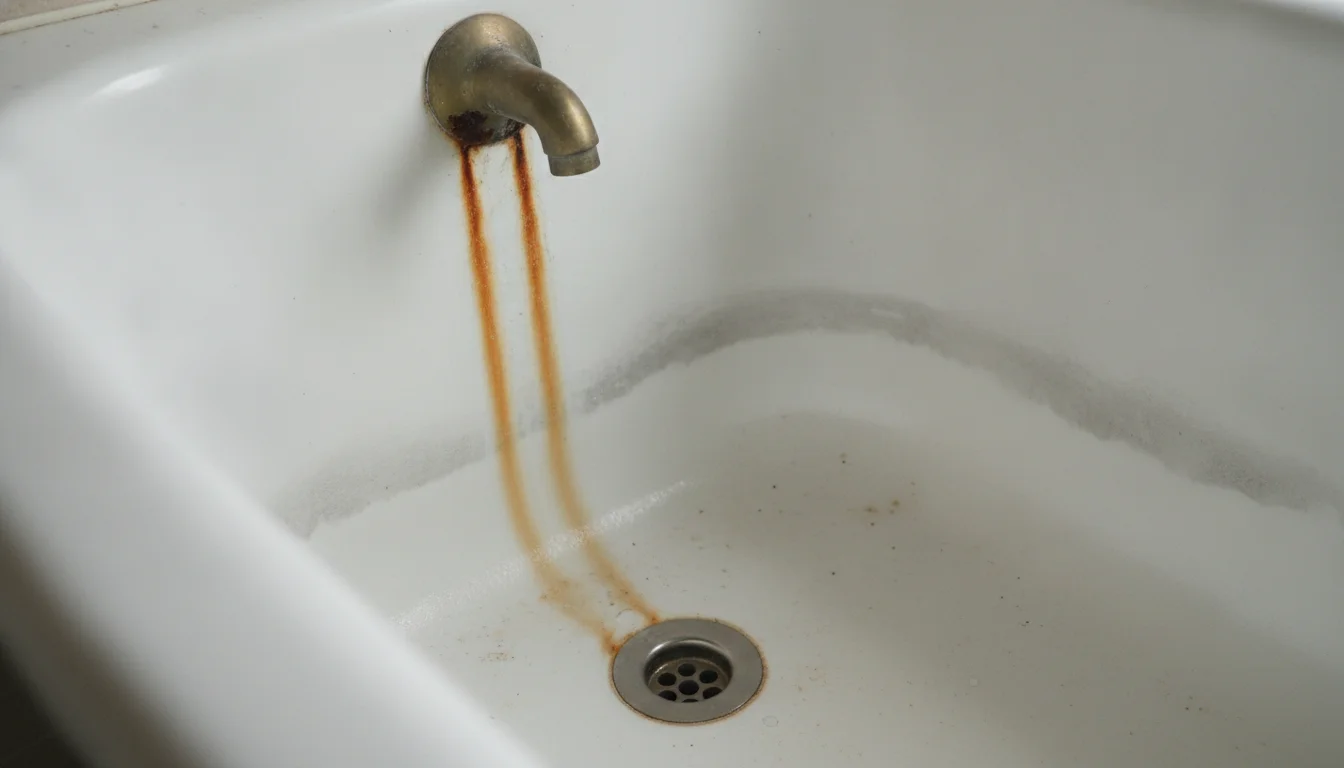
| Orange, red or brown | Iron (rust), from the water or a corroding fixture or razor | Method 3 on enamel, method 4 on acrylic |
| Black or brownish-black | Manganese in the water | Method 8 |
| Blue-green, often under the faucet | Copper, dissolved from pipes by acidic water | Method 1, then method 3 |
| White, chalky crust | Hard-water minerals (calcium and magnesium) | Method 1 |
| Gray film or ring | Soap scum: soap plus hard-water minerals | Method 2 |
| Yellow cast or dull patch on acrylic | Worn surface, fine scratches | Methods 5 and 6 |
Black spots in corners or caulk are more likely mold in the bathroom, a different job.
Then the material. Enamel and porcelain are hard glazes, but Kohler still rules out scouring pads, steel wool and wire brushes on its cast iron tubs. Acrylic and fiberglass are soft, and the FAQ below lists what Aquatica, an acrylic tub maker, and Apartment Therapy say to keep off them.
1. Vinegar compress for white crust and copper
Vinegar. Boring answer, and the right one for chalky white deposits on any tub. Soak paper towels in white vinegar, lay them flat over the crust so they stay put, and leave them 15 minutes to an hour. Scrub with a soft sponge and rinse well.
Keep it short on enamel: Merry Maids calls enamel sensitive to acids, and Kohler says not to let cleaner soak, so rinse once the crust softens. On acrylic, Aquatica gives 10 to 15 minutes and warns that hours of contact can damage the surface.
It’s also the first move on blue-green copper marks (and on toilet stains).
2. Vinegar spray and baking soda paste for soap scum
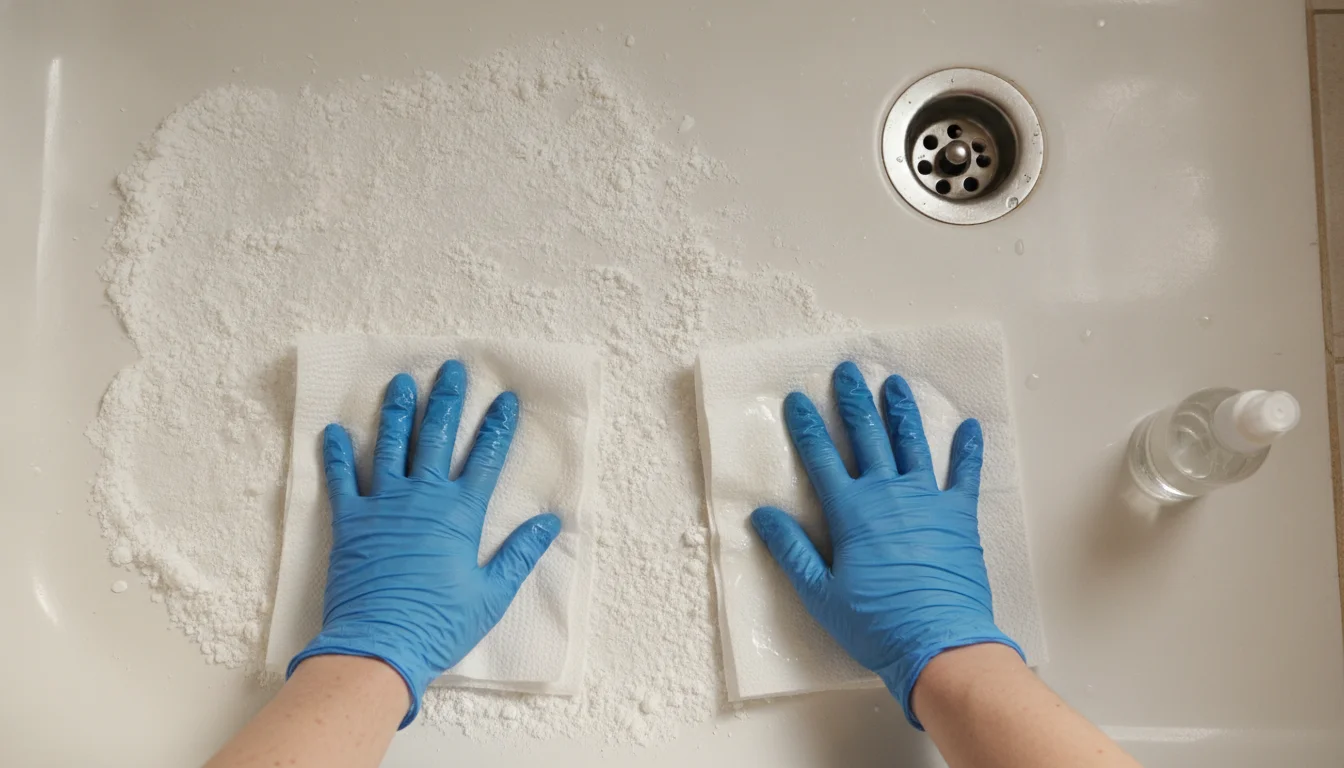
Soap scum is the gray, filmy ring. Spray it with a 50/50 mix of white vinegar and water and give it at least 15 minutes (longer is better, per Apartment Therapy). Then mix 3 parts baking soda to 1 part water into a thick paste and scrub it over the film with a non-scratch sponge. Rinse everything off.
On acrylic, use it only as a wet paste; dry powder leaves micro-scratches. And for every method here, rinse fully before switching cleaners. Never mix them.
3. Oxalic acid cleanser for rust on enamel
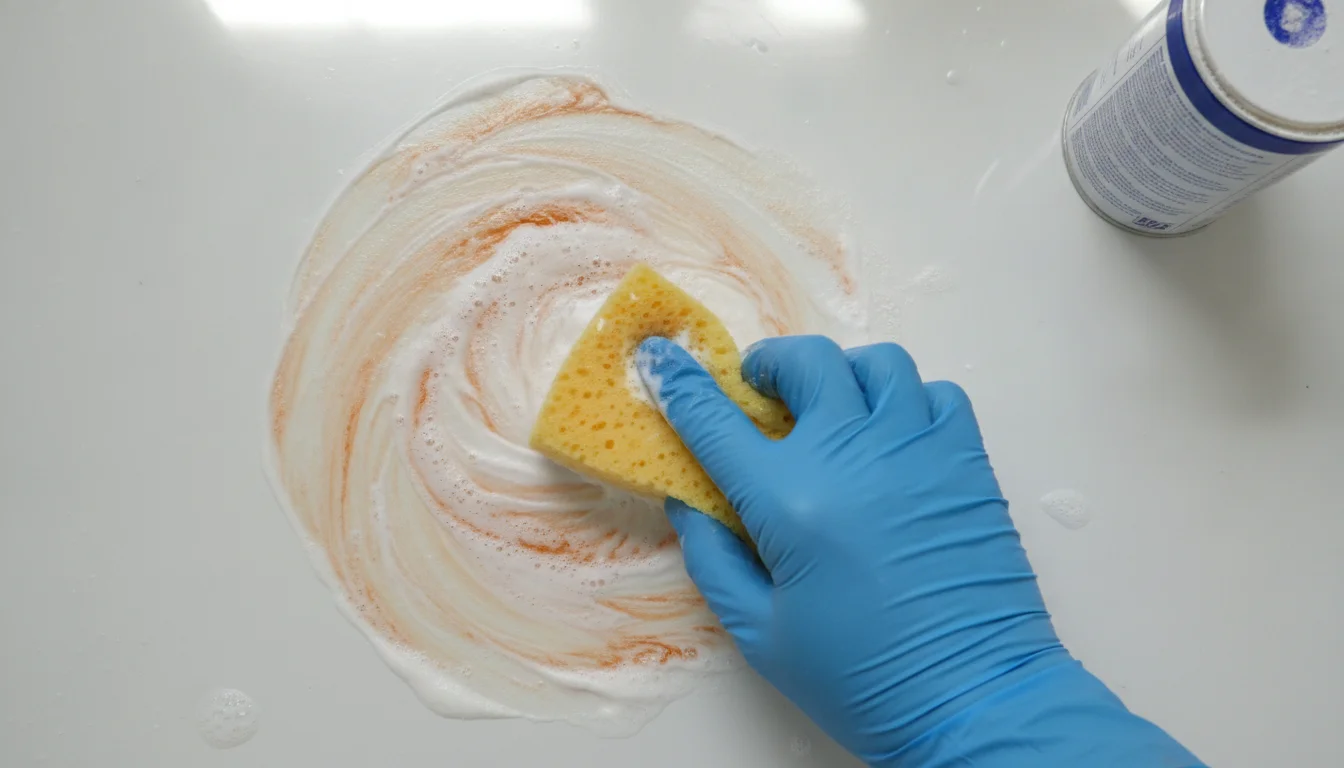
This is the winner for orange-brown rust on enamel or porcelain. An oxalic acid powder such as Bar Keepers Friend breaks the stain up chemically instead of grinding at it. Wet the tub so it’s damp with no standing water, sprinkle a little powder on the rust, and add a few drops of water to make a paste for a stubborn mark. Wait one minute. Wipe with a wet sponge, rinse completely, buff dry with a soft cloth, and repeat if it’s still there.
That minute is the maker’s limit: Bar Keepers Friend says not to let it sit longer or rub harder than needed. Wear gloves.
Expect rounds. One new cleaning-business owner found it worked best with a melamine sponge on a badly stained tub, and the shower and tub still took two hours.
Never use bleach on rust. Bar Keepers Friend says it sets the stain, and Virginia Tech’s extension service says chlorine bleach and alkaline cleaners can intensify iron and manganese stains. The same acid lifts copper marks that vinegar didn’t shift.
4. Borax and vinegar paste for rust on acrylic
Mix borax with enough white vinegar to make a thick paste, spread it on the mark, and leave it 20 to 30 minutes. Scrub gently with a soft sponge, rinse thoroughly and dry. Aquatica says rust on acrylic usually comes from metal razors or plumbing fixtures, so move the razor too.
5. Baking soda and hydrogen peroxide paste for yellowing
For a yellow cast on acrylic, make a paste of baking soda and hydrogen peroxide, spread it over the area, and leave it 30 to 60 minutes. Wipe it off, rinse, and repeat for deep stains. Wear gloves, and rinse well between this and vinegar: Apartment Therapy says never mix the two.
6. Plastic polish for dull or yellowed acrylic
Clean but still hazy? The gloss is worn, usually by fine scratches from the wrong tools.
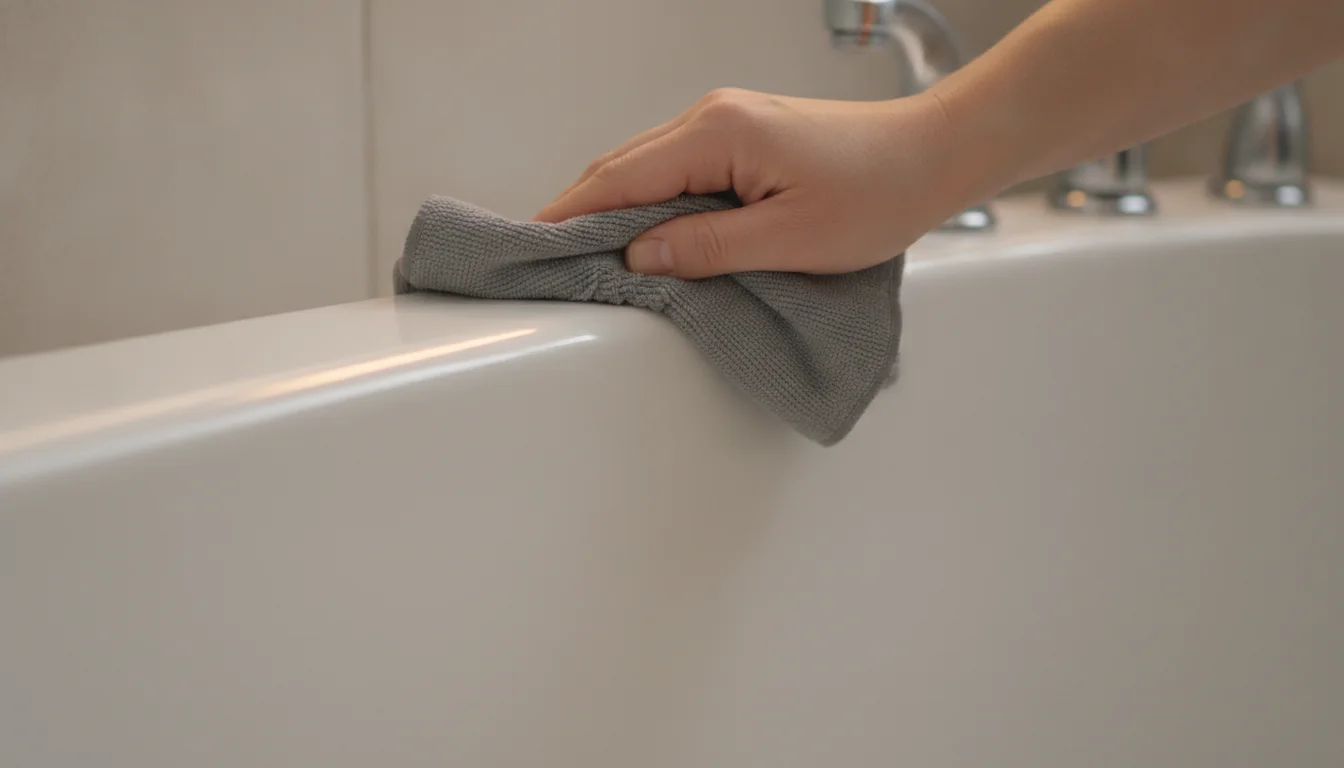
Wash and dry the tub. Put a little “plastic polish” or “acrylic polish” (Aquatica names Gel-Gloss) on a dry microfiber cloth, rub in small circles, let it haze if the label says so, and buff with a fresh cloth. Never use baby oil or furniture polish, which leave a slippery film where you stand.
One Reddit homeowner had a refinisher polish stubborn spots with rubbing compound on a $25 house call. Faint up close, but good enough to sell.
7. Refinishing for worn or etched enamel
If a mark has survived every safe method, it may not be a stain at all. Miracle Method, a refinishing firm, says a porcelain finish can turn dull, porous and hard to clean after 15 to 20 years of normal use, and that abrasive cleansers like Comet or Ajax get it there faster.
A refinisher etches or bonds the surface, fills chips and sprays a new finish, often in a day or two. On Reddit, one owner paid $300 and called it well worth it; another was quoted $700 and expected about 10 years from it. Wikipedia puts the 2023 average at $480; DIY kits run about $100, with hazardous fumes. Afterward, one commenter’s rule: hot water and dish soap only.
8. Test your water if the color keeps coming back
Have an accredited lab test for iron, manganese, pH and hardness. Virginia Tech notes that even water under the EPA’s nuisance limits (0.3 mg/L iron, 0.05 mg/L manganese) can stain.
The results pick the fix. Blue-green stains mean acidic water, below pH 7.0, is eating copper pipes and can eventually cause pinhole leaks, and an acid neutralizer on the incoming water slows that. For iron and manganese, the right treatment depends on how much the lab finds and in what form. Virginia Tech says an ion-exchange softener can usually remove combined levels of 5 mg/L or less, if the maker’s iron limit allows it; higher levels call for filtration or oxidation systems. Hardness alone needs a softener.
9. Rinse and wipe the tub dry after each use
Kohler’s instruction for its own tubs is to rinse thoroughly and wipe the surface dry with a soft cloth after every use. Water that dries on the tub leaves its minerals behind, which is how hard water issues start.
How to keep bathtub stains from coming back
- Clear the ring before it sets. A Southern Living writer’s grandmother kept her cast iron tub white with warm water and a soft, long-handled brush after every bath.
- Spray acrylic daily. Aquatica suggests a 50/50 vinegar and water spray after use to stop soap scum forming.
- Skip gritty cleansers on enamel. They wear the glaze faster, and a worn glaze stains more easily.
- Fix the water when the same color keeps returning.
Frequently asked questions
What are the brown stains in my bathtub? Usually iron, which is rust. Brownish-black points to manganese. Both come from the water, so if they return, test it. On acrylic, a yellow-brown cast that won’t clean can be wear in the surface.
What not to use to clean a bathtub? Never bleach on rust, and never bleach mixed with vinegar or ammonia. On acrylic and fiberglass, skip powdered cleansers, scouring pads, steel wool, pumice, salt, melamine sponges, bleach, acetone, ammonia and commercial rust removers. On enamel, skip scouring pads, steel wool and wire brushes.
What is the best cleaner for heavy duty bathtub stains? On enamel or porcelain, an oxalic acid cleanser for one minute at a time. On acrylic, a borax and vinegar or baking soda and peroxide paste. If none of them moves it, the finish is worn and needs refinishing.
Will a magic eraser damage a bathtub? On acrylic, yes. Aquatica says it’s micro-abrasive and dulls the gloss over time.