Table of Contents
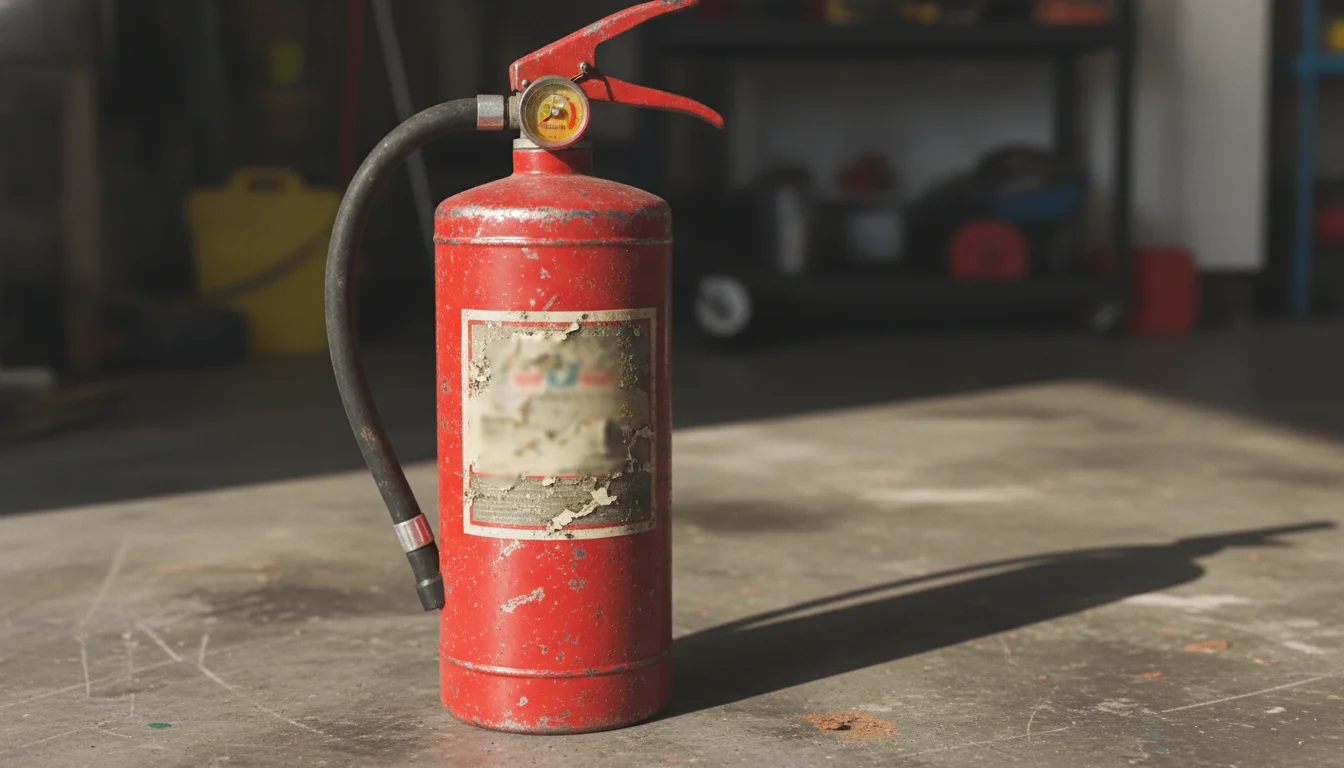
The old extinguisher in the garage cupboard is not ordinary trash. It is a sealed pressure vessel, and dropped in a bin it can injure the person who empties it: a compactor truck or recycling baler crushes its load, and a charged cylinder fed into that force can burst and throw metal and gas at the crew. So there is no bin route for a unit that still holds pressure. Where yours can safely go depends on its state, whether it is fully charged, partly used or genuinely empty, and its type, whether it is a common dry-chemical unit or a carbon-dioxide, halon or plastic one. Here is how to get rid of fire extinguishers the right way, routed by both, starting with the two rules that bound every option.
1. Keep a charged extinguisher out of the trash and recycling
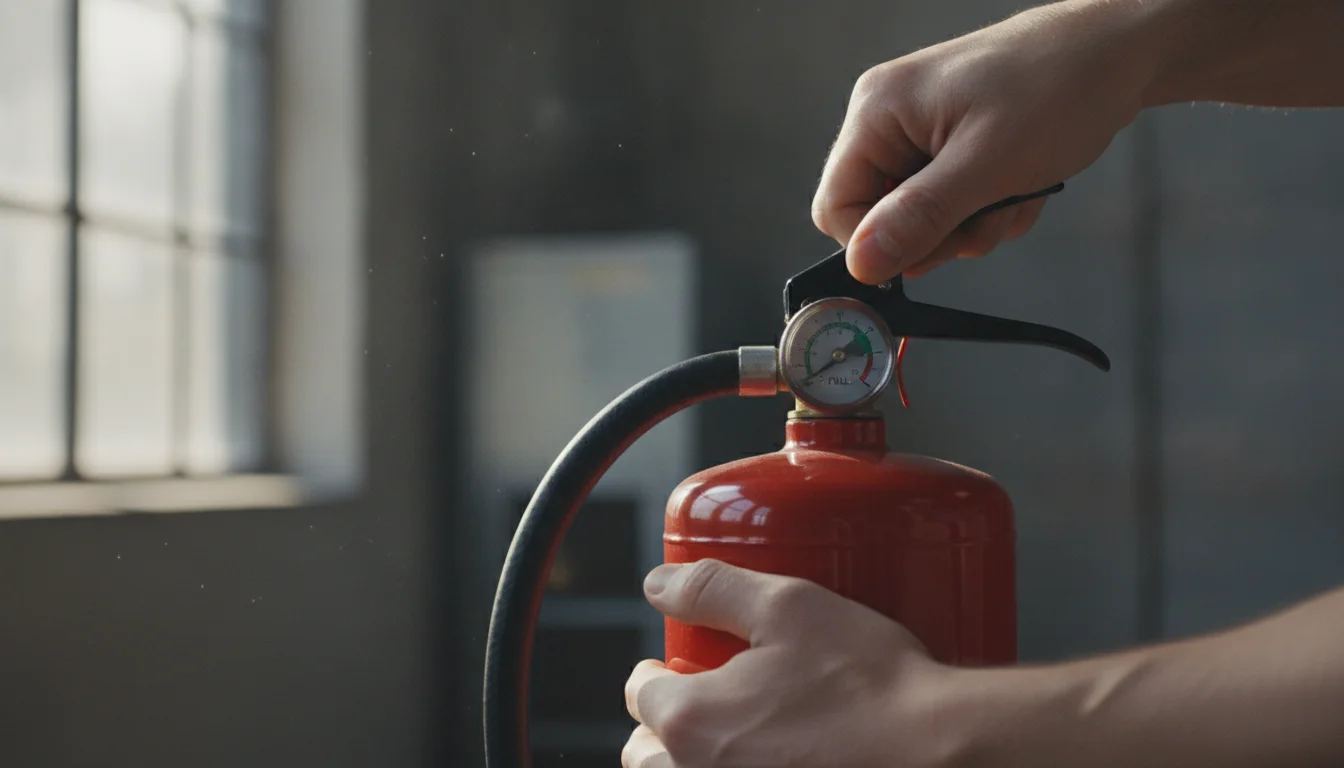
Before you choose any route, fix the rule that governs all of them: a fire extinguisher that still holds pressure never goes in the household trash or the recycling bin. Check the gauge. If the needle sits in the green, or the unit has any charge at all, it is a sealed pressure vessel, and the bin is the wrong place for it. The reason is the handler: curbside waste and recycling both end in machinery built to crush, and a pressurized cylinder fed into a compactor truck or a recycling baler can rupture, throwing metal and releasing its stored gas at the crew. Sanitation workers have been hurt by exactly this, which is why extinguishers, like propane cylinders and full aerosol cans, are kept out of the ordinary waste stream by rule.
Even a unit fired once usually keeps some charge, and a disposable extinguisher below the green line is often still not empty, so treat anything not confirmed fully discharged as pressurized. If there is no gauge or you cannot read it, do not try to judge the charge yourself: treat the unit as still pressurized and take it to a fire department or hazardous waste handler that can check it. Do not throw a charged unit in the trash “just this once”, hide it in a bag of other trash, or leave it for curbside crews, who are not equipped to take it. Set it aside intact and use one of the routes below.
2. Never puncture, crush or burn it
The second rule follows from the first. The tempting shortcut is to make the unit “safe” yourself: pierce the cylinder to let the pressure out, squash it flat, or throw it on a fire to be rid of it. Do none of these. Releasing that pressure suddenly, through a hole, a crush or a flame, sends contents out fast and can rupture the cylinder. So do not drive a nail, screwdriver or drill into it, do not put it in a trash compactor or stamp it flat, and do not toss it in a fire pit, wood stove or burn barrel, where heat alone raises the internal pressure until the vessel bursts.
Puncture-and-drain does exist as a real disposal step, but only on a purpose-built device operated by a business or scrap recycler, never by hand at home. For a household none is needed: the routes below take the unit whole, or empty it the one safe way, by its own trigger.
3. Recharge or service a rechargeable unit
Not every old extinguisher needs to leave your hands for good, so read the manufacturer’s label first: it says whether the unit is rechargeable or disposable. A rechargeable unit is built to be opened and refilled, and a certified fire equipment technician can depressurize, refill and re-pressurize one and put it back into service over a working life of a decade or more. A disposable model is sealed for one use, and its label tells you to discard the unit once it is used or expired. If the label is missing or unreadable, treat the unit as disposable.
Recharging is not a home job; it belongs with a fire equipment company, and many will service a unit brought in over the counter. Weigh reuse against replacement honestly: recharging makes sense for a sound rechargeable unit that has been discharged or dropped below the green, but not for one past its service life, damaged, or subject to a safety recall. If your extinguisher was recalled, such as the Kidde models covered by a large CPSC recall, use the manufacturer’s recall program, which usually ships a free replacement, rather than paying to recharge it.
4. Take it to the fire department or supplier
Many local fire departments and fire stations accept old extinguishers, and this is often the easiest route for a household: they handle pressurized cylinders as routine and can take a charged, partly used or empty unit without the preparation the scrap-metal route needs. Two related routes sit alongside it. The shop or supplier where you bought the unit may take it back, sometimes without charge when you buy a replacement, and fire equipment dealers often accept an old one, though some charge a fee. The manufacturer named on the label may also run a takeback or recall program, which is the route to use for a recalled unit.
Whichever you choose, call first: not every station runs a public drop-off, and some only refer you to a fire protection company, so a call tells you whether to drive over, book a time, or go elsewhere. Ask about any fee on the same call, since the standing advice is to check for one before you travel. Keep the unit whole and hand it over intact; the taker does the rest.
5. Take it to household hazardous waste
When no fire department, supplier or recharge route fits, a household hazardous waste (HHW) program is often the backstop for a unit you cannot otherwise place. Many county and municipal HHW depots and collection events accept fire extinguishers, the same programs that take old paint and other household hazards, but acceptance is not universal, so ask your local HHW site or event whether it takes them before you go. Where one does, it is a sound route for a unit that still holds pressure or that you cannot confirm is empty: many take them free for residents, and they have the equipment to depressurize the cylinder and pass the metal to a recycler, which is precisely the work you must not attempt at home.
It is also a good option for the units the scrap path cannot handle. A carbon-dioxide extinguisher, an older halon unit, a cartridge-operated unit, or any very old extinguisher you suspect contains carbon tetrachloride should not be discharged at home, so take it to a handler, a fire department, supplier or an HHW site that confirms it accepts the unit, rather than emptying it yourself. This is also the safe default when you cannot identify the type. Rules vary by area, so confirm the details with the local-rule check below before you drive over, and hand the unit over intact.
6. Discharge an empty unit and recycle the steel as scrap metal
A dry-chemical extinguisher that is spent, or a disposable one you are finishing off, can end as scrap metal once it is genuinely empty, because the steel or aluminum body is recyclable. This route is discharging, not puncturing: you empty the unit the safe way, by its own trigger, until nothing more comes out. The guidance below describes a standard stored-pressure dry-chemical unit; if yours is a carbon-dioxide, halon, cartridge-operated or unidentified type, do not discharge it at home, and take it to a handler instead, as above.
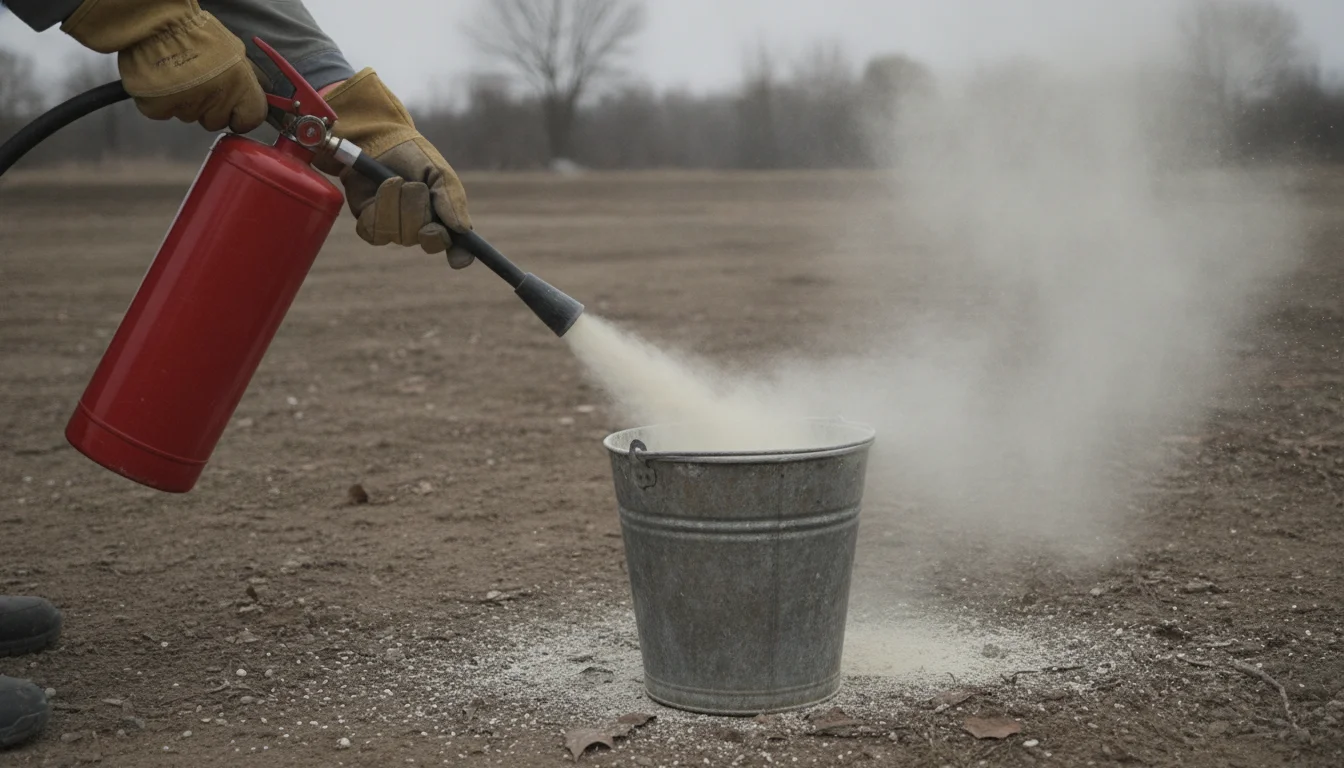
Do the discharge outdoors, away from children and pets, with eye protection and ideally a dust mask, since the agent is a fine powder. Pull the pin, aim low into a bucket or a lined box to catch the powder, and squeeze the lever until the flow stops and the gauge reads empty; let the unit stand a while, then squeeze again to clear any residual charge, since some guidance suggests leaving it a few days to be sure the pressure is gone. The collected dry chemical, typically a non-toxic monoammonium phosphate or a bicarbonate powder, goes in the household trash.
Then prove it is empty by unscrewing or detaching the head, which is the universal signal to a recycler that the vessel is open and safe; many will not accept a cylinder with the head still on. Take off any plastic parts, which go in the trash, and take the bare metal body to a scrap-metal yard or a drop-off that accepts ferrous metals and steel. A fully plastic-bodied extinguisher is not recyclable and, once confirmed empty, goes in the regular trash instead.
7. Check your local disposal rule
Which of these routes is open to you depends on where you live, so check the local rule before you load the car. Enter your ZIP in a recycling locator such as Earth911, or open your city or county solid-waste page and search for fire extinguishers or pressurized cylinders. That check tells you the nearest hazardous waste site or collection event, whether the fire department takes drop-offs, which scrap yards accept emptied bodies, and any fee.
Local variation is the whole reason this step exists. Some counties run a permanent HHW depot while others hold collection events twice a year, and a minority of communities do permit an emptied, depressurized extinguisher in curbside trash or recycling, but only after specific preparation and only once it is confirmed empty. What the check never changes is the rule at the top: a charged unit stays out of the bin. If nothing local takes extinguishers, a fire equipment company or a supplier takeback is the fallback.
Fire extinguisher disposal FAQ
Can you throw a fire extinguisher in the trash?
Not while it holds any pressure. A charged or partly used unit is a pressure vessel that can burst in a compactor, so it goes to a fire department, hazardous waste site or supplier instead. Only a standard unit confirmed fully empty, with the head removed, may be recycled as scrap or, in the few areas that allow it after preparation, placed in the trash.
Where can I recycle a fire extinguisher near me for free?
Many fire departments and household hazardous waste programs take them free for residents, and some suppliers accept an old unit without charge when you buy a replacement. Use a locator such as Earth911 with your ZIP, or check your city or county solid-waste page, and call ahead to confirm.
How do I dispose of the powder from a discharged extinguisher?
The dry chemical in a standard household extinguisher, usually monoammonium phosphate or a bicarbonate powder, is considered non-toxic. Discharge it into a bucket or lined box outdoors, then put the collected powder in the household trash.
How much does fire extinguisher disposal cost?
Often nothing: fire departments and HHW sites are frequently free for residents, and scrap yards take an emptied steel body at no charge. A supplier or fire equipment company may charge a fee to take a unit or to recharge one, and some waive it with a purchase, so call ahead and ask before you go.
Can a fire extinguisher be recharged?
Only if the manufacturer’s label says it is rechargeable. A certified technician recharges it; it is not a home job. A disposable unit cannot be refilled and must be replaced once it is used or expired.