Table of Contents
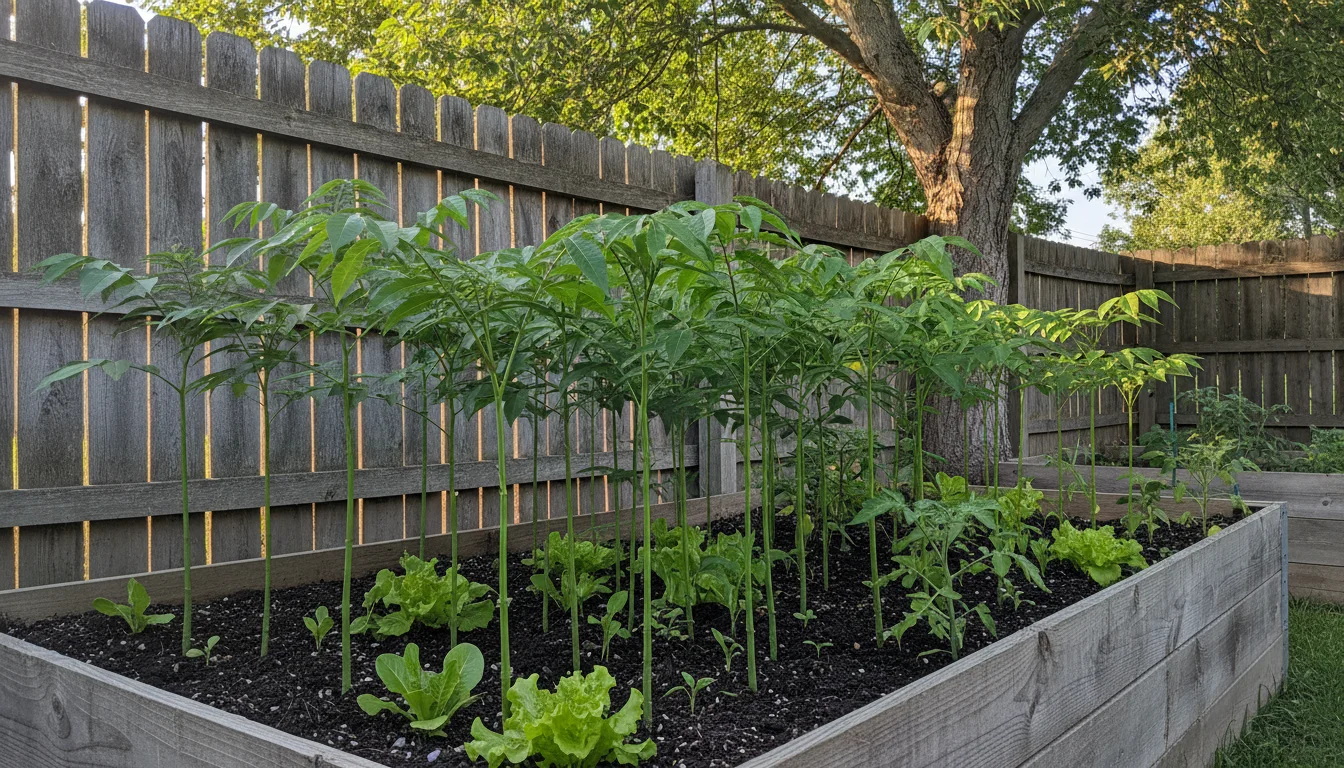
Saplings keep coming up in your raised beds, in a rough line from the fence, and the tree they’re coming from isn’t yours. You pull them. More come. You cut them. Even more come. That’s tree of heaven (Ailanthus altissima), and every cut tells the roots to send up more shoots. Learning how to get rid of tree of heaven starts with that.
This guide starts with the case most guides skip: suckers from a neighbor’s tree you can’t touch. Then, for a tree you can treat, the one rule that matters. Kill the roots first, and cut it down later. Do it the other way around and you’ll have a grove.
What causes this problem
Most of those “seedlings” aren’t seedlings. They’re root suckers, shoots coming up from long horizontal roots of a parent tree. UConn Extension says they can come up as far as 50 ft (15 m) from the parent, and they’re clones of it.
The tree treats damage as a signal to spread. Cut, mow or break it and it answers with stump sprouts and root suckers, which is why Rutgers Cooperative Extension warns that felling an untreated tree can produce dozens of them. One r/gardening commenter put it more simply: “when you cut em down, they root even harder and come back even worse than before.”
Seed adds to it. A female tree can produce more than 300,000 winged seeds a year, and sprouts as young as two can set seed.
1. Make sure it’s actually tree of heaven
Check first. Staghorn sumac and walnut look similar, and they’re natives worth keeping.
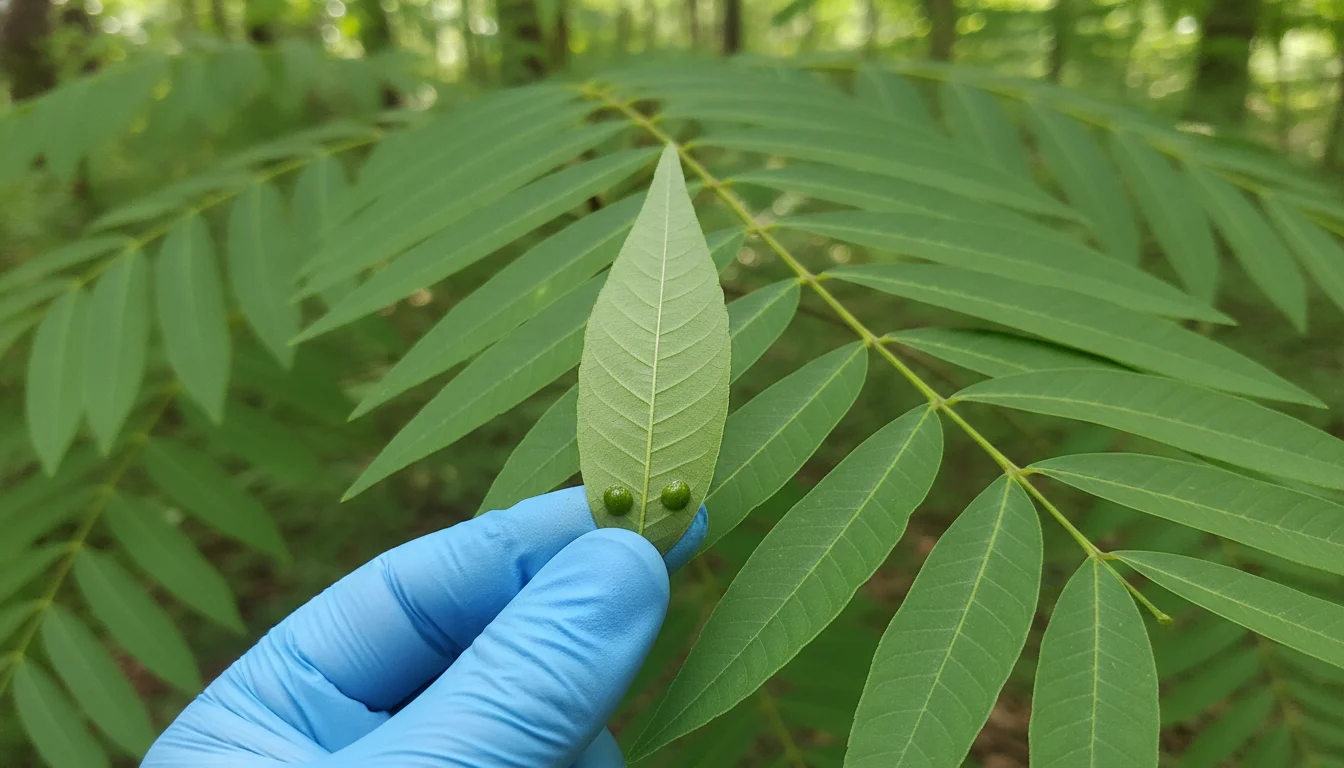
Crush a leaf. Tree of heaven stinks, a smell UC Master Gardeners compare to burnt peanut butter. The leaves are 1 to 4 ft (0.3 to 1.2 m) long with 11 to 41 smooth-edged leaflets, and each leaflet has one or two small bumps (glandular teeth) at its base. The bark looks like cantaloupe skin. Sumac has serrated leaflets and upright fuzzy fruit clusters. Walnut leaflets have no glands and no smell, and the tree drops nuts.
2. Ask the owner to treat the parent tree
As long as the parent tree lives, you’re only pruning its edges. Talk to the owner.
Be specific about what you’re asking for: a systemic herbicide treatment in late summer, then removal at least 30 days later. Not just cutting it down, which makes the suckers worse on both sides of the fence. Offer to share the cost or the arborist’s quote. Mention the spotted lanternfly too, an invasive pest whose favorite host is this tree. That’s a reason to act even for someone who doesn’t mind a few saplings.
Don’t treat their tree yourself. An Albuquerque garden columnist answering a reader in exactly this spot gave a flat no, warning it could start a range war. You can also be liable for damage to a neighbor’s tree. Renting? The owner is your landlord, so ask in writing.
3. Block the roots under your raised beds
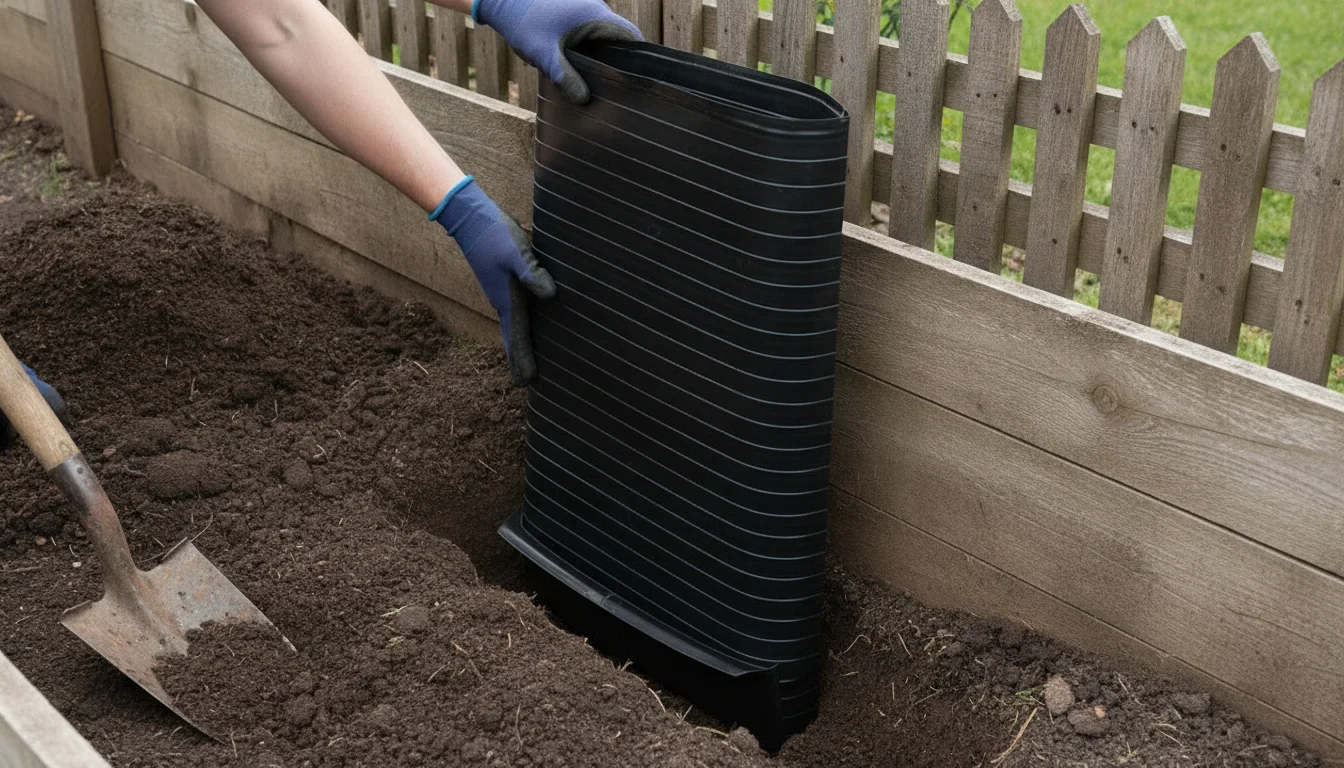
An open-bottom raised bed is just a box of well-watered soil sitting on top of the roots. NMSU Extension’s design for keeping roots out goes further than a simple edging:
- Dig a trench around the outside of the bed and stand a solid plastic or root-inhibiting fabric barrier in it. Gardening columnist Walter Reeves says aluminum flashing or fiberglass works too, if it’s buried edgewise 18 in (45 cm) deep.
- Compact the soil at the bottom of the trench so roots don’t dive under.
- Turn the bottom edge of the barrier outward, toward the tree.
- If you’re building or rebuilding the bed, line the bottom as well, with no seam or gap where the bottom liner meets the sides.
UC IPM is honest about the limits: no barrier gives complete control, and roots eventually go under or through. Check the edges every year and dig out anything that gets in.
4. Dig suckers back to the boundary
The one option that doesn’t depend on the neighbor. Dig when the soil is moist, so roots come out long instead of snapping. Dig up each sucker and follow its root back toward the fence, getting out as much as you can. The Albuquerque columnist says a strong back and a pickaxe have been the most used tools.
At your property line, cut the root clean. Roots crossing onto your land are generally yours to deal with up to the line, but not beyond it, and you can’t seriously harm the tree. The columnist paints the fresh cut end with a glyphosate-based herbicide, ties a small zip-close bag over it with a twist tie, and removes it several days later. That root still connects to the parent tree, so get the owner’s agreement before you put herbicide on it, or skip that step.
Wear gloves and long sleeves. The sap is a skin and eye irritant, according to the NSW Department of Primary Industries.
5. Cut every sprout until the roots give up
No herbicide? This works, slowly, as it does on most invasive plants that regrow from roots. University of Maryland Extension says regrowth can be managed without chemicals if you remove every new sprout promptly, before it has time to make and store energy, and keep going until the roots are exhausted.
The catch is the word “every.” Let sprouts grow and they rebuild the reserves you’re trying to drain. And if the parent tree next door is alive, it keeps feeding them, so treat this as maintenance, not a cure.
6. Treat first, cut 30 days later
If the tree is yours, this is the rule the other methods hang on. Apply a systemic herbicide to the standing tree between mid-July and the start of fall color, when it’s sending sugars down to its roots. Then wait at least 30 days before anyone cuts it. Rutgers explains why: once the trunk is gone, the herbicide stops moving into the roots.
No rush at day 30: Rutgers says winter removal, mid-November through April, is fine after a late-summer treatment. Painting a fresh stump instead doesn’t work on this tree: it stops the stump sprouting, not the roots suckering.
7. Hack and squirt for trunks over 1 inch
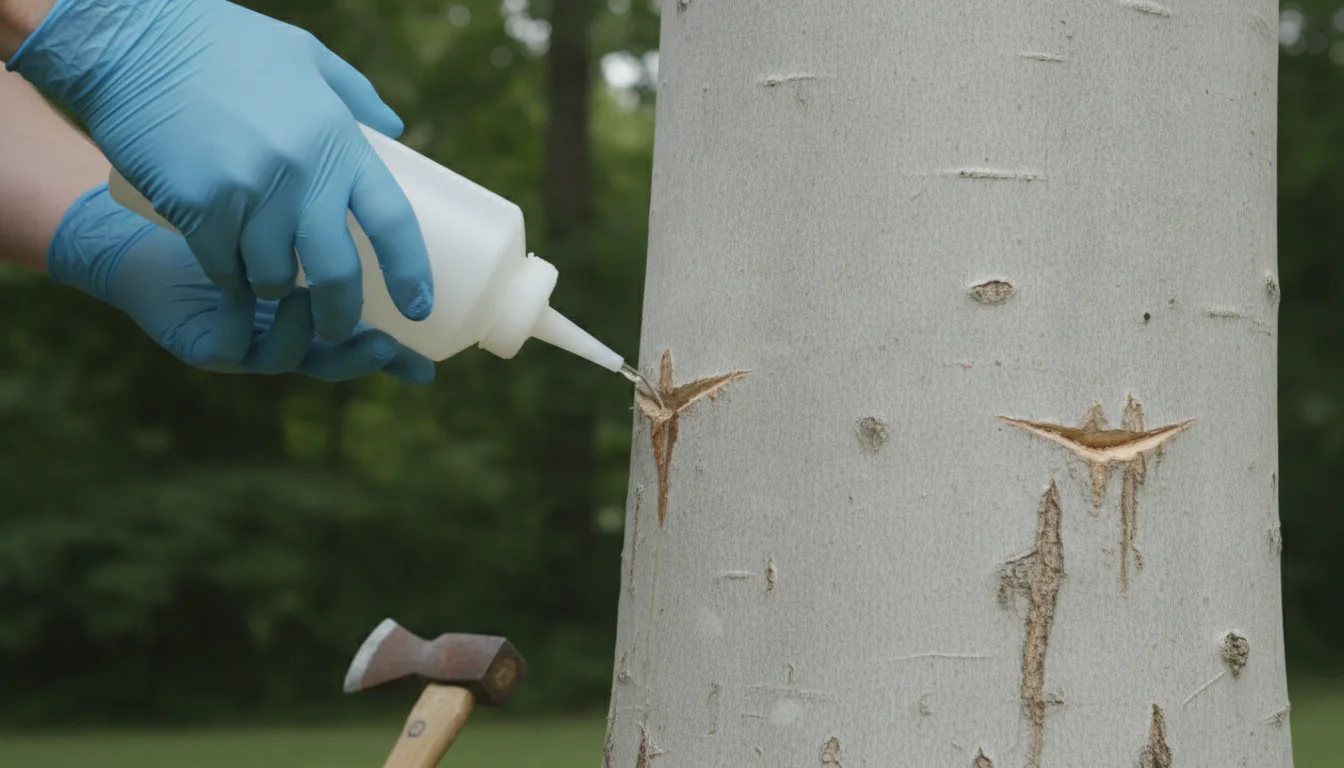
With a hatchet, make downward cuts at about 45 degrees through the bark into the pale wood, a few feet above the ground. Rutgers’ rule is one cut per inch of trunk diameter, minimum two. Measure around the trunk and divide by 3.14 to get the diameter. Leave bark between the cuts, because that living tissue carries the herbicide down. Then fill each cut with concentrated glyphosate or triclopyr amine.
Do it fast. A Connecticut state invasive plant specialist applies undiluted 44% triclopyr amine within an hour of cutting and saw leaves wilt within two weeks. Results vary: one r/gardening commenter got limited results from hack and squirt and switched to drilling about ten holes 3 in (7.5 cm) deep and refilling them with herbicide.
8. Basal bark spray for stems up to 6 inches
For stems up to 6 in (15 cm) across, wet the lower 12 to 18 in (30 to 45 cm) of the trunk all the way around with triclopyr ester in basal oil. The oil carries it through the bark, so there’s no cutting, and Rutgers rates it the better choice when a leaf spray would likely drift onto plants you want to keep. Near a vegetable bed, the product label decides what you may treat and how close, so read it before you start.
Rutgers notes triclopyr ester is restricted-use in New Jersey, which means a pesticide license, so check your state’s rules before you buy it.
9. Spray the leaves of short stems in late summer
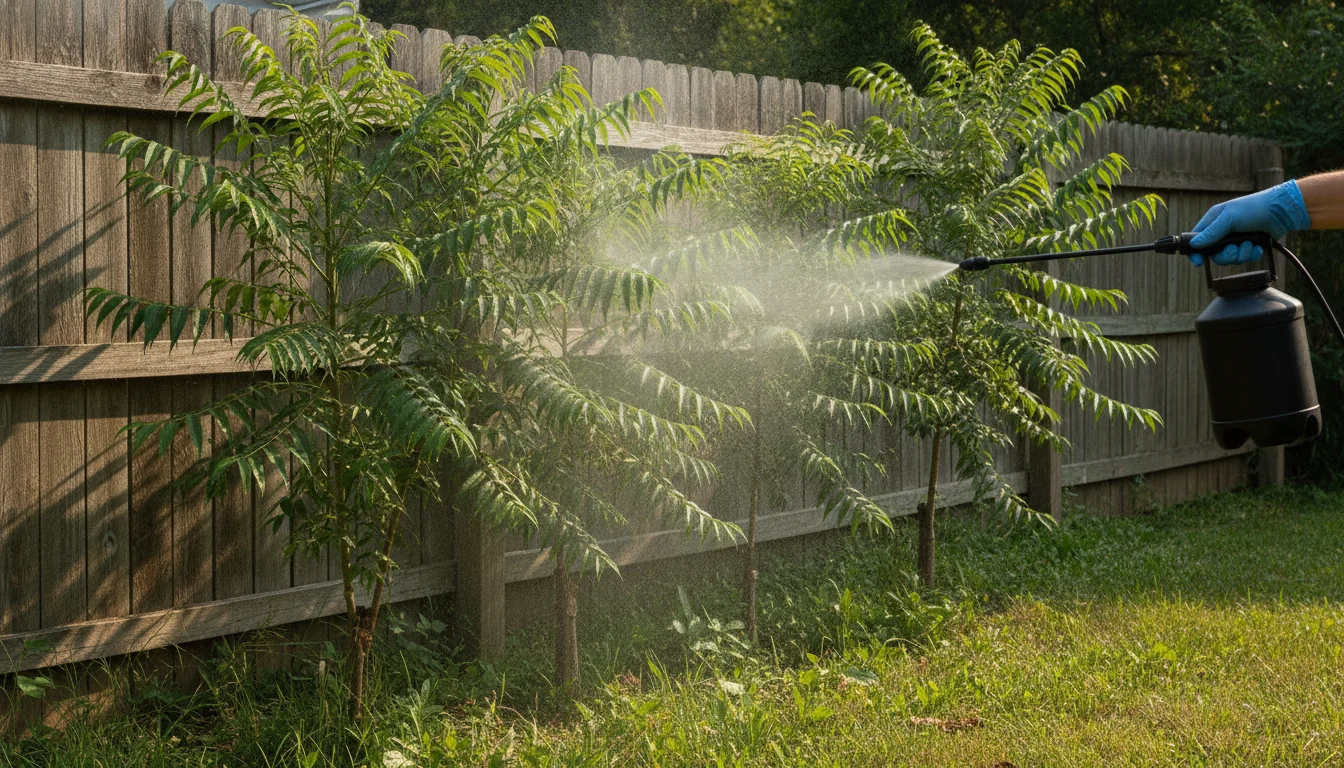
For suckers and stems under 8 to 10 ft (2.4 to 3 m), spray the leaves with glyphosate and triclopyr amine (Rutgers says the mix works best) plus a surfactant unless the label says it’s included. Spray from mid-July to fall color. Earlier, you mostly kill leaves.
Both chemicals kill whatever they drift onto, so spray only between 50°F and 80°F (10°C and 27°C) in light wind. Then leave the plants alone for about 30 days.
10. Pull true seedlings while they’re tiny
A real seedling, grown from seed, can come out by hand if you catch it young, pull it when the soil is wet, and get the whole root. UConn says it grows a serious taproot within about three months, and broken root pieces resprout.
Root suckers are different. UConn calls them nearly impossible to pull. If it’s coming up near a big tree, assume it’s a sucker.
When to call a professional
Call an arborist for any tree you can’t drop safely yourself, and for anything near a house, fence or path. A treated tree dies standing, and dead trees can fall unpredictably. The Connecticut specialist notes that arborists generally won’t climb dead trees. A licensed pesticide applicator makes sense when the product you need is restricted-use where you live, or when the infestation is big. Expect follow-up either way: the same specialist monitors sites for three to five years.
FAQ
Can you kill tree of heaven with glyphosate?
Yes, Roundup and other glyphosate weed killers work if you apply them in late summer and nobody cuts the tree for at least 30 days. UConn says the tree tends to be more sensitive to triclopyr than to glyphosate, especially before late summer, so brush killers with triclopyr are worth a look too.
How do you get rid of tree of heaven naturally?
By cutting every sprout the moment it appears, until the roots run out of energy. It works but takes far longer. The Connecticut specialist’s view is that big infestations aren’t currently manageable without herbicide.
Is tree of heaven poisonous to touch?
The sap irritates skin and eyes and can cause a rash, so wear gloves and long sleeves when you cut, dig or pull it.
How long does it take to get rid of it?
Years. Expect new suckers for at least a year or two after treatment, and keep checking for three to five years. One r/gardening commenter who inherited about 500 of them says they’ve been free of tree of heaven for a couple of decades.