Table of Contents
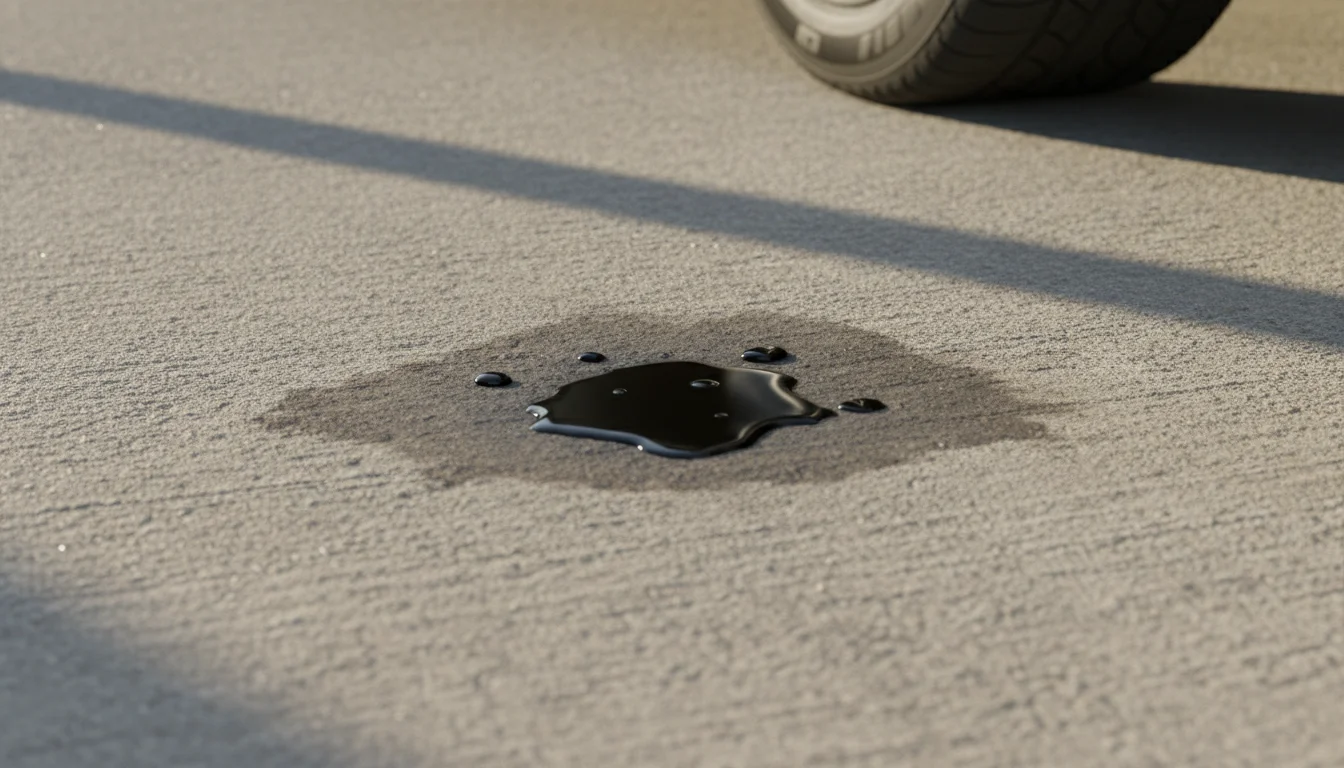
Knowing how to get rid of oil stains on concrete starts with making sure it’s concrete. A parking space may well be asphalt (black, with visible stones), and asphalt is held together by a petroleum binder. Acetone, mineral spirits and industrial degreasers can dissolve it, so on asphalt stop at methods 2 and 3. On real concrete, match the method to the stain’s age. Methods 2 and 3 are for fresh spills, 4 and 5 for marks that have sat a while, 6 and 7 for years of drips. Go in order, gentle to strong. And old oil usually fades rather than disappears.
1. Drip water beside the stain
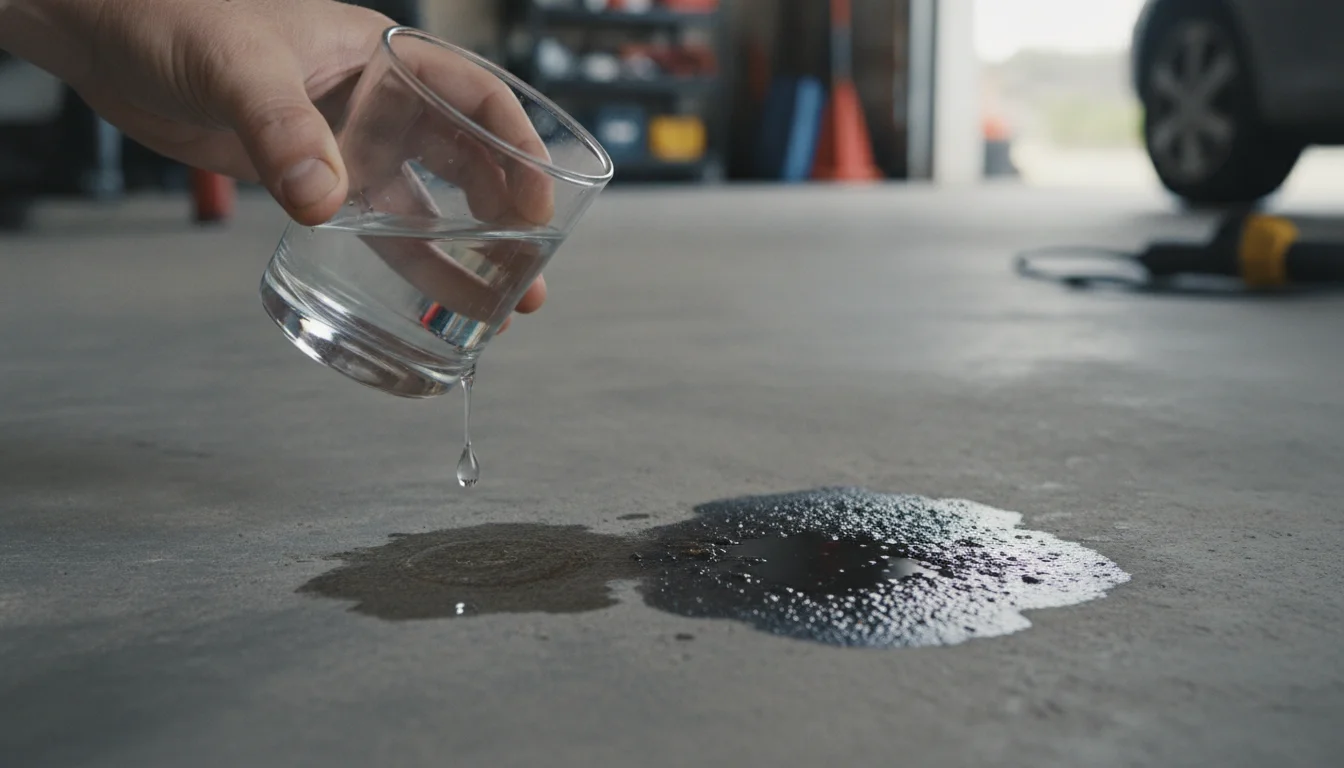
Pour a dime-sized drop of water on clean concrete a few inches from the mark and wait 60 seconds. If it beads, the slab is sealed or painted, and the oil has had a harder time getting in. If it soaks in and darkens the surface, the concrete is bare or the sealer’s gone, and the oil is in the pores.
Sealer wears off in patches, so test more than one spot.
Keep this test for the end too, because it’s how you know you’re done. Oil repels water, so once the cleaned spot is dry, drip on it again. Beading or a rainbow sheen means oil is still in there. If water soaks in, stop. A shadow with no beading is as clean as that stain gets.
2. Cover it with an absorbent
The minute you see a wet spill, blot it with paper towels or rags. Don’t wipe, which spreads it and drives it in. Then bury the spot in cat litter, sawdust, cornstarch or dry cement, thick enough that you can’t see the stain.
Leave it several hours at least. The Portland Cement Association says at least a day with dry cement, repeating until no more oil comes up. Then sweep it up and bag it for the trash.
One r/HomeImprovement poster got nowhere with dish soap and cat litter, then left a store-bought spill absorbent on a concrete driveway for 2 to 4 weeks, rain and all. That’s what finally worked.
3. Scrub with dish soap and hot water
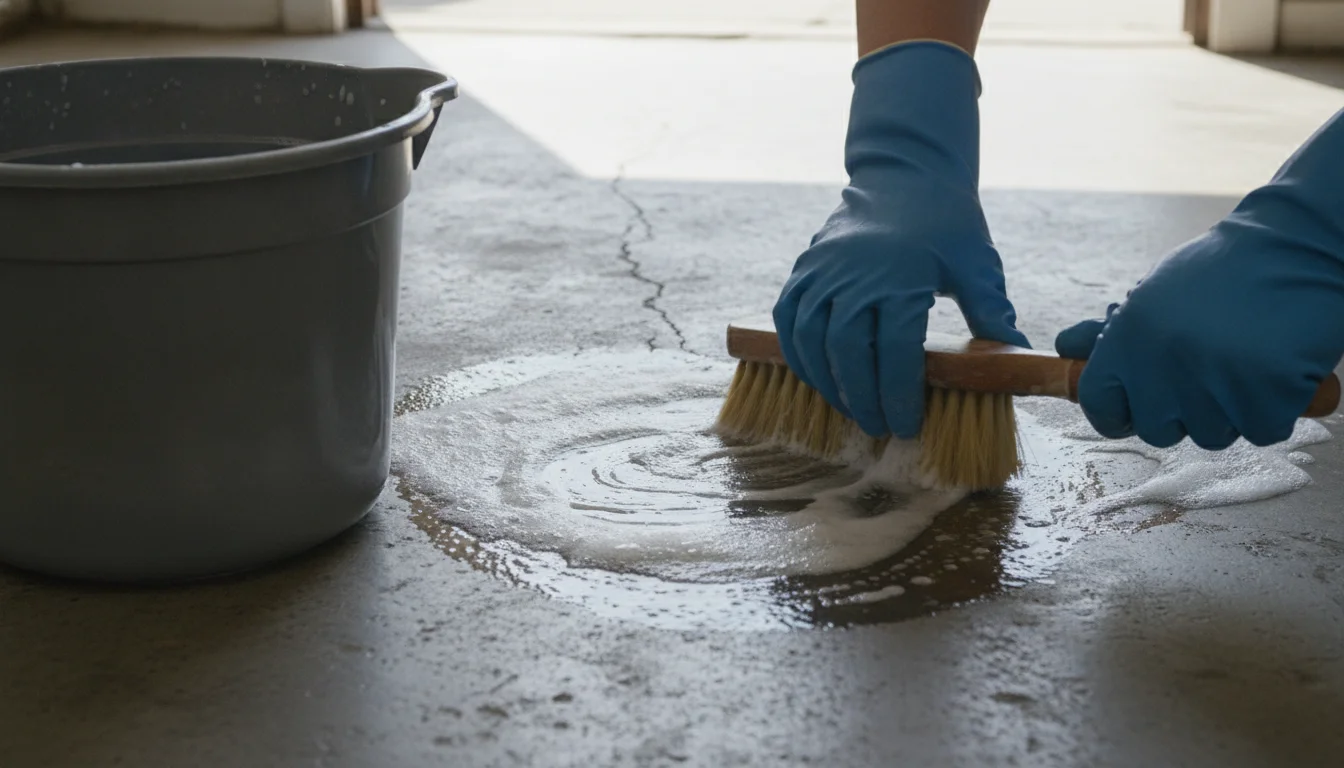
Mix a good squeeze of dish soap into a bucket of hot water, pour it over the spot and leave it 15 to 20 minutes. Scrub with a stiff nylon brush (never wire, which leaves rust spots, as with brick stains) and rinse.
This is for new spots. Old ones barely notice it.
Watch where the rinse goes. Nashville’s stormwater guidance says dirty wash water must never reach a storm drain, because that’s an illicit discharge you can be fined for. Send it across grass instead. The same goes for every method below.
4. Scrub in a concrete degreaser
Dilute it as the label says, wet the stain, give it 15 to 20 minutes, then scrub hard and rinse. Concrete Network says soap like this acts as ball bearings: it frees the oil but doesn’t break it down. So it’s fine on a recent stain, weak on heavy, long-term contamination, and better on porous concrete than on a hard, dense finish.
One r/HomeImprovement poster uses Spray Nine on a shop floor after engine teardowns: 5 minutes, then a stiff nylon brush.
5. Soak it with TSP
Trisodium phosphate is the old-school choice, and the University of Georgia’s stain guide lists it for concrete. Put on rubber gloves and goggles. Dissolve 1 cup (about 240 ml) in 1 gallon (3.8 L) of hot water, pour it on, wait 15 to 20 minutes, then scrub hard with a stiff brush or broom. Rinse well and repeat if it’s still fading.
For a small, dark mark, the Portland Cement Association uses a paste instead: 1 part TSP to 6 parts water, spread on, left a full day to dry, then scrubbed off with clear water.
6. Draw it out with a poultice
Once oil is deep in the pores, surface cleaning can’t reach it. A poultice dissolves it with a solvent, then pulls it up into a powder as it dries.
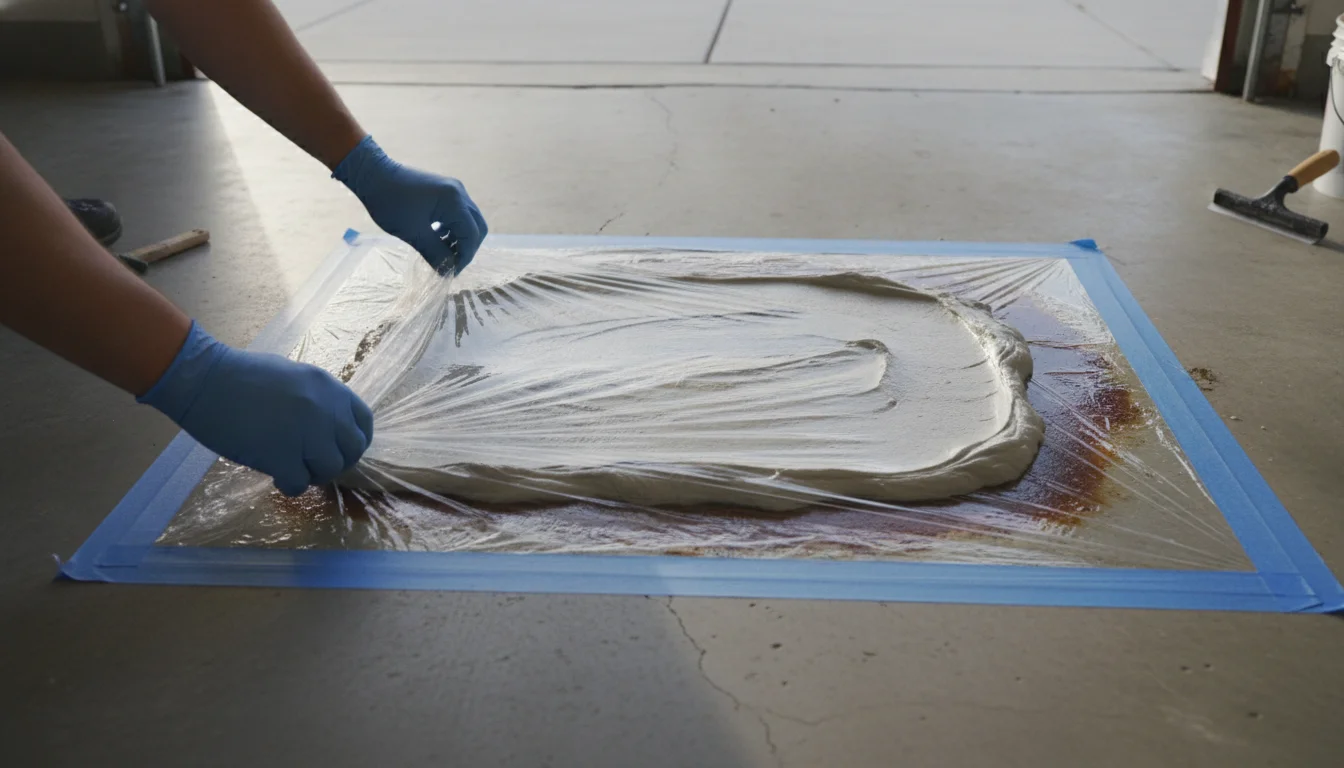
Work with the garage door open, gloves on, and no flame or pilot light nearby, because acetone is highly flammable. Mix cat litter or another absorbent powder with acetone in a glass or metal bowl until it’s like peanut butter. Spread it 1/4 to 1/2 inch (6 to 12 mm) thick, covering 1/2 inch (1 cm) past the stain. Tape plastic wrap over it and leave it 24 to 48 hours. Unwrap, let it dry completely, scrape it off and rinse.
The Portland Cement Association’s cheaper version soaks the stain with mineral spirits or paint thinner, covers it with cat litter, and sweeps up the next day. Expect repeats: Direct Colors, which sells concrete stains, says up to 4 rounds on a big or very old mark.
It’s slow and doesn’t suit large stains. And solvent-soaked litter isn’t ordinary sweepings, so check your local household hazardous waste rules before you bin it, as you would for old paint.
7. Let microbes eat it
Microbial concrete cleaners use single-celled organisms that feed on oil, digesting it into carbon dioxide and more microbes, then dying off when the food runs out. Concrete Network says it’s the same technology used on beaches after big spills.
Apply it exactly as the label says, because dilution and timing vary by product. It’s the pick when you don’t want solvents near your garage and you’re in no hurry. The oil gets destroyed rather than moved, so there’s no oily sludge left to deal with.
How to prevent oil stains on concrete
Fix the leak. Get the car serviced, or the stain comes back however well you cleaned it. Until then, park over an oil mat, and treat anything you collect as used motor oil.
Sealing the slab gives you a barrier. But get the oil out first. Concrete Network warns that oil left behind eventually seeps back through to the surface, and Direct Colors says sealer laid over it will likely bubble or flake.
FAQ
Will Dawn remove oil stains from concrete?
On fresh spots, often. On old ones, no. One r/HomeImprovement poster saw more grease come to the surface after using it, so absorb again if that happens.
Can baking soda remove oil from a driveway?
Sometimes, on a fresh stain. Concrete Network suggests a paste of baking soda and water, scrubbed and rinsed. Asphalt Kingdom says it may only lighten a stubborn one.
Will white vinegar remove oil from concrete?
Skip it. Concrete Network lists vinegar with bleach, cola and WD-40 as remedies that can leave a discolored spot where the stain was. And never mix cleaners.
Will oil eventually come out of concrete?
Not by itself. Left alone it stays in the pores and can seep back up. Window Genie admits that even after professional cleaning, an old stain often leaves some shadowing.
What if my parking space is asphalt?
Blot, absorb and use dish soap, then stop. If you want a degreaser, buy one whose label names asphalt. Don’t leave the stain, though: Asphalt Kingdom warns oil can weaken the pavement and lead to cracks.