Table of Contents
Moving out doesn’t end a bug problem. It packs it. Knowing how to get rid of pests when moving comes down to clearing them out of your stuff before it goes on the truck, because a new address does nothing to the roach living in your toaster.
And no single fix covers it. Roaches ride in electronics, appliances and cardboard. Bed bugs ride in soft goods, mattresses and luggage. Pantry moths ride in dry food. Carpet beetles ride in wool. Each one needs its own step, and most of those steps take days, not an hour on moving morning.
So start a few weeks out if you can. The steps run in the order of the move, and you can skip whatever doesn’t apply. If you’ve never seen a bed bug, the whole wardrobe doesn’t need the dryer.
What causes pests to move with you
Pests don’t move on purpose. They stay in whatever they were hiding in, and you carry it out for them. Here’s which one rides in what:
- Roaches: clocks, toaster ovens and other warm electronics, according to University of Kentucky entomologists. UC IPM adds refrigerator and appliance motors, hollow furniture legs, the backs of pictures and the undersides of furniture. Cardboard too.
- Bed bugs: mattresses, box springs, bed frames, clothing, bedding and luggage. UC IPM says about 85% of them are found in or near the bed, but they’ll also use furniture, appliances and electronics.
- Pantry moths and beetles: flour, cereal, nuts, dried fruit, spices, pet food and birdseed. Flour beetle eggs are sticky and cling to the sides of sacks, boxes and other containers.
- Carpet beetles and clothes moths: wool, felt, fur, silk, feathers and leather. Their eggs and larvae travel in rugs, woolens and secondhand furniture. Cotton and synthetics are rarely touched unless they’re blended with wool or badly soiled.
1. Bait the roaches a few weeks out
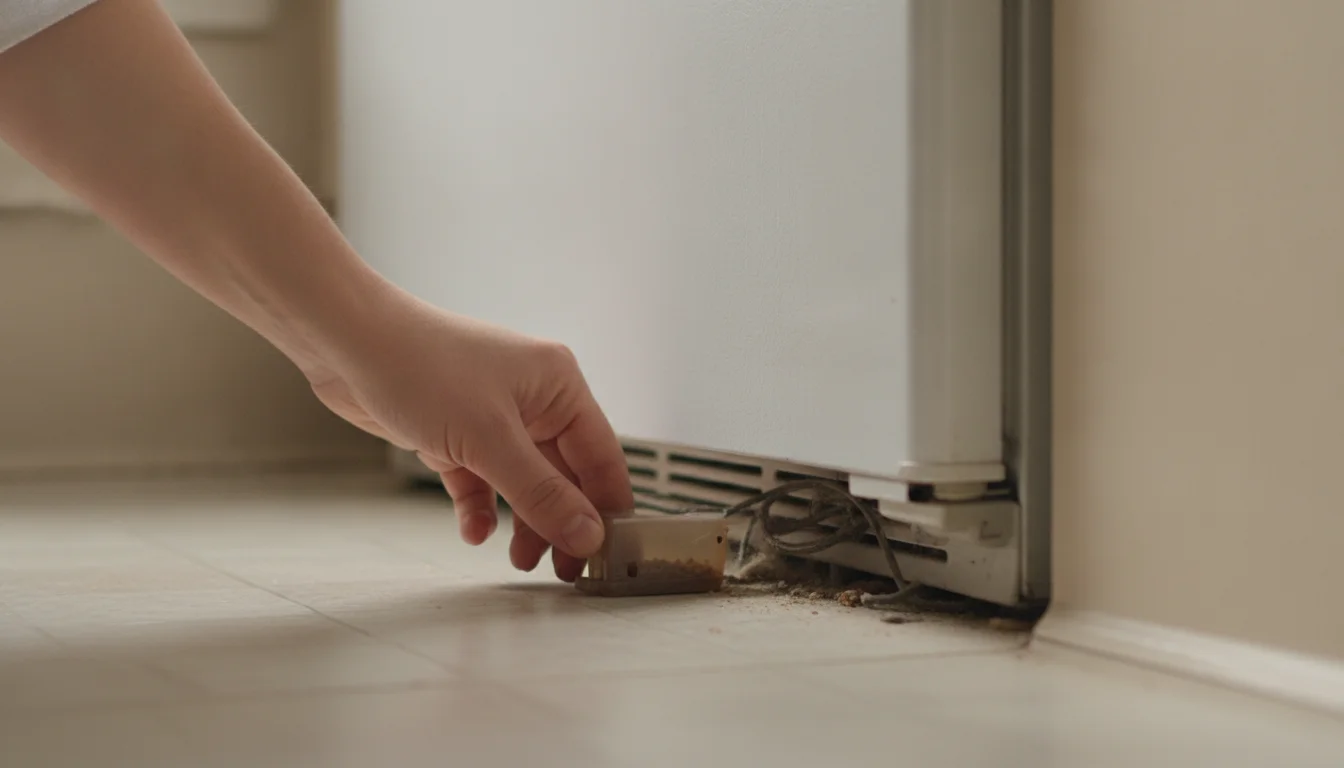
Bait first, because it’s the slowest step. Bait stations go flush against corners and cabinet edges, behind the fridge, dishwasher and stove, under the sink, and directly behind or beneath any appliance you suspect. Kentucky’s guide says a station placed that way draws out the roaches living inside to feed and die. A roach that eats bait usually dies in 1 to 3 days, and you should see a real drop within a few weeks. Don’t spray near it, and keep bait out of the electronics themselves.
Skip the farewell fogger. Kentucky notes the ingredients tend to repel insects, so they scatter deeper into wall voids.
2. Pack in new boxes or sealed plastic bins
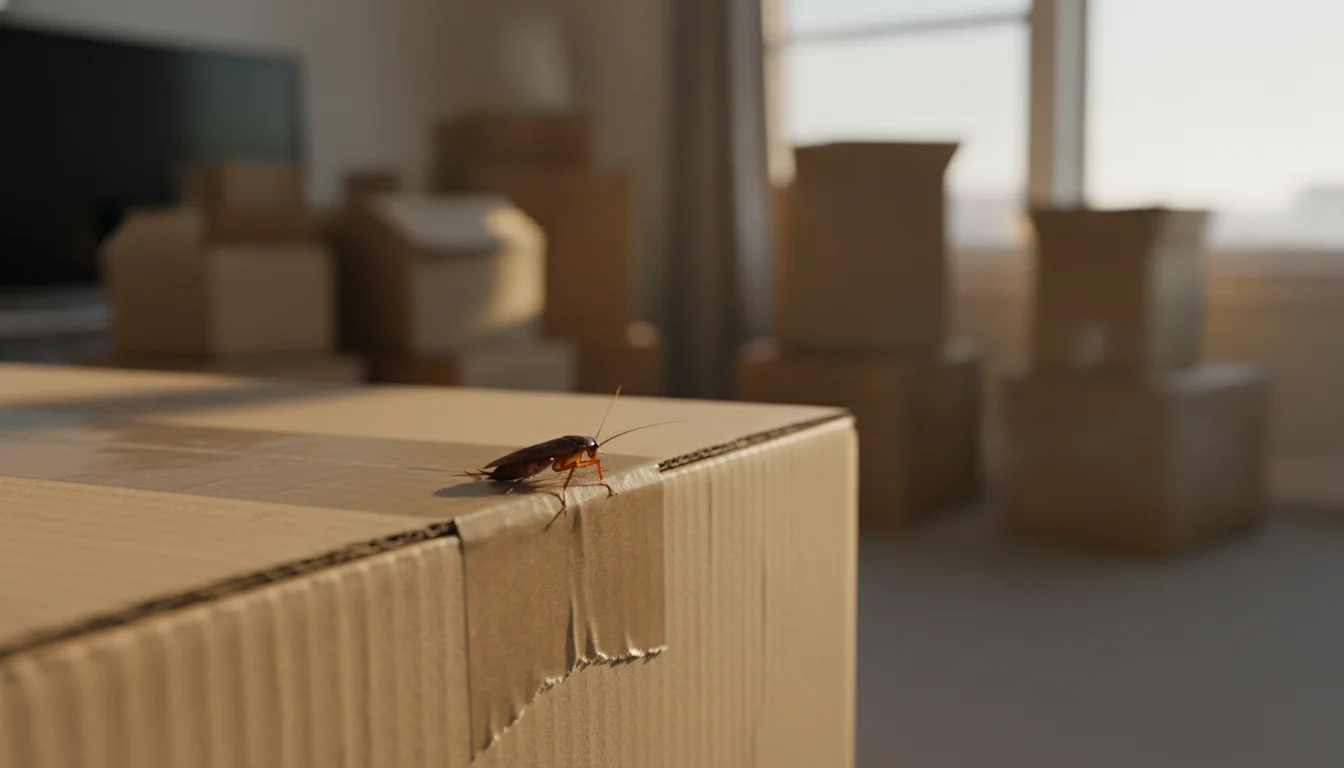
Used cardboard is the worst thing you can move in. Virginia Tech’s extension guide calls unused boxes and stacks of paper ideal shelter for roaches and other pests. So throw out the old boxes, the paper bags and the newspaper pile instead of filling them.
Buy new boxes, or better, use hard plastic bins with tight lids. Tape every cardboard seam shut. Keep the new supplies away from any problem room until you need them.
3. Inspect appliances and furniture for egg cases
A wipe-down misses egg cases, and one German cockroach egg case holds about 30 young, according to UC IPM.
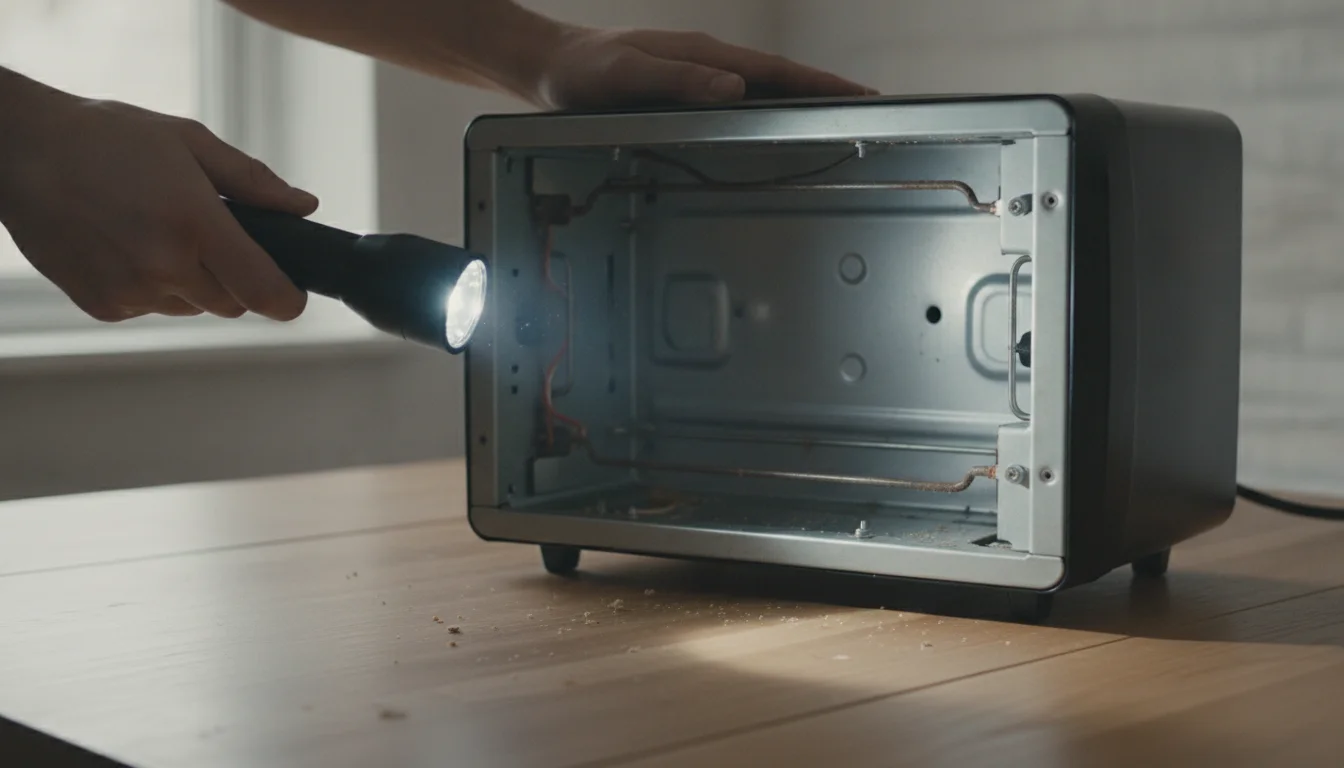
Unplug each appliance, let it cool and take it to bright light. Use a flashlight on the back panel, vents, underside and motor housing. Flip furniture and check under drawers and tabletops. You’re looking for droppings like black pepper and small tan-to-brown capsules about 1/4 inch (6 mm) long. Vacuum off what you find, then bag the vacuum contents and put them in an outdoor trash can.
Electronics stay dry: no spray, no water, no dust. Kentucky warns that boric acid can damage the components. If you already know something’s infested, follow the steps for roaches in electronics first.
4. Run soft goods through a hot dryer
The dryer does the killing. The EPA’s instruction for bed bugs is high heat for 30 minutes, and it says washing alone generally won’t do it. So wash if it’s dirty, then dry on high for the full half hour.
Then keep it clean. Seal each load in a plastic bag straight out of the dryer, label it and take it out of the problem room, as Orkin advises. Check care labels first, since some fabrics won’t take the heat.
5. Freeze what you can’t put in the dryer
Shoes, books, stuffed toys and small keepsakes go in the freezer. Seal them in a plastic bag and press out the air.
Published times vary. The EPA gives three days at 0°F (-18°C) for bed bugs on one page and at least four on another. UNH Extension gives four for food. Kentucky says at least a week for carpet beetles and clothes moths. Use a week and you’ve covered all of them, with bulky items needing longer.
The catch is the temperature. The EPA warns that many home freezers aren’t cold enough, so put a thermometer in there and check it. Leave the bag sealed for about 24 hours afterward as it warms (Kentucky’s advice), so the moisture doesn’t land on the item.
We found no reliable guidance on freezing electronics, so leave them out.
6. Encase the mattress before it moves
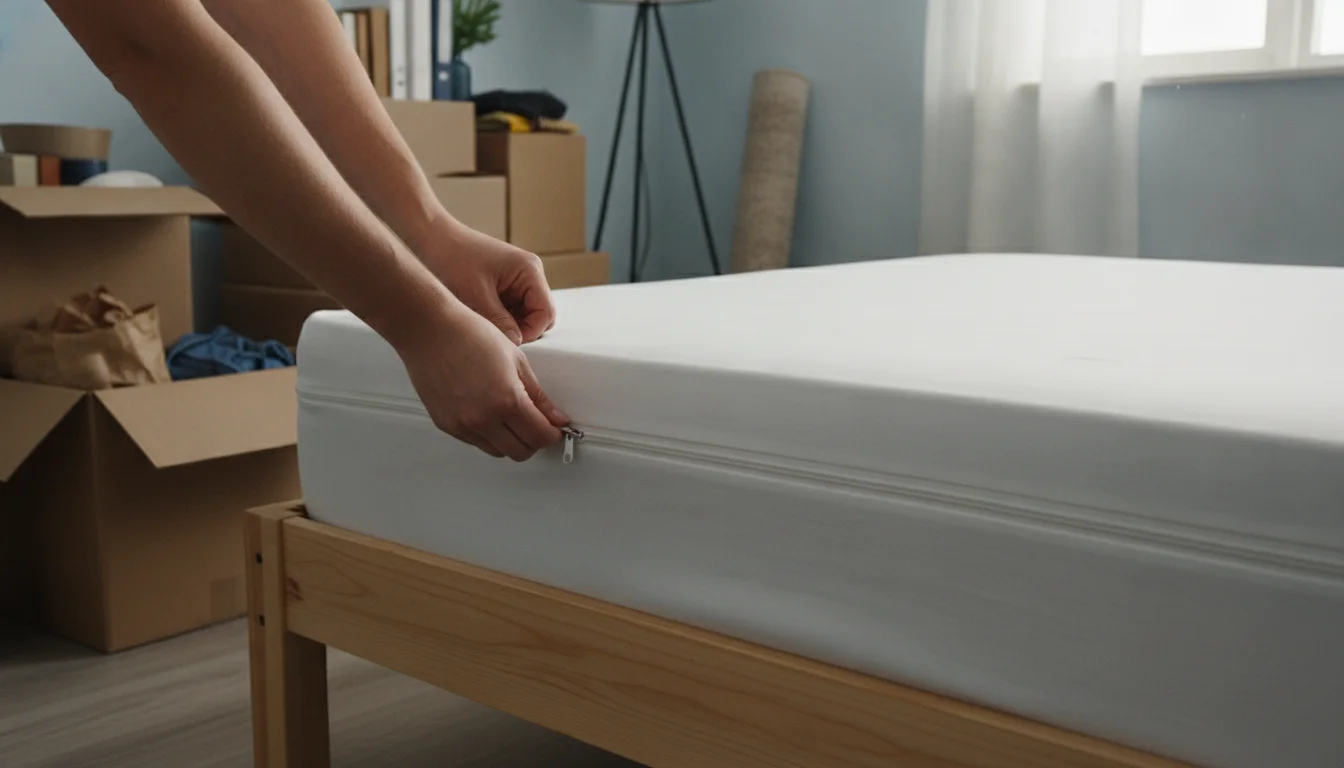
If there’s any chance of bed bugs, zip the mattress and box spring into encasements made for bed bugs before anyone lifts them. UC IPM says encasements hold bugs inside, where they eventually starve. And a sealed mattress can’t shed bugs across the truck and onto everything else. Regular mattress protectors don’t do this job.
Getting rid of a badly infested mattress instead? Wrap it, mark it “bed bugs”, and don’t leave it on the curb or the porch for someone else to adopt.
7. Clean wool before it gets packed
Go through wool, fur and silk one piece at a time, looking along seams, folds and creases. Carpet beetle larvae feed in hems, collars and cuffs, especially on things stored for a long time. Look for holes and small bristly larvae 1/8 to 1/4 inch (3 to 6 mm) long.
Kentucky says dry cleaning or hot laundering kills any eggs or larvae, and that heat from a clothes dryer works too. Care labels decide which one you use. If a piece can’t take either, it gets the week in the freezer from step 5. Vacuum wool rugs before you roll them, and read up on carpet beetles if you find a real colony.
8. Go through the pantry and throw out anything suspect
Check every package, including sealed ones, for webbing, holes, clumps and larvae. Then be ruthless. UC IPM’s advice for an infested package is to seal it up and get it out of the house right away, not to try and rescue it.
For food that looks fine but makes you nervous, UNH Extension gives two fixes that kill the eggs: four days at 0°F (-18°C) in the freezer, or 30 minutes at 130°F (54°C) in an oven, spread out on a tray. If you’ve got moths now, see pantry pests before you pack anything.
9. Move dry food in hard containers
Paper sacks and thin bags don’t stop these insects. UNH Extension says many of them chew through plastic and cardboard. Decant what’s left into glass, metal or thick plastic with tight lids, including pet food and birdseed, and wipe down the outside of each container. Keep using them at the new place. UC IPM suggests airtight storage or the fridge or freezer for at least several months after an infestation.

10. Unpack one box at a time, outside
Don’t carry everything straight in. Keep boxes outside or in the garage and open them one at a time, lifting items out and checking them for insects and egg cases. That’s BR Moving’s advice, and Orkin also says to empty boxes outside. It’s your last clean chance, so do the boxes from your worst rooms first.
Flatten each empty box and take it straight to the recycling or the trash. Sealed bags of dried laundry can come in as they are.
11. Put interceptors under the bed legs
Interceptors are plastic dishes that sit under each bed leg and catch bed bugs climbing up. Set them up the day the bed goes together, and check them at least every 7 days, as the EPA says.
12. Put sticky traps in the kitchen before the first night
Lay glue boards against the walls behind the fridge and stove and inside cabinets, which is where UC IPM says to put them. For the pantry, add a pheromone trap. UC IPM says a new catch means it’s time to go through your food packages again.
How to get rid of pests when moving: what to check in the first week
Give the new place a proper look at day 7, then keep going, because a clean first week doesn’t clear you:
- The bed: interceptors and mattress seams, every week. Bed bug eggs hatch in about 10 to 15 days, so anything that came along as an egg won’t show up yet. The EPA says to keep inspecting for at least a year after treatment.
- The kitchen: sticky traps behind the fridge and stove, plus a flashlight in the cabinets after dark. German cockroaches carry their egg cases and drop them just before hatching.
- The pantry: small moths in the kitchen and webbing in packages. In warm weather, Indian meal moths take six to eight weeks to go from egg to adult, so keep checking through that stretch.
- The closets: wool seams and rug edges. Carpet beetle eggs take about two weeks to hatch, and the larvae can feed for months.
When to call a professional
Call a licensed pest control company when:
- You’ve got confirmed bed bugs and a moving date. UC IPM says confirmed infestations should be handled by trained professionals, and the EPA says treatment can take weeks to months. Book it now, not the week before.
- Roaches are still showing up every night after a few weeks of baiting.
- You’re renting and the bugs are coming through shared walls. Tell your landlord, since treating your unit alone won’t fix the building.
- An interceptor at the new place catches a bed bug.
FAQ
How do you move if you have roaches?
Bait for a few weeks first, throw out old cardboard, check appliances and furniture for egg cases, and pack in new boxes or plastic bins. Then unpack outside, one box at a time, and put out sticky traps before the first night.
Should I throw away my mattress before moving?
Not automatically. An encasement made for bed bugs seals in what’s there, and UC IPM says the bugs inside eventually starve. Throw it out if it’s too far gone, and mark it so nobody picks it up.
How long can bed bugs last in a sealed bag?
A long time. UC IPM says they can go 20 to 400 days without feeding, depending on temperature and humidity. That’s why the EPA says items you can’t treat should stay sealed for up to a year.
Can I leave bags in a hot car to kill bed bugs?
Don’t rely on it. The EPA says black bags in a hot, closed car may work, but success depends on your climate and do-it-yourself heat treatments might not work. A dryer on high is the sure thing.
What if I don’t know whether I have pests?
Do the cheap parts anyway: new boxes, a pantry check, a flashlight on your appliances and bed seams, and traps on arrival.