Table of Contents
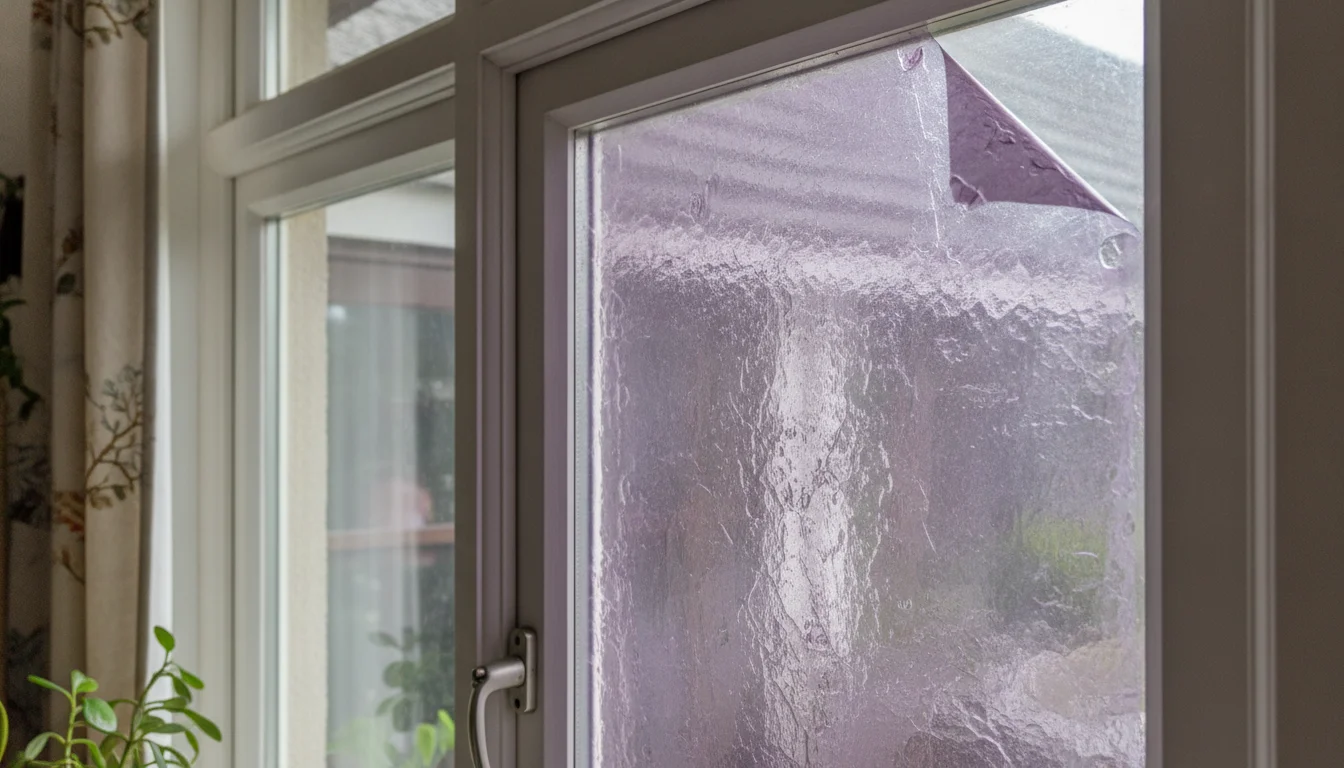
Someone on r/CleaningTips wanted to know how to get rid of window tint from house windows, the “ancient” kind. You know it: purple, bubbling, brittle, put up by a previous owner decades ago. Here’s the thing nobody selling car tint removal tells you. On a house, the film is the easy part. The glass behind it is what you can break.
So look at the window before you touch it. Is it double glazed? A big pane? Tempered (look for a small stamp etched in a corner)? Does it have a low-E coating? Are the frames wood? Each of those changes which method you use. Then test your method on one corner first, as Windows Canada and Campbell Window Film both advise.
1. Peel the film off dry from a corner
Free, and sometimes it’s all you need. 3M’s own advice, as reported by Hunker, starts here: lift a corner and pull the film off at a 90-degree angle, harder if the film’s age or condition calls for it. Static cling film has no adhesive and simply lets go.
Pull slowly. Tinting Source warns that rushing breaks film into small pieces, and every piece is another corner to pick at. If the first pull snaps off a chip, stop. That’s old polyester film, which Purlfrost describes as rigid and brittle, and it needs softening first.
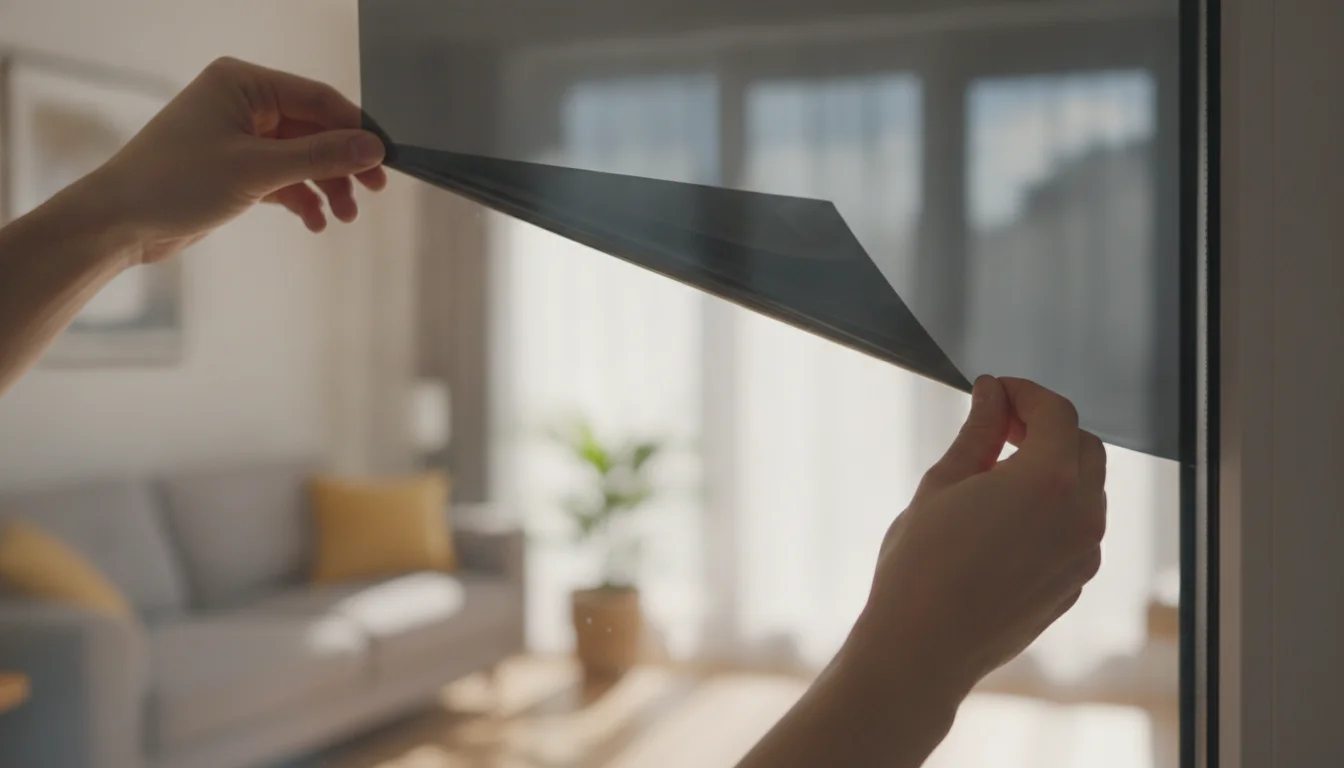
2. Heat to soften adhesive (a steamer beats a heat gun)
Heat softens the glue so the film comes off in sheets instead of flakes. Hold a hair dryer a few inches from a corner, lift the edge as it pops, and keep heating just ahead of the peel.
But heat is exactly how house glass cracks. Flexfilm, which sells architectural film, warns installers not to overheat a single area and to keep a heat gun moving, never on a high setting close to the glass. Campbell warns that too much heat can end up breaking large windows. On double glazing, an installer on the Signs101 forum prefers a handheld steamer from a big-box store: enough heat to release the adhesive without shattering glass or breaking the seals on thermo-pane units the way a heat gun can. Another poster in the same thread went further: on glass that isn’t tempered, skip both heat and steam. If you can’t tell what your glass is, use the soak instead.
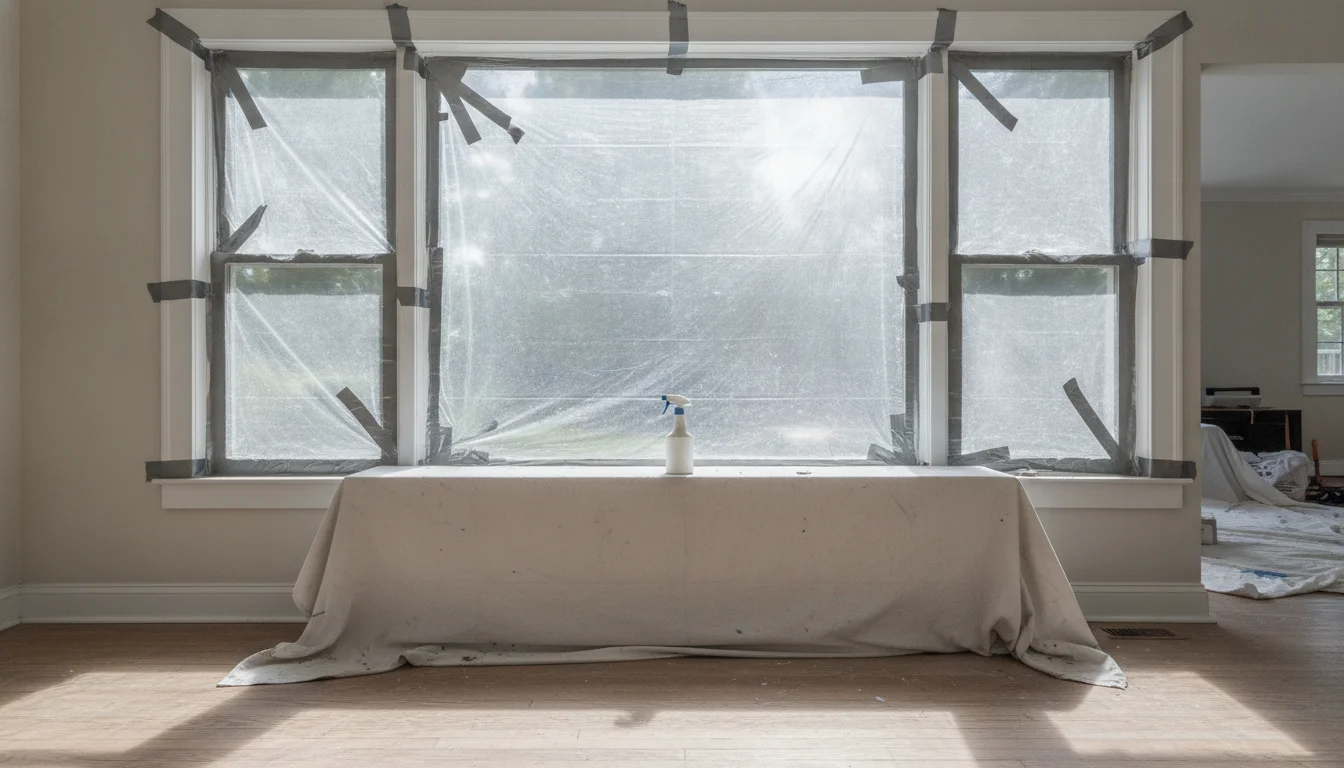
3. Soak the film under plastic sheeting
The best bet for brittle film on double glazing. Spray the film until it’s dripping, press plastic sheeting or a cut-open trash bag over it, and wait. Clera Windows uses warm water with mild liquid soap and leaves it at least eight hours or overnight. Then lift a corner and peel.
The fast version swaps in ammonia and a black bag in the sun for 1 to 2 hours (Windows Canada). A window cleaner on the WindowCleaner.com forum used the ammonia itself to stick cut-open bags to the glass, waited about an hour, and pulled the film off in one large piece with very little glue left. A pane done without ammonia fought back and kept a good amount of glue.
Three cautions for houses. Sun under black plastic can break the inner pane of a thin insulated unit, one Signs101 poster warns, so use the overnight soapy soak on double glazing. Ammonia can strip lacquered and painted wood finishes, so tape plastic over wooden frames and sills. And open the windows: Clera warns the fumes can be toxic.
4. Scrape with a plastic tool
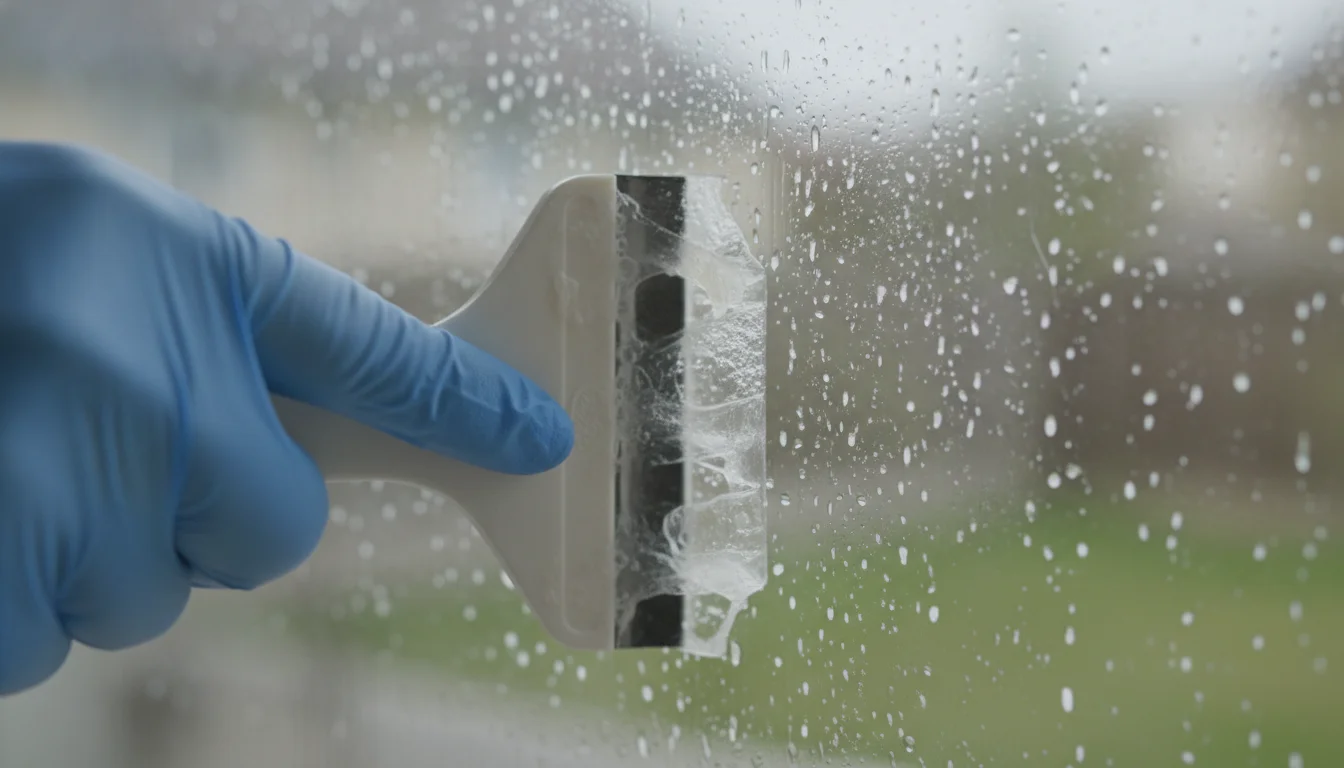
Glue left on the glass? Start with plastic. Hold a plastic scraper or an old card at about 30 degrees and push in short strokes while the glue is wet. Window Film Depot’s crews use plastic scrapers on tempered glass because they don’t scratch. It’s slower than a blade, but it’s the one to use when you don’t know what the glass is.
5. Scrape with a razor blade held nearly flat
Faster, and the one that does the damage. Use a razor only on plain, uncoated glass, and only wet. Keep the glass soaked with soapy water, use a fresh, clean blade, and hold it at a low angle (Viridian suggests 30 degrees) so it slides under the glue.
Never use one on a low-E coated surface. Pilkington tells window makers that razor blades, steel wool or other metal objects leave fine metal marks on the coating that look like scratches in sunlight and need special cleaning to remove. Tempered glass is risky too: Viridian explains its surface can carry tiny fused glass particles that a blade drags across it, and Tinting Source says plainly that razor blades scratch tempered glass. Skip the steel wool some guides suggest.
One exception where a blade earns its place: the Signs101 installer describes a dry, chemically bonded adhesive that stays on the glass, not even tacky, when the film comes off. That kind only comes off by dry scraping, with lots of blades.
6. Commercial adhesive remover
A citrus-based remover is Purlfrost’s pick for stubborn residue: apply a little, let it sit a few minutes, then scrape or wipe. Test it on a small area first and avoid harsh solvents that can damage seals. It’s the same chemistry that lifts tape residue. Work one section at a time. A Bunnings Workshop answer on old window film notes the spray dries fast and the glue turns sticky again if you spray the whole pane at once.
7. Rubbing alcohol adhesive dissolve
For the last thin haze. One Redditor found 91% isopropyl alcohol cleared glue that Goo Gone wouldn’t touch. Press a soaked cloth onto the residue for 30 seconds to a minute, then wipe in one direction. Keep it off varnished wood frames, where alcohol can strip the finish.
When to call a professional
Call before you start if the film is on large panes or double glazing and is dark or mirrored, if the glass has a low-E coating, if it’s security film (Windows Canada says its multiple adhesive layers resist normal peeling), or if the film is outside above the ground floor. Exterior film is worse in winter, too. The Signs101 installer says that on a cold day it’ll take forever.
Find the original installer first. 3M strongly encourages it, and Hunker reports its professionally installed residential films carry a lifetime warranty for the original homeowner against crazing, cracking, bubbling and delamination. If the film is failing and you’re that homeowner, the fix may already be paid for. Check your window warranty too: Solar Screen notes some window makers’ terms are strict about the glass and its seals. Window Film Depot puts professional removal at $2 to $3 per square foot in 2026.
Frequently asked questions
What is the best way to remove old window tint?
On house windows, the soapy soak under plastic. It needs no heat, so it’s the safest on double glazing and large panes. Then clear the glue with a plastic scraper and a remover.
Can I use a heat gun to remove tint?
You can, but keep it on low and always moving. A hair dryer or a steamer is the safer heat on house glass, because heat focused on one spot is what cracks large panes and double glazing.
How do I remove film from a glass window?
Lift a corner and peel it slowly at a low angle, softening it with heat or a soak if it tears. Then scrape the wet glue with plastic, and finish with a citrus remover or rubbing alcohol.
How long does it take?
The overnight soak takes the longest, at eight hours or more. The rest is labor, and Campbell estimates a DIY job with household tools takes a single afternoon.