Table of Contents
Figuring out how to get rid of drain smell comes down to one fact: a smelly drain has three different causes, and only one of them is actual dirt. Before you tip baking soda down the hole like every other guide tells you to, work out which one you’ve got. A trap that’s dried out and is letting sewer gas up. Something rotting inside the pipe, trap, or disposal. Or sewer gas getting past a failed trap or a blocked vent.
The fix for the first is free. The fix for the last is a plumber. Figure out which one you’ve got and you’ll usually clear the smell in ten minutes with what’s already under your sink, instead of scrubbing a clean pipe while the real problem sits untouched.
How to get rid of drain smell: start by finding the cause
Sinks are built never to smell. A curved section of pipe under the drain (the P-trap) holds a plug of water that seals the sewer off from your room. When a drain smells, that seal has either dried out, or something’s rotting on your side of it, or the seal has failed and gas is getting through. Here’s how to tell which.
Rotten eggs or raw sewage. Three things cause this, so don’t jump to the worst. The rotten-egg gas is hydrogen sulfide, and bacteria make it in two places: the organic film inside your own drain, and the sewer line past the trap. Rule out the water first. Fill a glass at the tap, walk away from the sink, and smell it; if the water itself stinks, the source is your supply or water heater, not the drain. If the glass is fine, the smell is coming from the drain, either something rotting on your side of the trap (clean it, below) or sewer gas slipping past a trap that’s dried out (common in a guest bath, a basement floor drain, or any fixture nobody’s run in weeks) or cracked, unsealed, or unvented. Run water into the drain first; if the smell clears, the trap was simply empty. If it’s back within a day or the drain gurgles, treat it as a plumbing fault and call a plumber.
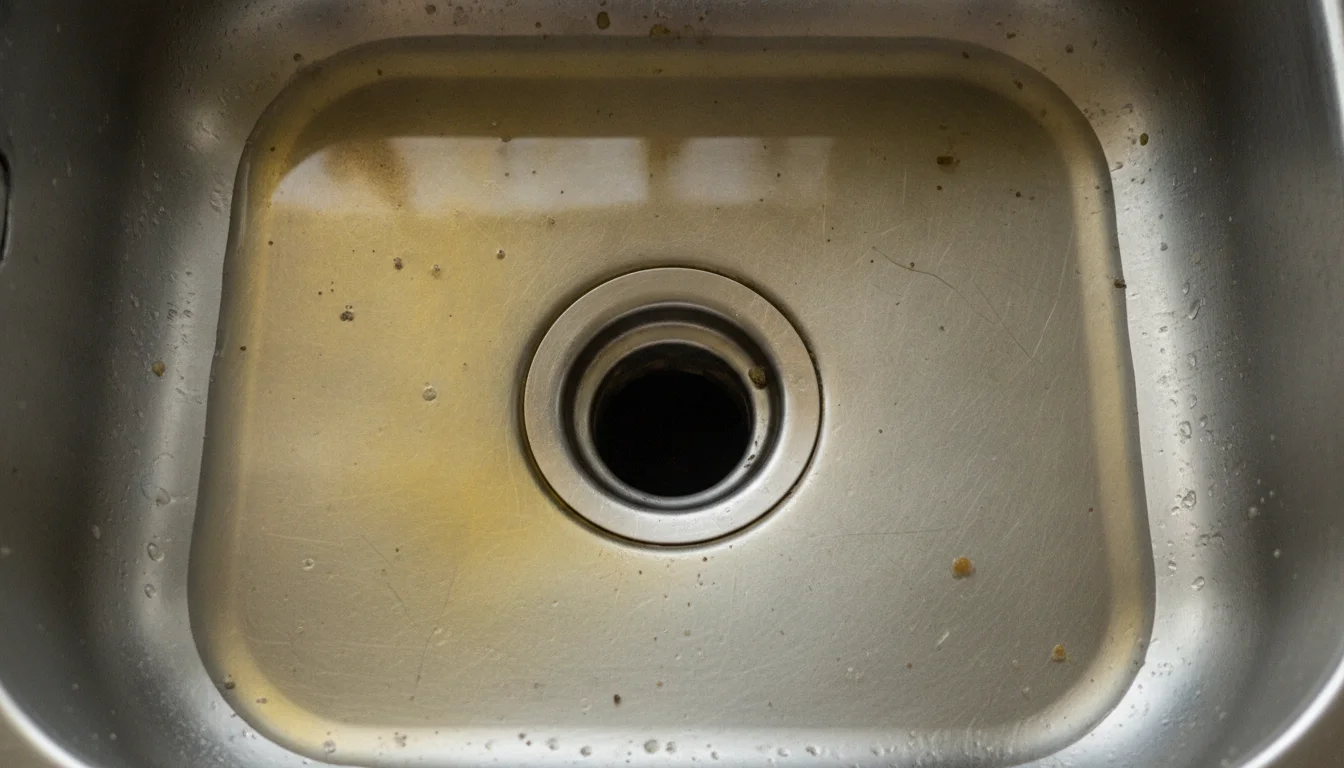
Musty, sour, or like old food. That’s organic buildup on your side of the trap: grease, hair, soap scum, and food gluing a bacterial film to the pipe walls. It’s worst right at the drain and strongest when you run water and disturb it. Kitchen sinks and disposals are the usual culprits.
Gurgling when the water drains. Run the sink and flush the nearest toilet. If the drain gurgles, it’s sucking air because the vent is blocked, and sewer gas comes with it. That one’s a plumbing problem, not a cleaning job.
1. Run water to refill a dry trap
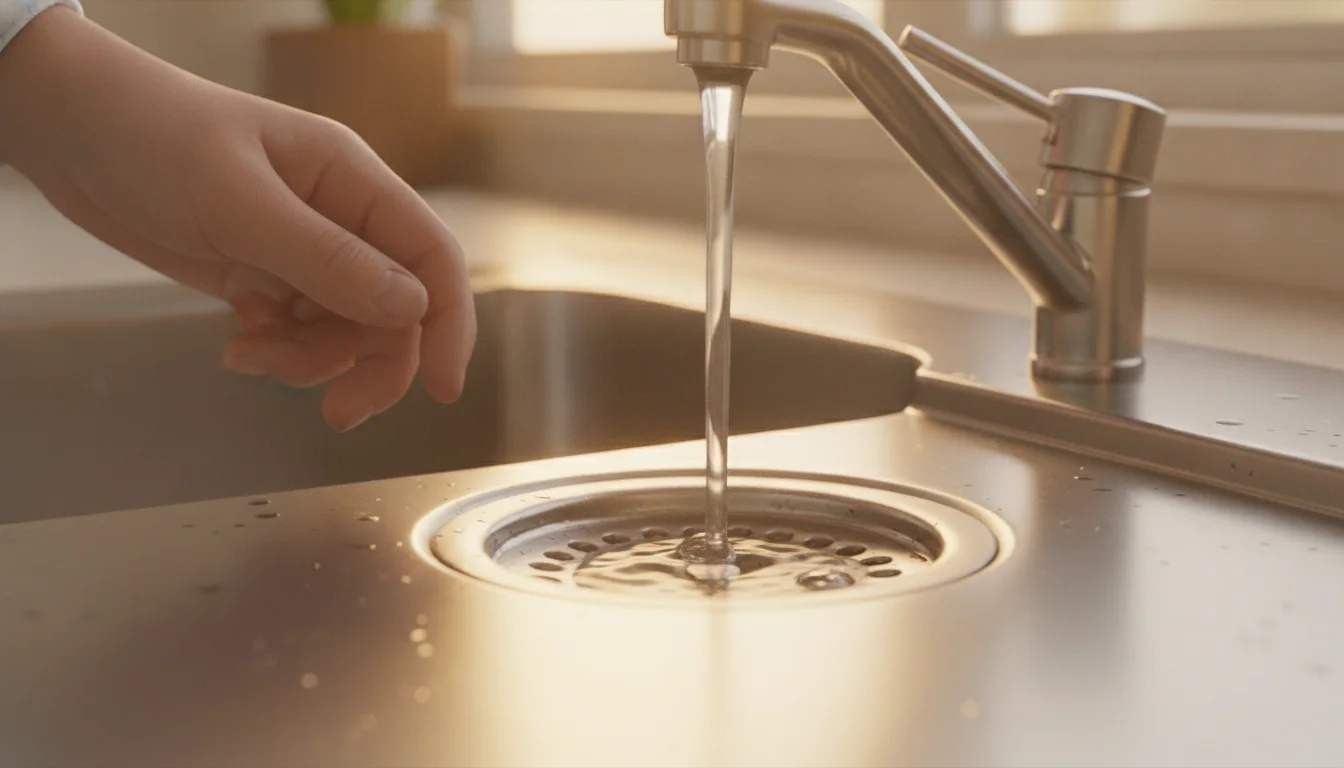
Start here, because it’s free and it’s the cause everyone forgets. If the smell is the rotten-egg kind and it’s coming from a drain you barely use, the trap has almost certainly evaporated dry. Run the tap for a minute, or pour a quart (1 L) of water down a floor drain, and wait. The seal refills and the smell should be gone within the hour. Nothing to scrub, nothing to buy.
A drain that keeps drying out (a basement or utility floor drain) holds its seal far longer if you pour a cup of mineral oil in after the water, since oil barely evaporates. Then get in the habit of running every seldom-used drain once a month.
2. Clean the drain with a snake or brush
If it’s the musty, buildup smell, this is the single most effective thing you can do, and it’s the step most guides skip on their way to the baking soda. Push a drain snake or a long pipe brush into the drain and work it up and down to scrape the slimy film off the pipe walls. Run warm water first to soften things up. What comes out is foul, and that foulness is exactly what’s been stinking. A plunger helps drag out whatever you’ve loosened. Liquid cleaners can’t touch this, because the smell lives inside a film you have to physically remove. That same film is where drain flies breed, so if you’ve been swatting little moth-like bugs near the sink, cleaning the pipe deals with both at once.
3. Flush with baking soda and vinegar
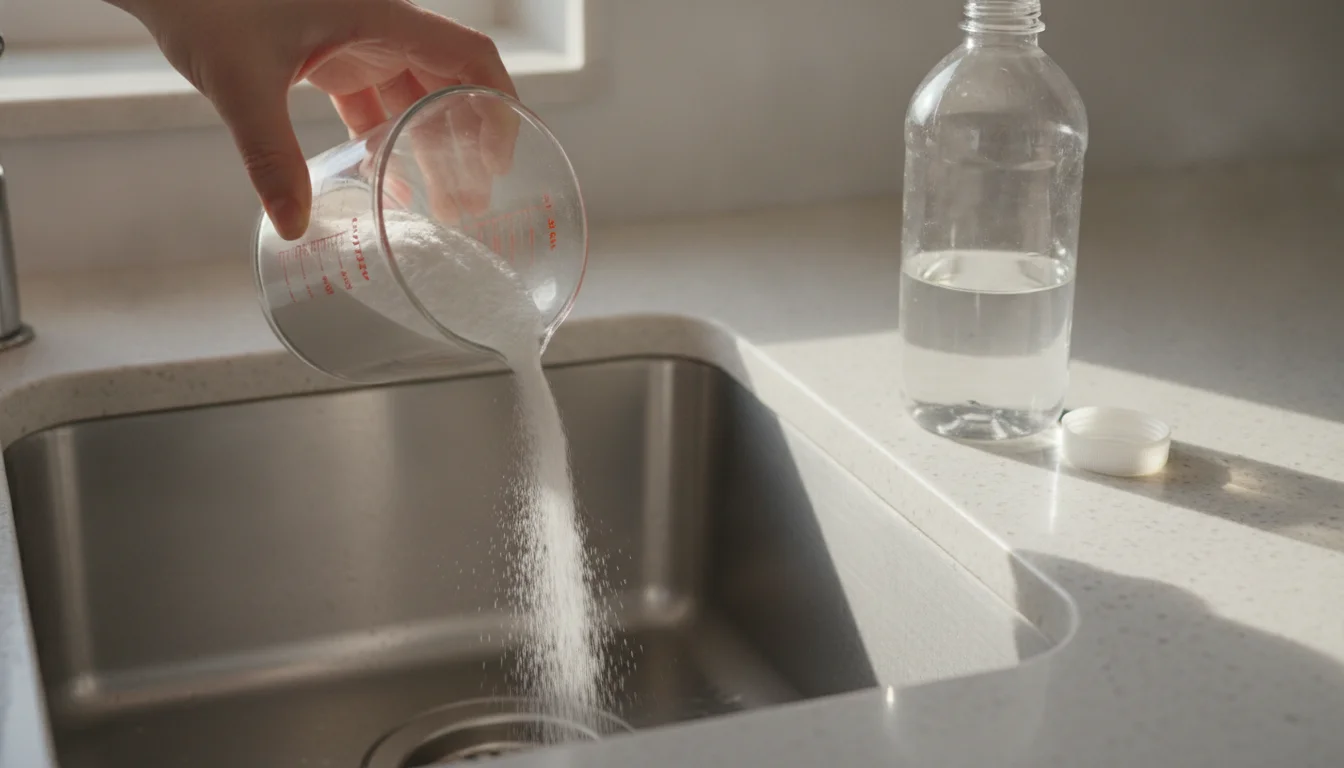
Now the famous one. It’s real, it’s just not the whole answer. Pour half a cup (120 ml) of baking soda down the drain, chase it with a cup (240 ml) of white vinegar, and let it fizz for about 15 minutes. The reaction loosens the lighter residue the brush left behind and knocks the smell back. Flush it through with a couple of quarts of hot water.
Not boiling water, though. Boiling water softens and warps PVC pipe and can loosen the glued joints under your sink. Hot from the faucet is plenty. Do this in every drain, not just the one that stinks.
4. Use an enzyme drain cleaner
For a drain that keeps coming back to smell, an enzyme cleaner is the one worth buying. The biological agents digest the organic film that bacteria feed on, reaching what the brush missed. Pour it in, leave it for the time on the label (usually overnight), and don’t run water after. On a septic system, check the label for septic compatibility before you use it. One dose rarely clears a heavy layer, so repeat weekly until it stays fresh.
5. Run the garbage disposal with lemon
Kitchen smell that’s worst at the disposal? Food’s rotting on the blades and inside the chamber. Drop a quartered lemon through with cold water running; the citrus oils scour the blades and leave the kitchen smelling clean. No lemon? Pour half a cup (120 ml) of white vinegar in with cold water instead, which kills the bacteria rather than just covering them. For a bad one, do both: vinegar to disinfect, lemon to scent.
6. Clean the P-trap
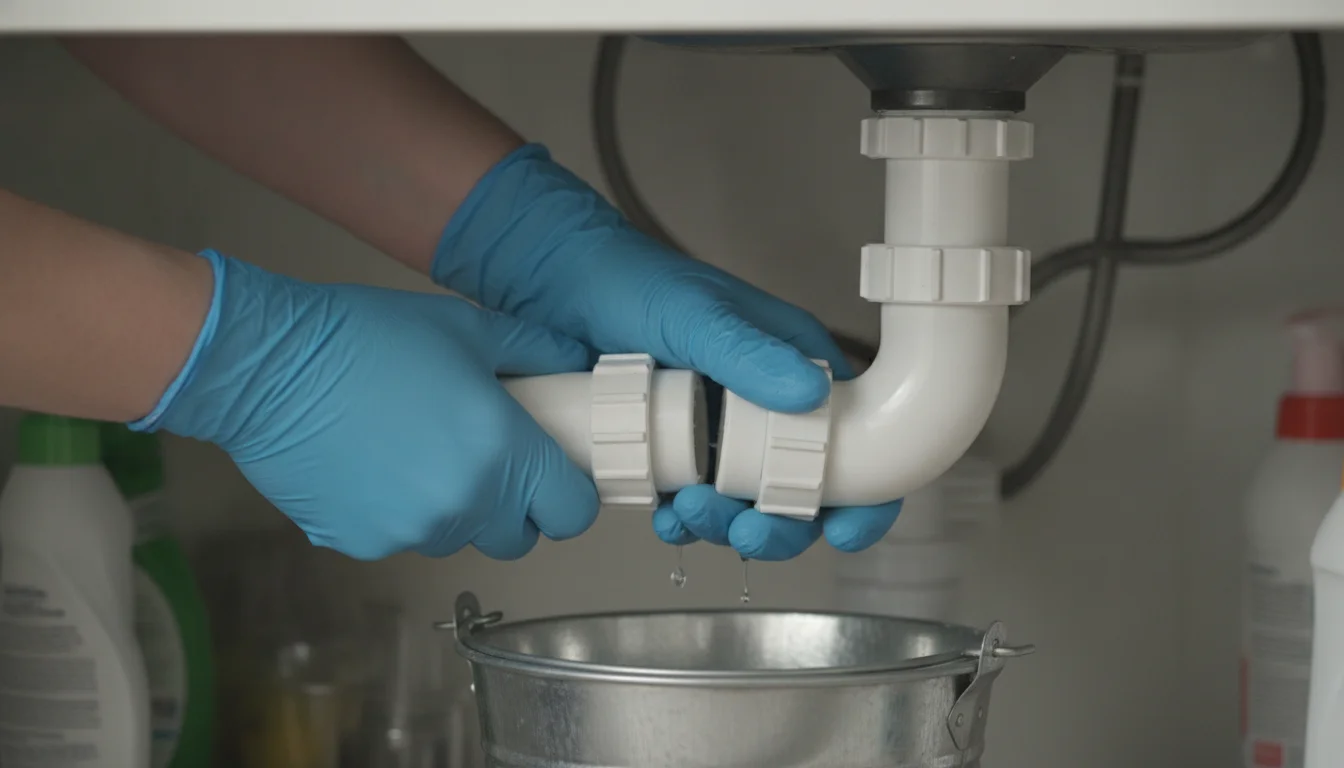
Scrubbed the drain and it still smells? Open the trap. That U-bend under the sink catches debris a snake can’t reach, and a slug of rotting sludge can sit there for months. Put a bucket under it, loosen the slip nuts by hand (or with pliers), and pull the trap off. Tip out the water, scrub the inside with a bottle brush, reassemble, and run water to refill the seal. This catches what every surface treatment misses.
7. Use a sink strainer to catch scraps
Stops the whole problem before it starts. A mesh strainer sitting in the drain catches food scraps and grease before they can glue themselves to the pipe. Empty it into the trash after you wash up, give it a rinse, done. Cheap, and it saves you doing any of the above again for a long while.
Prevention
Most drain smells are buildup, and buildup is preventable. Keep fats, oils, and grease out of the drain, since they cool, harden, and glue everything else to the pipe walls. Wipe greasy pans with a paper towel before washing them, and run hot water for a few seconds after every use to carry residue down instead of letting it settle. Once a week, the baking-soda-and-vinegar flush (or an enzyme dose) keeps the film from taking hold. And run water through every drain you don’t use often, floor drains included, at least monthly so the trap never dries out. A dishwasher or washing machine that starts to smell is the same buildup story in a different drain, and the same habits keep it from happening.
When to call a professional
Some drain smells aren’t a cleaning job. If you refill the trap and the rotten-egg smell is back within a day, the water’s being siphoned out by a venting fault: call a plumber. A drain that gurgles when you run water or flush a nearby toilet means the same blocked vent. A cracked trap leaking sewer gas needs replacing, not scrubbing. And if the smell is in the water itself (every faucet runs sulfur or rotten eggs) that’s your water supply or water heater, not the drain. Persistent sewer gas is a plumbing fault to fix, not one to live with.
Frequently asked questions
Why does my drain smell like rotten eggs or sewage? The rotten-egg gas (hydrogen sulfide) has three possible sources, so rule out the water first: fill a glass at the tap, step away, and smell it. If the water itself stinks, it’s your supply or water heater, not the drain. If the glass is fine, the smell is the drain, either bacteria in the film inside the pipe (clean it) or sewer gas getting past a dried-out or failed trap. Run water into the drain; if that clears it, the trap was simply empty. If the smell returns, treat it as a plumbing problem.
Why does my sink only smell when the water runs? Running water disturbs the bacterial film built up inside the pipe, trap, or disposal. Clean the drain mechanically and flush it. If the water itself smells at every faucet, the problem is your water supply, not the drain.
Can I pour boiling water down the drain to clear it? Not if you have PVC pipes. Boiling water softens and warps plastic pipe and can loosen glued joints. Hot tap water does the job without the risk.
The smell went away when I ran water but came back a day later. Now what? Then it wasn’t a simple dry trap. The seal is being pulled out by a venting fault, or the trap is cracked. That’s a plumber’s call. A faint whiff is just unpleasant, but a strong, persistent rotten-egg smell means sewer gas is getting into the room and is worth fixing promptly.