Table of Contents
Old paint is one of the few household leftovers where the wrong bin is a real problem, not a fussy one. Knowing how to get rid of old paint comes down to a single fact most guides bury behind “check your local rules”: is the paint water-based or oil-based? Water-based paint (latex or acrylic) can usually be hardened and put out with the household trash, though some places want dried paint at a recycling center instead, and paint that contains lead or mercury is hazardous waste whatever its base. Oil-based and solvent paint is household hazardous waste: keep it out of the trash, and never pour it down a sink or toilet, onto the ground, or into a storm drain, which usually runs straight to a river or the sea untreated. Either way, let the paint label and your state or local waste authority settle the exact route. The label tells you which: water-based cleans up with soap and water, oil-based with mineral spirits. If the label is gone, rub a hidden dab with cotton and rubbing alcohol; water-based softens and lifts, oil-based does not react. Here are the five routes, best outcome first.
1. Give away or donate usable paint
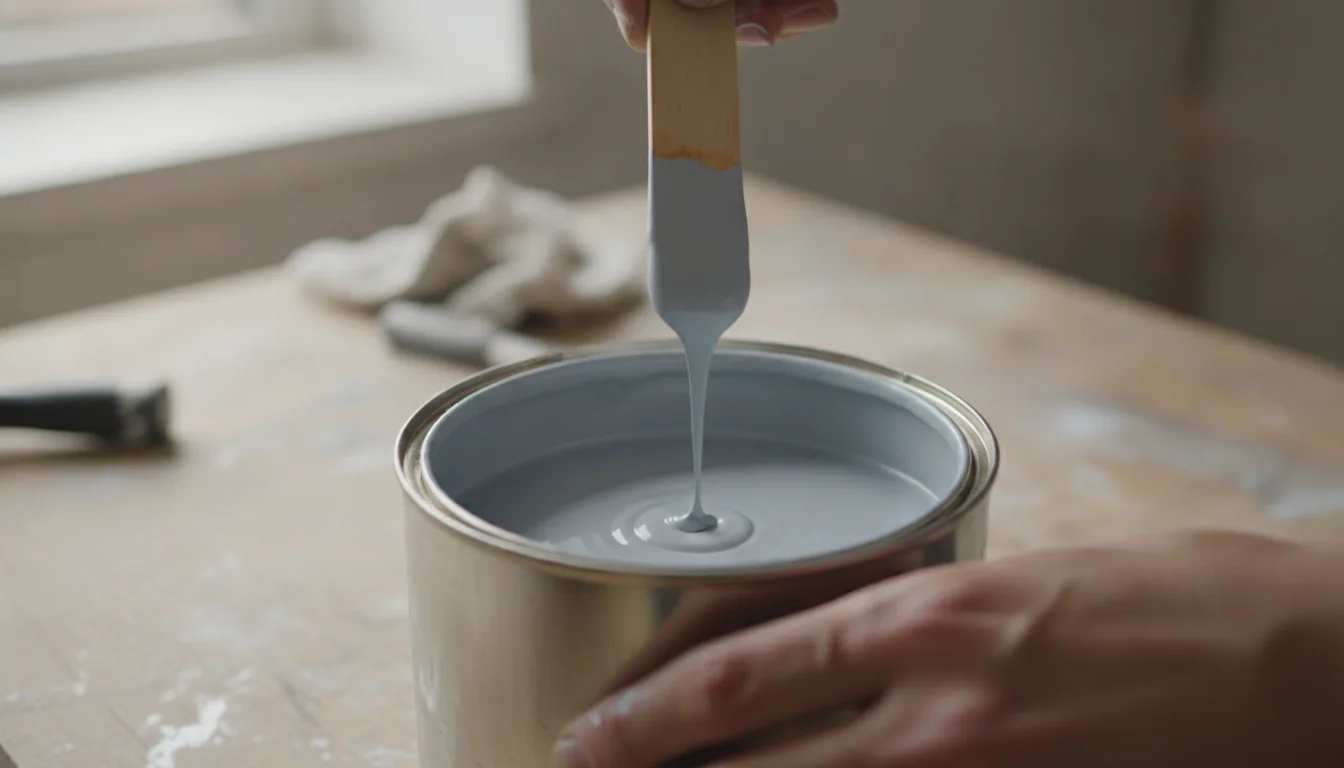
The cheapest and greenest move is to keep good paint out of the waste stream entirely. Before you write a can off, pry the lid and stir from the bottom; if it comes back smooth and does not smell sour, someone can use it. Offer it to neighbors, a buy-nothing or community group, a school, or a drama group. Reuse stores such as Habitat for Humanity ReStore take usable architectural paint in many areas, and some hazardous-waste depots run a free paint-swap shelf. In the United States, PaintCare’s PaintShare gives leftover paint back to the public. Wipe the can, keep the label readable, and tape the lid down for transport.
2. Dry out water-based paint and throw it out
Once you know a paint is water-based, this is the easy route. Curbside trash pickup will not take liquid paint because it slops in the truck, so the job is to dry it solid first. A thin film in the bottom dries on its own in a day or two with the lid off, somewhere warm and out of reach of children and pets. For a half-can or less, stir in an absorbent: clay cat litter, a packet of commercial paint hardener, sawdust or shredded paper. Cat litter is the classic choice, roughly equal parts litter to paint, stirred to a stiff, oatmeal-like paste that will not pour. Keep the can half full at most so it does not overflow. It firms up in anywhere from an hour to overnight depending on quantity and warmth. When it is hard right through, most areas let you put it out with the household trash, lid off, so the crew can see it is solid and not liquid; a few want the dried paint at a recycling center instead, so check the paint label and your local waste authority.
3. Take oil-based paint to household hazardous waste
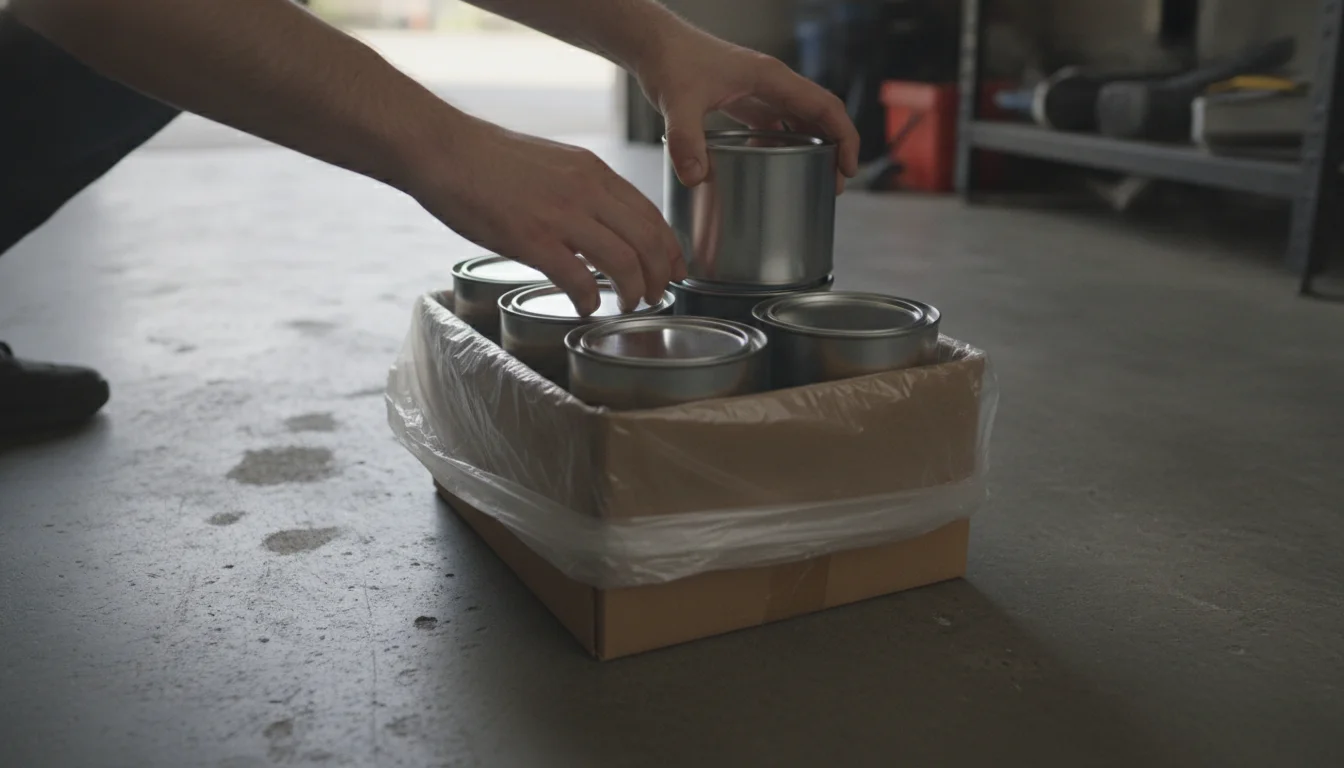
Oil-based paint, solvent-based stain, varnish, thinner and paint stripper are hazardous waste, and this is the one route where getting it wrong causes real harm. The solvents are flammable, and the EPA warns against putting hazardous waste like this down any drain, onto the ground, or into a storm sewer, which usually carries it straight to a river or stream untreated and can injure the crews who handle waste. The same rule holds for used cooking oil: the drain is never the answer. Take these paints to a household hazardous waste (HHW) facility or a collection event instead. Not every area runs one, and hours, quantity limits, appointments and fees vary, so look yours up first through your state or local environmental or solid-waste agency, or a hazardous-waste locator such as Earth911. Leave each product in its labeled can, press the lid down, and stand the cans upright in a lined box so they cannot tip on the drive. Two things ride along. Used thinner can be reused: let it stand until the pigment settles, then pour the clear solvent back into its original, tightly capped metal can, and take the sludge to the HHW site. Solvent-soaked rags need care, because piled oily rags can heat up and catch fire on their own. The NFPA’s routine is to hang or spread them outdoors to dry, away from buildings, then keep them in a sealed metal container or a can of water until you take them to the HHW site with the paint.
4. Drop off paint at a recycling program
Where a paint stewardship program runs, it is the single tidiest route, because it takes both usable and unusable architectural paint, latex and oil-based alike, in a single drop-off. In the United States this is PaintCare, a nonprofit with thousands of drop-off points, mostly at paint and hardware stores, in the states that have adopted it. Bring your leftovers in their original, labeled cans; the paint is sorted for reuse, remade into recycled-content paint, or disposed of responsibly. It does not take loose solvents, thinners or aerosols, which stay on the hazardous-waste route. Where there is no program, your local recycling center or HHW depot fills the same role. Check the site’s hours and limits before you drive over.
5. Recycle the empty paint can
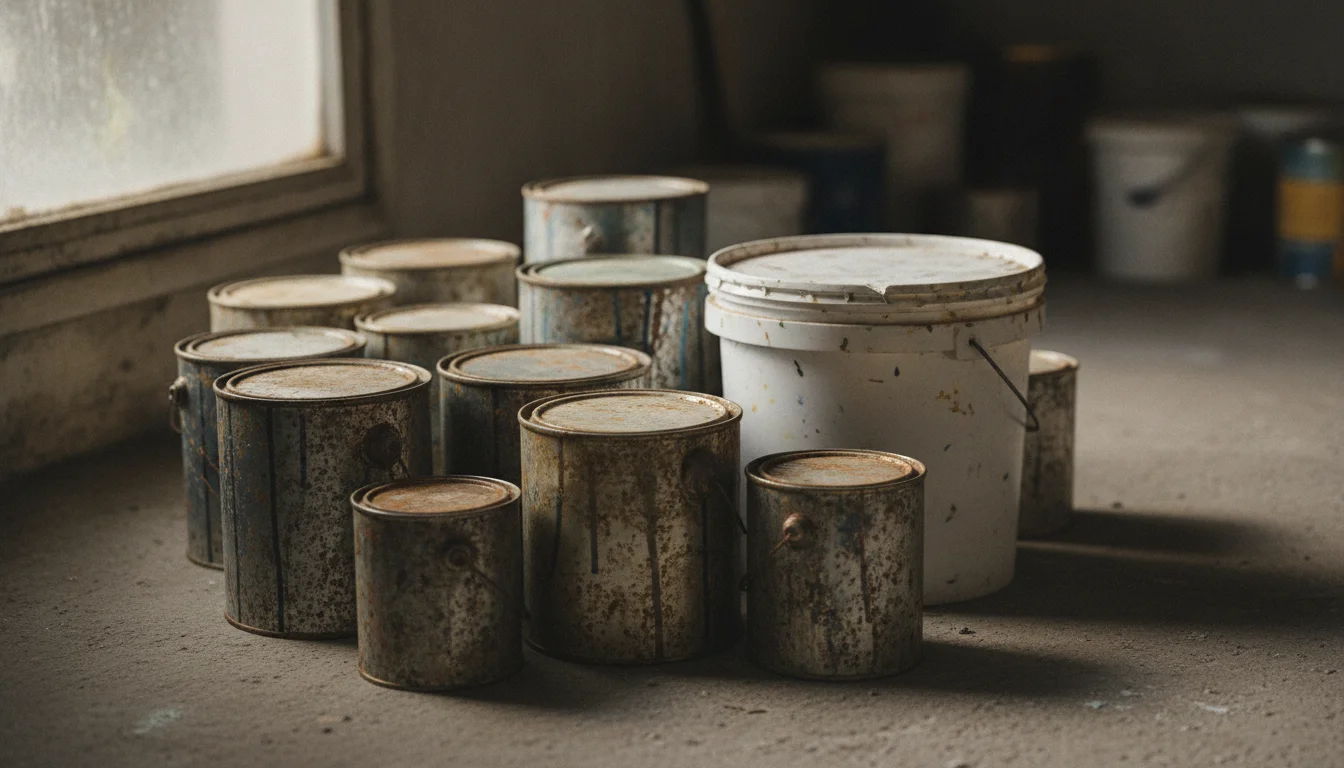
Once a can holds nothing but dry residue, it is mostly a recycling question rather than a paint one, though even an “empty” can keeps a little residue, so the paint type and your local rules still decide where it goes. A scraped-dry metal can is scrap steel and goes in metal recycling where your area collects it, or into the scrap-metal dumpster at a recycling center, lid off so the sorter can see it is empty; a sealed can is often rejected on sight. Plastic tubs vary more by area, so check before assuming a dry one can go in curbside plastics. If you hardened latex paint inside the can, some areas let the whole lid-off can go in the regular trash, while others want the dried block out and the bare metal recycled. Old, rusted cans left by a previous owner can be stubborn: a proper paint-can opener beats a putty knife or screwdriver, and a degrading tub is best lifted into a bag-lined box before you move it, so a split does not make a mess.
Old paint disposal FAQ
Can you put old paint in the trash?
Water-based (latex or acrylic) paint usually can, once it is dried solid: harden it with air, cat litter or paint hardener, then put the block out with the lid off, unless your local rules send dried paint to a recycling center. Liquid paint of any kind does not belong in the trash. For oil-based and solvent paint, use your local household hazardous waste facility or collection route instead. Either way, follow the paint label and your state or local waste authority, which set the rules where you live.
How do you dispose of oil-based paint?
Take it to a household hazardous waste facility or a collection event. Never throw it out wet, and never pour it down a sink, toilet, gutter, drain or storm drain, or onto the ground. Keep it in its labeled can, lid on and upright, for the drive.
Where can I get rid of old paint near me?
Start with your state or local waste authority or a hazardous-waste locator such as Earth911, which will tell you whether a household hazardous waste depot, recycling center or collection event near you takes paint, since some communities have neither a permanent facility nor a special collection. In the United States you can also use the PaintCare site locator where the program runs. Those locators also list drop-off options for other household items that need careful disposal, like expired medicine. Call ahead to confirm hours and quantity limits.
Can you donate old paint?
Yes, if it is still good. Stir it first: if it blends back to a smooth, pourable consistency and does not smell sour, neighbors, community groups, schools, drama groups and reuse stores such as Habitat for Humanity ReStore will often take it. Discard paint that has set solid, gone lumpy and stringy, or smells rancid.