Table of Contents
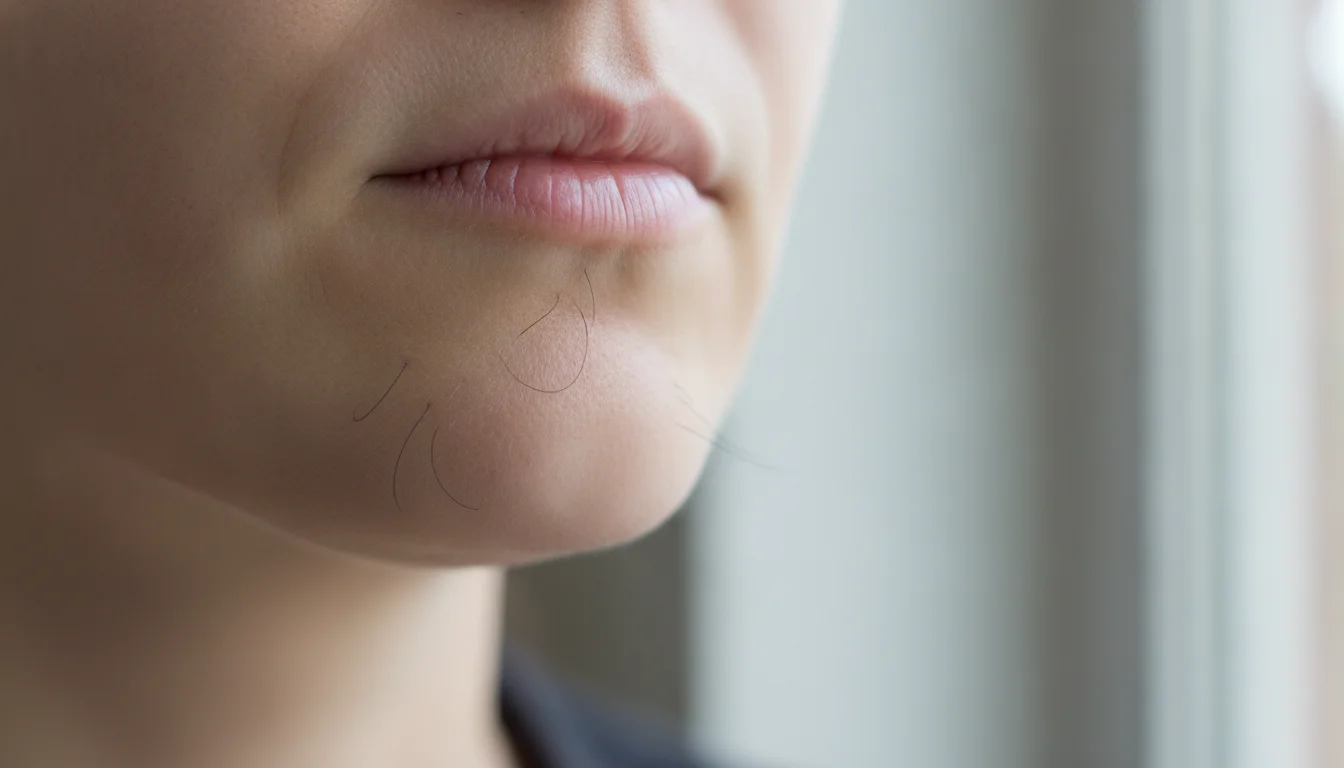
You feel it before you see it. A single wiry hair on the chin or along the jaw, longer and coarser than everything around it, that seems to have shown up overnight without asking. It’s normal, and learning how to get rid of chin hair is really about picking the right removal method, not chasing a cure. Hormones shift through your whole life, and especially around menopause, the same shift behind other menopausal skin changes, fine “peach fuzz” can turn into the odd dark, stubborn hair. Millions of women deal with it, and it says nothing about your health on its own.
So here’s the honest version, without the supplement doses and prescription creams the magazine listicles love to push. What you pick depends on how many hairs you’re dealing with and how long you want the result to last.
1. Pluck it with tweezers
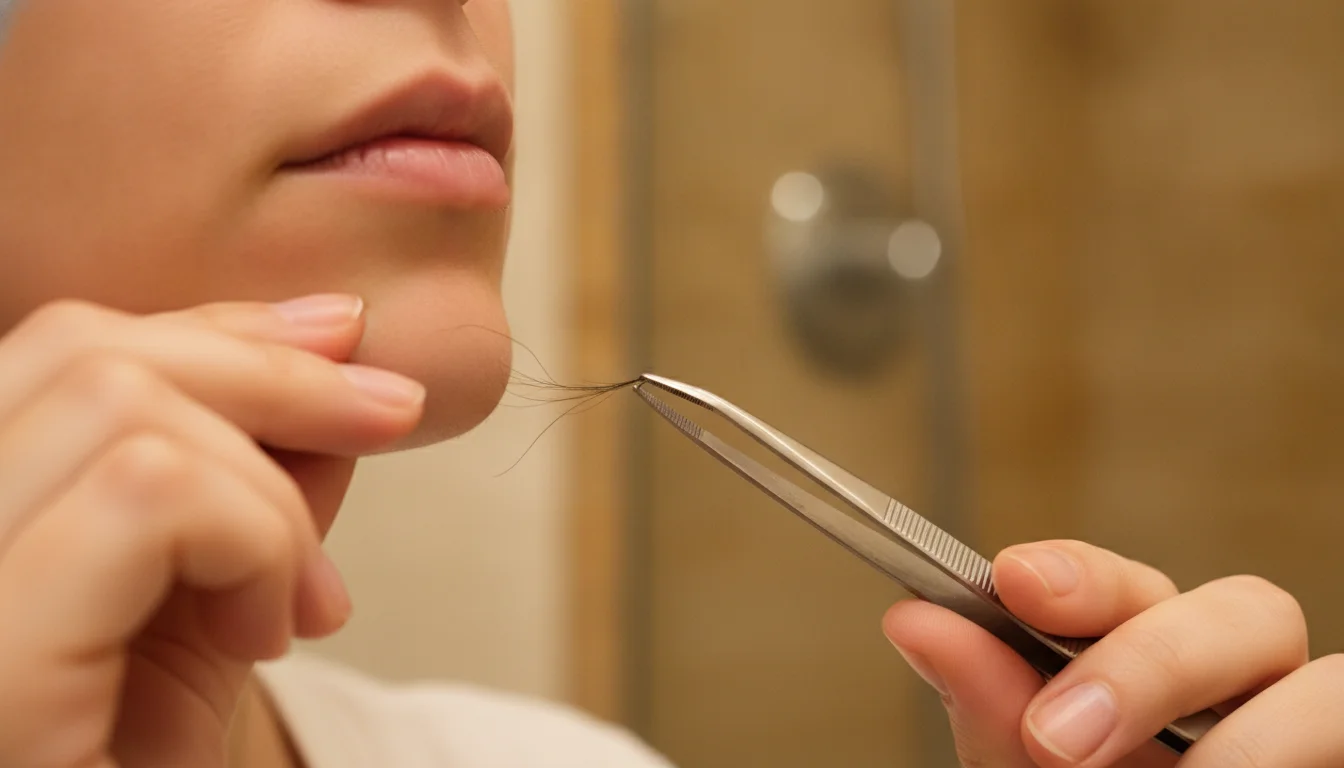
For one hair or a handful, tweezers win. Nothing else is cheaper or more precise. Get a slant-tip pair, find good light and a magnifying mirror, grip the hair as close to the skin as you can, and pull in the direction it grows in one smooth motion. Yank sideways and you’ll snap it, leaving the root to regrow in days.
Pluck just after a warm shower, when the pore is looser, and hold the skin taut with your free hand to cut the sting. Because the whole hair comes out, that spot stays clear for a week or two. Just don’t pick at a hair buried under the skin, and back off any spot that’s turning red and bumpy. That’s how you train an ingrown.
2. Dermaplane with a facial razor
A small facial razor (or a salon dermaplaning treatment, which is the same idea with a sharper blade and a trained hand) skims flat across the skin and cuts hair off at the surface. Clean, dry skin, a shallow angle, short downward strokes. It’s painless, takes seconds, and lifts a layer of dead skin as a bonus, so makeup sits smoother afterward.
The catch: it only cuts, so the hair’s back in a few days. And no, shaving does not make it grow back thicker or darker. That’s the most persistent myth in hair removal. You’re just feeling a blunt cut end instead of a tapered tip. The follicle doesn’t change. Skip it on skin that’s mid-breakout or irritated, and swap the blade often, because a dull one drags, nicks, and can leave razor bumps.
3. Thread the hair
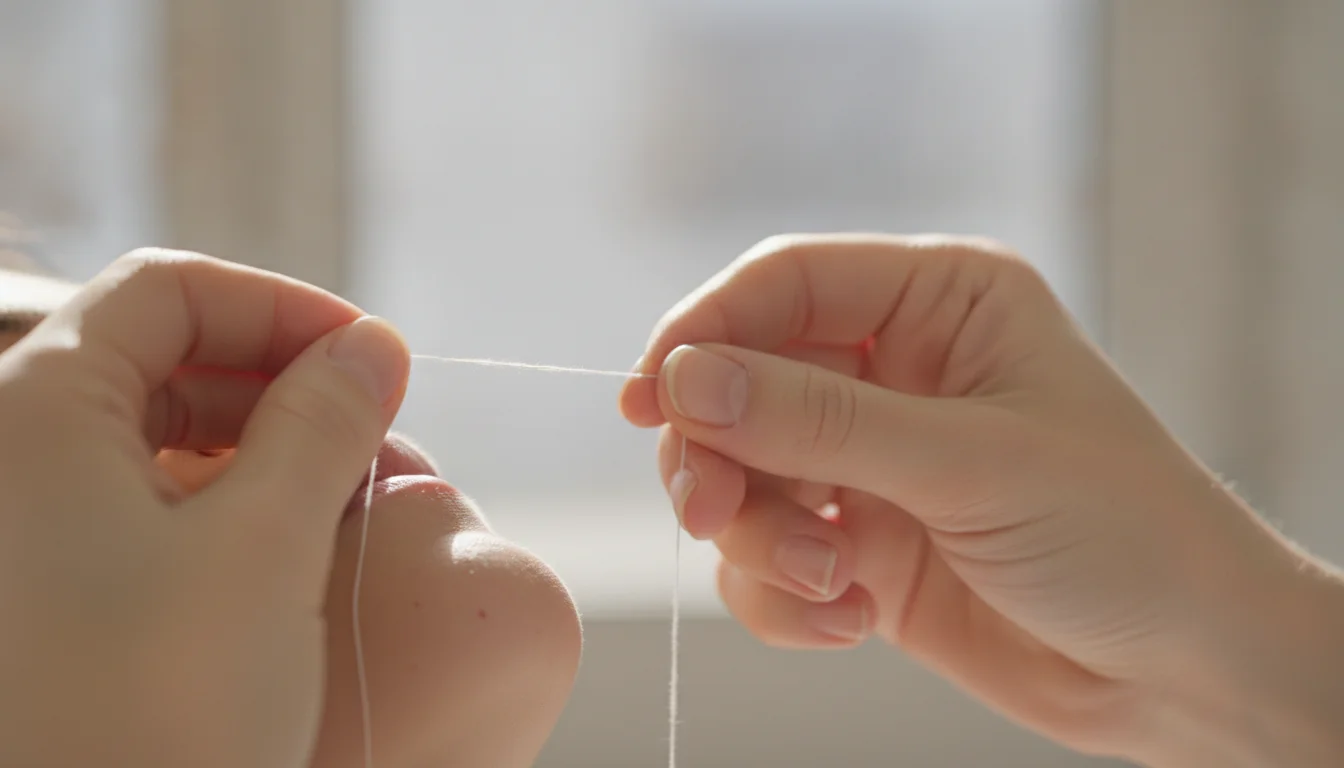
Threading rolls a twisted loop of cotton thread across the skin and lifts out a whole row of hairs at the root, several at a time. It’s as precise as plucking but much faster, which is why brow bars run on it. Results hold for four to five weeks, and because nothing touches the skin but thread, it’s gentle enough for sensitive or acne-prone skin that waxing would leave raging.
The downside is skill. A clean line takes a practiced hand, so this is one to have done rather than learn on your own face. Ask around for a good salon. It stings the first time and eases with repeat visits, as the regrowth comes in finer.
4. Wax the hair
Wax grips a patch of hairs and rips them out at the root in one pull, so a waxed chin stays smooth for three to six weeks. Facial kits use small strips and a gentler formula than the leg stuff. Test the temperature on your wrist first, because wax that’s too hot burns.
One firm rule most listicles skip: don’t wax skin that’s on an acne or retinoid treatment, on a skin-thinning antibiotic, or on any medicine that thins the skin. Those can thin the skin enough that the wax tears it. If you take a prescription skin or acne medicine, check its label or ask your pharmacist or prescriber whether, and for how long, to hold off on waxing. And at a salon, insist the tech uses a fresh stick for every dip into the pot. Double-dipping puts other people’s bacteria into warm wax that isn’t hot enough to kill it.
5. Apply a depilatory cream
A hair-removal cream dissolves the hair chemically instead of cutting or pulling, so the smooth result lasts a day or two longer than shaving. Spread it on, wait, wipe it off. Quick and painless.
This is the one method where reading the label isn’t optional. Use only a cream marked for the face (body formulas are too harsh for the chin), follow the directions on the label for timing exactly, and patch-test a small spot 24 hours ahead. The chemistry that melts hair can burn skin, so if it stings, rinse it off right away and don’t chase a closer result by leaving it on longer. Some people also just can’t stand the sulfur smell.
6. Drink spearmint tea
This is the only drink with real, if modest, evidence behind it, and it’s a slow one. In women whose coarse hair is driven by high androgen (male-hormone) levels, small studies found that two cups of spearmint tea a day lowered free testosterone over several weeks. Lower androgens can mean slower, finer regrowth over months. It’s a traditional Middle Eastern remedy for exactly this.
Be clear on what it can’t do: it won’t remove the hairs already on your chin, and a month probably won’t show much. Treat it as a gentle long-game backup to a removal method, not a swap for one. Two cups a day is the amount the research used and a normal amount of tea. It’s not a dose to push higher, and it’s not medicine.
When to Call a Professional
Chin hair on its own is almost always just hormones and age, nothing to fix at a clinic. But get a checkup if, over a few months, coarse hair is growing fast or spreading across your face, chest or stomach. Rapid, heavy growth is worth a look.
Watch too for signs that androgen levels are high: a deepening voice, thinning scalp hair, new acne, or irregular periods. Those together can point to a hormonal cause like PCOS, which a GP or an endocrinologist can check with simple tests and manage. Sudden coarse growth deserves that conversation, not a stronger pair of tweezers.
For lasting reduction, laser and electrolysis are the professional routes. Laser targets the pigment in the hair, so it can be used on all skin tones when the professional has experience with your skin tone, but it won’t touch gray, white or blonde hair. On a woman’s face laser gives longer-lasting reduction rather than permanent removal, so it can need maintenance. Electrolysis works on any color and treats one follicle at a time over many sessions, and it is the route that removes hair permanently. Both are clinic jobs, not kitchen ones.
Chin Hair FAQ
Does plucking or shaving chin hair make it grow back thicker or darker?
No. Neither plucking (which empties the follicle) nor shaving (which cuts at the surface) changes the follicle’s size or color. Shaved regrowth only feels coarse because you’re feeling a blunt cut end. Within a couple of weeks it feels normal again.
How long does each method last?
Surface-level methods last days: a facial razor cuts hair at the skin, and a depilatory cream dissolves it just below the surface. Root-removal methods (tweezing, threading, waxing) last a few weeks. Done professionally, laser gives longer-lasting reduction that can need maintenance on a woman’s face, and electrolysis is the route that removes hair permanently.
Can spearmint tea really get rid of chin hair?
Not the hairs you already have. At best, two cups a day may slow and soften new growth over months by nudging hormone levels down. Keep using a removal method alongside it.