Table of Contents
Most of the advice on how to get rid of dark spots is either useless (lemon juice) or points you at something you can’t buy anymore (over-the-counter hydroquinone has been off the US market since 2020). What genuinely works is a short list of over-the-counter actives, used patiently, with sunscreen every single day. Dark spots are stubborn. That’s the whole game.
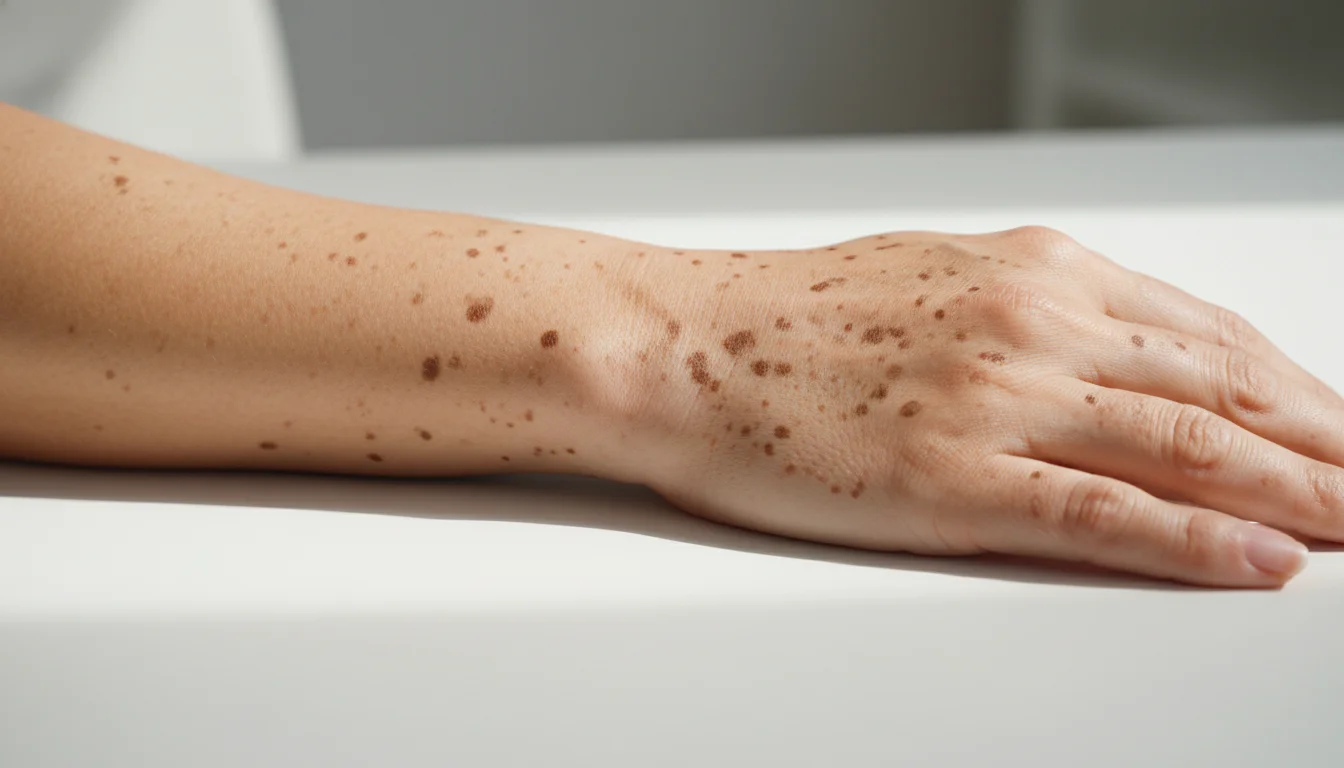
They form when melanocytes overproduce melanin in one patch of skin. Sun is the usual culprit, the same process behind age spots, but acne, hormonal shifts, injuries, and inflammation all leave the same mark: skin that’s noticeably darker than the skin around it.
One rule comes before any of the treatments below, and it isn’t optional: daily SPF 30 or higher. UV drives melanin production and undoes the progress of everything on this list. Every morning, reapplied outdoors. Skip it and you’re working against yourself.
Everything here is over-the-counter or at-home, roughly ordered by how strong the evidence behind it is. Used consistently, with that daily SPF, they fade spots over weeks to months, not overnight, whatever the ads say. Use every product exactly as its label directs; the label sets your dose and frequency, not this page. And for the times a spot needs a doctor rather than a serum, skip to “When to see a professional” at the end.
1. Tranexamic Acid Serum
If your dark spots are melasma, the diffuse hormonal kind, start here. Topical tranexamic acid has trial evidence for melasma and irregular facial pigmentation, which is why it leads this list.
It’s sold as an OTC serum, so follow the directions on the label. It layers with niacinamide, which acts at a different point in the pigment pathway, and the two are a common pairing.
Give it a couple of months before you judge it. Melasma doesn’t hurry.
2. Azelaic Acid Cream
Azelaic acid has solid evidence for the brown marks acne leaves behind, the post-inflammatory kind. Buy the over-the-counter cream and use it as the label directs.
It’s one of the few brighteners considered safe to use in pregnancy, which matters, because retinol is off the table then.
Like the other actives here, it works over weeks to months, not overnight.
3. Kojic Acid Serum
Kojic acid inhibits tyrosinase, the enzyme that drives melanin production, and has evidence for fading melasma when it’s used in a combination formula. It’s sold as an OTC serum, so use it exactly as the label directs.
Store it out of direct light and heat the way its packaging tells you to, and replace it once you reach the shelf life on the label rather than pushing it past that.
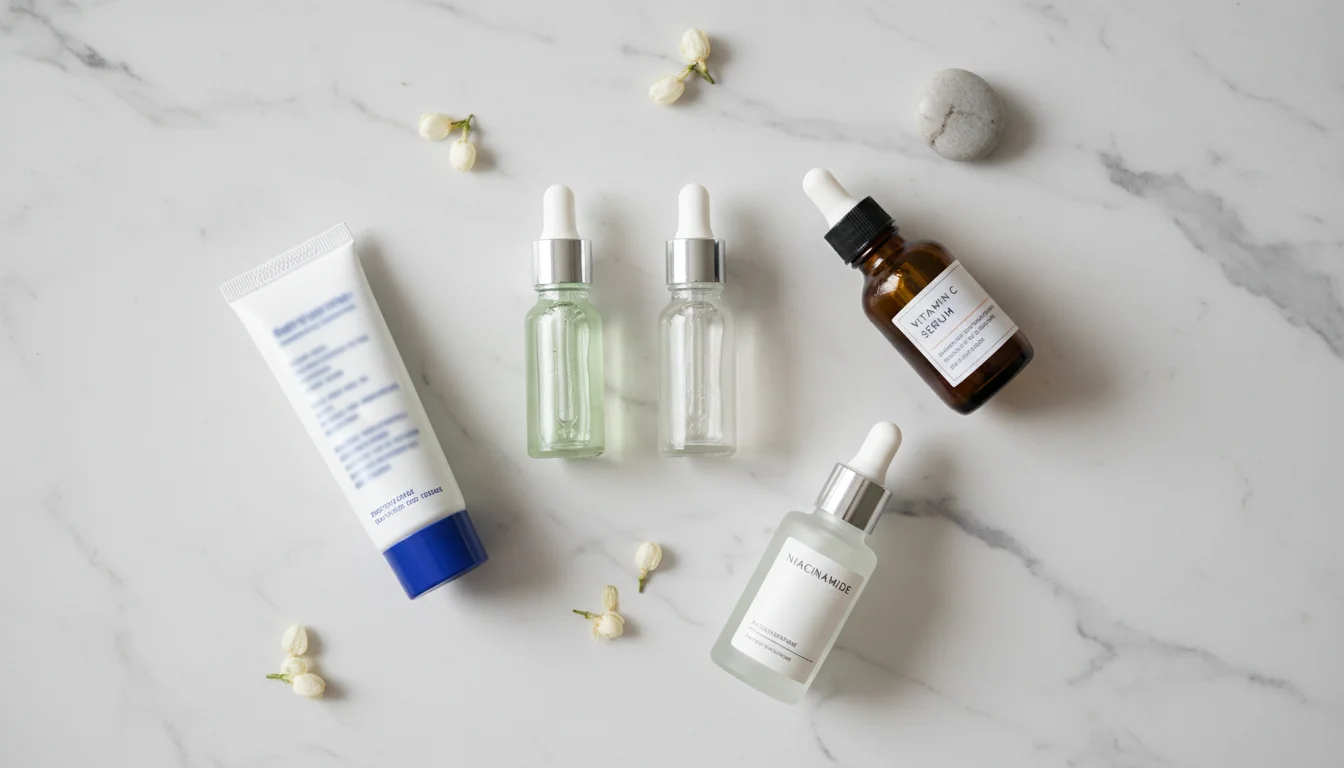
4. Vitamin C Serum
Vitamin C pulls double duty: it brightens the spots you already have and adds a layer of antioxidant defense against the UV that makes new ones. That’s why it belongs in the morning, under sunscreen, working while it protects.
Use an OTC L-ascorbic acid serum as directed on the label. Store it out of light and heat the way the packaging says, and replace it by the shelf life the label gives.
5. Niacinamide
Niacinamide works differently from everything else here: it doesn’t stop melanin being made, it stops it being handed off, blocking the transfer of melanosomes from the pigment cells to the surface skin cells. Less pigment reaches the surface even if the same amount is being produced underneath.
It’s easy to layer with other actives and simple to add to a routine. Use it as the label directs.
6. Retinol
Retinol speeds up cell turnover, the rate at which surface skin sheds and renews, so pigmented cells clear sooner. It has authority backing for mild uneven tone.
Start low and slow. Buy an OTC retinol and follow the label. If your skin gets flaky, red, or sore, that’s irritation, not progress, so back off the frequency or stop. Pushing through it is how you end up with more pigment than you started with, because irritation itself can trigger dark marks, especially on deeper skin tones. Give it weeks to months.
Don’t layer it with glycolic acid on the same night; stacking strong actives raises the irritation risk, so keep them separate unless the product labels or a professional tell you otherwise. And skip retinol entirely during pregnancy. It isn’t worth the risk.
7. Glycolic Acid Exfoliant
Glycolic acid works by force: it loosens and sheds the surface layer of skin, pigmented cells included, and lets clearer cells come up from underneath. It won’t shift deep pigment on its own, but it earns its place working on the surface.
Use an OTC glycolic product as the label directs, at night, and moisturize after. The next morning is non-negotiable: SPF 30+. Freshly exfoliated skin burns and pigments far more easily, and UV on that skin drives exactly the darkening you’re trying to undo.
On deeper skin tones, go cautiously. Irritation on melanin-rich skin can set off post-inflammatory hyperpigmentation, which is the whole problem in reverse.
8. Sunscreen (Use This With Everything)
Not a spot treatment, exactly. But leave it out and nothing else on this list holds. UV switches on melanin production, so every brightener you apply is fighting a losing battle against fresh, sun-driven pigment unless you’re covered.
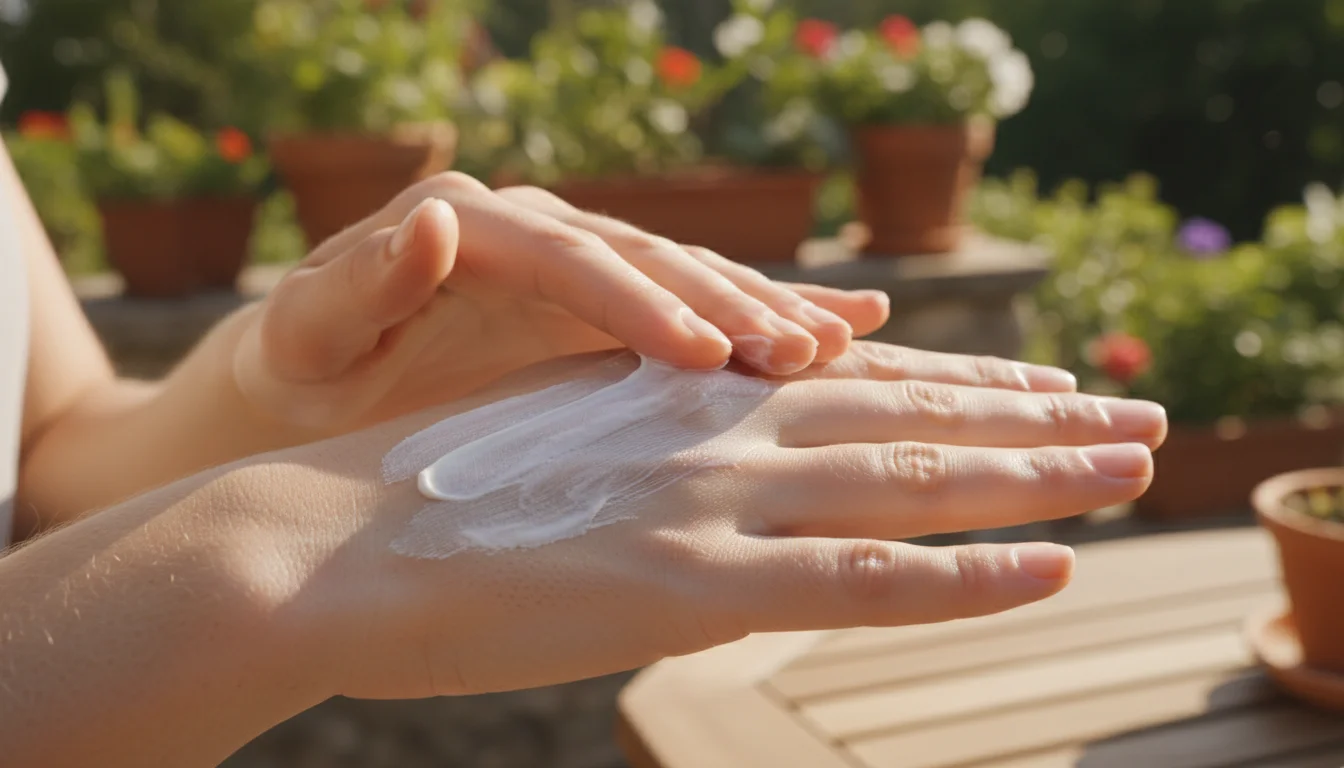
Use a broad-spectrum sunscreen, SPF 30 or higher, every morning, and follow the label for how much to apply and how often. Reapply at least every two hours outdoors. And put it on your hands, forearms, and chest if that’s where the spots are, not just your face.
No daily SPF, no results. It’s that blunt.
When to see a professional
At-home treatment handles most everyday dark spots, but a spot is a job for a doctor, not a serum, when:
- A spot changes – in size, shape, color, or outline – or a new one appears and keeps growing. Asymmetry, ragged edges, more than one color, or a diameter wider than a pencil eraser are the warning signs for skin cancer, and no brightening product is the right response to them.
- A spot itches, bleeds, crusts, or won’t heal.
- The darkening came on suddenly, spread widely, or arrived with a new medication or a health change rather than with sun or age.
- Months of consistent at-home care have made no difference and the spots still bother you.
A dermatologist can confirm what a spot is before anything is done to it, and can discuss in-clinic options – prescription-strength creams, chemical peels, laser, or freezing – that aren’t available at home. That is a conversation to have with them, not a purchase to make online.
Frequently asked questions
What fades dark spots the fastest at home?
There’s no fast, honestly. The OTC actives on this list, paired with strict daily SPF, tend to show visible change over a couple of months, not days. Anything promising an overnight fix is either useless or an irritant, and irritation makes hyperpigmentation worse, not better.
How can I remove dark spots in 3 days at home?
You can’t. The home remedies that trend for this – lemon juice, apple cider vinegar, raw potato – don’t have evidence for fading dark spots, and anything acidic enough to irritate skin can make more melanin, not less. If you want a low-risk place to start, it’s a vitamin C serum plus daily SPF. Give it a couple of months.
What gets rid of dark spots permanently?
Nothing, unconditionally. At-home treatments fade the spots you have, but skin with melanocytes makes fresh pigment whenever the sun hits it, so it’s fade-then-maintain, not cure. The closest thing to lasting results is clearing the spots and then protecting the skin with daily SPF for good. In-clinic procedures can remove individual spots more decisively, but new ones still turn up over time, which is another reason to treat that route as a conversation with a dermatologist rather than a one-off fix.
Are dark spots the same as melasma?
No, though they get lumped together. Melasma is a specific kind of hyperpigmentation – larger, blurrier patches driven by hormones (pregnancy, birth control) combined with UV, not the small, defined dots of freckles or a single sunspot. It tends to come back while the hormonal trigger is still there. Tranexamic acid has trial evidence for melasma; if it’s spreading or won’t budge, take it to a dermatologist.
Corrections
- 2026-09-16: Removed hydroquinone as a listed treatment. Over-the-counter hydroquinone has not been legally sold in the United States since 2020, when the CARES Act ended its OTC status, so it is no longer an at-home option there. This update also drops in-clinic laser therapy and liquid-nitrogen freezing as step-by-step treatments; those are now mentioned only under “When to see a professional”, as procedures to discuss with a dermatologist rather than things to do at home.