Table of Contents
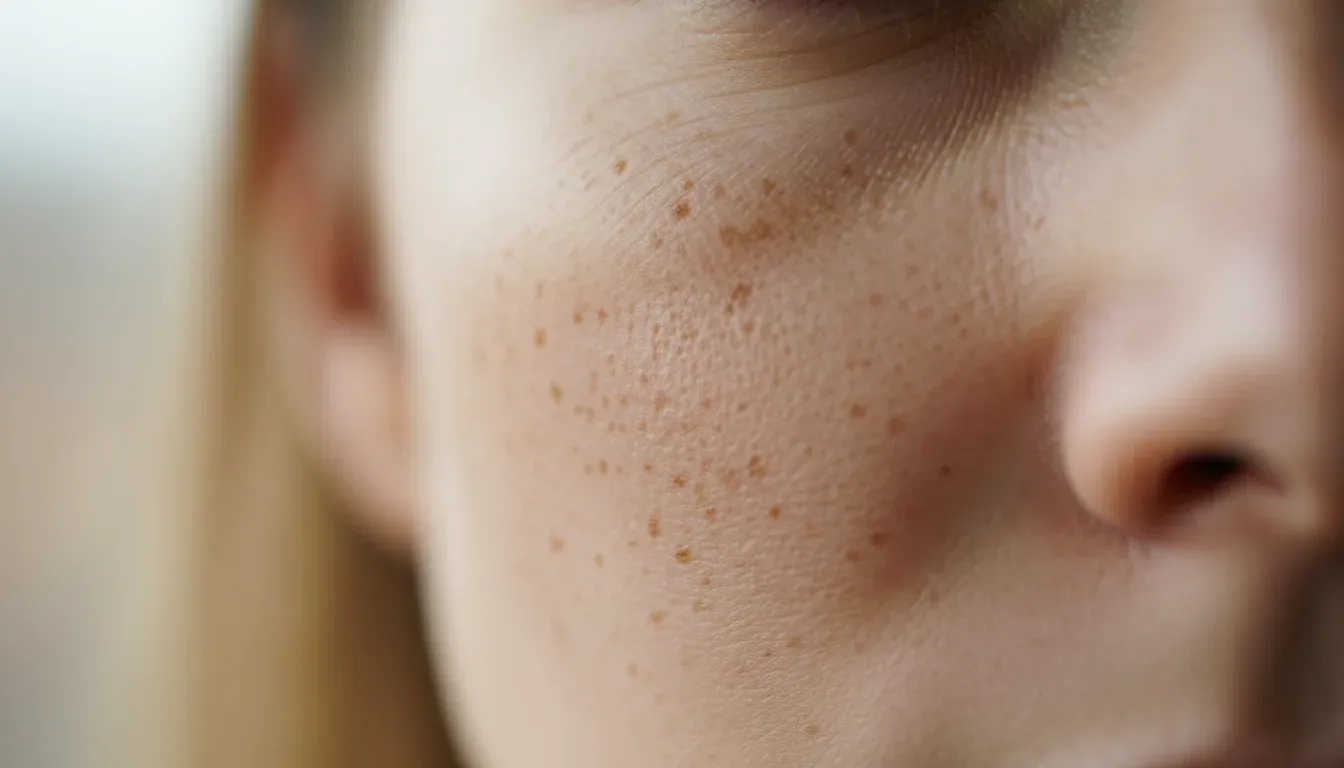
Freckles are the sun’s signature on your skin: small clusters of melanin that show up where UV light hits. Some people are born prone to them, most earn more of them through summers outdoors, and they darken every time you skip the sunscreen. They are almost always harmless, just visible, and the pages that rank for this search jump straight to lasers and clinic peels.
Most of the fading you can actually do happens off the shelf. The routine below starts with the one step that stops new freckles forming, then works through the over-the-counter ingredients that lighten the pigment you already have. It also draws an honest line: a plain freckle is cosmetic, but a spot that changes is worth a doctor’s eye, and the last section says how to tell them apart.
1. Wear Broad-Spectrum Sunscreen Every Day
Start here, because everything else is wasted without it. Freckles are driven by UV, so every unprotected afternoon darkens the ones you have and prints new ones. Sunscreen does not fade a freckle on its own, but it stops the sun from undoing the work the other steps do at night.
Use a broad-spectrum SPF 30 or higher every morning, and follow the label for how much to apply and how often to reapply. A mineral formula with zinc oxide or titanium dioxide suits freckle-prone and sensitive skin well. Wear it on cloudy days and near windows too, because the UV that sets pigment passes through both.
2. Vitamin C Serum
Vitamin C is an antioxidant that brightens existing pigment and blunts the UV damage that keeps freckles dark. It pairs naturally with your sunscreen: apply it in the morning, then the SPF over the top.
Look for a serum with L-ascorbic acid and use it as the label directs. It oxidizes quickly, so keep it in a dark bottle and replace it once it turns orange, because by then it has lost its potency. Like every brightener here it works on color rather than texture, and slowly. Give it several weeks before you judge it.
3. Niacinamide
Niacinamide, or vitamin B3, works differently from vitamin C: it blocks the transfer of pigment into your surface skin cells, so less melanin reaches the spots you can see. In one controlled trial, 5% niacinamide reduced facial hyperpigmentation after four weeks.
Apply it to clean skin as the label directs. The results are steady rather than sudden, so give it time.
4. Kojic Acid
Kojic acid targets the pigment at its source. It blocks tyrosinase, the enzyme that produces melanin, so active spots make less color over time. Use an over-the-counter kojic-acid serum or cream as the label directs, after cleansing.
Expect several weeks of consistent use before freckles start to lighten. It oxidizes in air and light, turning pink or brown as it loses potency, so buy it in dark or airless packaging. Patch test first, because it can irritate sensitive skin.
5. An At-Home Chemical Exfoliant
This is the honest at-home version of the “peel” that ranking pages sell as a clinic procedure. Glycolic acid, an AHA, works on surface tone; salicylic acid, a BHA, suits oilier skin. Both lift away dull surface cells and speed the turnover that carries pigmented skin off faster.
There is good evidence that an over-the-counter glycolic acid around 10% gives real results at home. Use an OTC glycolic or salicylic product as the label directs, and wear sunscreen the next morning because freshly exfoliated skin burns easily. Ease off if your skin turns tight or raw.
When to See a Professional About Freckles
The steps above fade color; they will not strip heavy pigment overnight, and now and then a spot is not just a cosmetic freckle. See a dermatologist if a spot on your skin:
- Changes in size, shape or color, or simply looks different from the freckles around it.
- Has an uneven or jagged border, is asymmetrical, shows more than one color, or grows past about a quarter inch (6 mm), the width of a pencil eraser.
- Becomes itchy, sore, raised, or starts to bleed or crust.
- Is new, or is one you are unsure about.
A dermatologist can tell a harmless freckle from a spot that needs checking, and if you want freckles removed for looks rather than health, they can talk through in-office options such as stronger peels or laser. That is a conversation to have based on your own skin, not something to decide from a page like this.
Frequently Asked Questions
Can you get rid of freckles permanently? Not reliably at home. The routine above lightens them, but freckles are UV-driven, so they tend to return or darken with sun exposure unless you keep up daily sunscreen. Even in-office treatments often fade rather than erase them for good.
Do freckles go away on their own? Many childhood freckles lighten in winter and with less sun, and some fade with age. Sun spots, which look similar but tend to appear later, usually do not fade on their own; that is one way to tell the two apart.
What is the fastest way to fade freckles? There is no overnight fix off the shelf. Daily sunscreen plus one brightener used consistently is the quickest honest route, and even that takes several weeks. Anything promising faster is usually a clinic procedure with its own cost and downtime.
Are freckles a sign of skin damage? A freckle itself is harmless, but it marks where UV has reached your skin, so plenty of freckles is a sign you get real sun exposure, the same UV that drives a tan. That is a reason to protect your skin, and to check anything that looks like a dark spot but behaves differently, using the signs above.